Artwork
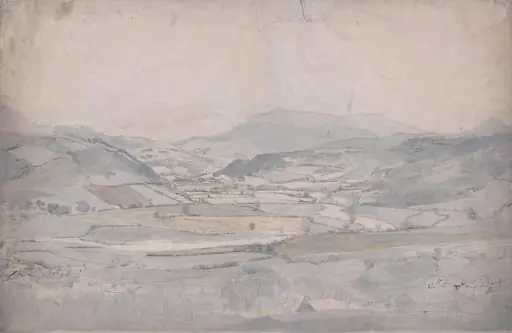
An Extensive View in Shropshire
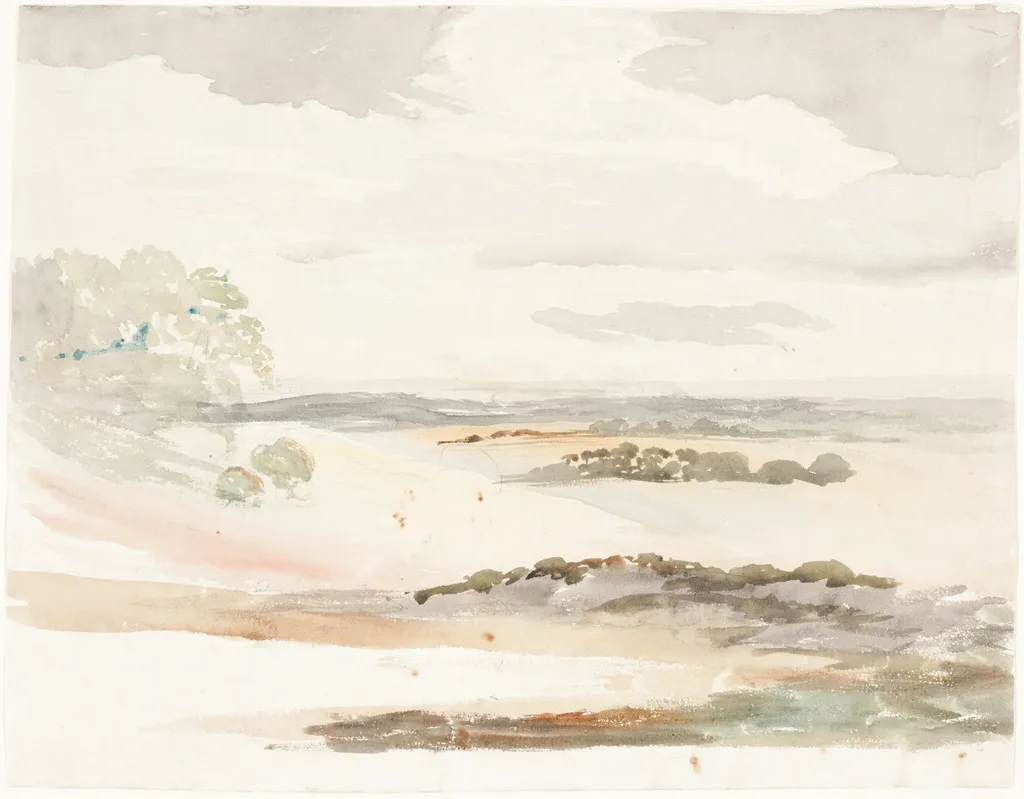
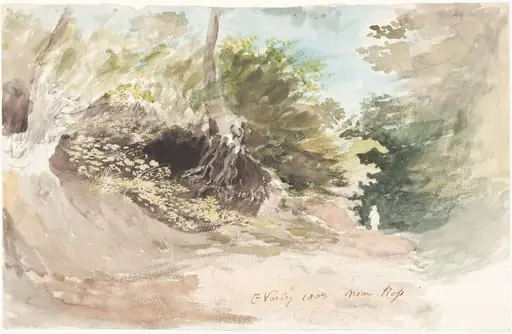
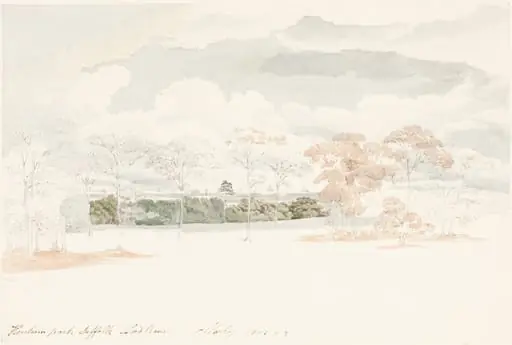
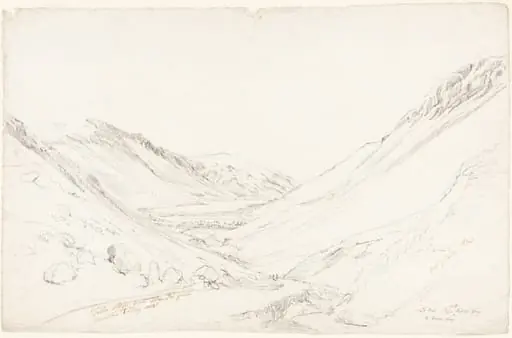
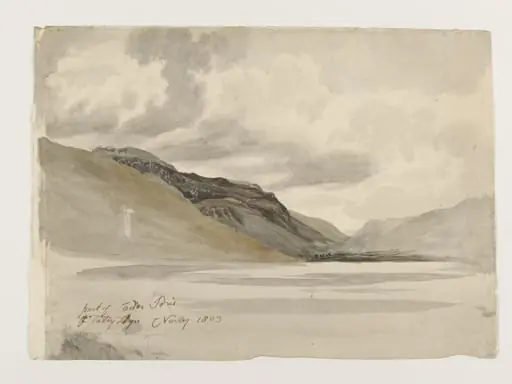
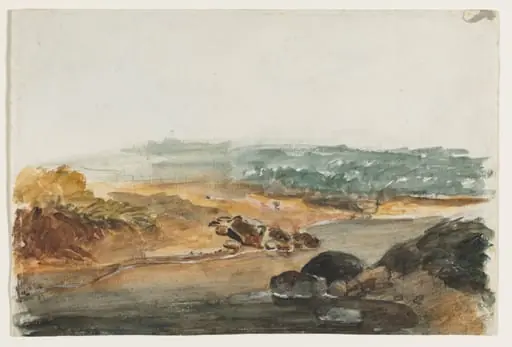
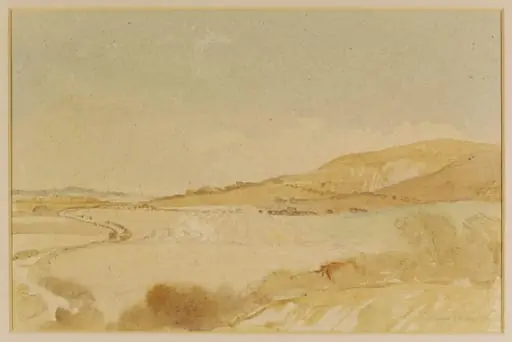
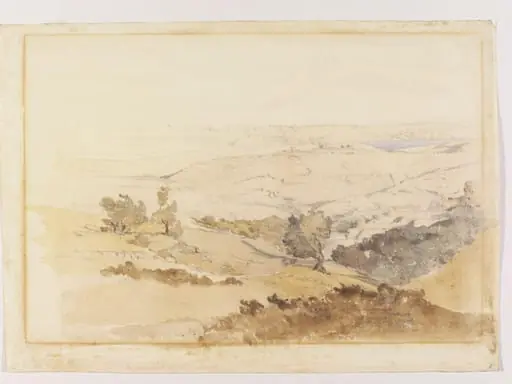
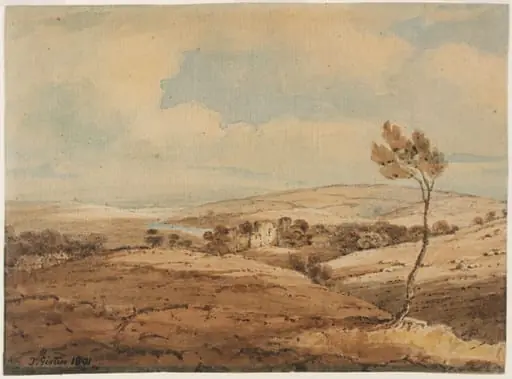
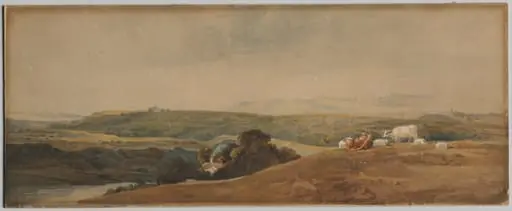
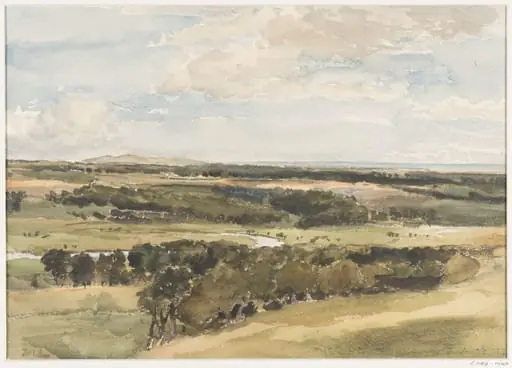
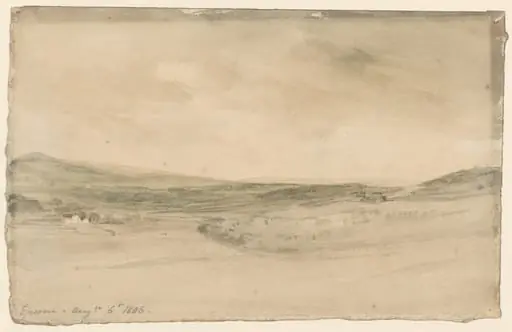
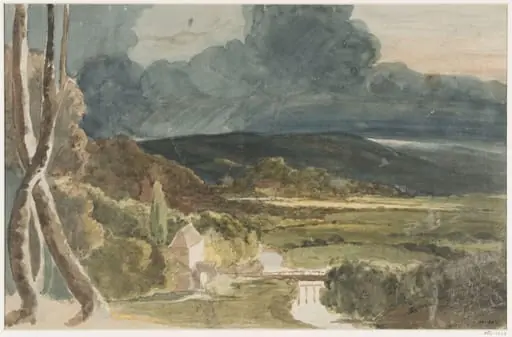
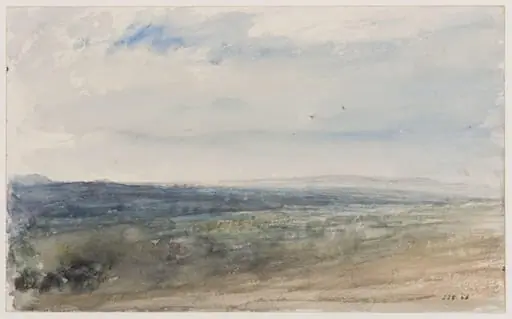
An Extensive View in Shropshire is a graphite drawing by the Romanticist artist Cornelius Varley. It dates from 1803 and is held in the collection of the National Gallery of Art.
About this work
Overview
The piece captures a broad, tranquil landscape that aligns with the conventions of early‑19th‑century cityscape and countryside studies.
Created in 1803, *An Extensive View in Shropshire* is a watercolor drawing executed on wove paper with an underlying graphite sketch. The British artist Cornelius Varley, noted for his inventive approaches to visual documentation, produced the work as part of his broader interest in topographical representation. The piece captures a broad, tranquil landscape that aligns with the conventions of early‑19th‑century cityscape and countryside studies.
Subject & Meaning
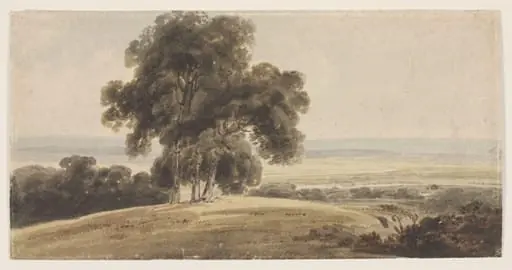
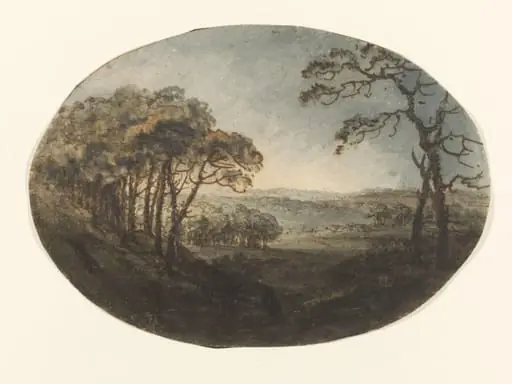
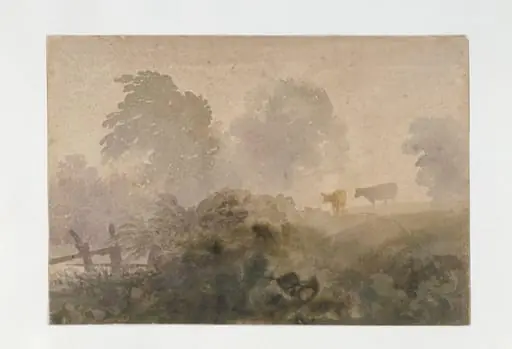
The composition presents a gently undulating terrain of low hills punctuated by scattered trees, set beneath a pale, cloud‑filled sky. In the foreground, darker tonal masses suggest rocks or brush, adding depth and texture. The overall atmosphere conveys a sense of quiet repose, reflecting the Romantic fascination with the serene and unspoiled aspects of the English countryside.
Technique & Style
Varley employed a graphite underdrawing to establish the basic forms before applying transparent watercolor washes. The medium’s inherent softness allows the hills and sky to blend subtly, while the graphite lines retain enough definition to delineate foreground elements. The use of wove paper provides a smooth surface that supports fine detail and delicate tonal gradations characteristic of his topographical works.
History & Provenance
The drawing was produced during Varley’s prolific period of producing topographical watercolors for patrons interested in the picturesque qualities of regional England. While specific ownership records are limited, the work has remained within collections that focus on early British watercolors, illustrating Varley’s role in documenting the visual landscape of Shropshire at the turn of the 19th century.
Context
Varley’s career intersected with the rise of scientific observation tools such as his graphic telescope and microscope, which informed his precise rendering of terrain. This piece fits within the broader Romantic movement’s emphasis on nature’s emotional resonance, yet it also reflects the era’s growing interest in accurate geographical depiction for both artistic and practical purposes.
Artist & collection

Artist
Cornelius Varley, FRSA (21 November 1781 – 2 October 1873) was a British painter, mostly in watercolour, printmaker and optical instrument-maker. He invented the graphic telescope and the graphic microscope.