Artwork
Sleeping Infant
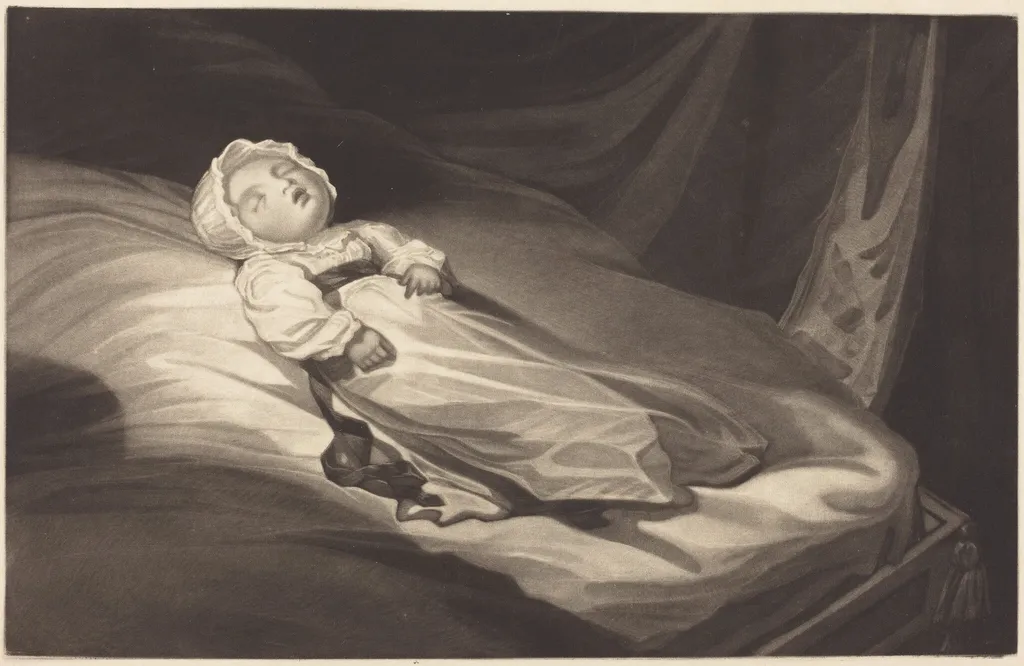
Sleeping Infant is an ink print by the Romanticist artist British 19th Century. It dates from 1850 and is held in the collection of the National Gallery of Art.
About this work
The artist pits and burnishes the metal plate to create those velvety blacks and glowing whites in one plate, not layers.
This print shows a baby asleep on its back, one tiny hand resting near its face. Soft light wraps around the folds of its gown and the blanket beneath it. Every shadow and highlight feels real, like you could reach out and touch the cloth.
Mezzotint makes this possible. The artist pits and burnishes the metal plate to create those velvety blacks and glowing whites in one plate, not layers. Only a few printers could pull such smooth gradations in the 1800s.
If you like how light shapes quiet scenes, look up British 19th Century.
Overview
Sleeping Infant is a print created using the mezzotint technique, showcasing a serene scene of a baby asleep.
Subject & Meaning
The print depicts a baby lying on its back, with one hand near its face, enveloped in soft light that accentuates the folds of its gown and the blanket.
Technique & Style
The mezzotint process allowed the artist to achieve a range of tonal values, from deep blacks to glowing whites, on a single plate, creating a highly realistic effect.
Context
The ability to produce such smooth gradations of tone was a hallmark of skilled printers in the 19th century, and this work is characteristic of British printmaking during this period.
Artist & collection

Artist
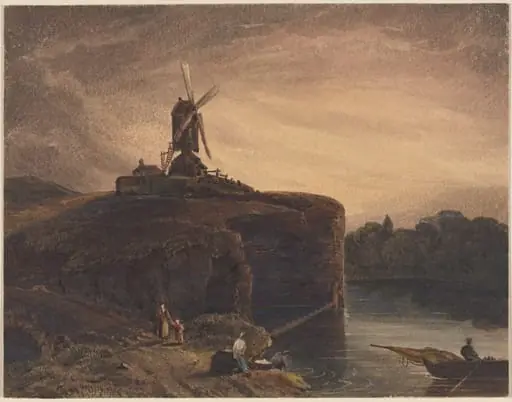
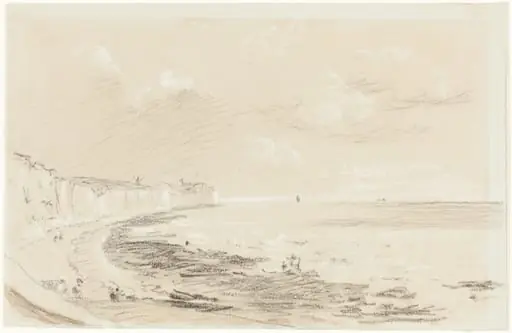
This artist’s short life left behind a quiet obsession with water—whether the churn of a mill wheel, the choppy waves off England’s south coast, or the way light bounces off pond lilies.

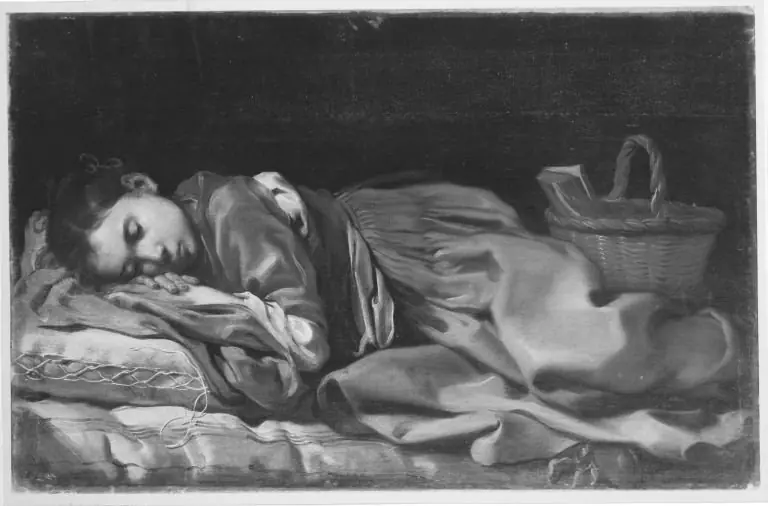 Sleeping Girl
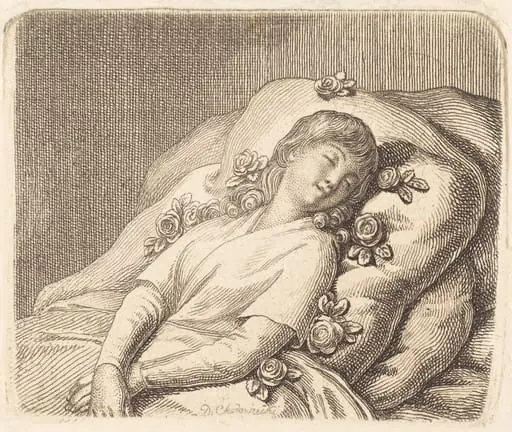 Dreaming on Roses
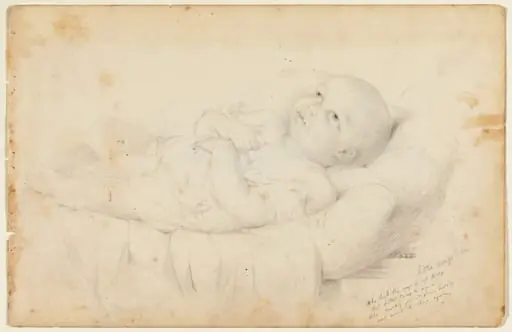 My Poor Sweet Little Angelica
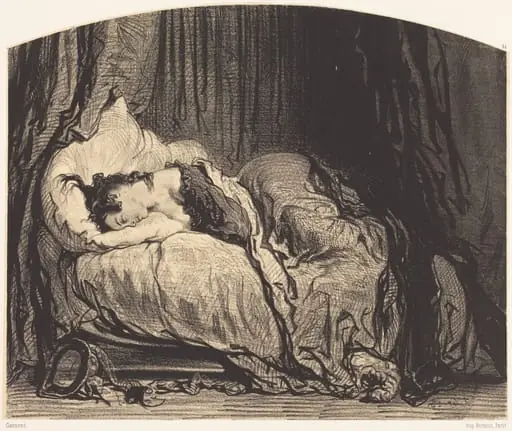 After the Pardon (Il lui sera beaucoup pardonne parce qu'elle a beaucoup danse)
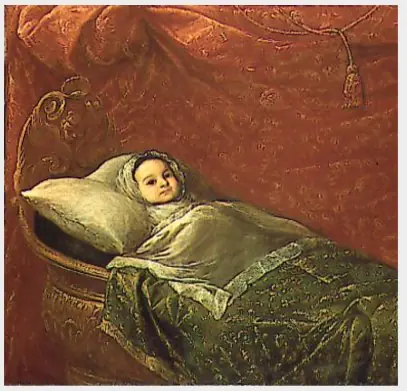 A Noble Spanish Child in its Cradle
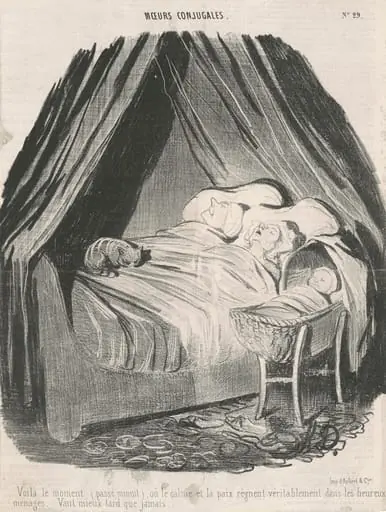 Voilà le moment (passé minuit) o∙ le calme et la paix règnent véritablement dans les heureux ménages. Vaut mieux tard que jamais.
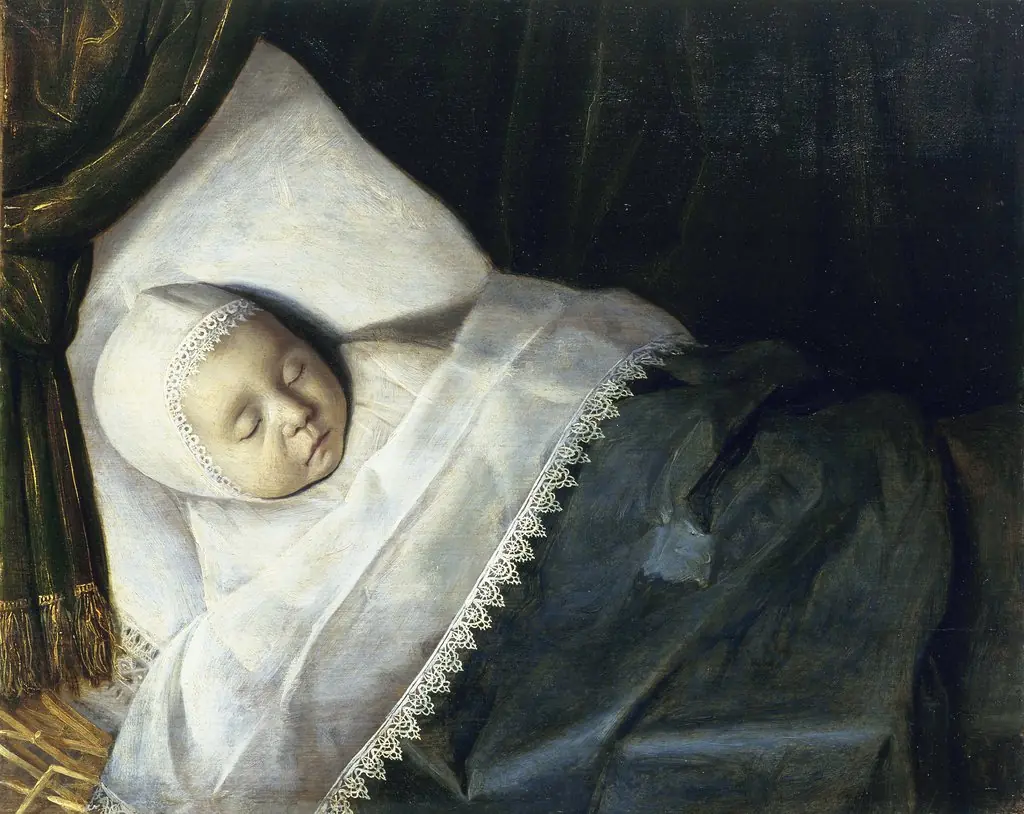 A Child of the Honigh Family on its Deathbed
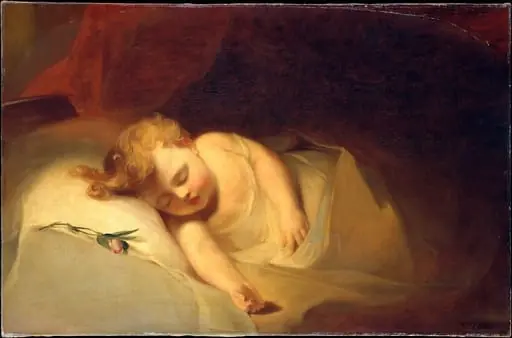 Child Asleep (The Rosebud)
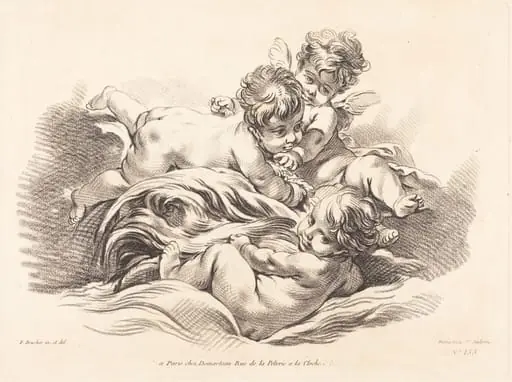 Three Cherubs Playing on Dolphin Like Wave