Artwork
Monte Cavallo, Rome
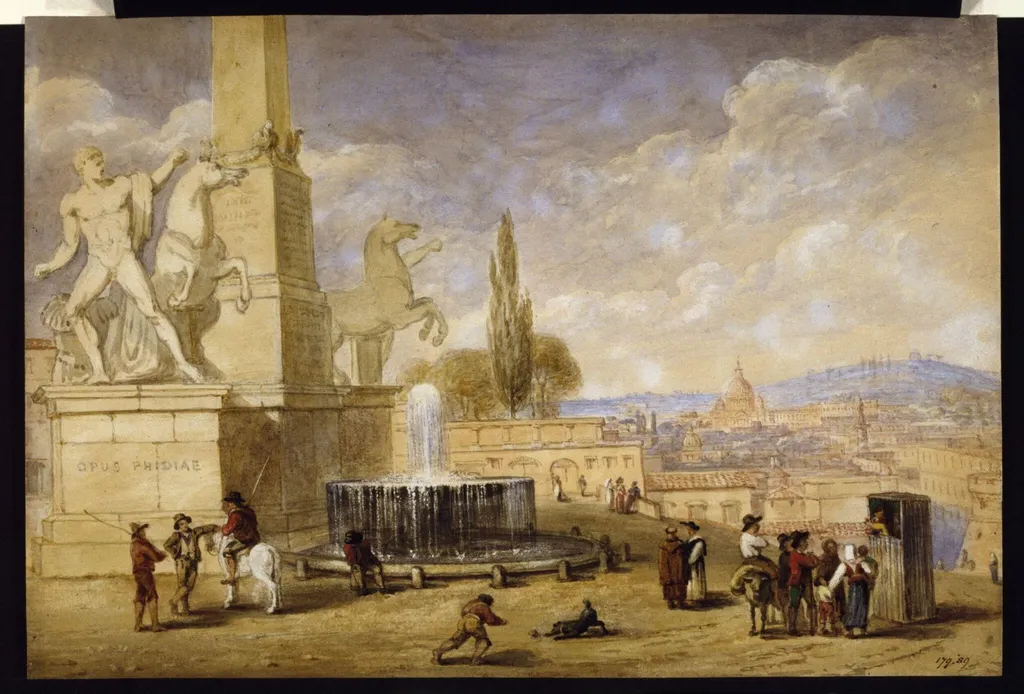
Monte Cavallo, Rome is a watercolor work on paper by the British Romanticist artist William Brockedon. It dates from 1825 and is held in the collection of the Victoria and Albert Museum.
About this work
Overview
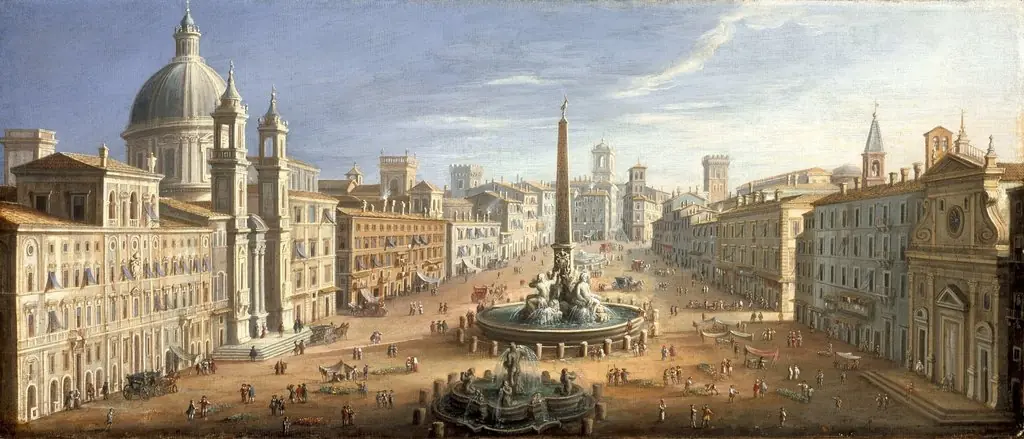
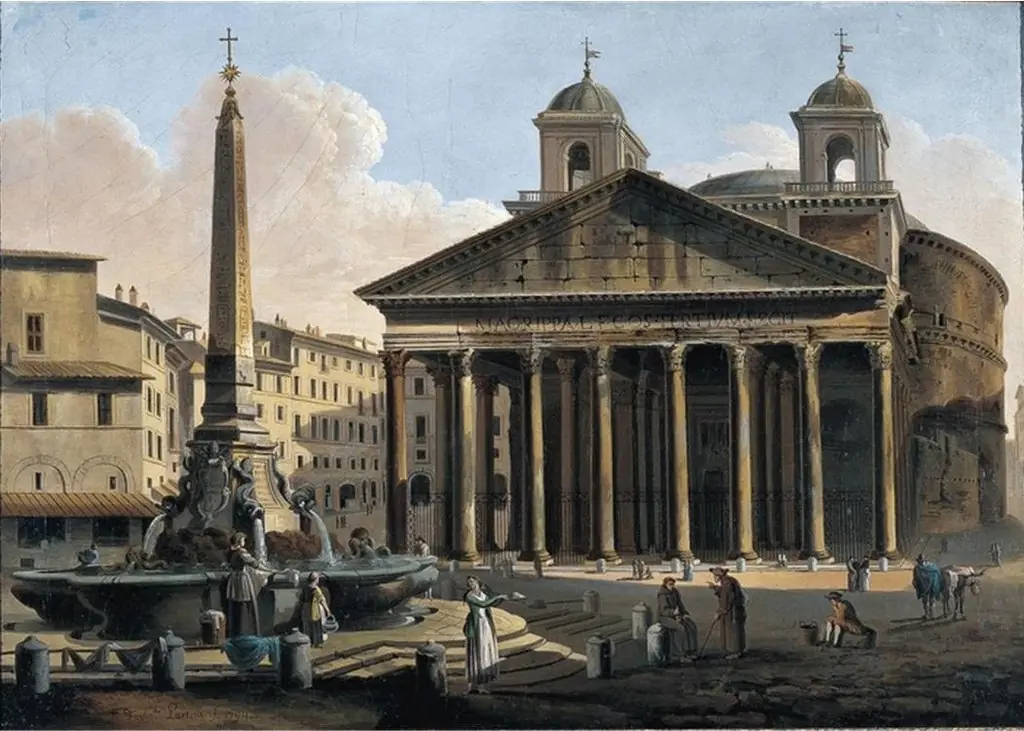
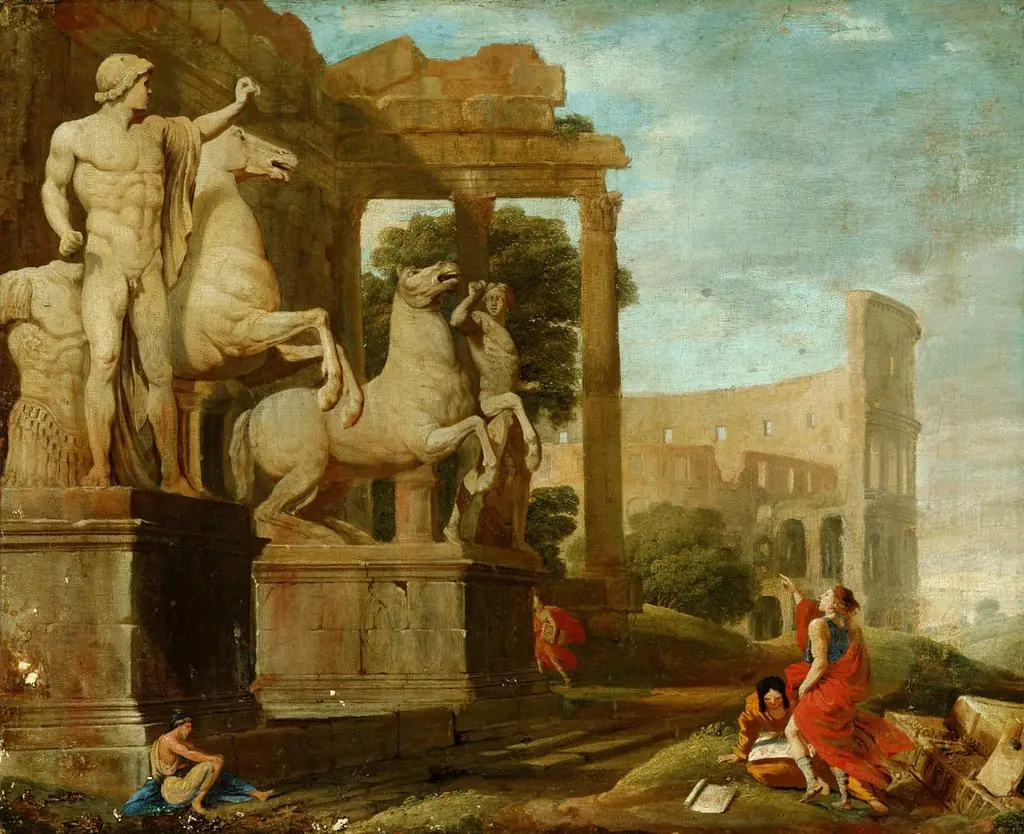
William Brockedon’s 1825 watercolour portrays the bustling courtyard of Monte Cavallo in Rome. A high‑arching fountain dominates the scene, surrounded by figures in period dress, a horse‑mounted statue inscribed *OPUS PHIDIAE*, and a resting dog. Soft clouds fill a bright sky while distant stone façades and domes frame the composition.
Subject & Meaning
The work captures a lively urban space where civic architecture, public water supply and social interaction converge. The fountain, central to the composition, symbolizes communal gathering, while the equestrian statue alludes to classical heritage. The varied activities of pedestrians and riders suggest everyday Roman life in the early nineteenth century.
Technique & Style
Executed in transparent watercolour, Brockedon renders the spray of the fountain with delicate washes that convey motion and light. Contrasting tonal values model the wet stone and the fabrics of the figures, while the sky’s soft clouds are suggested with broad, luminous strokes. The overall effect balances detailed observation with a loosely atmospheric background.
History & Provenance
Brockedon’s watercolour served as the source material for an engraving by E. Finden, reproduced opposite page 159 of the artist’s 1835 travel guide *Road Book from London to Naples*. The original painting is now part of the Victoria and Albert Museum’s collection, where it remains accessible to scholars and visitors.
Context
Created during a period of heightened interest in Grand Tour destinations, the image reflects contemporary British fascination with Roman antiquities and urban scenery. Monte Cavallo, a prominent Roman landmark, was a frequent subject for travelers documenting the city’s architectural and social fabric.
Artist & collection
Artist
William Brockedon painted watercolours of real places he saw on journeys in the early 1800s.