Artwork
Primăvara
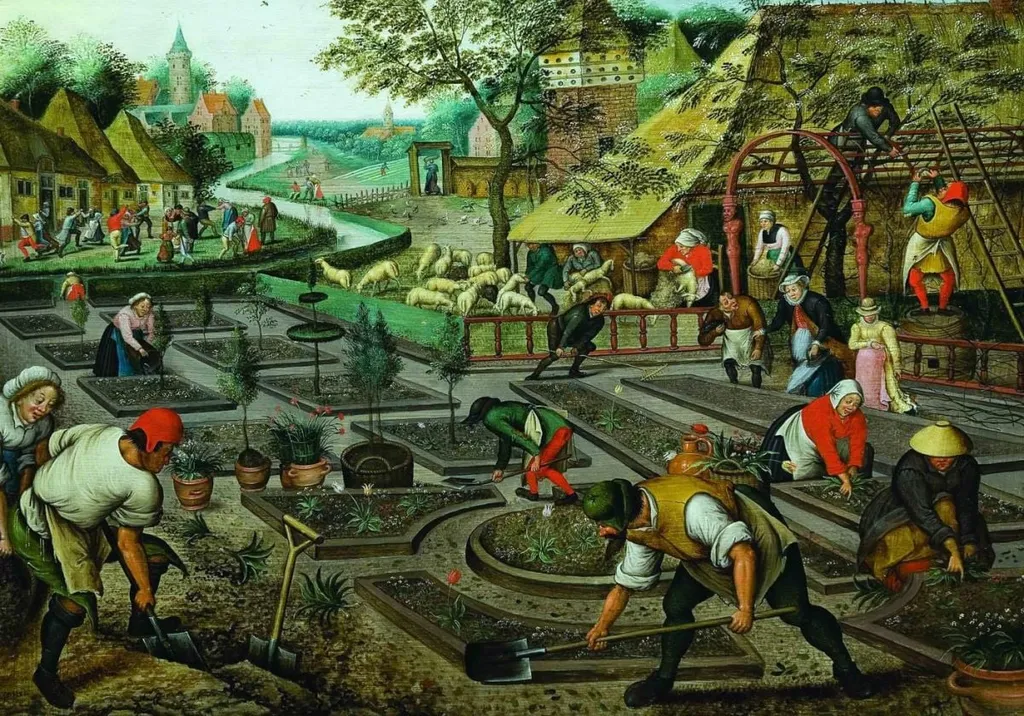
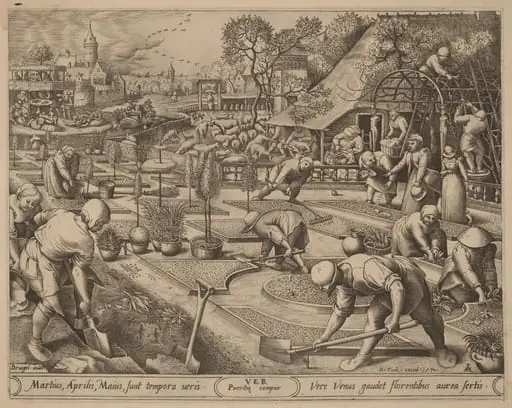
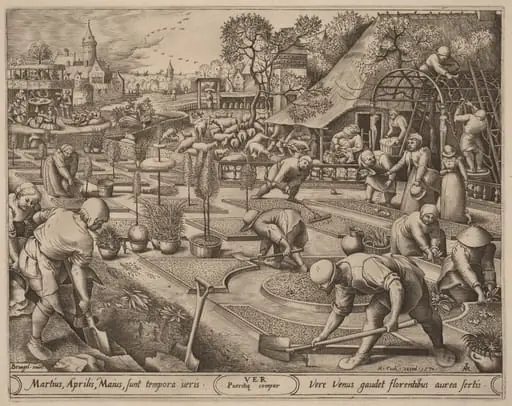
Primăvara is a print by Pieter Brueghel Cel Tânăr. It is held in the collection of the National Museum of Art of Romania.
About this work
Overview
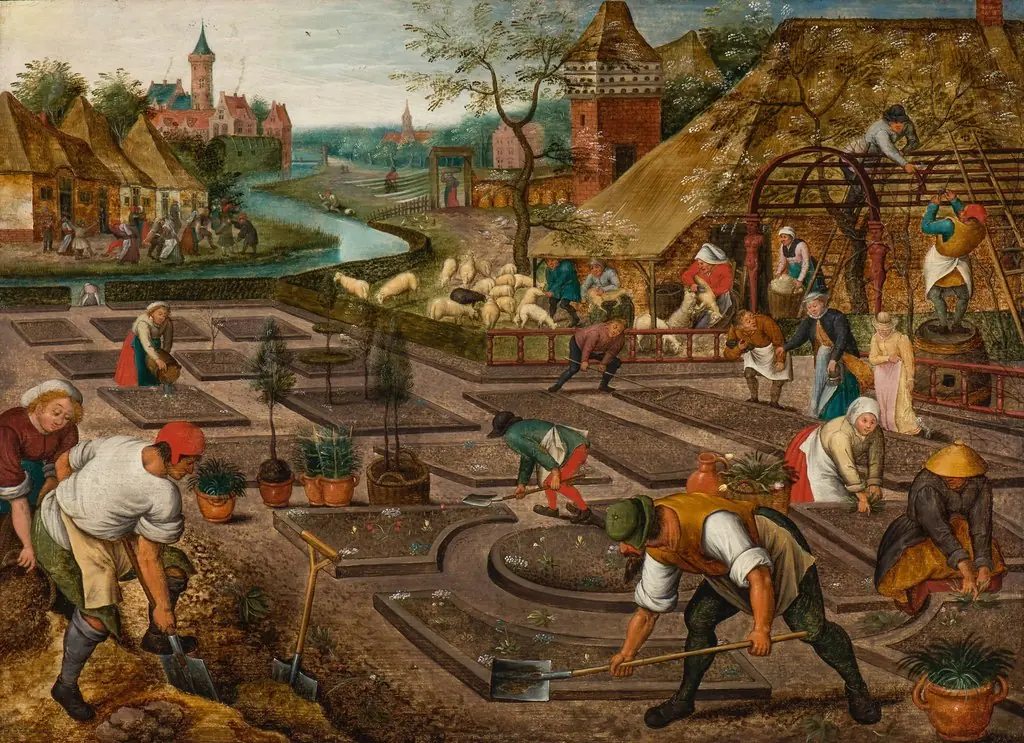
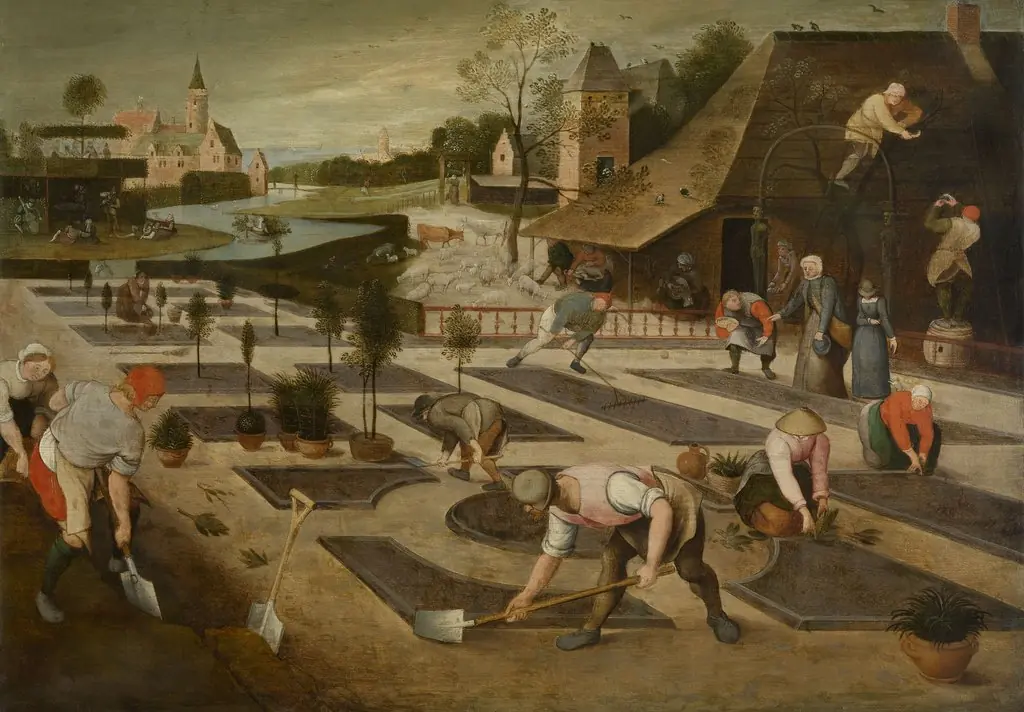
In the foreground, figures tend garden beds, dig soil, and transport baskets, while a flock of sheep rests in a nearby fold.
The work titled "Primăvara" presents a bustling rural tableau in which villagers are engaged in agricultural labor. In the foreground, figures tend garden beds, dig soil, and transport baskets, while a flock of sheep rests in a nearby fold. A red arched bridge spans a modest stream, and beyond it rise modest dwellings, a church steeple, and a windmill, all rendered in bright yet slightly muted hues.
Subject & Meaning
The composition captures a communal spring effort, emphasizing collective work and the rhythms of agrarian life. The arrangement of figures, each absorbed in a specific task, suggests a harmonious coordination among the villagers. The presence of the church and windmill in the distance underscores the integration of spiritual and technological elements within the rural landscape.
Technique & Style
The artist employs a dense arrangement of figures, filling the pictorial space without omission. Garden beds are delineated with swirling contours, adding a decorative rhythm to the scene. Light and shadow are modulated to suggest depth, while the palette balances vivid coloration with a subtle fading that softens the overall visual impact.
Context
Although specific details of the painting’s origin are not provided, its focus on everyday village activity aligns with a tradition of genre scenes that document rural customs. The inclusion of recognizable architectural features such as a church steeple and windmill situates the work within a European pastoral setting, reflecting broader 19th‑century interests in folk life.
Artist & collection
Artist
A Flemish printmaker and painter of the early 1600s, Brueghel the Younger carried on his father’s tradition of seasonal scenes.