Artwork
Vara
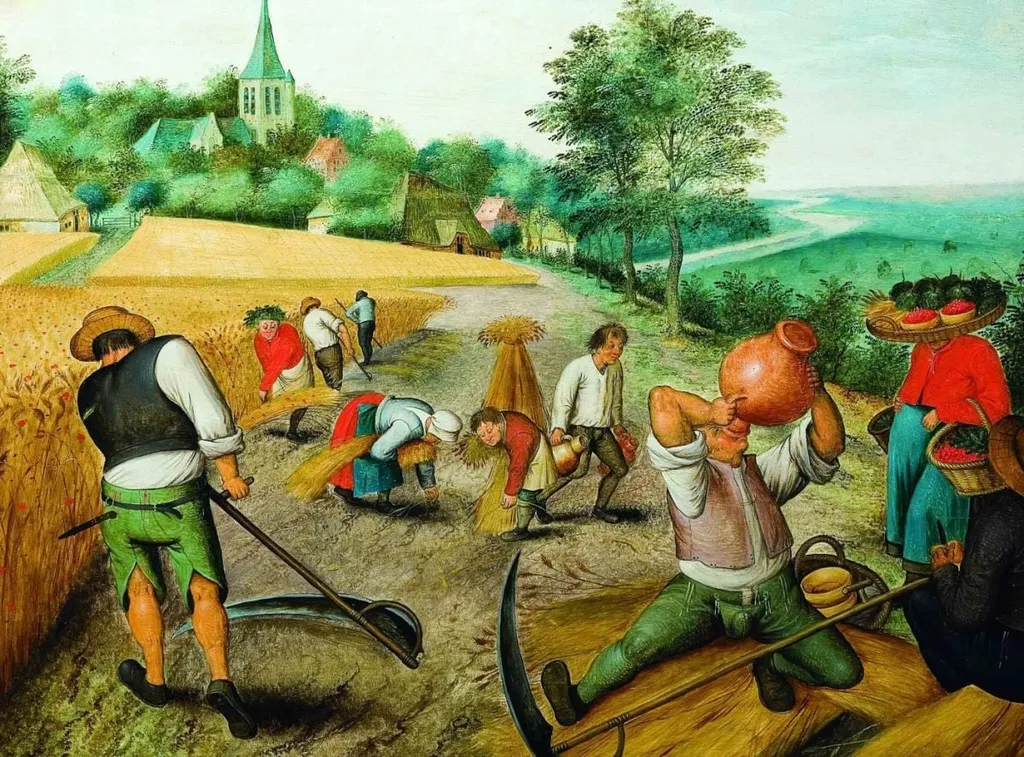
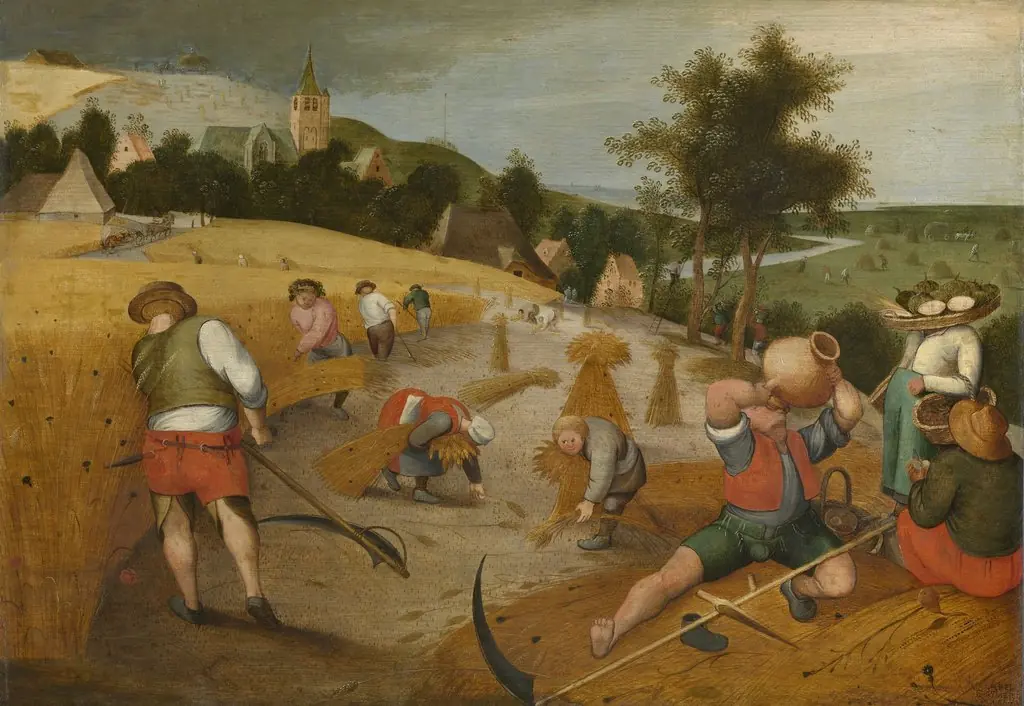
Vara is a print by Pieter Brueghel Cel Tânăr. It is held in the collection of the National Museum of Art of Romania.
About this work
Overview
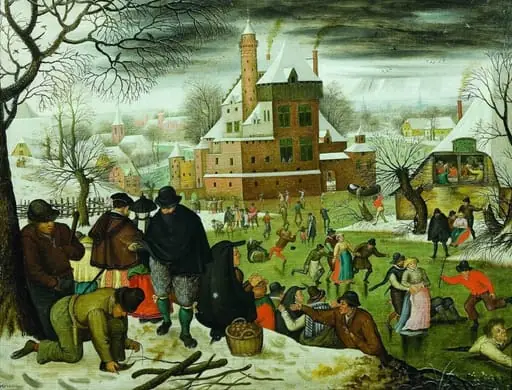
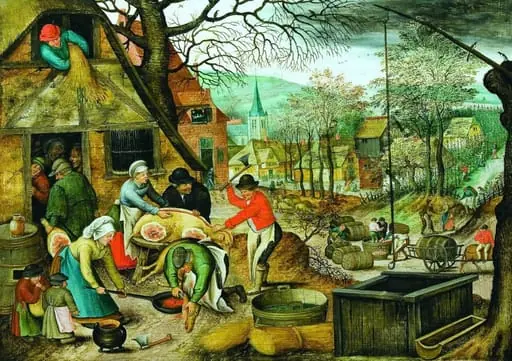
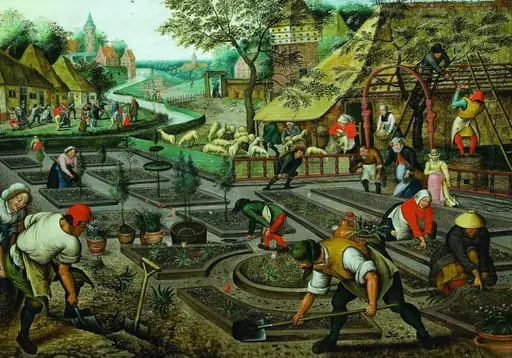
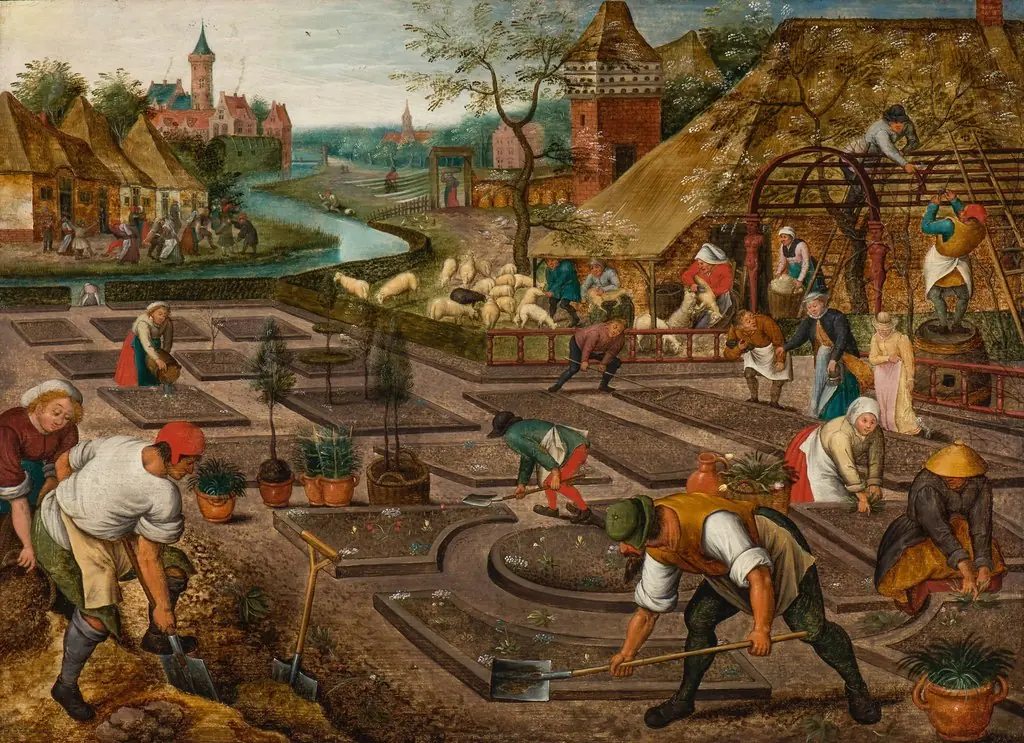
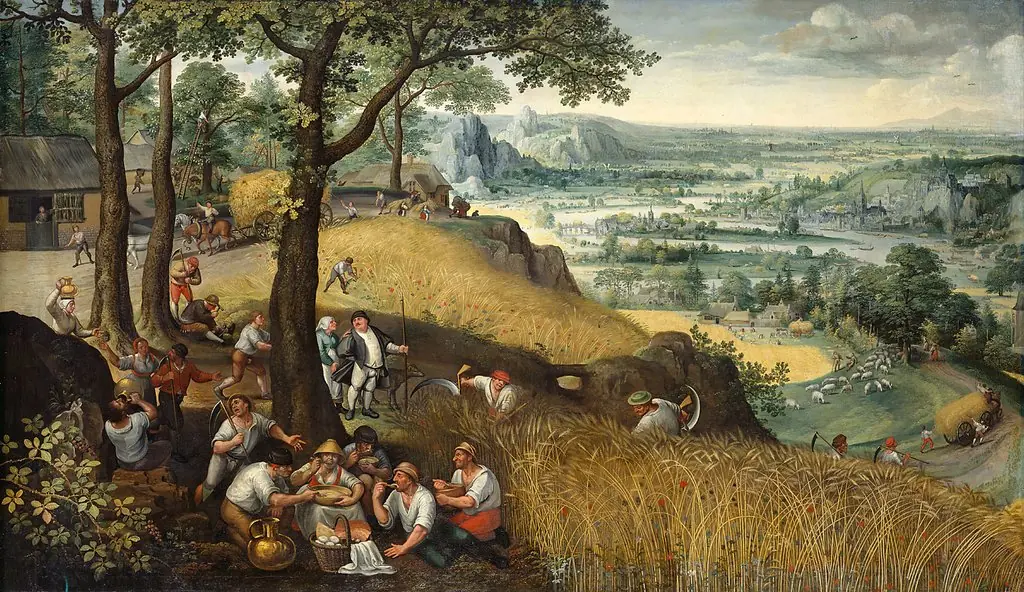
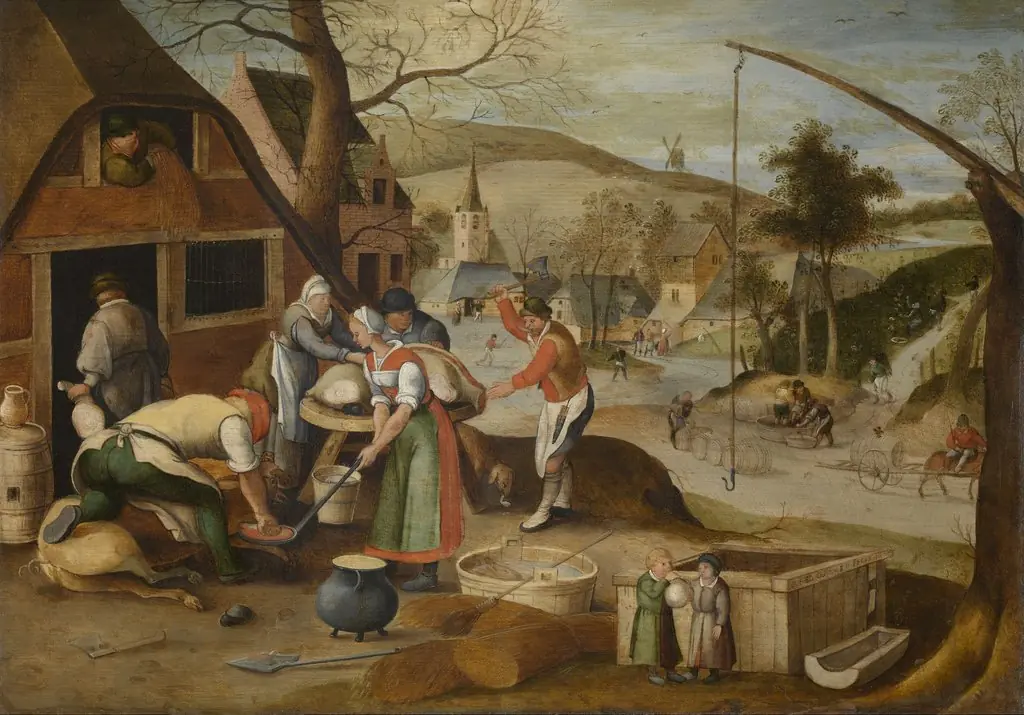
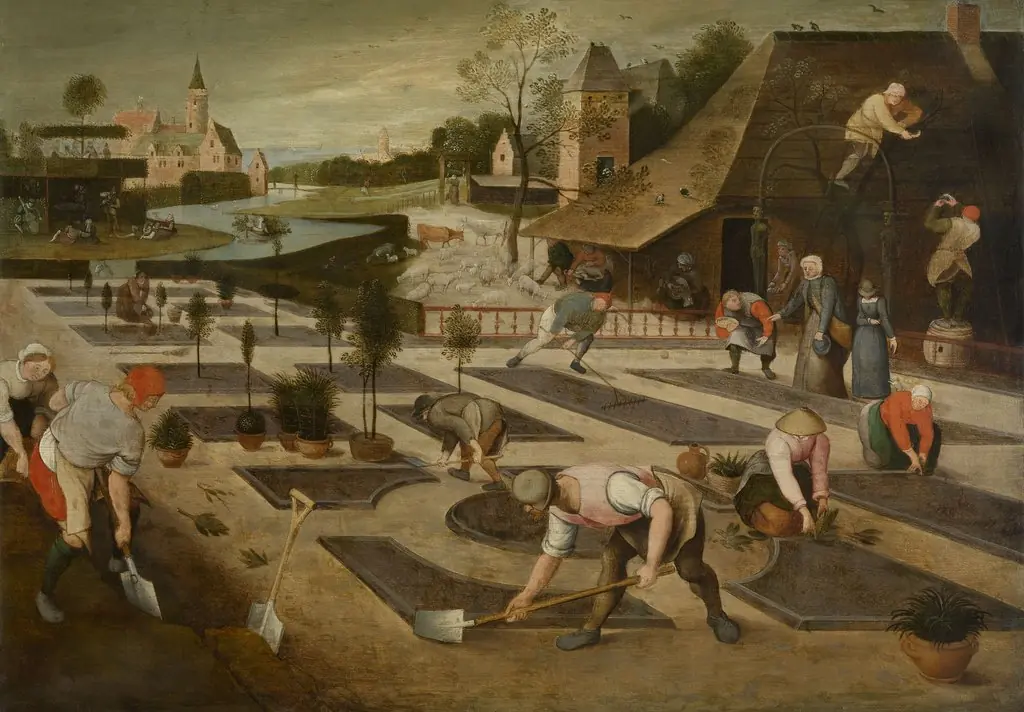
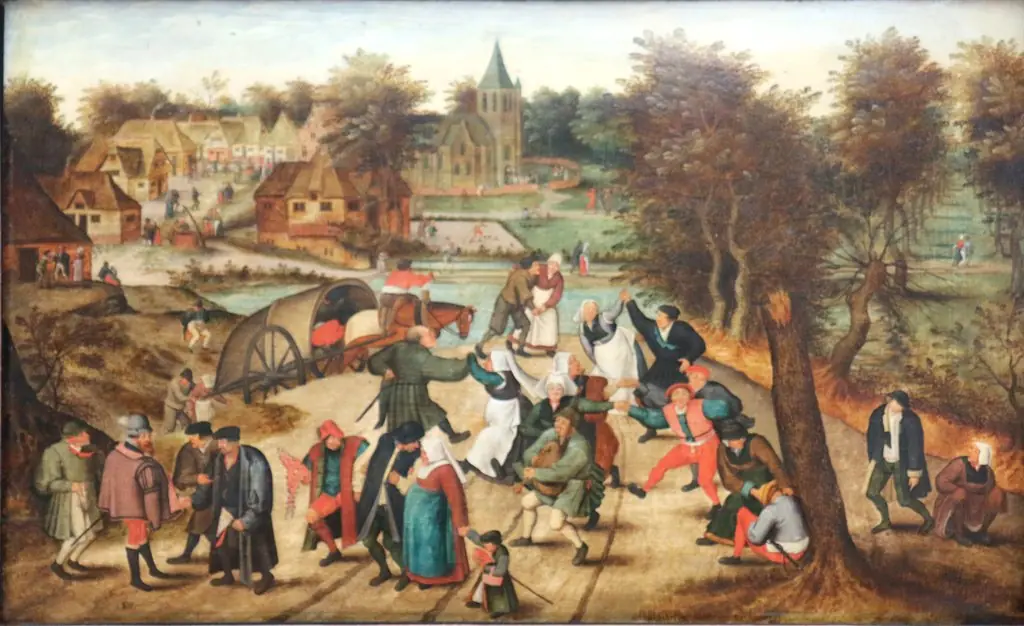
The composition is densely populated with figures, each engaged in distinct activities that reflect the rhythms of peasant life.
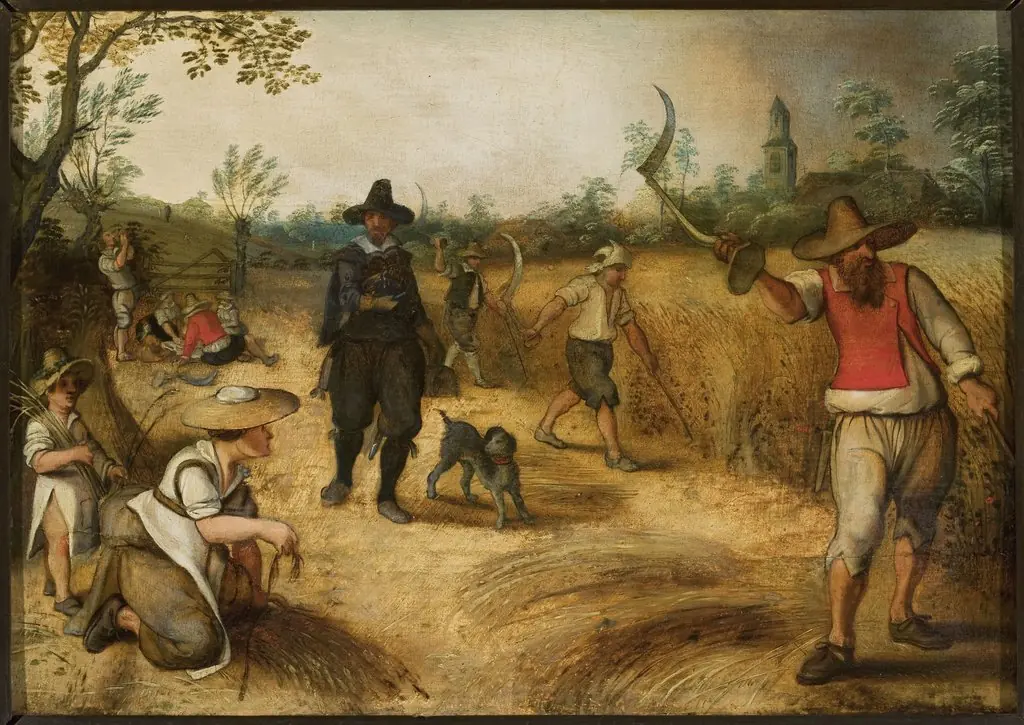
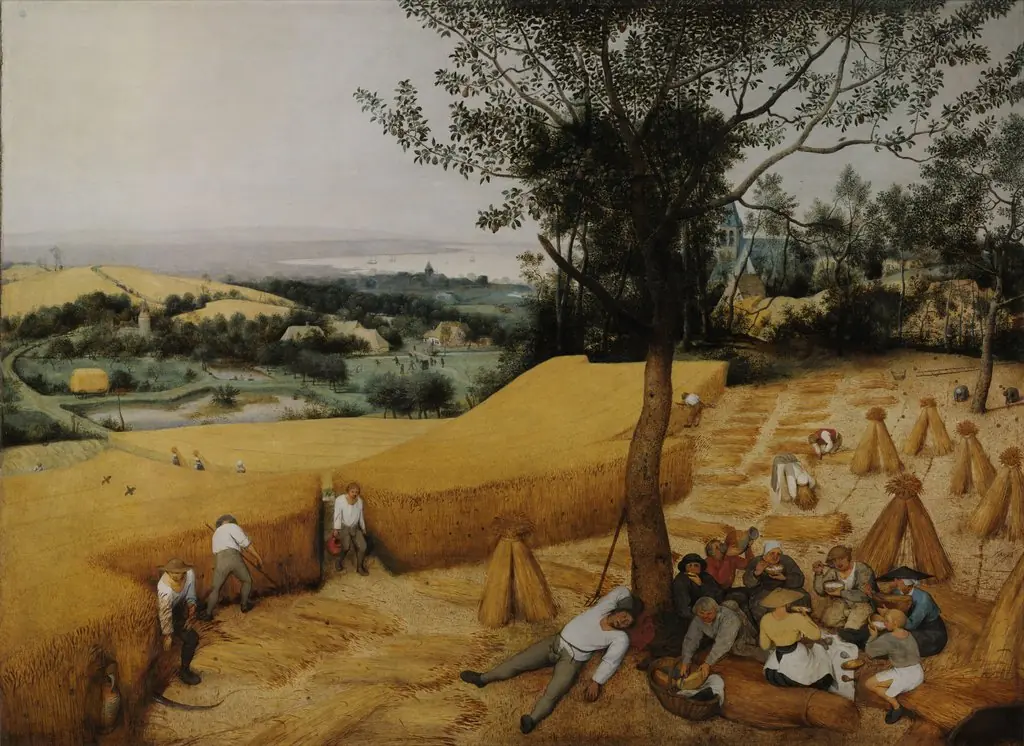
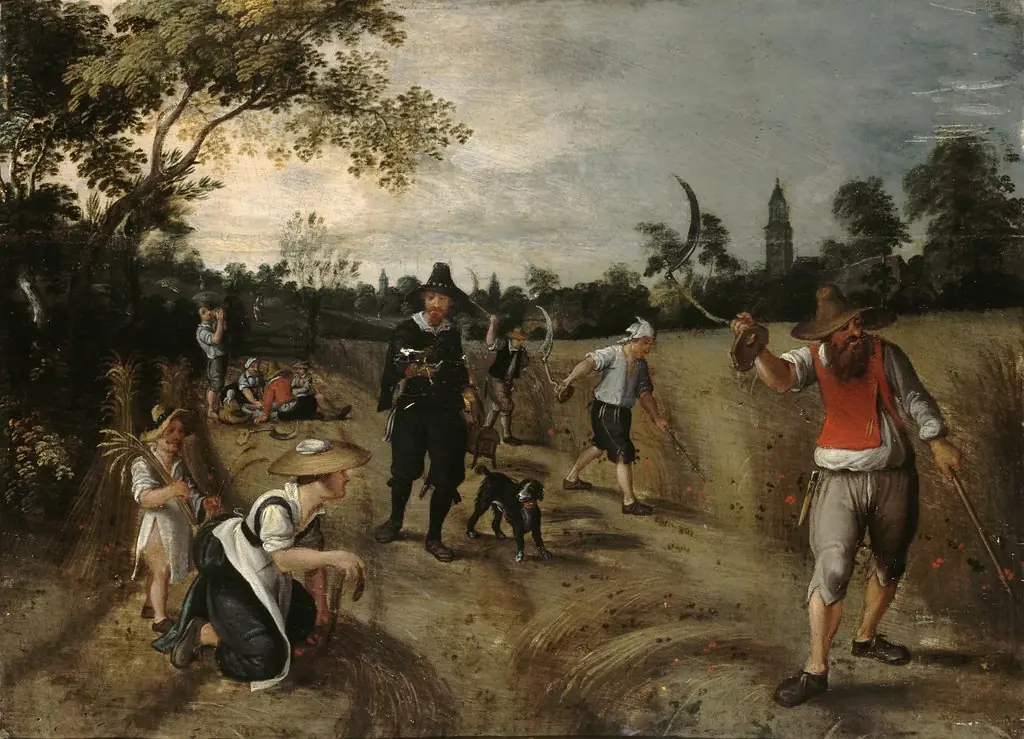
This painting depicts a rural agricultural scene teeming with laborers engaged in seasonal tasks such as harvesting hay, transporting fruit, and gathering crops. The composition is densely populated with figures, each engaged in distinct activities that reflect the rhythms of peasant life. A quiet landscape unfolds behind them, featuring a church, scattered dwellings, and a distant stretch of water, anchoring the scene in a specific, recognizable environment.
Subject & Meaning
The work centers on the daily toil of rural communities, portraying labor not as idealized romance but as grounded, repetitive work. Tools, clothing, and postures are rendered with observational precision, suggesting an intent to document rather than glorify. The presence of a church and homes implies a community bound by both labor and faith, where survival depends on collective effort and seasonal cycles.
Technique & Style
The artist employs clear, bright pigments and sharp light to enhance the sense of realism and vitality. Details in clothing, tools, and gestures are meticulously rendered, revealing an eye for the textures of wool, straw, and wood. The composition avoids dramatic focal points, instead distributing visual interest evenly across the field, reinforcing the quiet ubiquity of rural work.
History & Provenance
The painting is attributed to Pieter Brueghel the Younger, known for reproducing and adapting his father’s compositions. This work likely stems from a tradition of Flemish genre painting that flourished in the late 16th and early 17th centuries. Its survival suggests it was valued within domestic or civic collections, though its early ownership remains undocumented.
Context
Created during a period when Flemish artists increasingly turned to peasant life as subject matter, the painting reflects broader cultural interest in the moral and social dimensions of labor. Unlike religious or mythological scenes, this work elevates ordinary activity through careful observation, aligning with humanist values that saw dignity in the everyday.
Legacy
The painting contributes to a lineage of Northern European genre scenes that prioritized authenticity over idealization. Its emphasis on detail and communal labor influenced later realist traditions, particularly in Dutch and French rural painting. Though not widely exhibited today, it remains a representative example of how 17th-century artists captured the texture of rural existence.
Artist & collection
Artist
A Flemish printmaker and painter of the early 1600s, Brueghel the Younger carried on his father’s tradition of seasonal scenes.