Artwork
Le Patre
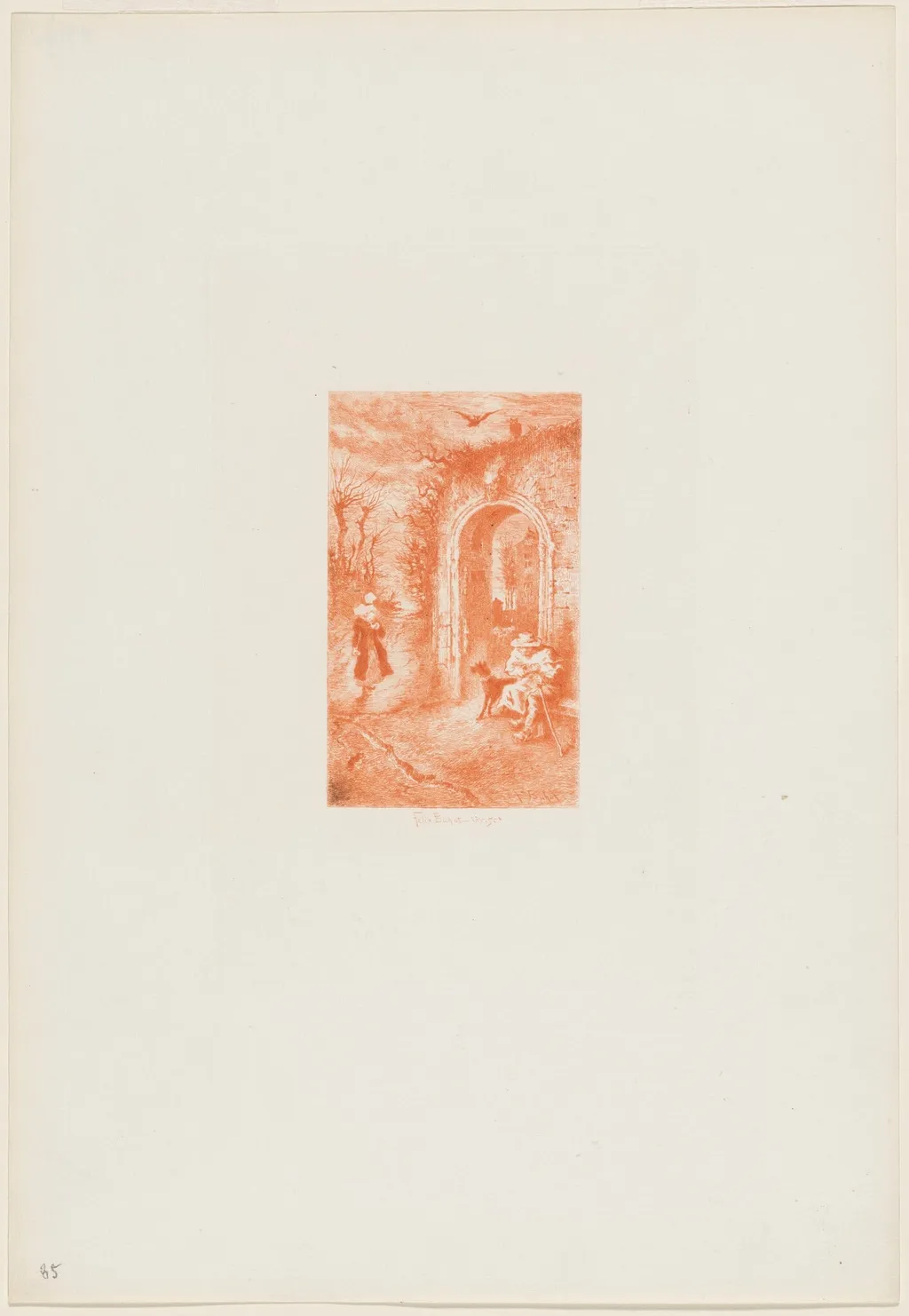
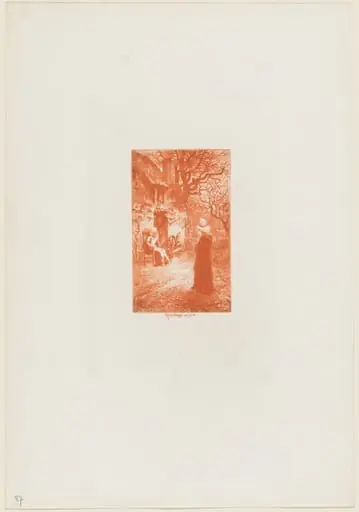
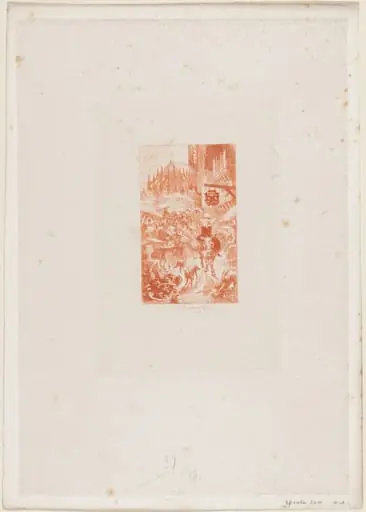
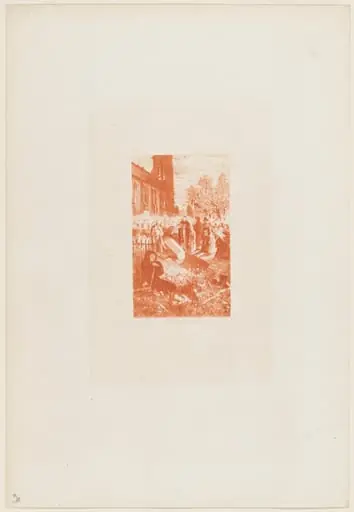
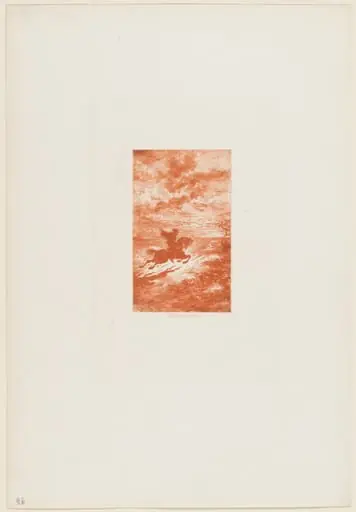
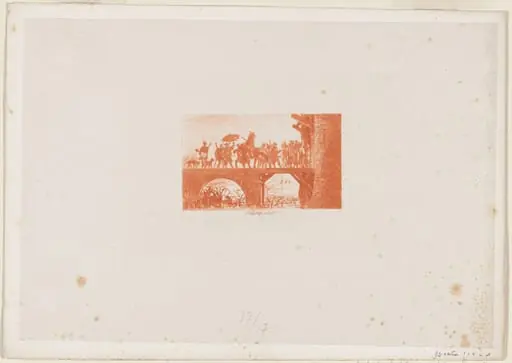
Le Patre is an ink print by the Romanticist artist Félix-Hilaire Buhot. It dates from 1873 and is held in the collection of the National Gallery of Art.
About this work
Overview
Le Patre is a 1873 print by Félix-Hilaire Buhot, executed in etching and drypoint using red ink on wove paper. Unlike traditional black-ink prints, the choice of red lends the composition a subtle warmth. The work belongs to a series of intimate landscape scenes Buhot produced during this period, capturing quiet moments in rural France with minimal detail and heightened atmosphere.
Subject & Meaning
The absence of clear context invites interpretation, aligning the image with 19th-century sensibilities of introspection in nature.
The figure, a solitary man in a long coat and hat, stands motionless amid a quiet woodland. His posture suggests contemplation rather than action, and his placement in the foreground emphasizes isolation over narrative. The distant building and scattered trees frame him without intrusion, reinforcing a mood of stillness. The absence of clear context invites interpretation, aligning the image with 19th-century sensibilities of introspection in nature.
Technique & Style
Buhot employed drypoint for its soft, velvety lines and etching for controlled tonal gradations, both rendered in red ink. The ink’s hue softens contrasts, unifying the scene in muted earth tones. Depth is achieved through layered textures—dense foliage in the middle ground, sparse outlines for the building—rather than sharp perspective. The technique favors atmospheric suggestion over precise detail, reflecting a shift toward poetic realism in printmaking.
History & Provenance
Created in 1873, Le Patre emerged during Buhot’s most productive period, when he focused on rural French scenes and urban vignettes. The print was likely part of a private circulation among collectors of prints, not widely exhibited. Its survival in institutional collections today reflects its status as a representative example of late 19th-century French etching, valued for its emotional restraint and technical nuance.
Context
In the 1870s, French printmakers like Buhot moved away from grand historical subjects toward intimate, everyday moments. Influenced by the Barbizon School and early Impressionism, they favored naturalism and mood over drama. Le Patre aligns with this trend, echoing the quietude of Corot’s landscapes and the tonal experiments of Whistler, while retaining a distinctly French sensitivity to light and solitude.
Legacy
Though not widely known outside specialist circles, Le Patre exemplifies the quiet evolution of printmaking in the late 19th century. Buhot’s use of color and texture in etching influenced later artists exploring non-traditional inks and atmospheric effects. The work remains a reference point for studies on emotional tone in graphic arts, valued for its understated economy and technical precision.
Artist & collection
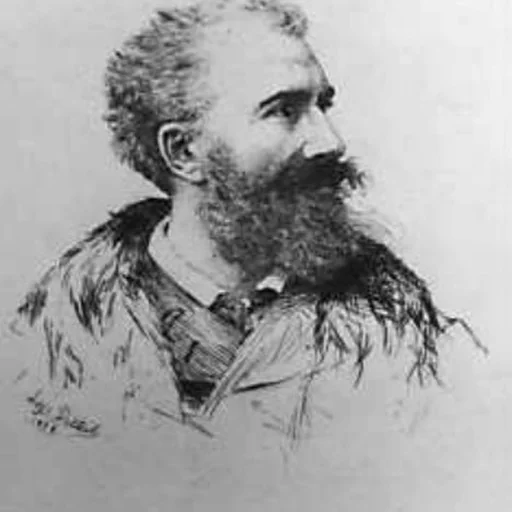

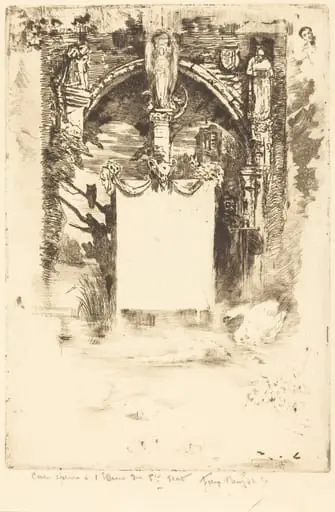 Ex-Libris pour "L'Ensorcelée" (Bookplate for "L'Ensorcelée")
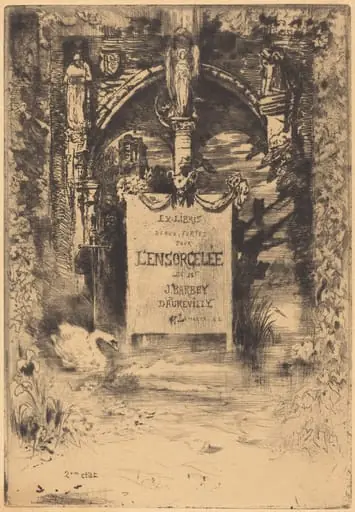 Ex-Libris pour "L'Ensorcelée" (Bookplate for "L'Ensorcelée")
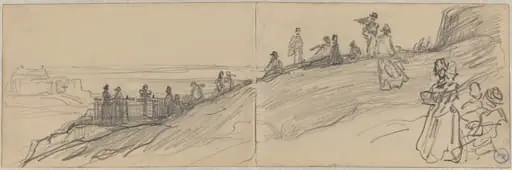 Figures on Top of a Hill, Overlooking the Sea
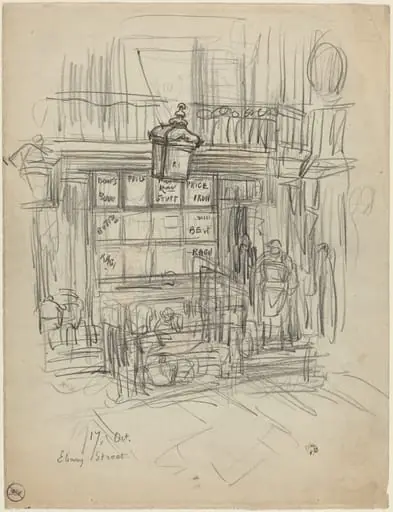 Ebury Street
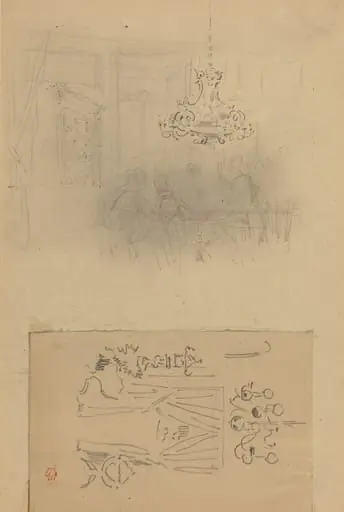 A Gathering in an Interior; A Curtained Doorway
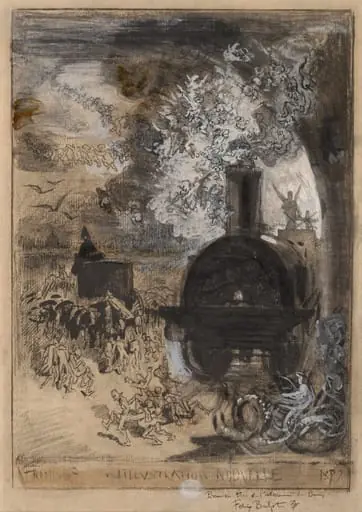 Frontispiece for L'Illustration Nouvelle: The Burial of the Burin
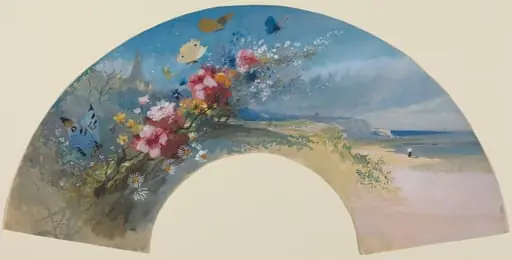 Fan with Wildflowers and Butterflies against the Norman Coast
![Gillingham Pier, London [verso], by Félix-Hilaire Buhot](https://artifactworldgallery.com/img/felix-hilaire-buhot--gillingham-pier-london-verso--641e03dd7de8217b-w320.webp) Gillingham Pier, London [verso]
Gillingham Pier, London [verso]