Artwork
Une Variété dans l'Amour (A Change of Heart)
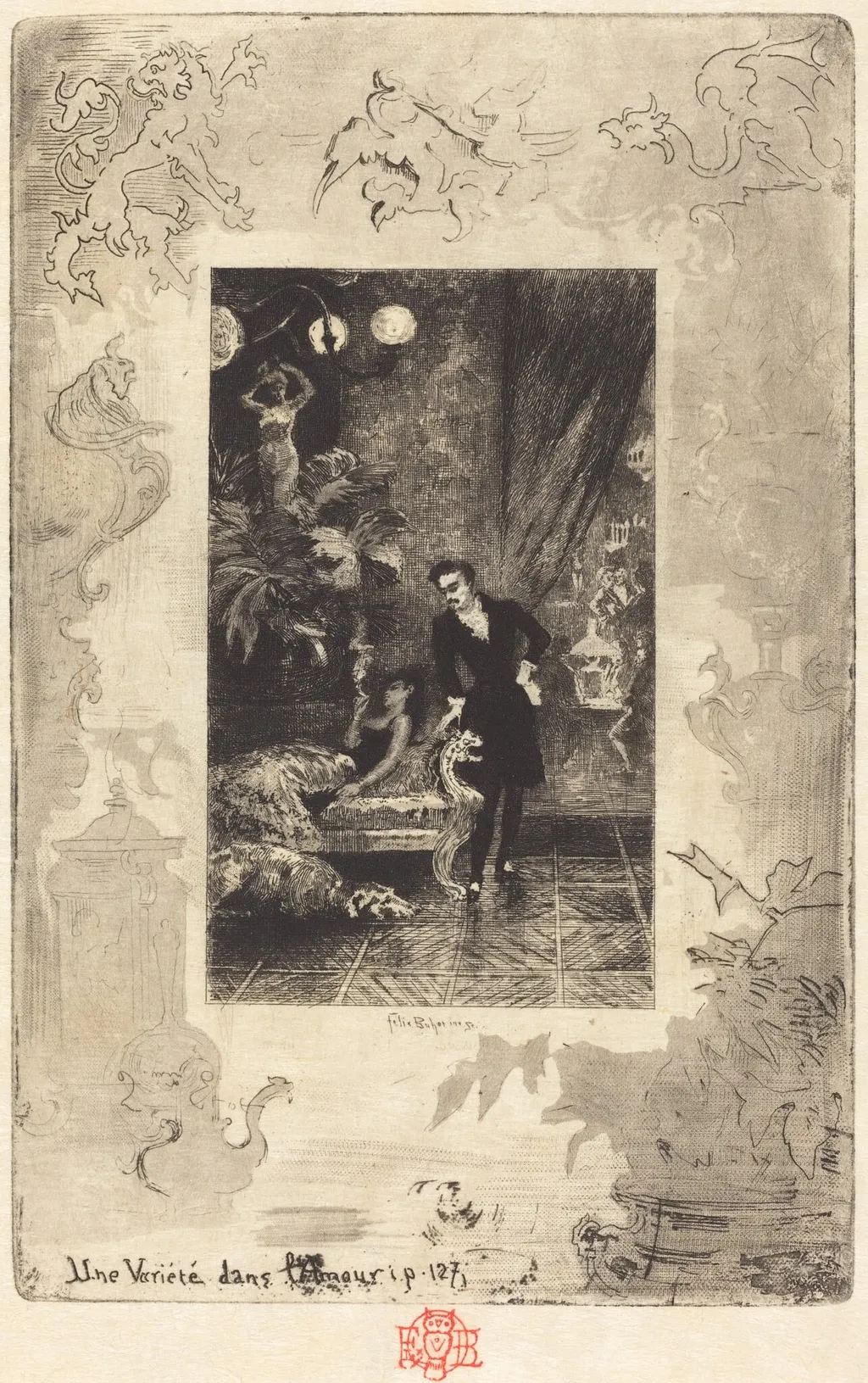
Une Variété dans l'Amour (A Change of Heart) is an ink print by the Impressionist artist Félix-Hilaire Buhot. It dates from 1880 and is held in the collection of the National Gallery of Art.
About this work
Overview
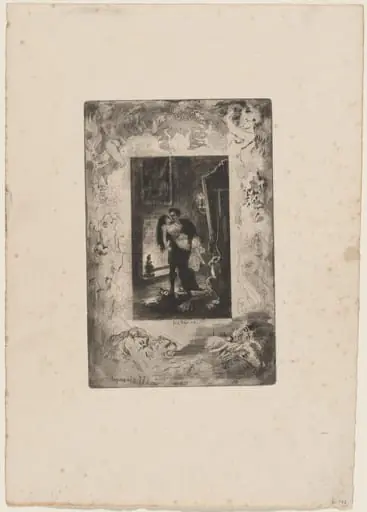
The composition captures a quiet, tense moment in a dim interior, where a woman kneels beside a leashed tiger, a second predator lurking in darkness.
Created in 1880 by Félix-Hilaire Buhot, this print combines etching, drypoint, aquatint, and roulette techniques on Japanese paper. The composition captures a quiet, tense moment in a dim interior, where a woman kneels beside a leashed tiger, a second predator lurking in darkness. The interplay of light and texture defines the scene, with candlelight casting fragile illumination against deep shadows and intricate wall patterns.
Subject & Meaning
The woman’s posture suggests vulnerability or devotion as she holds a candle beside a restrained animal. The presence of a second tiger in shadow introduces unease, hinting at hidden danger or emotional duality. The title, A Change of Heart, implies a shift in affection or resolve, though the image offers no narrative resolution—only atmosphere and ambiguity.
Technique & Style
Buhot employed multiple intaglio methods to achieve varied textures: drypoint for fine, scratchy lines in the tiger’s fur, aquatint for soft tonal gradients, and roulette for the swirling wall patterns. The delicate Japanese paper enhances the print’s subtlety, allowing the candle’s glow to appear luminous against the inked darkness, while the moonlight through the window adds a cool, distant contrast.
History & Provenance
The work emerged during Buhot’s mature period, when he increasingly focused on atmospheric urban and domestic scenes. Though not widely exhibited at the time, it entered private collections in France and later found its way into institutional holdings, valued for its technical innovation and psychological nuance. Its survival in good condition reflects careful handling over time.
Context
In late 19th-century France, printmakers like Buhot explored intimate, moody subjects as alternatives to grand historical narratives. This piece aligns with a growing interest in psychological tension and the uncanny within domestic spaces, reflecting broader cultural fascination with the hidden layers of emotion and the natural world’s intrusion into human life.
Legacy
Buhot’s use of mixed techniques in this print influenced later printmakers seeking expressive texture without color. While not widely known outside specialist circles, the work remains a quiet example of how etching could convey psychological depth through light, shadow, and tactile surface—offering a counterpoint to the more overtly dramatic imagery of his contemporaries.
Artist & collection

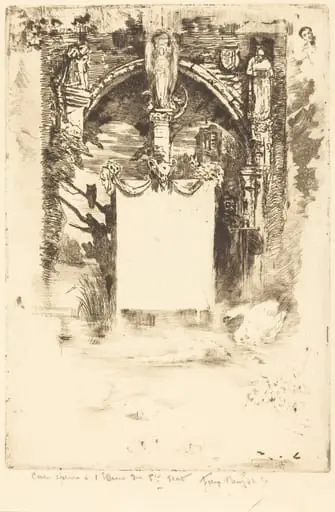 Ex-Libris pour "L'Ensorcelée" (Bookplate for "L'Ensorcelée")
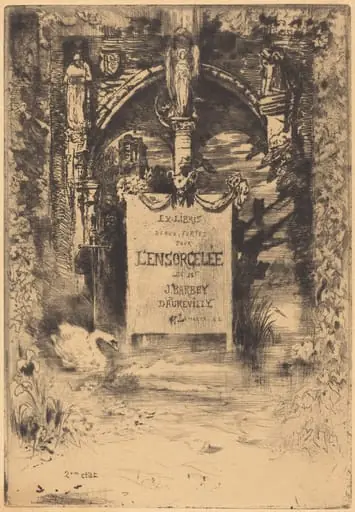 Ex-Libris pour "L'Ensorcelée" (Bookplate for "L'Ensorcelée")
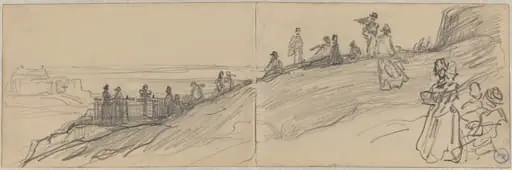 Figures on Top of a Hill, Overlooking the Sea
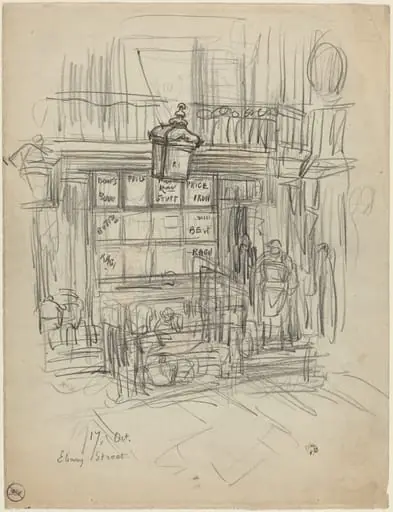 Ebury Street
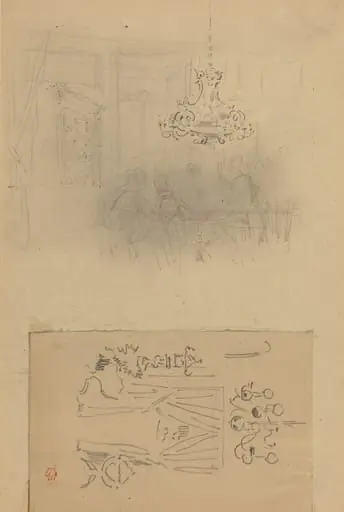 A Gathering in an Interior; A Curtained Doorway
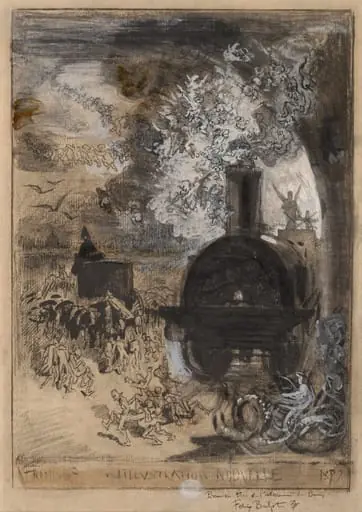 Frontispiece for L'Illustration Nouvelle: The Burial of the Burin
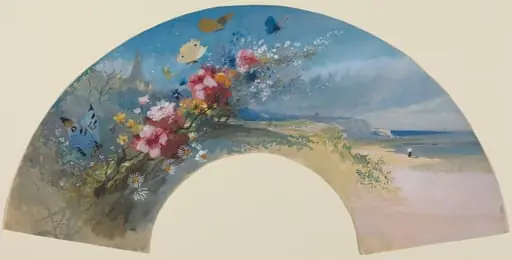 Fan with Wildflowers and Butterflies against the Norman Coast
![Gillingham Pier, London [verso], by Félix-Hilaire Buhot](https://artifactworldgallery.com/img/felix-hilaire-buhot--gillingham-pier-london-verso--641e03dd7de8217b-w320.webp) Gillingham Pier, London [verso]
Gillingham Pier, London [verso]
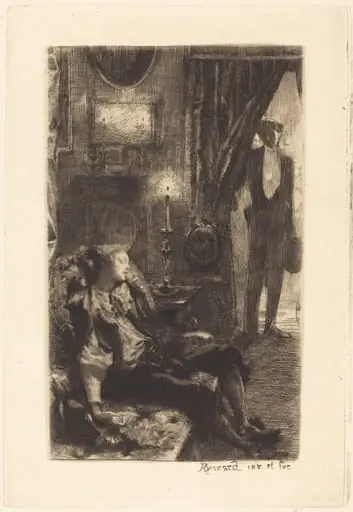
![La lezione di violincello [The Violin Lesson], by Mosè Bianchi](https://artifactworldgallery.com/img/mose-bianchi--la-lezione-di-violincello-the-violin-lesson--409ab16368cea0c8-w320.webp)