Artwork
Femeie cosând
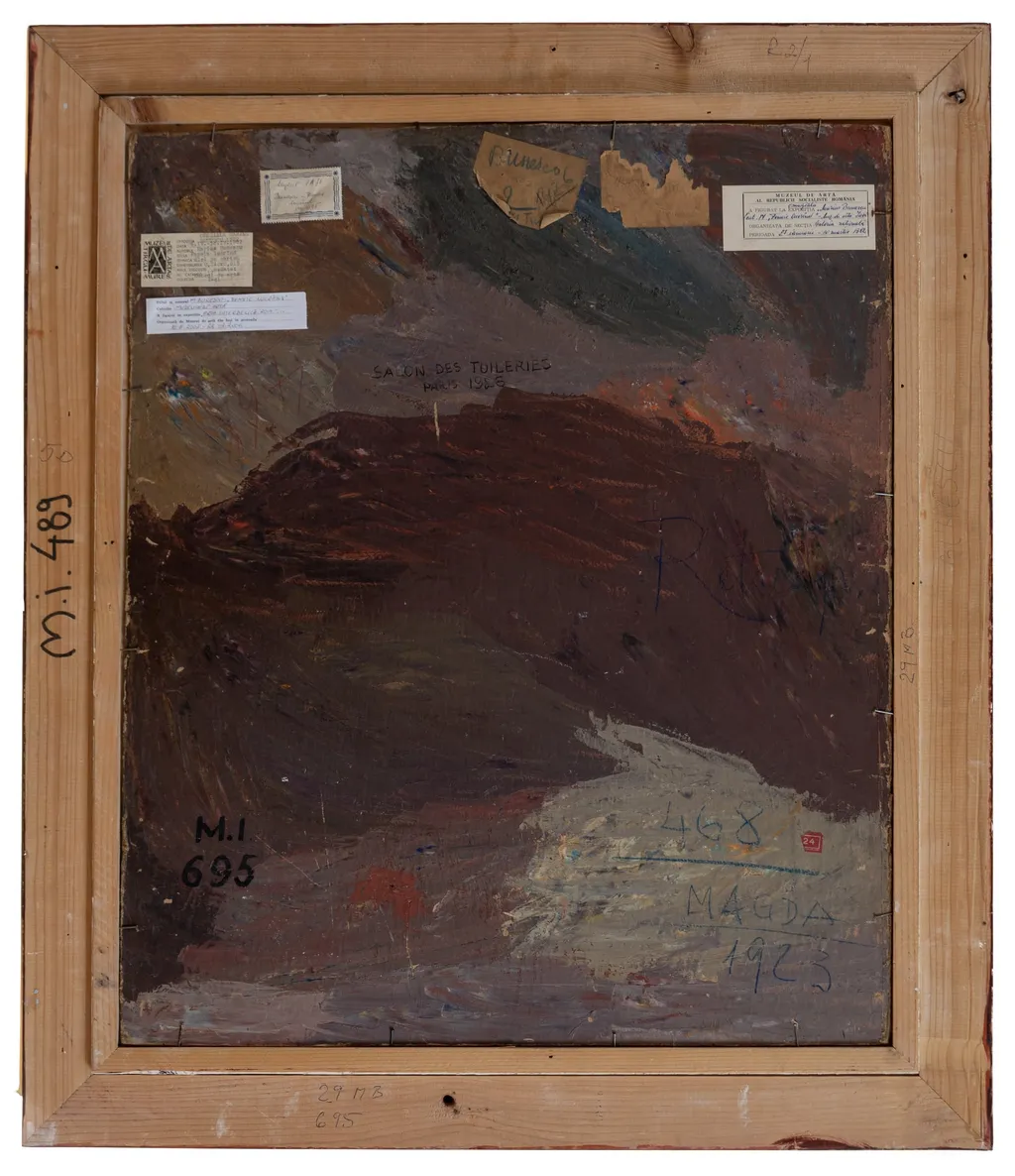
Femeie cosând is an unspecified painting by Marius Bunescu. It dates from 1926 and is held in the collection of the Moldova National Museum Complex.
About this work
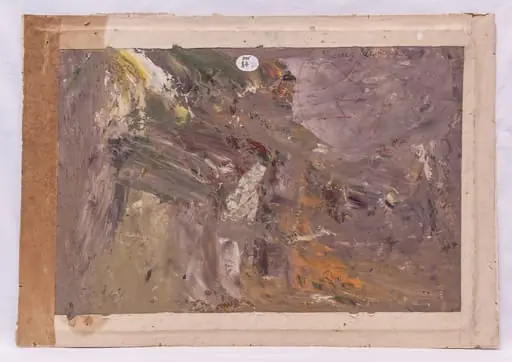
This painting shows a rough, textured surface with thick brushstrokes in earthy browns, greens, and grays.
This painting shows a rough, textured surface with thick brushstrokes in earthy browns, greens, and grays. The colors blend unevenly, giving it a messy, unfinished look. You can see the edge of a wooden frame holding it in place.
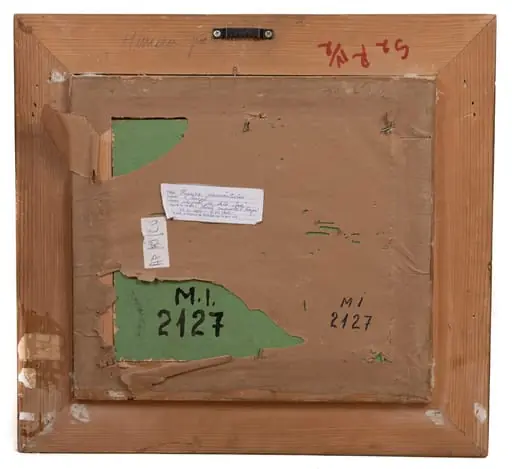
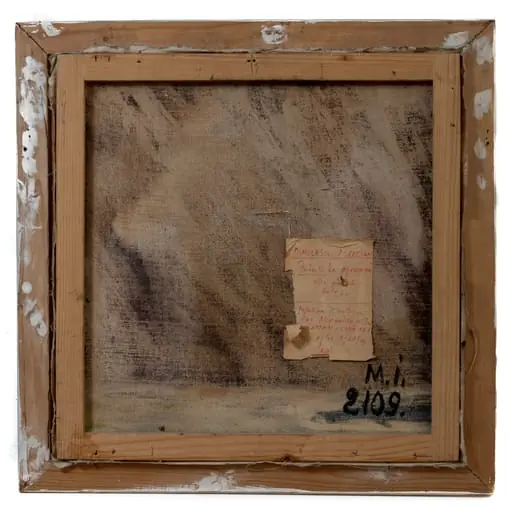
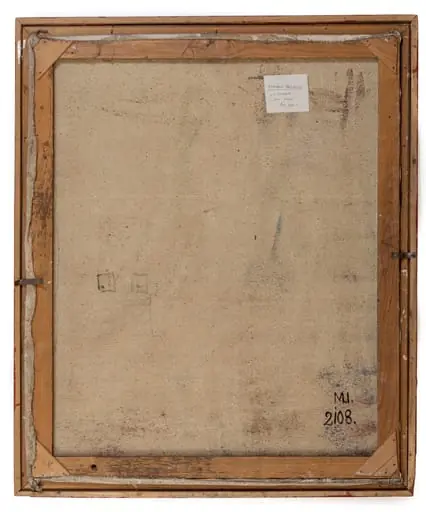
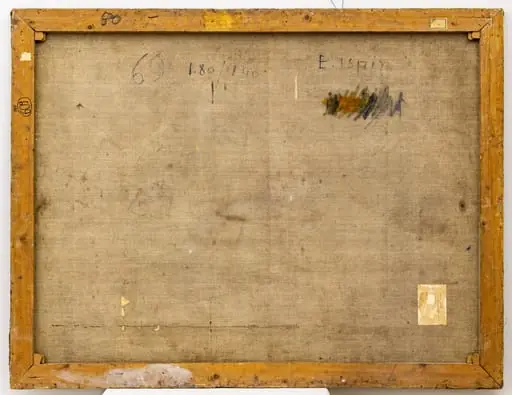
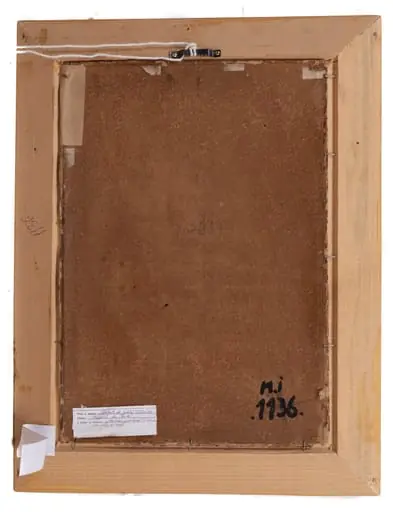
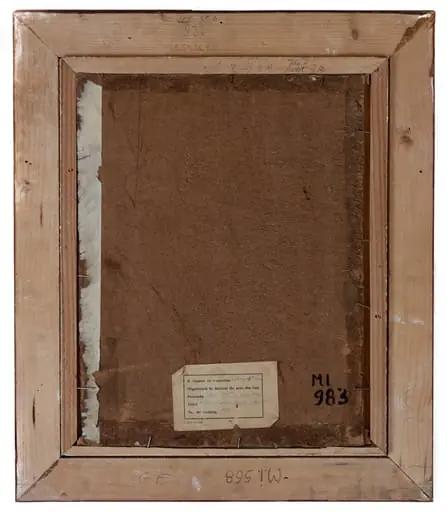
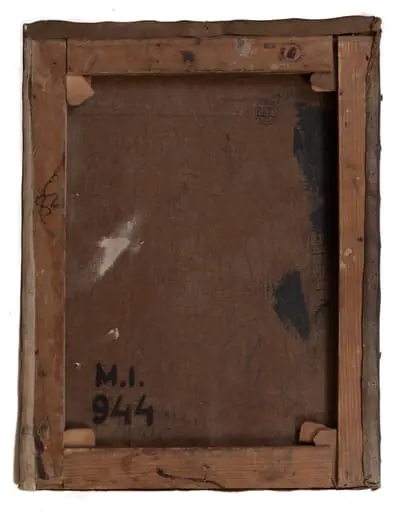
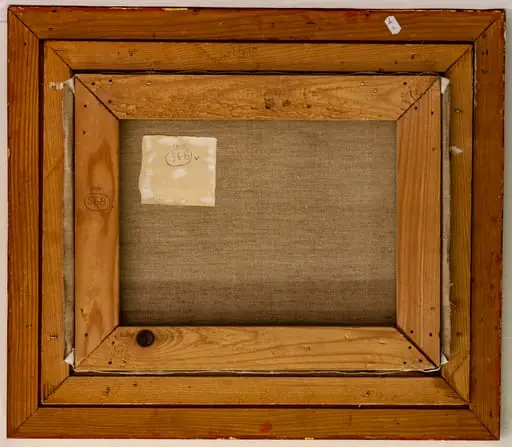
The back of the canvas has labels and handwritten notes, including the word "palette" and some numbers. One label reads "Salon des Tuileries Paris 1925," but that might not be related to this work.
If you’re curious about how artists use paint like this, look up impasto.
Overview
Marius Bunescu, a Romanian artist active in the early twentieth century, executed the oil painting *Femeie cosând* circa 1926. The work presents a domestic interior in which a woman is seated at a table, absorbed in the act of sewing. The composition reflects Bunescu’s interest in portraying ordinary moments and everyday labor within a modest, interior setting.
Subject & Meaning
The central figure is a female seamstress, her posture and focused expression suggesting concentration on a needlework task. By choosing such a quotidian scene, Bunescu emphasizes the dignity of routine work and the quiet rhythms of domestic life, aligning with broader trends in interwar Romanian art that valued realistic depictions of social reality.
Technique & Style
The canvas is treated with a heavily impastoed surface; thick, tactile brushstrokes build up layers of earth tones, muted greens and grays. The paint is applied unevenly, creating a textured, almost unfinished appearance that conveys a sense of immediacy. This material handling underscores the physicality of the subject while reinforcing the painting’s modest, grounded atmosphere.
History & Provenance
Bunescu, trained in Constanța and later in Munich, held prominent positions in Romania’s cultural institutions, including directorship of the Anastase Simu Museum and involvement in founding the National Museum of Art. The reverse of the canvas bears archival labels and handwritten notes, one of which mentions the Salon des Tuileries in Paris, 1925, though its connection to this piece remains uncertain.
Context
Created during the interwar period, *Femeie cosând* reflects the artist’s shift toward genre scenes that documented everyday Romanian life. This focus parallels contemporary European movements that turned away from grand historical subjects toward the representation of ordinary people, aligning Bunescu’s work with a broader realist tendency in the region’s visual culture.
Artist & collection
Artist
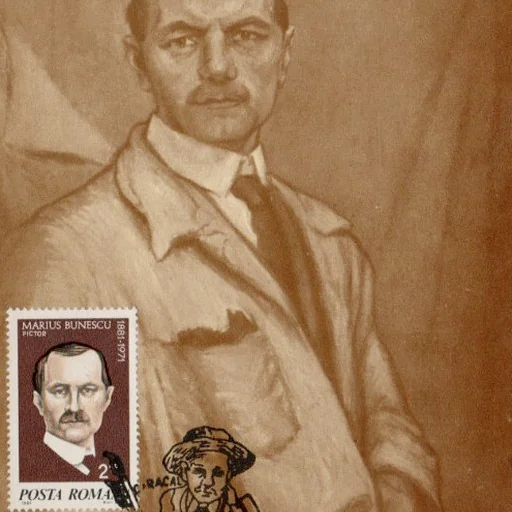
Marius Bunescu (15 May 1881 – 31 March 1971) was a Romanian painter, organizer of the National Museum of Art, and director of the Anastase Simu Museum.