Artwork
Shuyadō (Studio of Lofty Rusticity)
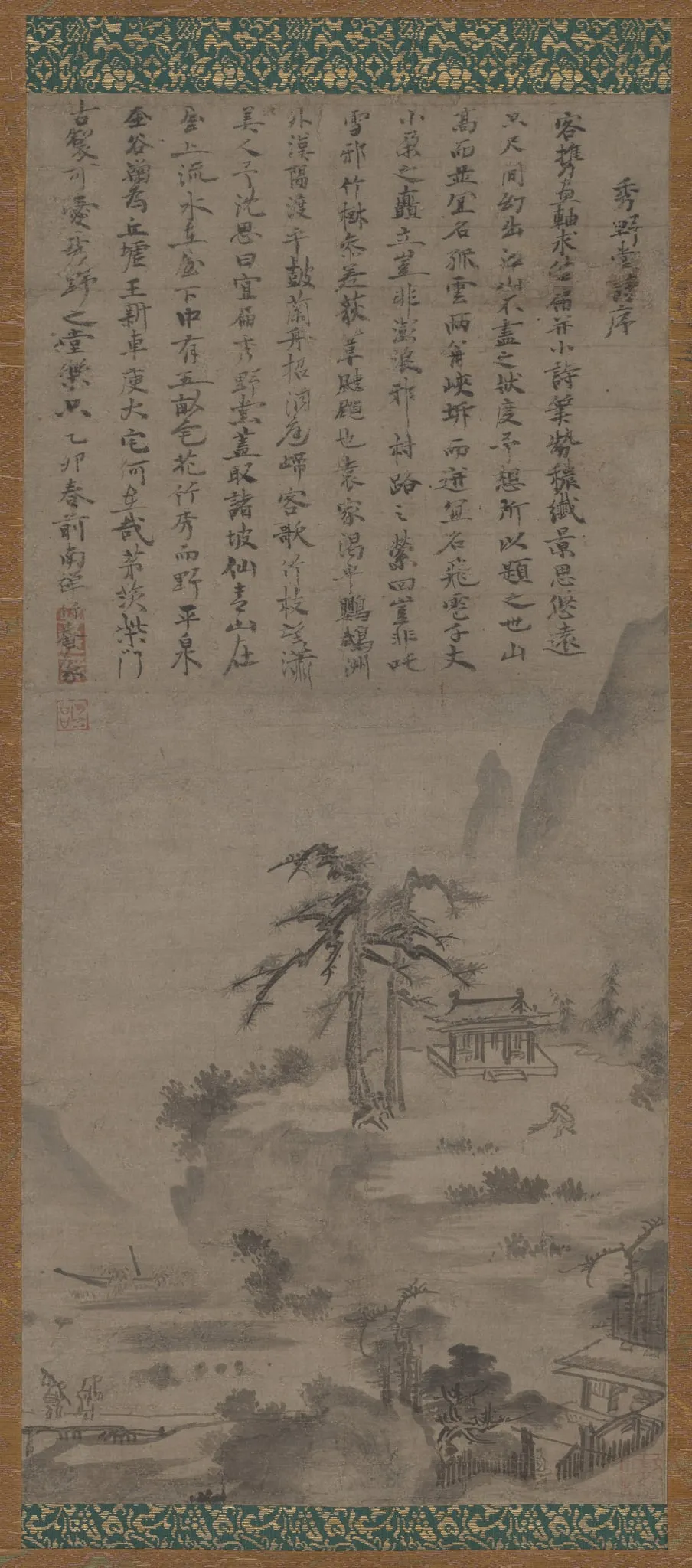
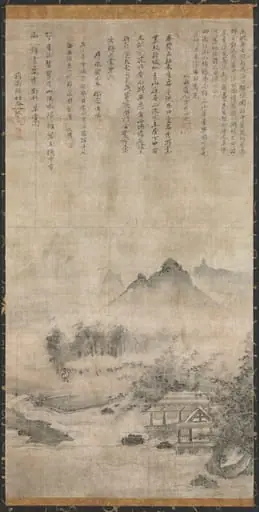
Shuyadō (Studio of Lofty Rusticity) is an unspecified painting by the Baroque artist Bunsei (Muncheong). It dates from 1704 and is held in the collection of the Cleveland Museum of Art. Shuyadō is a modest hanging scroll featuring a single ink depiction of bamboo.
About this work
Overview
Shuyadō is a modest hanging scroll featuring a single ink depiction of bamboo. The slender stems are rendered with fluid, light strokes, conveying a tranquil, momentary scene. The work follows the format of historic Japanese Zen scrolls, yet it presents only a brief introductory text rather than a series of poems.
Subject & Meaning
The central motif, bamboo, is a traditional symbol in Zen art, representing resilience and flexibility. By portraying the plant in a simple, unadorned manner, the scroll invites contemplation of natural elegance and the quietude associated with monastic practice.
Technique & Style
Executed in monochrome ink on paper, the painting employs swift, expressive brushwork characteristic of Zen calligraphy. The leaves and stems are suggested with minimal, gestural lines, emphasizing spontaneity and the artist’s mastery of negative space.
Context
The scroll is a later imitation of shigajiku, the poem‑painting scrolls produced in Japanese Zen monasteries during the 15th and 16th centuries. Original shigajiku typically combined a preface with multiple poems from different monks; this piece retains only the introductory passage, reflecting a simplified homage to the earlier format.
History & Provenance
Now part of the Cleveland Museum of Art’s collection, the work’s precise date and creator remain uncertain, though its stylistic references place it well after the medieval shigajiku tradition, likely crafted in a subsequent era that sought to revive Zen visual conventions.
Artist & collection
Artist
Bunsei painted tranquil ink landscapes in the quiet tradition of the 1700s Muromachi period, when brush and paper met Zen calm.

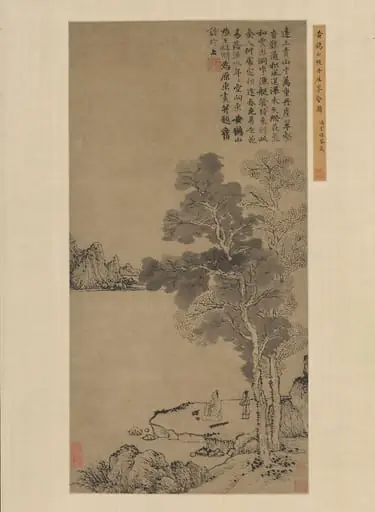 元 王蒙 丹崖翠壑圖 軸|Red Cliffs and Green Valleys
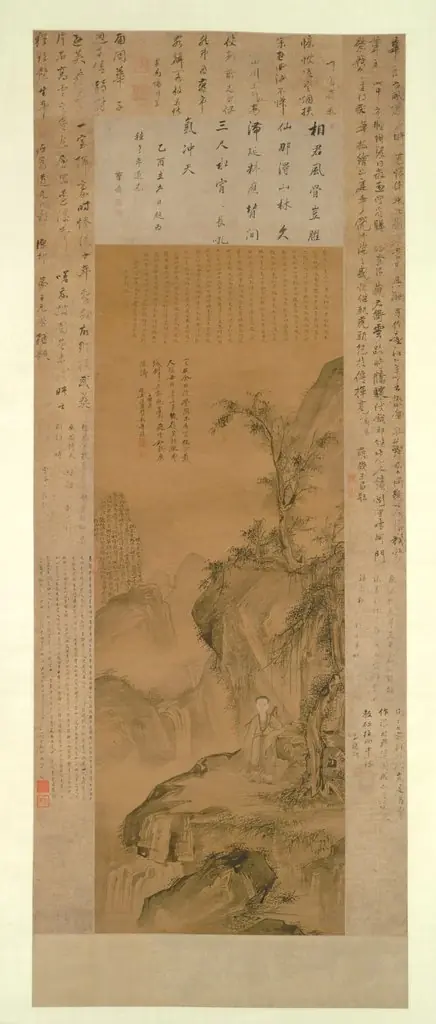 Layered Peaks and Splashing Waterfall: Portrait of Hua Yan as a Young Man
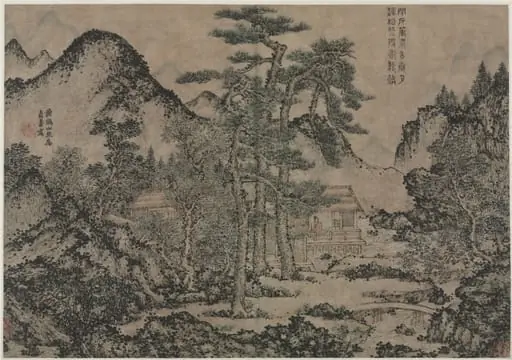 Writing Books under the Pine Trees
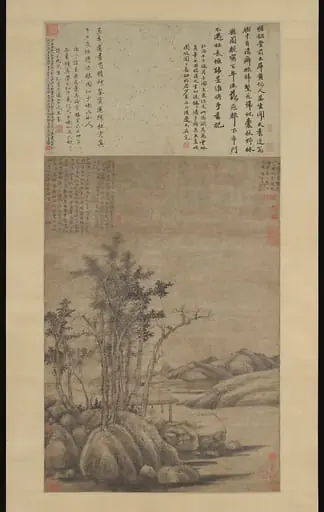 元 倪瓚 秋林野興圖 軸|Enjoying the Wilderness in an Autumn Grove
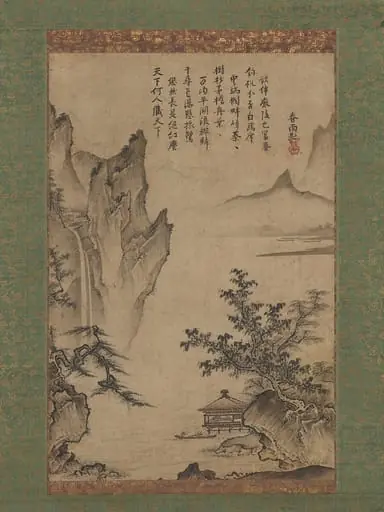 山水図|Landscape with Pavilion
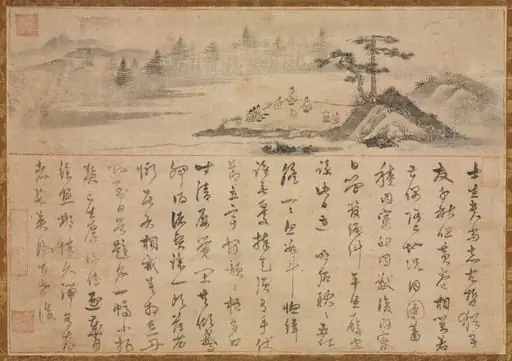 Gathering among the Members of Office Censor-General
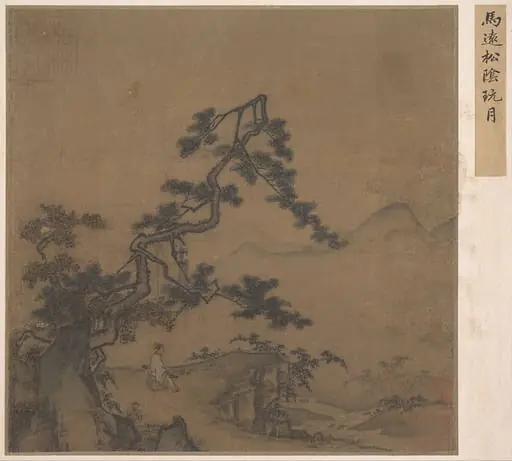 南宋 佚名 倣馬遠 松陰玩月圖 冊頁|Viewing the Moon under a Pine Tree
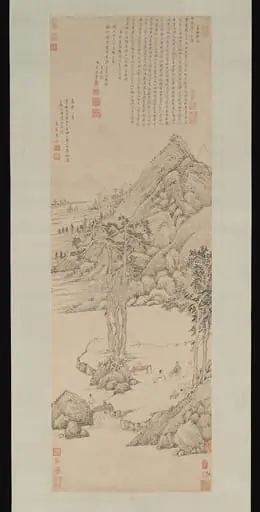 明 文嘉 為項元汴作山水圖 軸|Landscape dedicated to Xiang Yuanbian
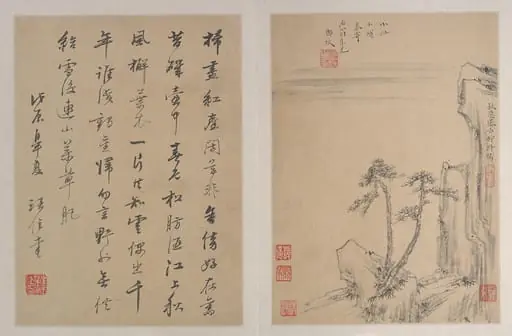 Untitled
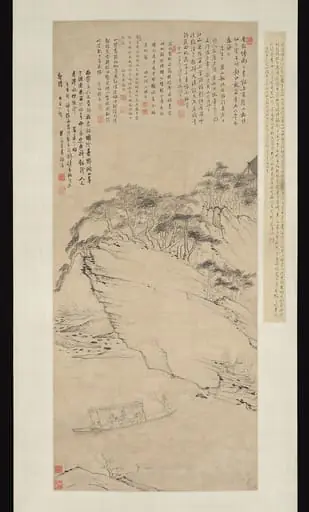 清 倣梅清 響山泛舟圖 軸|Boating beneath Echo Hill
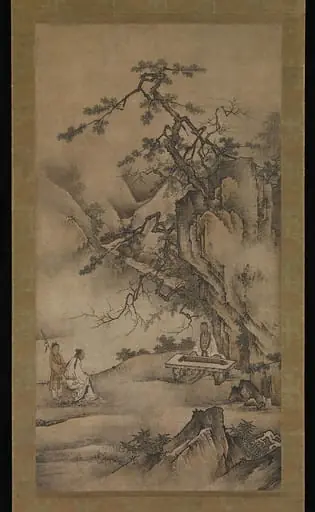 狩野元信周辺 伯牙鍾子期図|Bo Ya Plays the Qin as Zhong Ziqi Listens
 Landscape