Artwork
H Beard Print Collection
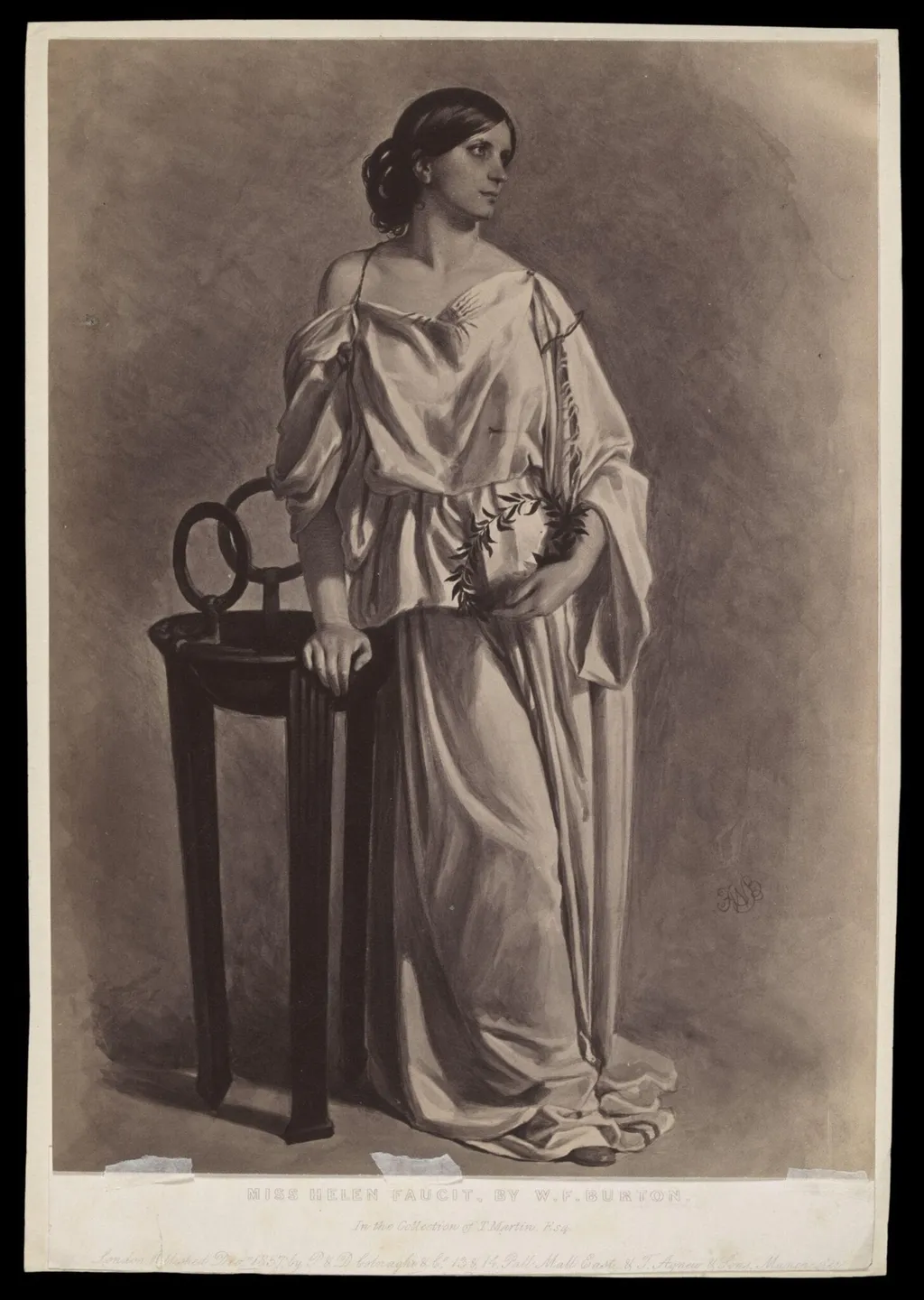
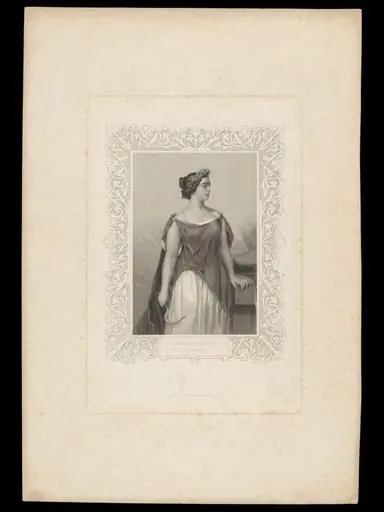
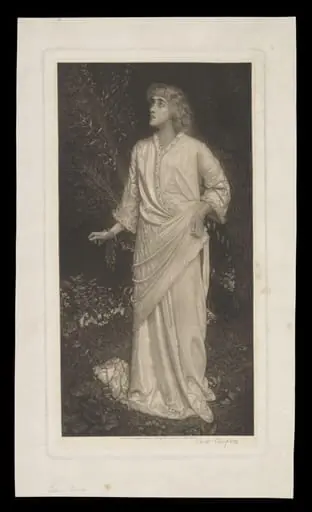
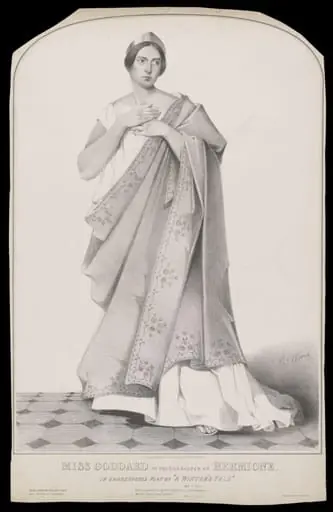
H Beard Print Collection is a print by the Impressionist artist Frederic William Burton. It dates from 1857 and is held in the collection of the Victoria and Albert Museum. This 1857 print portrays actress Helen Faucit in the role of Hermione from Shakespeare’s *The Winter’s Tale*.
About this work
This print shows Helen Faucit playing Hermione in Shakespeare’s *The Winter’s Tale*. It’s a 1857 engraving by Frederic William Burton, caught between Impressionism and Realism.
Burton used a printmaking technique to capture the moment, not paint. The publisher was P. & D. Colnaghi, and the sheet is held at the Victoria and Albert Museum.
Look up the Victoria and Albert Museum next.
Overview
Unlike a painted portrait, the image was created through printmaking techniques, intended for wide distribution rather than private collection.
This 1857 print portrays actress Helen Faucit in the role of Hermione from Shakespeare’s *The Winter’s Tale*. Produced by the London firm P. & D. Colnaghi, it is an engraving based on a design by Frederic William Burton. Unlike a painted portrait, the image was created through printmaking techniques, intended for wide distribution rather than private collection. The sheet is now held in the Victoria and Albert Museum’s H. Beard Print Collection.
Subject & Meaning
Helen Faucit’s portrayal of Hermione captures the character’s quiet dignity during her trial scene, a moment of profound emotional restraint. The print emphasizes her stillness and grace, aligning with 19th-century ideals of female virtue and theatrical seriousness. By freezing this dramatic instant, the image transforms stage performance into a lasting visual testament to the actor’s interpretive power and the play’s moral gravity.
Technique & Style
Frederic William Burton rendered the image using fine-line engraving, a method that allowed precise detail and tonal gradation. His approach blends the clarity of Realism with a sensitivity to light and texture that anticipates Impressionist concerns. The composition avoids theatrical flourish, focusing instead on subtle facial expression and the folds of fabric, reflecting a shift toward psychological depth in theatrical portraiture.
History & Provenance
The print was issued by P. & D. Colnaghi, a prominent London publisher of fine art prints in the mid-19th century. It was part of a series documenting notable stage performances, reflecting public interest in theater during the Victorian era. The sheet entered the Victoria and Albert Museum’s collection through the H. Beard Print Collection, established to preserve visual records of British theatrical history.
Context
In the 1850s, Shakespearean drama experienced a revival on the British stage, with actors like Faucit gaining acclaim for their nuanced portrayals. Printed images of performances served as both souvenirs and cultural artifacts, bridging the gap between live theater and domestic audiences. This print exemplifies how visual media helped shape public perception of actors as serious artists rather than mere entertainers.
Legacy
The print remains a key document in the study of Victorian theater and print culture. It illustrates the growing intersection of fine art and performance, and the role of publishers in shaping artistic memory. While Faucit’s performances are no longer seen, this engraving preserves her presence as a defining figure in 19th-century Shakespearean interpretation, offering insight into how stage roles were visually codified for posterity.
Artist & collection

Artist
Sir Frederic William Burton was an Irish Victorian painter and curator who was the third director of the National Gallery, London for 20 years from 1874.