Artwork
H Beard Print Collection
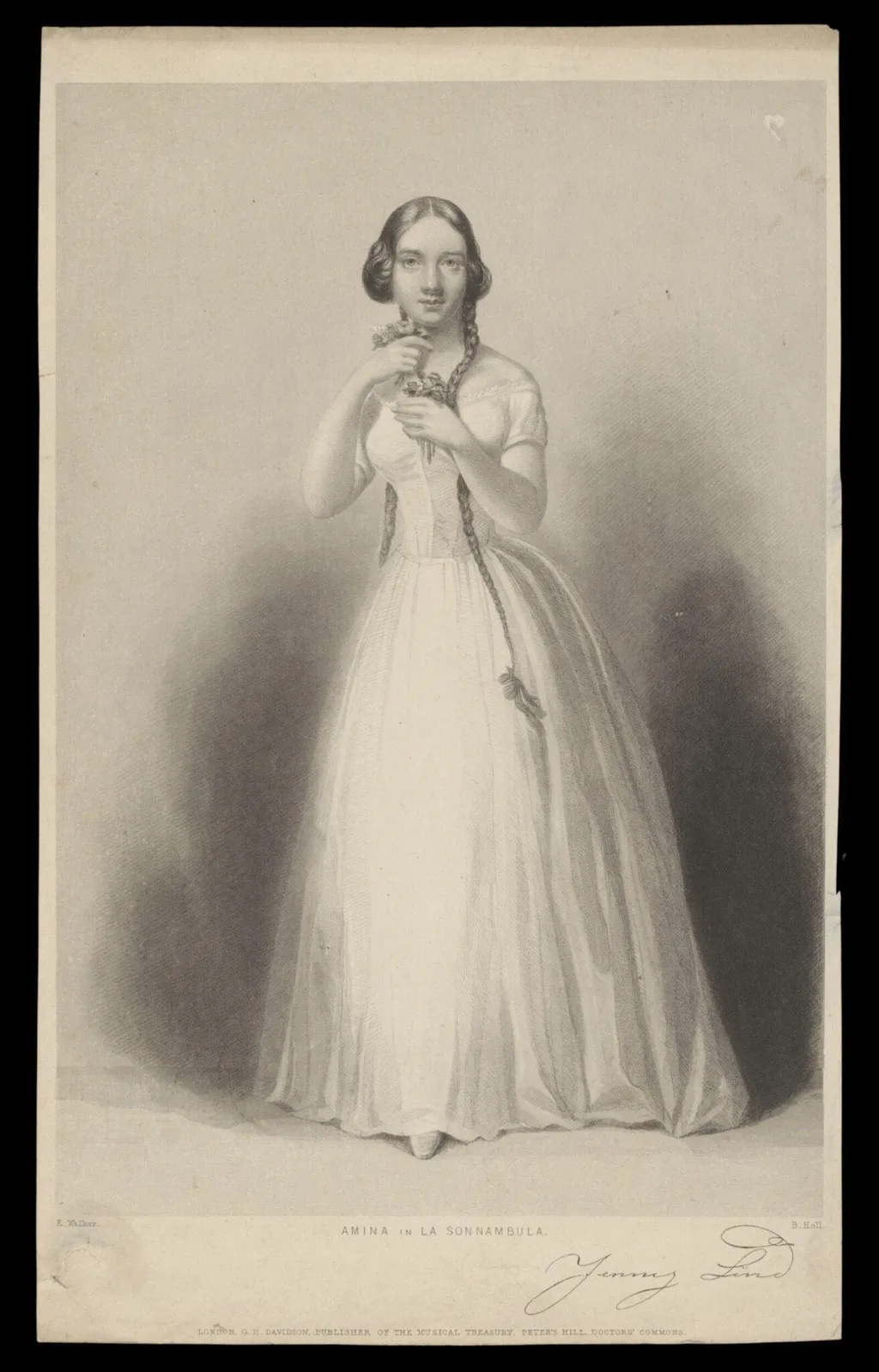
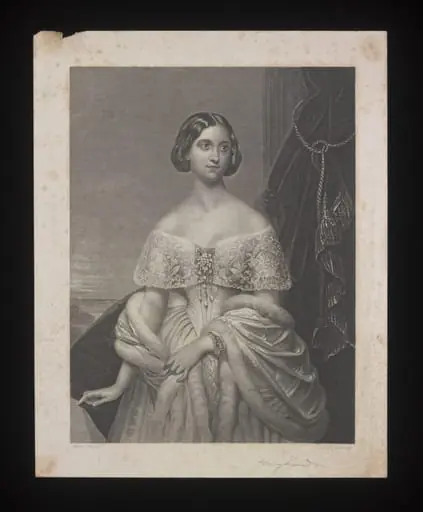
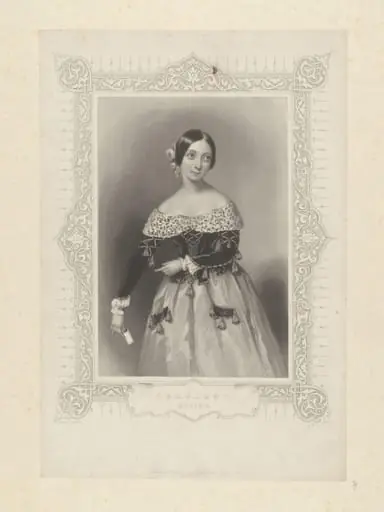
H Beard Print Collection is a print by Edmund Walker. It dates from 1850 and is held in the collection of the Victoria and Albert Museum. This 19th-century print captures the soprano Jenny Lind in the role of Amina, the sleepwalker from Bellini’s opera La Sonnambula.
About this work
The print shows a portrait of Jenny Lind as Amina in La Sonnambula.
This print was published by G.H. Davidson, and it's interesting that it depicts a specific character from an opera. The fact that it's a print from the 19th century gives us a glimpse into the art and culture of that time.
You can learn more about this style of art by looking into the work of artist Walker, Edmund.
Overview
This 19th-century print captures the soprano Jenny Lind in the role of Amina, the sleepwalker from Bellini’s opera La Sonnambula. Published by G.H. Davidson, it belongs to a wave of popular imagery that translated theatrical performances into accessible domestic art. The format reflects the era’s demand for visual souvenirs of celebrated performers, bridging live spectacle and private collection.
Subject & Meaning
The image fixes Lind at the moment of Amina’s most vulnerable scene—sleepwalking through a romantic, perilous narrative. As a symbol of purity and ethereal grace, Amina mirrored Lind’s public persona. The print thus functions not merely as portraiture but as cultural propaganda, reinforcing ideals of feminine delicacy and moral innocence tied to both the character and the singer’s reputation.
Technique & Style
Executed in the lithographic tradition common to theatrical portraiture, the print employs fine linework and tonal gradations to suggest texture and emotion.
Executed in the lithographic tradition common to theatrical portraiture, the print employs fine linework and tonal gradations to suggest texture and emotion. The composition centers Lind’s face and gesture, with minimal background detail, directing focus to her expressive presence. This restrained aesthetic aligns with mid-century printmaking norms, prioritizing recognition over elaborate staging.
History & Provenance
Produced during Lind’s peak popularity in the 1840s and 1850s, the print was likely distributed in Britain and America following her concert tours. G.H. Davidson, a known publisher of theatrical imagery, capitalized on her fame. The print survives today as part of the H. Beard Collection, a curated archive of performance-related ephemera assembled in the 19th century.
Context
Lind’s transatlantic fame coincided with the rise of mass-produced visual culture. Prints like this one allowed middle-class audiences to own fragments of celebrity, much like today’s posters or digital images. The popularity of La Sonnambula and Lind’s interpretation of Amina reflected broader Victorian fascination with emotional restraint, moral purity, and the sublime in art.
Legacy
Though the artist is often attributed to Edmund Walker, definitive authorship remains unconfirmed. The print’s endurance lies in its role as a historical document—evidence of how opera, celebrity, and print media intersected to shape public memory. It remains a touchstone for scholars studying 19th-century performance culture and the commodification of artistic fame.
Artist & collection

Artist
Sir Byron Edmund Walker, CVO was a Canadian banker. He was the president of the Canadian Bank of Commerce from 1907 to 1924, and a generous patron of the arts, helping to found and nurture many of Canada's cultural and…