Artwork
The Chapel of St Eucharius, Nuremberg
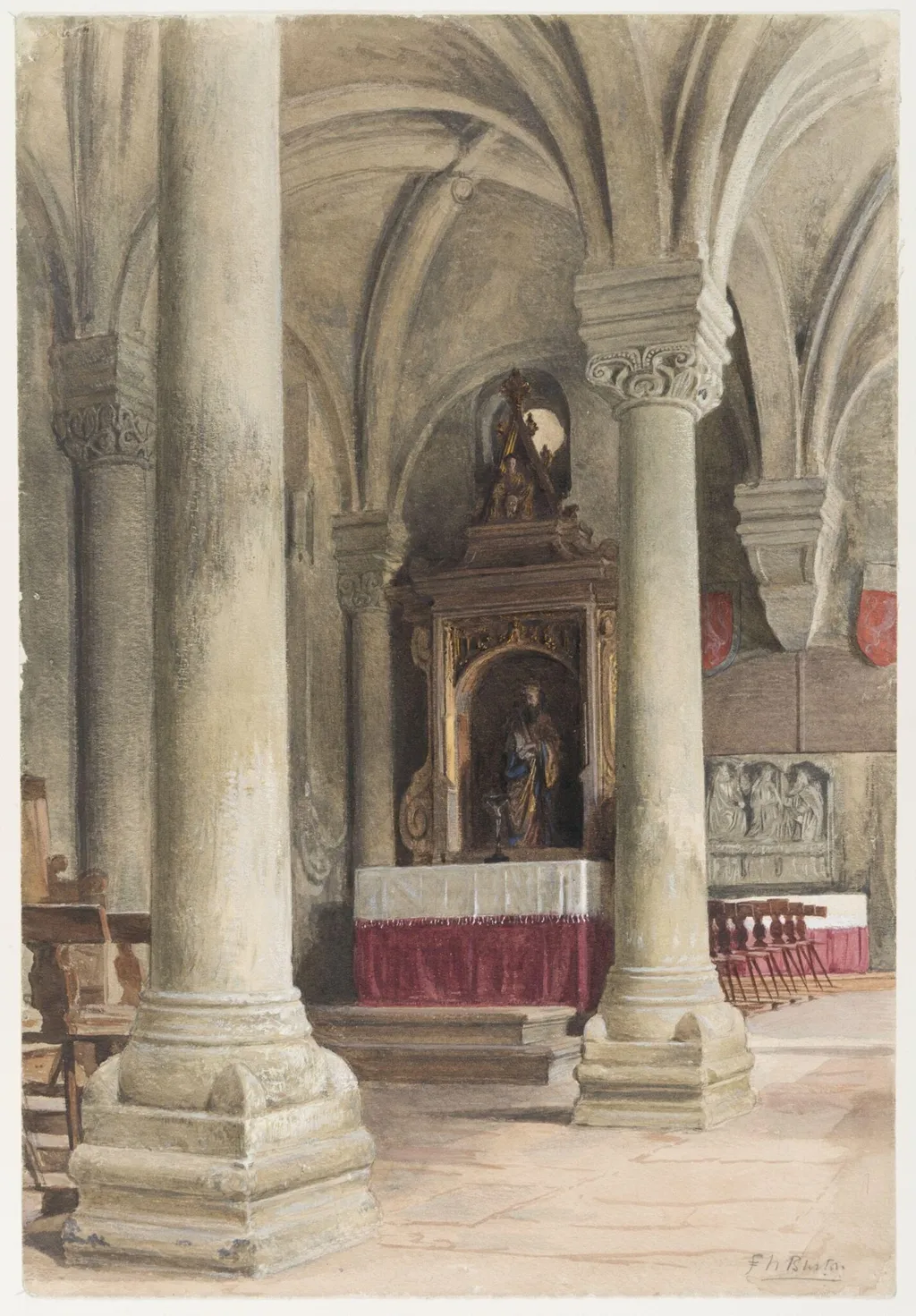
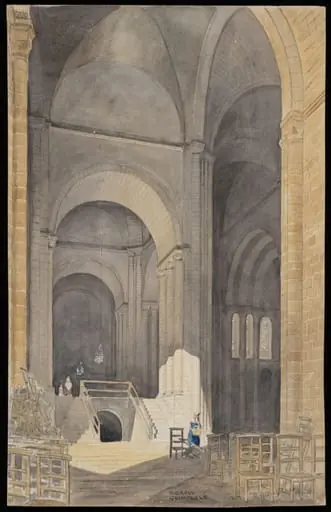
The Chapel of St Eucharius, Nuremberg is a watercolor work on paper by the British Romanticist artist Frederic William Sir Burton. It dates from 1857 and is held in the collection of the Victoria and Albert Museum.
About this work
Overview
Though best known for portraiture, this work reveals his interest in quiet, contemplative interiors.
Sir Frederic William Burton created this watercolour during his years in Germany, between 1851 and 1858, as part of a broader exploration of European architecture. Though best known for portraiture, this work reveals his interest in quiet, contemplative interiors. The Chapel of St Eucharius in Nuremberg served as a subject that aligned with his growing focus on historical spaces, rendered with restrained precision and a muted palette.
Subject & Meaning
The painting captures the interior of a small, medieval chapel dedicated to St Eucharius, an early Christian bishop. Its simplicity—unadorned walls, modest furnishings—suggests devotion rooted in austerity rather than grandeur. Burton’s choice to depict this unassuming space reflects an appreciation for sacred environments that prioritize stillness and solitude over ornamentation.
Technique & Style
Burton employed delicate watercolour washes to convey the soft, diffused light within the chapel. Subtle variations in tone model the stone surfaces, while fine brushwork defines the texture of the floor and walls without overstatement. The technique avoids dramatic contrast, instead relying on tonal harmony to evoke a sense of quiet reverence, characteristic of his approach to architectural subjects.
History & Provenance
Created during Burton’s formative years abroad, the work likely originated from his sketching trips across southern Germany. It remained in his personal collection until his later years, when many of his watercolours were acquired by institutions. The piece entered public collections in the late 19th century, preserving its connection to his early artistic development.
Context
Burton’s time in Germany coincided with a broader European revival of interest in medieval heritage. Artists and scholars were documenting historic buildings as cultural memory became a priority. His watercolours of chapels and churches contributed to this movement, offering intimate records of spaces often overlooked in favour of cathedrals or public monuments.
Legacy
This watercolour exemplifies Burton’s transition from portraiture to architectural observation, influencing later British artists who sought to capture historical interiors with sensitivity rather than spectacle. Though not widely exhibited, it remains a quiet testament to his ability to find dignity in understated spaces, shaping his reputation as a meticulous observer of place.
Artist & collection


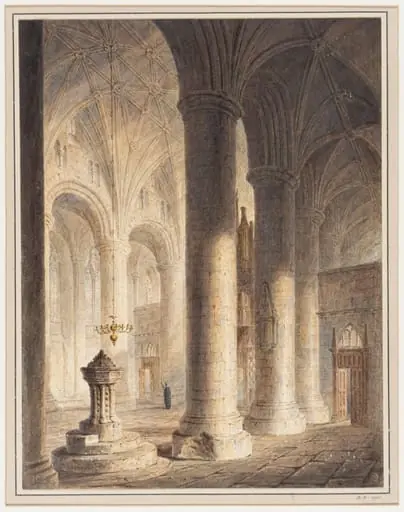 Tewkesbury Abbey
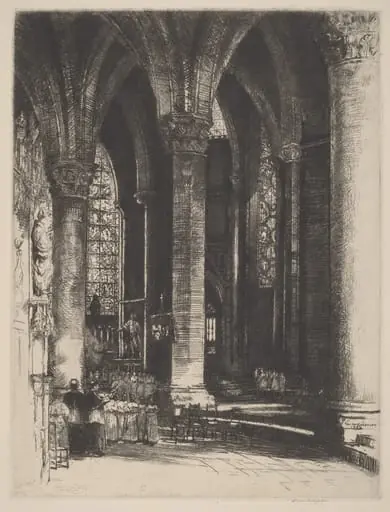 Interior of Chartres
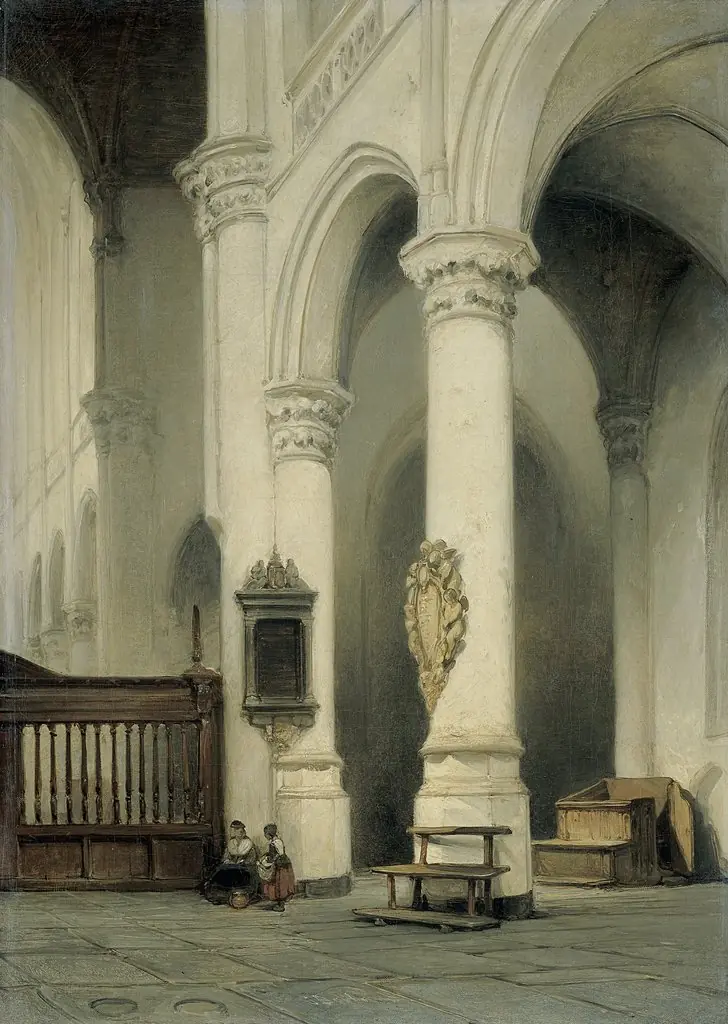 Church interior
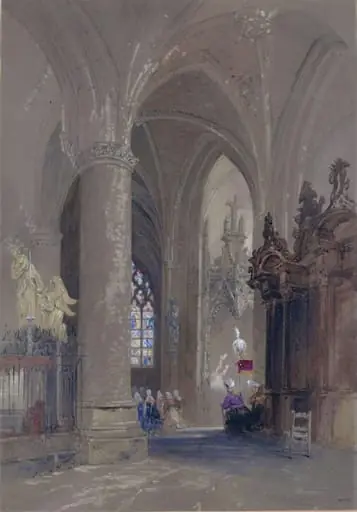 Caudebec on the Seine - Church Interior
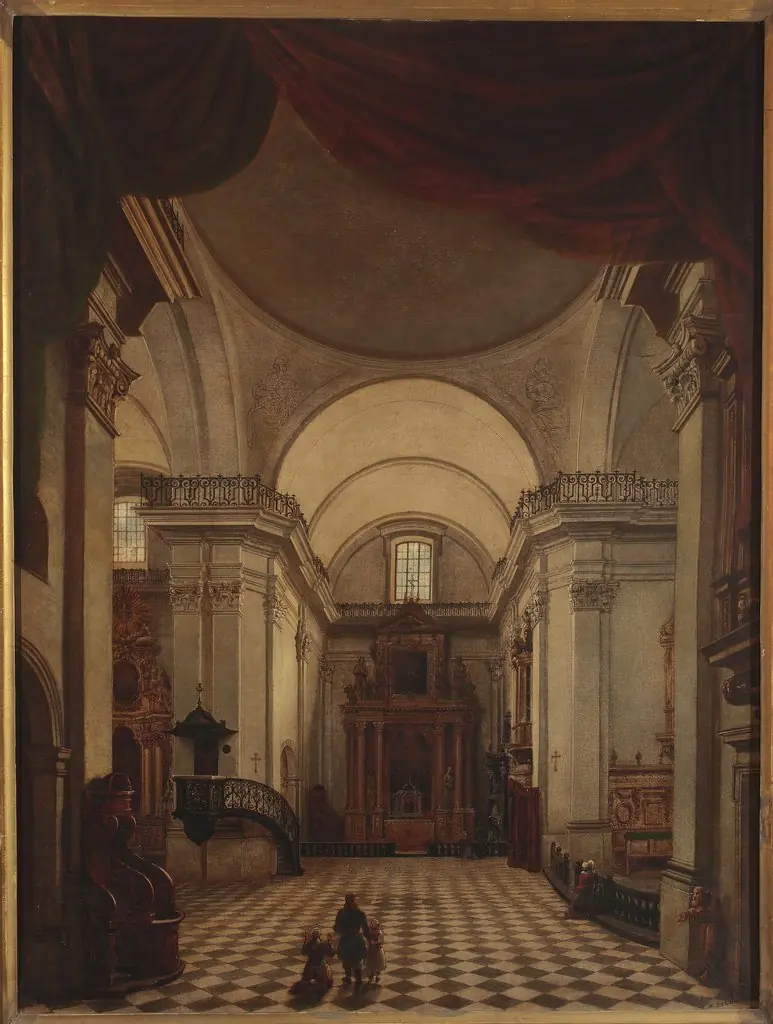 Interior of the Holy Cross Church in Warsaw
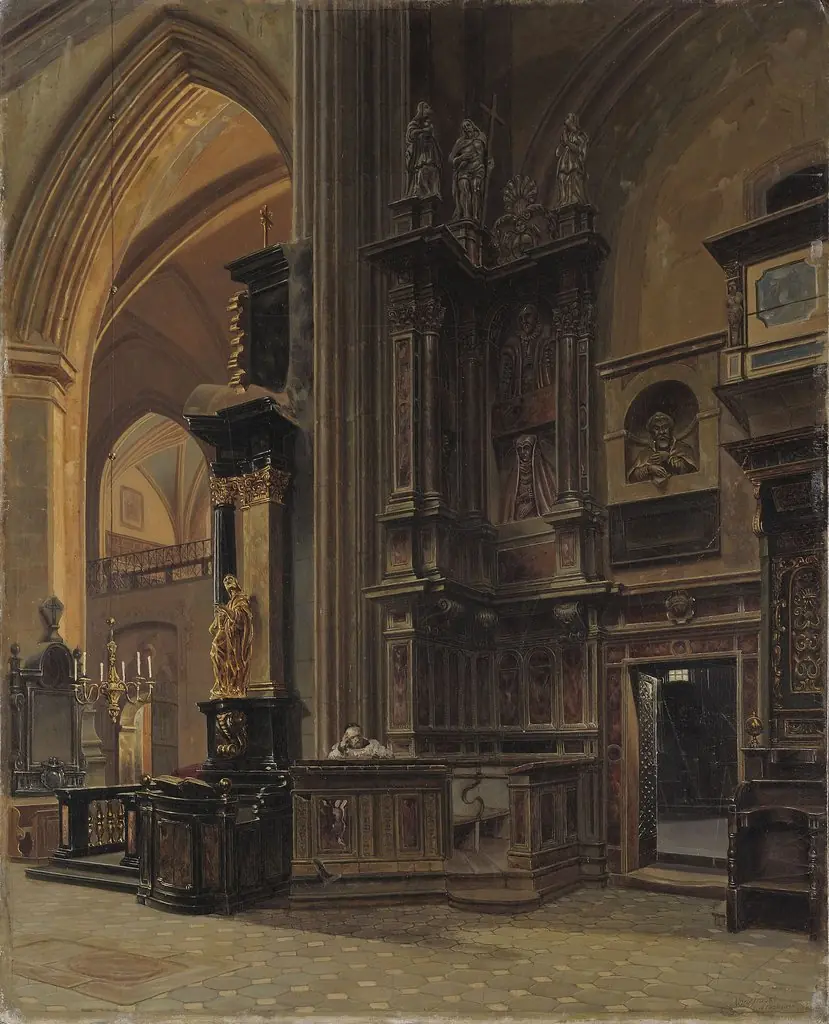 Interior of Saint Mary’s Basilica in Kraków
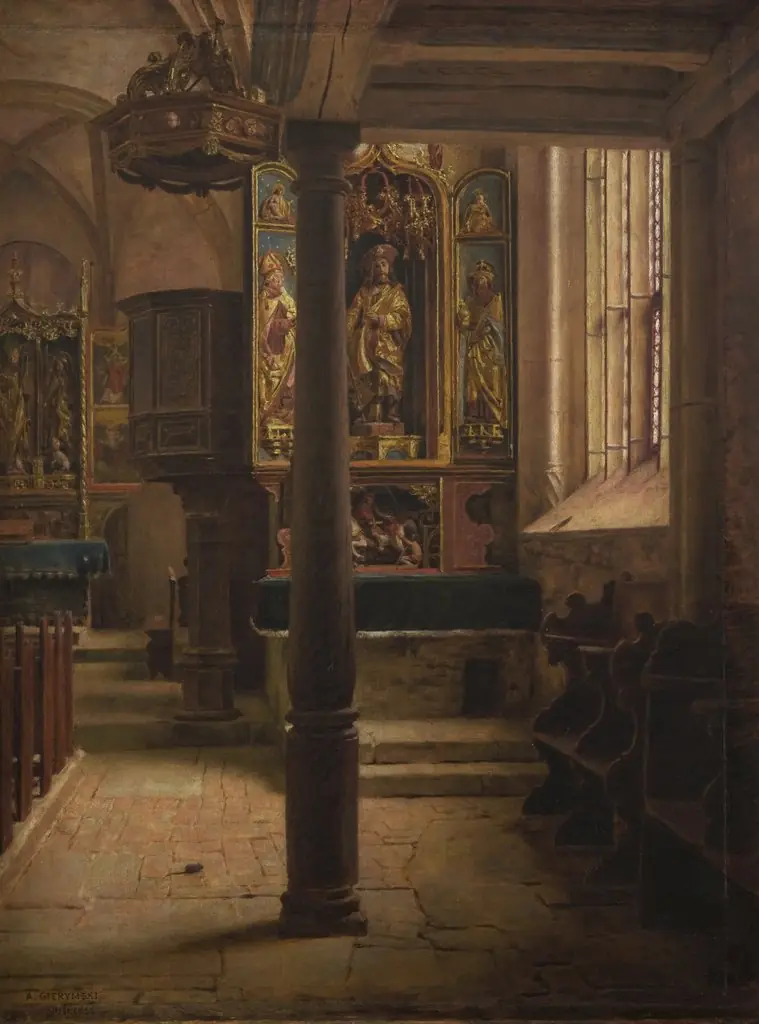 Interior of St Wolfgang's Church in Rothenburg
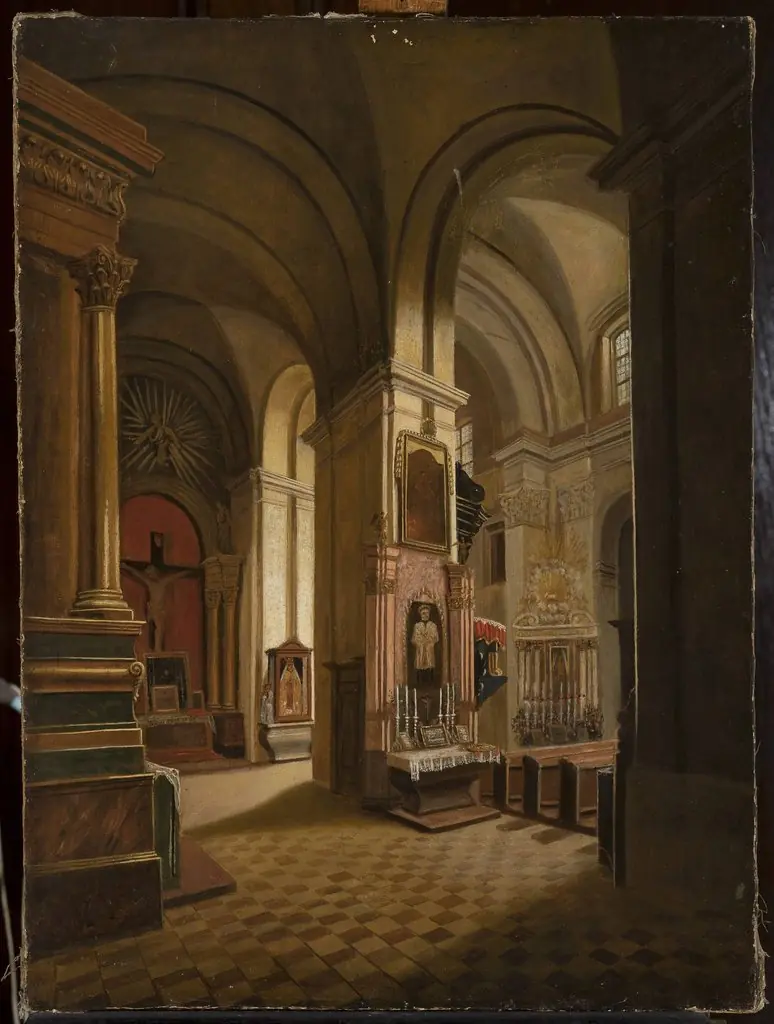 Church interior
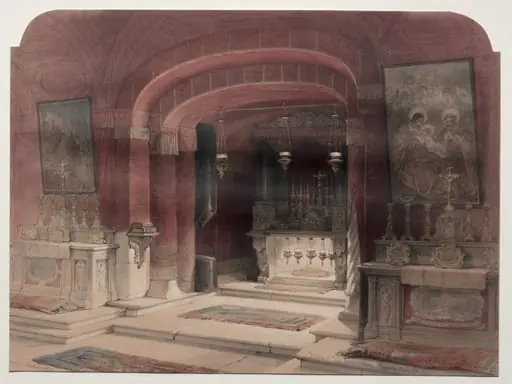 Shrine of the Annunciation, Nazareth
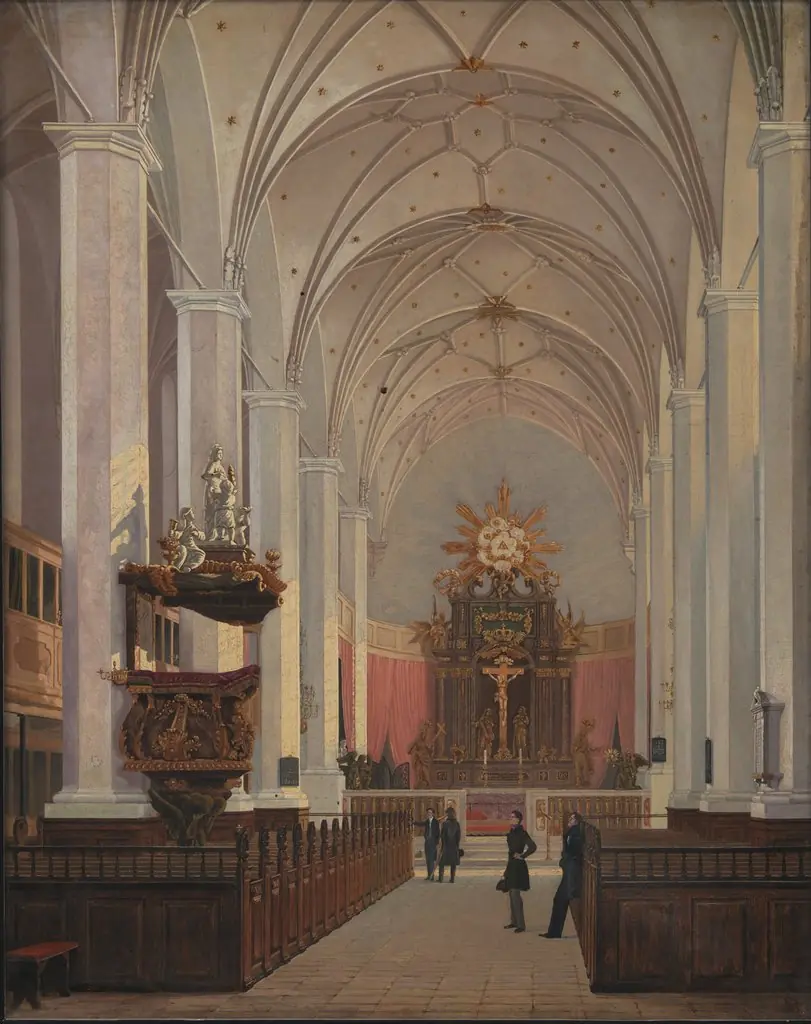 Det indre af Trinitatis Kirke
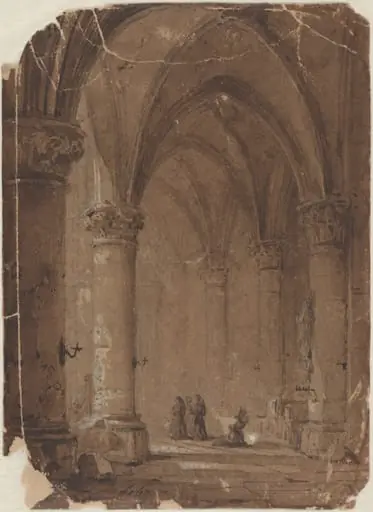 Monks in a Cathedral
 Interior of church at St. Croix, Quimperle