Artwork
Caudebec on the Seine - Church Interior
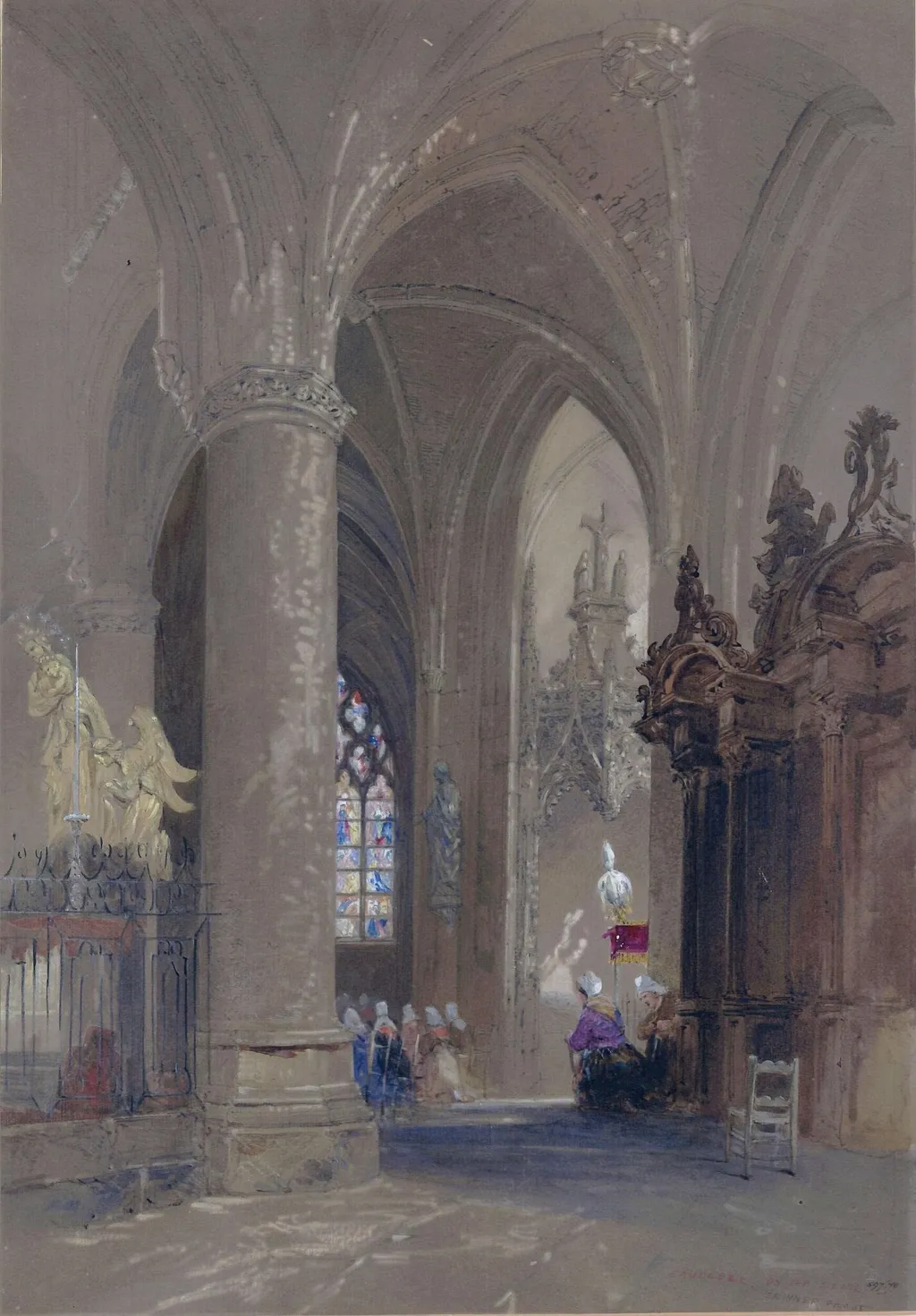
Caudebec on the Seine - Church Interior is a watercolor work on paper by the British Romanticist artist Skinner Prout. It dates from 1825 and is held in the collection of the Victoria and Albert Museum.
About this work
Overview
Created in 1825, this watercolour by Skinner Prout captures the interior of a church in Caudebec-sur-Seine.
Created in 1825, this watercolour by Skinner Prout captures the interior of a church in Caudebec-sur-Seine. The work is signed and executed in delicate washes, emphasizing atmosphere over detail. It presents a quiet, contemplative space, rendered with subtle tonal shifts rather than sharp lines. The composition centers on the interplay of natural light and architectural form, reflecting the artist’s interest in ecclesiastical environments of northern France.
Subject & Meaning
The scene depicts a modest church interior during a moment of stillness. A single statue of a robed figure stands near the front, flanked by a few worshippers in postures of prayer. The absence of grand ceremony or crowded activity suggests private devotion. The lighting, filtering through stained glass, implies divine presence without overt symbolism. The quietude of the space conveys reverence through restraint, aligning with early 19th-century ideals of spiritual introspection.
Technique & Style
Prout employed transparent watercolour washes to build layered tones, allowing the paper’s white to suggest highlights and the play of light. Soft gradients define the stone arches and columns, while the stained-glass window is rendered with muted hues of blue, red, and gold. Shadows are implied through diluted pigment, not outline. The wooden chair and carved wall details are suggested with minimal strokes, emphasizing atmosphere over precision, characteristic of topographical watercolour practice of the period.
History & Provenance
The work dates from Prout’s early travels along the Seine, during which he documented regional churches and landscapes. Signed and dated 1825, it likely originated as a study for later compositions or personal record. No documented ownership history is widely recorded prior to its inclusion in institutional collections. Its survival suggests it was preserved within the artist’s circle or acquired by a local collector with interest in French ecclesiastical subjects.
Context
In the 1820s, British artists increasingly traveled to France to study architecture and light, often producing watercolours as records of their journeys. Prout was part of this trend, focusing on Gothic interiors with an emphasis on spatial harmony and subdued illumination. This work reflects a broader cultural interest in medieval heritage, post-Revolution, as France and Britain reevaluated religious architecture amid secularizing trends.
Legacy
Though not widely exhibited during his lifetime, Prout’s watercolours like this one contributed to a genre of topographical art that valued observation over drama. His careful rendering of light in ecclesiastical spaces influenced later generations of British watercolourists interested in architectural intimacy. Today, such works serve as historical documents of regional churches, preserving details of interiors that have since changed or been lost.
Artist & collection
Artist
Skinner Prout painted delicate watercolors and drawings of boats, rivers, and old European towns in the 19th century.


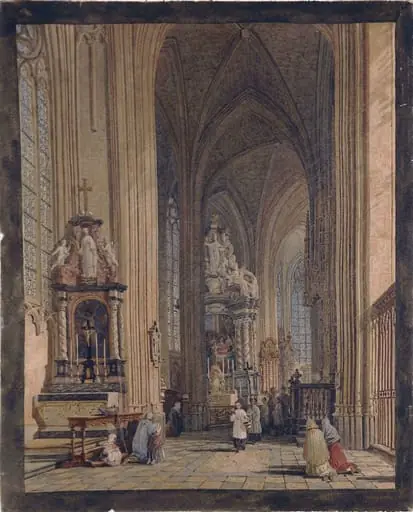 North Aisle of the Choir of the Collegiate Church of St. Peter at Louvain
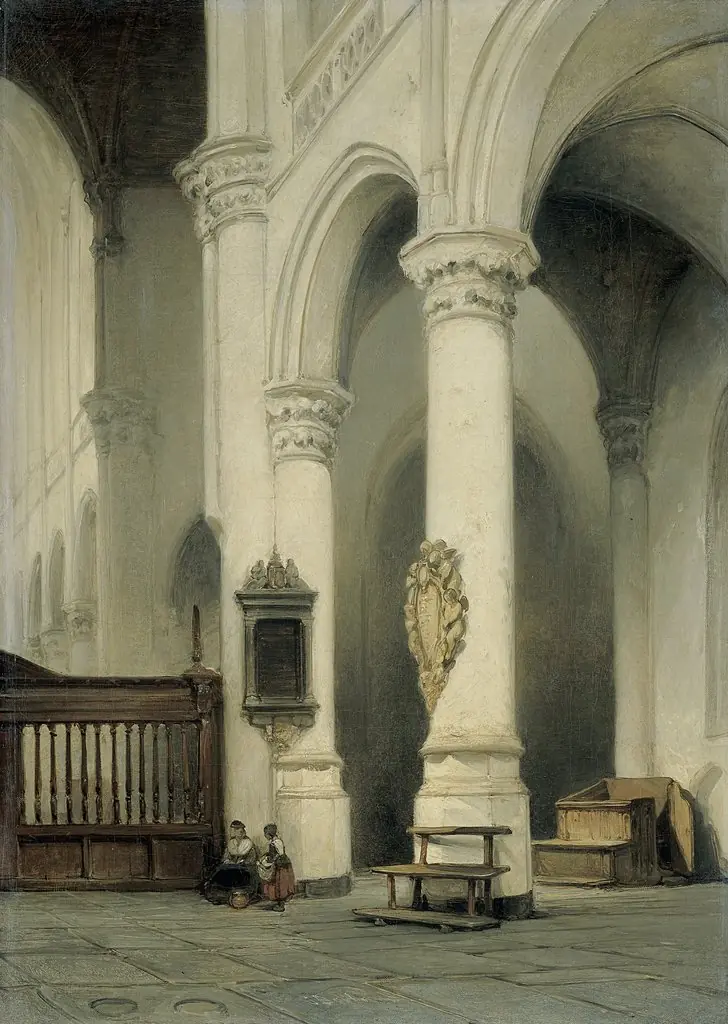 Church interior
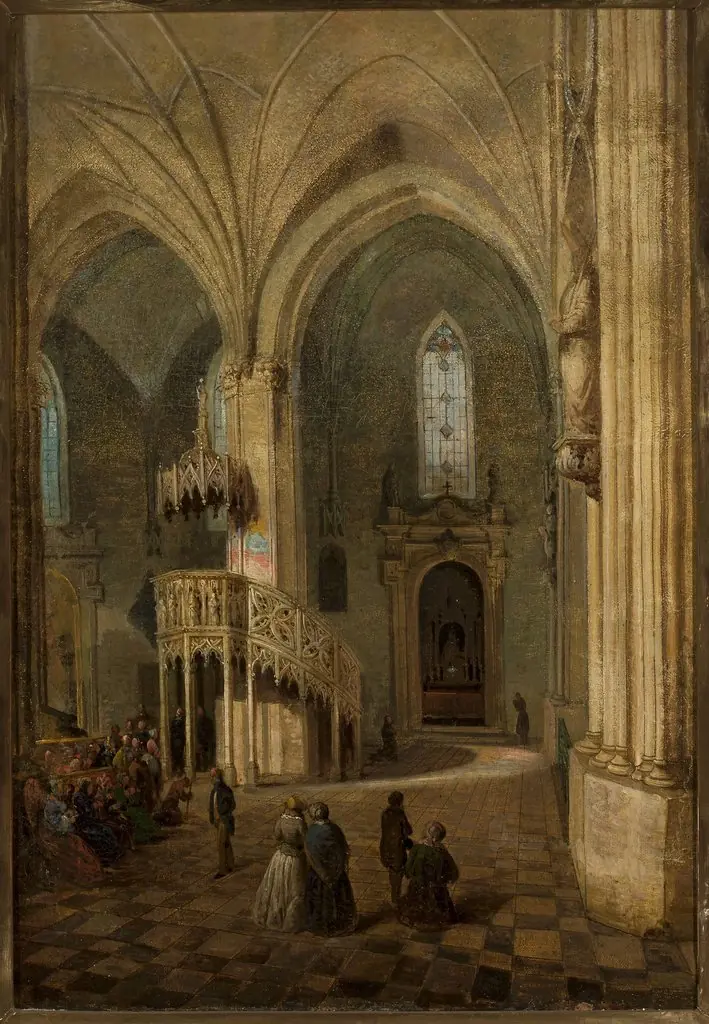 Interior of St. John’s Cathedral in Warsaw
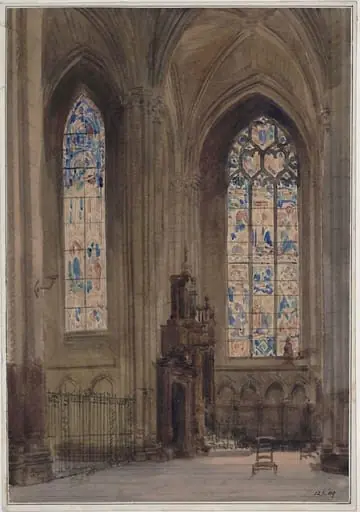 Chapel in the south transept of Rouen Cathedral
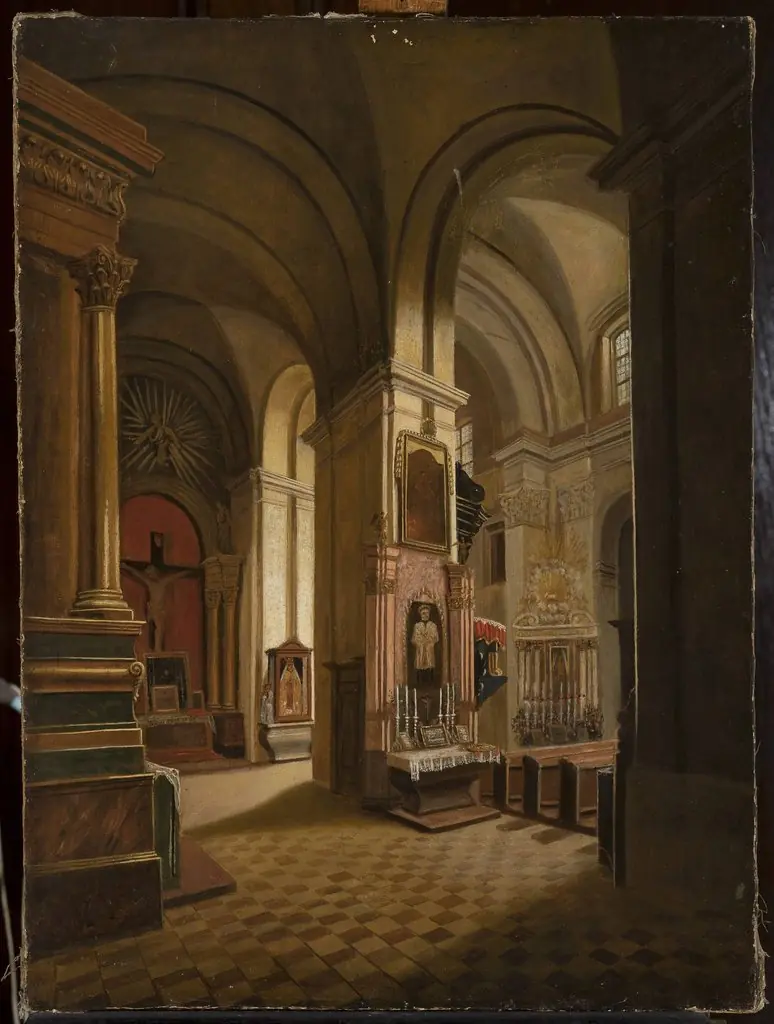 Church interior
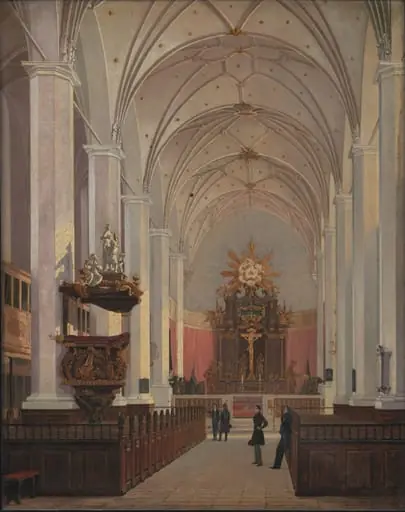 Det indre af Trinitatis Kirke
 Interior of Milan Cathedral
 Tewkesbury Abbey
 Det indre af Trinitatis Kirke
 The Chapel of St Eucharius, Nuremberg
 Interior de iglesia
 The Nun's Chapel, Caudebec