Artwork
Female Nude
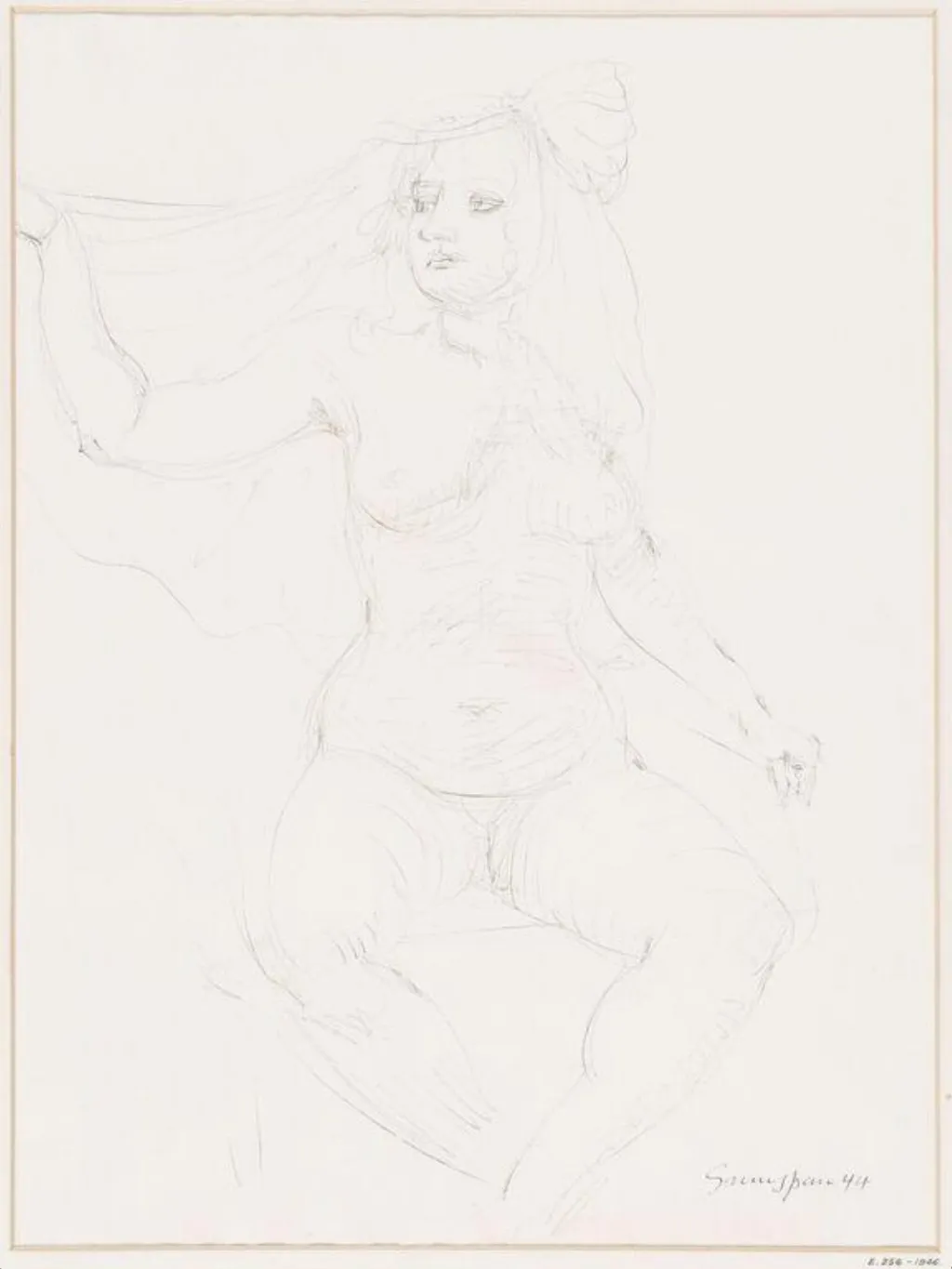
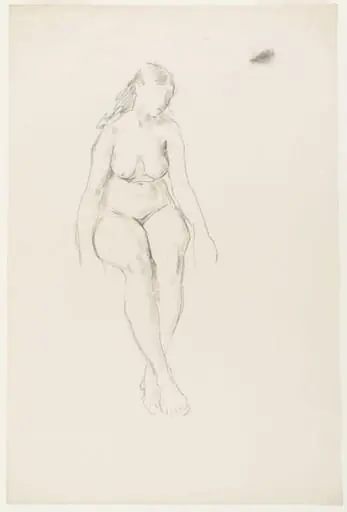
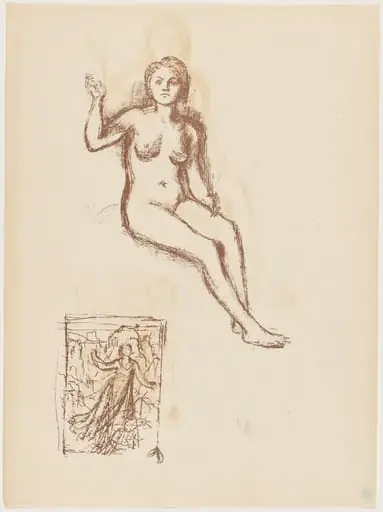
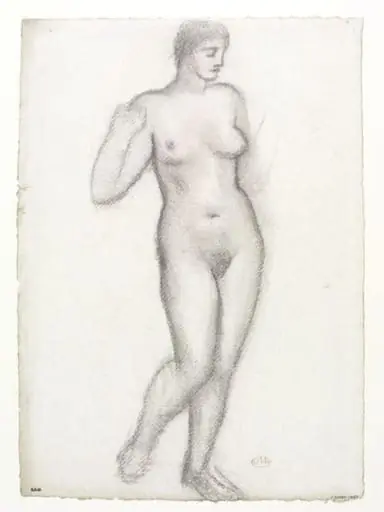
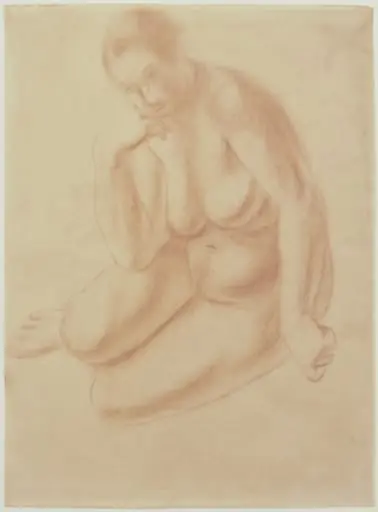
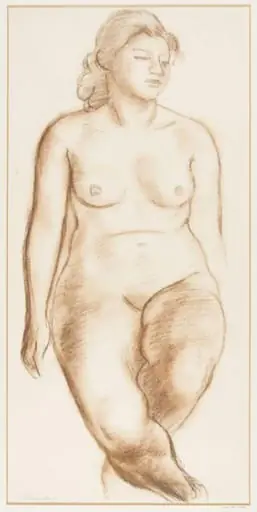
Female Nude is a drawing by C. E. Grunspan. It dates from 1944 and is held in the collection of the Victoria and Albert Museum. Created in 1944, this pen and ink drawing by C.
About this work
Overview
The absence of hard contours and the soft blending of forms indicate an intentional embrace of impermanence and motion.
Created in 1944, this pen and ink drawing by C. E. Grunspan presents a female nude in profile, rendered with minimal detail and fluid, unrefined strokes. The work is signed and dated by the artist in the lower corner, confirming its origin. Its spontaneous quality suggests it was made rapidly, prioritizing gesture over finish. The absence of hard contours and the soft blending of forms indicate an intentional embrace of impermanence and motion.
Subject & Meaning
The figure is depicted in a natural, unidealized pose, turned slightly to the side with limbs loosely defined. There is no narrative context or symbolic element—only the presence of the body in space. The artist’s focus appears to be on capturing the essence of form in motion rather than anatomical accuracy or emotional expression. The work invites contemplation of the human figure as a transient, physical presence.
Technique & Style
Grunspan employs loose, gestural pen strokes to suggest volume and posture without outlining. Ink flows freely, allowing edges to dissolve into the paper’s texture. Hair and limbs merge with the background, creating a sense of ambiguity and ephemerality. The technique avoids shading or cross-hatching, relying instead on the weight and direction of lines to imply structure. The drawing’s unfinished appearance is deliberate, reflecting a preference for immediacy over polish.
History & Provenance
The drawing is dated 1944, placing it within the context of wartime artistic production, though no specific commission or exhibition history is documented. Its signature and date suggest personal authorship rather than institutional intent. The work has remained in private hands or lesser-known collections, with no record of public display or critical reception at the time of creation. Its survival reflects its value as a private study rather than a public artifact.
Context
Made during the Second World War, the drawing exists alongside broader trends in mid-century drawing that valued spontaneity and emotional honesty over academic precision. While not aligned with major movements, its approach echoes the informal sketches of artists exploring the figure in private practice. The work reflects a quiet, introspective moment in a period marked by upheaval, emphasizing personal observation over public statement.
Legacy
Though not widely exhibited or published, the drawing exemplifies a mode of figure study common among 20th-century artists who prioritized process over product. Its restrained aesthetic and lack of pretension align it with private, working drawings rather than finished artworks. It remains a quiet testament to the artist’s engagement with the human form, valued today for its honesty and unembellished observation.
Artist & collection
Artist
C. E. Grunspan kept a studio in a former butcher’s shop in Queens, its walls lined with charcoal dust and half-finished sketches. She drew the same woman—her neighbor, a subway token seller—dozens of times, always from…