Artwork
Standing nude, a study for sculpture
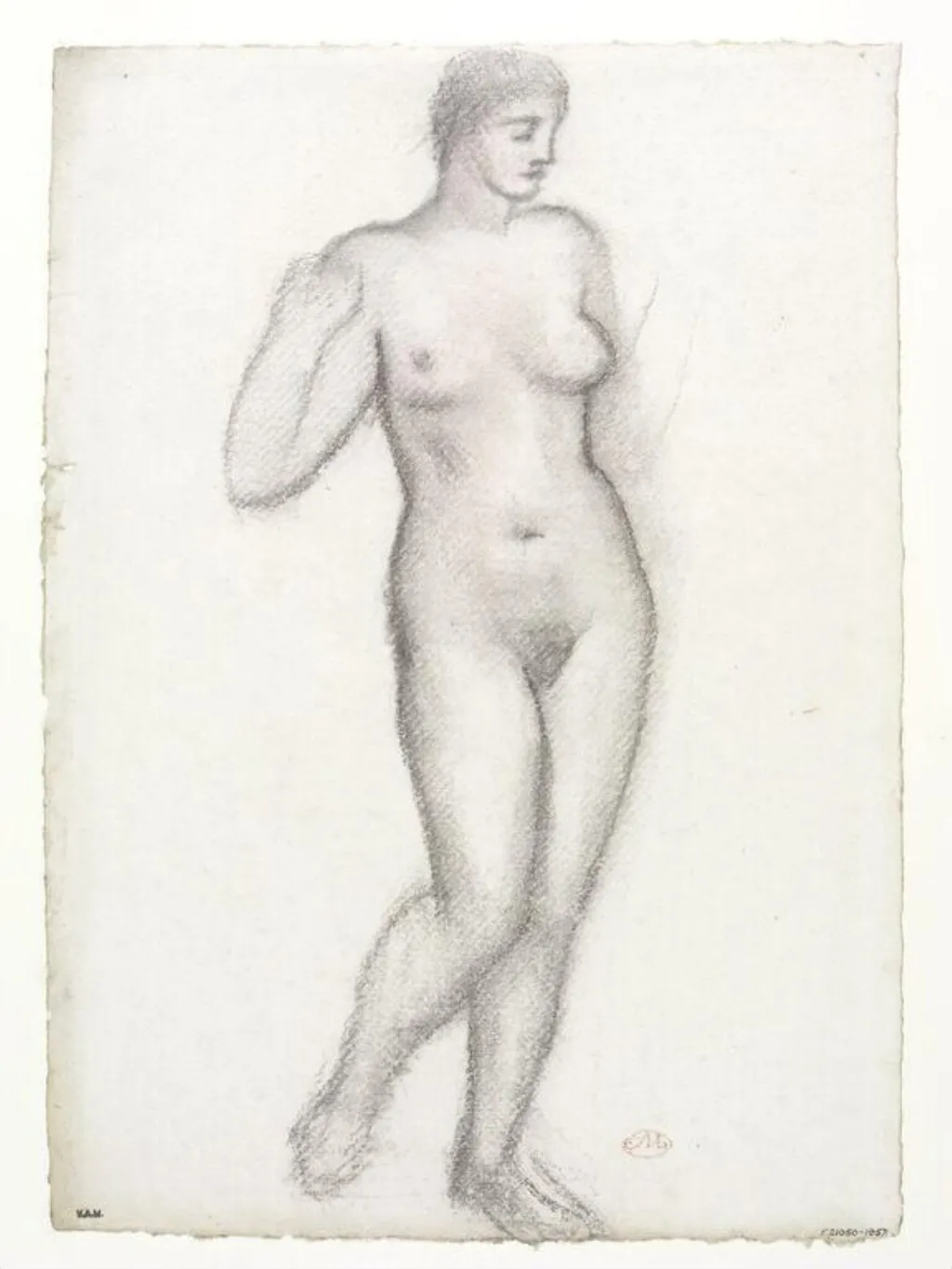
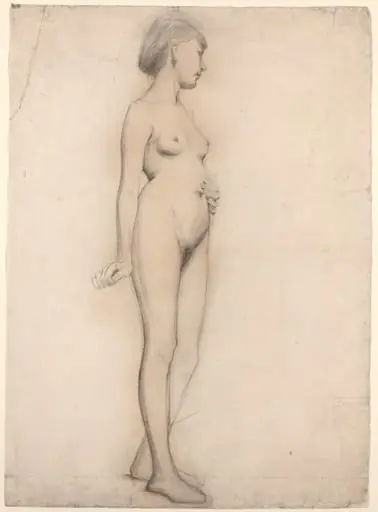
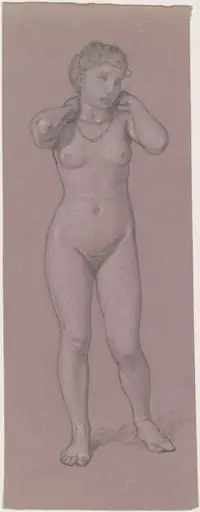
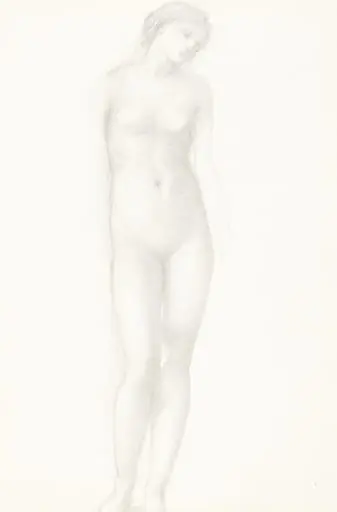
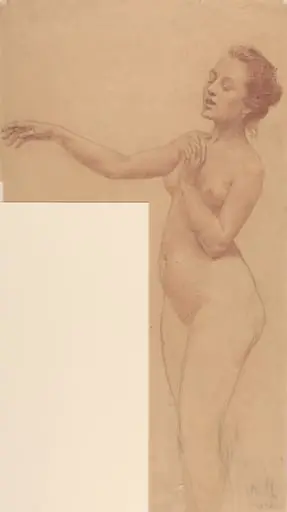
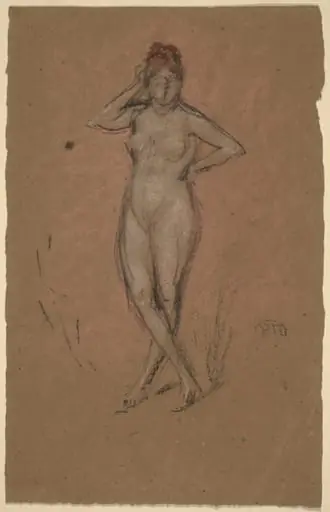
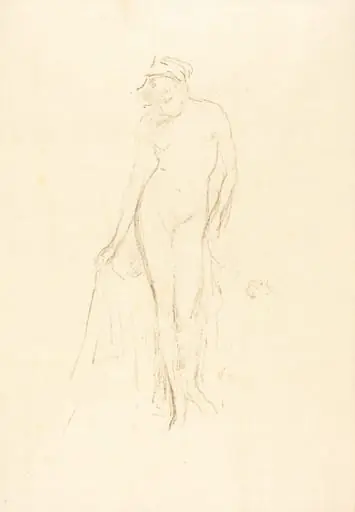
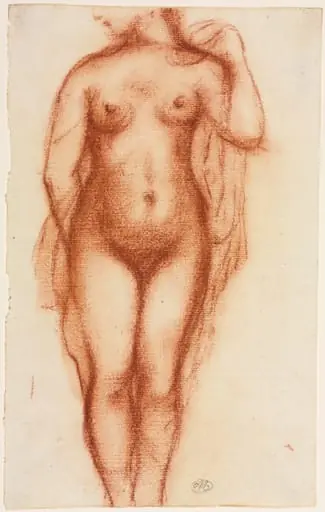
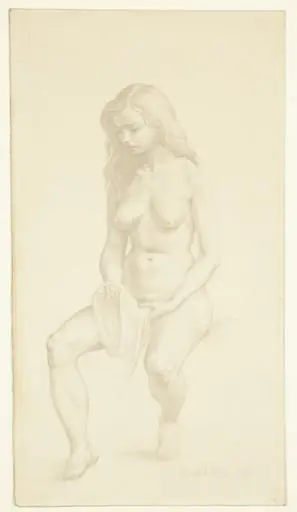
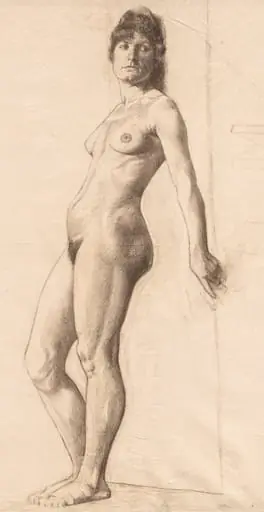
Standing nude, a study for sculpture is a drawing by the Impressionist artist Aristide Joseph Bonaventure Maillol. It dates from 1881 and is held in the collection of the Victoria and Albert Museum. This pencil drawing serves as a preparatory study for a sculptural work, capturing a standing female nude in quiet repose.
About this work
Overview
This pencil drawing serves as a preparatory study for a sculptural work, capturing a standing female nude in quiet repose.
This pencil drawing serves as a preparatory study for a sculptural work, capturing a standing female nude in quiet repose. Signed with the initial 'M.', it reflects the artist’s process of translating three-dimensional form into two-dimensional notation. The composition emphasizes anatomical accuracy and subtle tonal variation, characteristic of studies intended to inform later sculptural modeling rather than stand as finished works.
Subject & Meaning
The figure stands with a slight contrapposto, her left arm bent at the elbow and right arm relaxed at her side. Her head is lowered, inviting introspection rather than engagement. There is no narrative or symbolic context—only the presence of the body as a subject of formal inquiry. The pose suggests stillness and self-containment, aligning with early 20th-century interests in timeless, elemental human form.
Technique & Style
Rendered in soft pencil, the drawing employs delicate hatching and graded shading to define volume without harsh outlines. The lines are restrained, prioritizing tonal transitions over contour, creating a sense of gentle solidity. The surface texture of skin is suggested through subtle gradations, not detail, emphasizing mass and weight over individual features. This restrained approach reflects a focus on structure over ornamentation.
History & Provenance
The drawing is attributed to Aristide Maillol, a French sculptor known for his simplified, monumental nudes. As a preparatory study, it likely dates to the early 1900s, during his transition from painting and tapestry design to sculpture. Its survival suggests it was retained by the artist or his circle, possibly used in the development of one of his better-known bronze figures.
Context
Created amid a period when European artists were redefining the human figure beyond academic idealism, this drawing aligns with a broader movement toward essentialized forms. Maillol’s work responded to both classical antiquity and contemporary shifts away from expressive distortion, favoring calm, geometric harmony. Such studies were vital to his method, bridging observation and abstraction.
Legacy
Though not a public artwork, this study exemplifies Maillol’s disciplined approach to form. It reveals how his sculptures emerged from careful, quiet observation rather than dramatic gesture. The drawing’s restraint influenced later sculptors seeking to distill the human figure into enduring, elemental shapes, contributing to modernism’s turn toward simplicity and presence.
Own this work as a print
Artist & collection
Artist
Aristide Joseph Bonaventure Maillol
French sculptor and draftsman Aristide Maillol made solid, calm nudes in bronze and charcoal that feel like they’ve always existed.