Artwork
Untitled
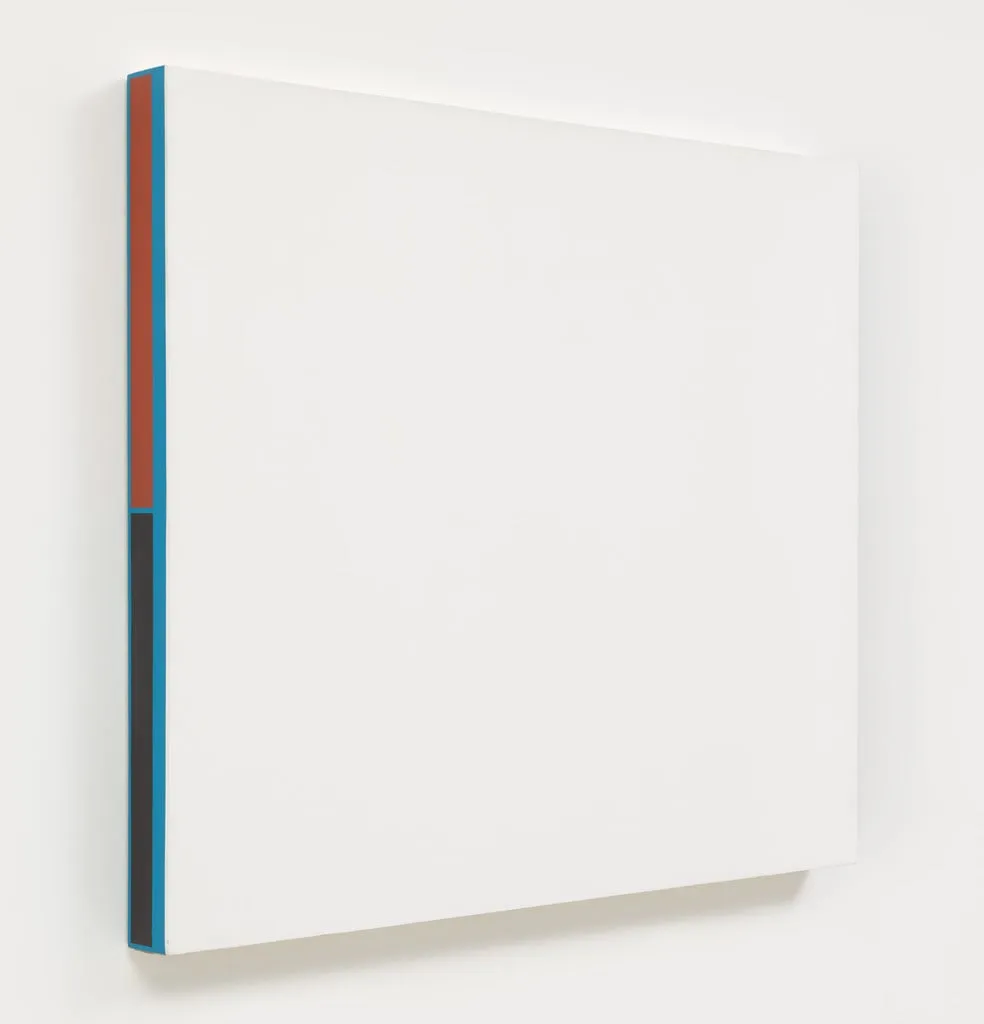
Untitled is an acrylic painting by the Contemporary Abstract artist César Paternosto. It dates from 1972 and is held in the collection of the Museum of Modern Art.
About this work
Overview
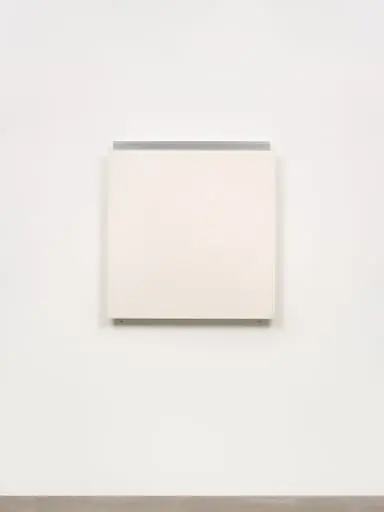
The majority of the surface remains untouched white, emphasizing the canvas as a field rather than a surface to be filled.
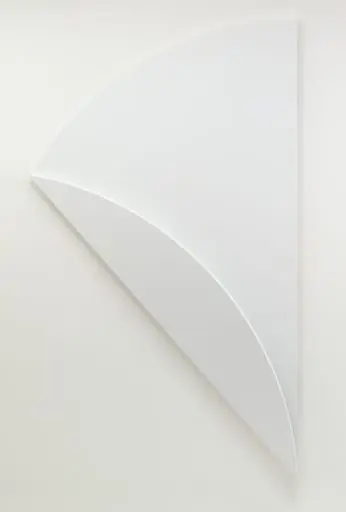
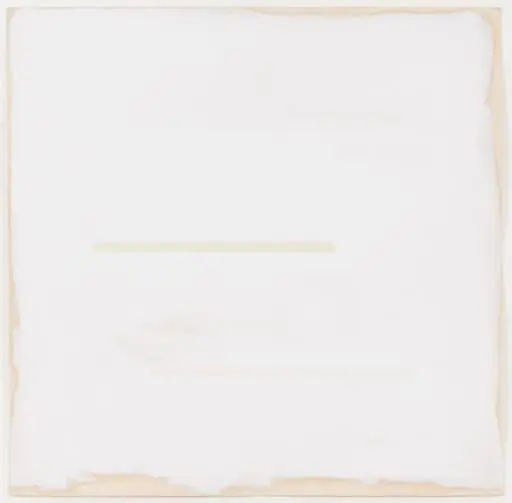
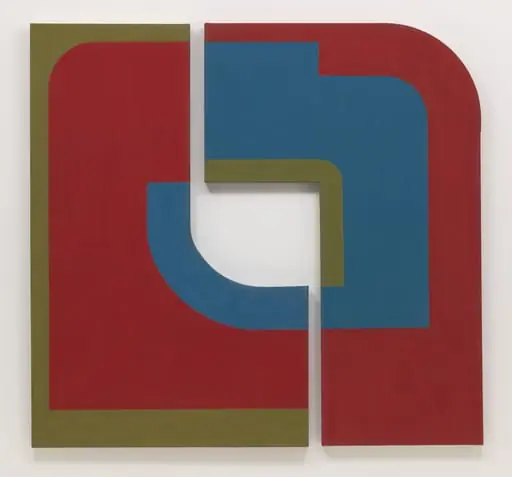
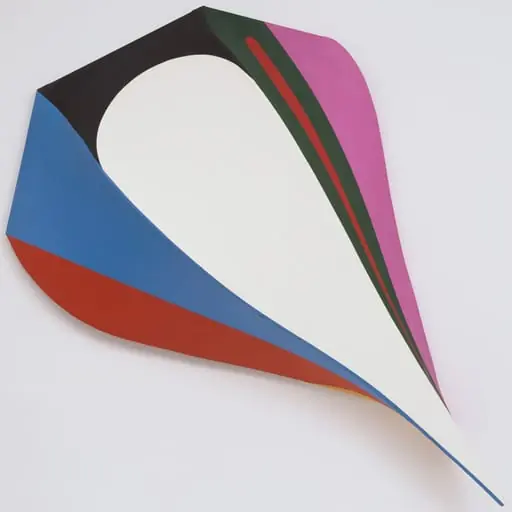
Created in 1972, this acrylic on canvas work by César Paternosto is a restrained composition defined by spatial economy. The majority of the surface remains untouched white, emphasizing the canvas as a field rather than a surface to be filled. A narrow vertical band on the left edge introduces three distinct, unblended color segments—red, blue, and black—each aligned with precise edges and no gradation.
Subject & Meaning
The painting resists narrative or symbolic interpretation, instead foregrounding formal relationships. The vertical stripe functions as a structural anchor, while the vast emptiness invites contemplation of absence and presence. Paternosto’s approach reflects an interest in how minimal elements can generate visual tension, aligning with broader concerns in postwar abstraction about perception and materiality.
Technique & Style
The artist applied flat, unmixed acrylic paint with sharp, clean edges, avoiding texture or modulation. Colors are saturated but not luminous, presented as discrete planes rather than atmospheric effects. This method rejects expressive brushwork, favoring industrial precision and geometric clarity. The work’s austerity reflects a deliberate departure from gestural abstraction dominant in the preceding decade.
History & Provenance
The painting entered The Museum of Modern Art’s collection in the 1970s, shortly after its creation. It is one of several works by Paternosto acquired during a period when the museum expanded its holdings of Latin American modernism. Its inclusion signaled a growing institutional recognition of non-Western contributions to minimalist and geometric abstraction.
Context
Emerging from Argentina, Paternosto engaged with international movements like Concrete Art and Minimalism while maintaining a distinct regional perspective. In the early 1970s, his work responded to political repression in Latin America by turning toward formal purity. This painting’s austerity can be read as both an aesthetic choice and a quiet act of resistance to excess and ornamentation.
Legacy
The work contributes to a broader reevaluation of minimalist practices beyond the United States and Europe. Paternosto’s use of negative space and color segmentation influenced later artists interested in the politics of form. Its presence in MoMA’s collection helped legitimize Latin American artists within global modernist narratives, expanding the canon’s geographic scope.
Artist & collection