Artwork
Untitled
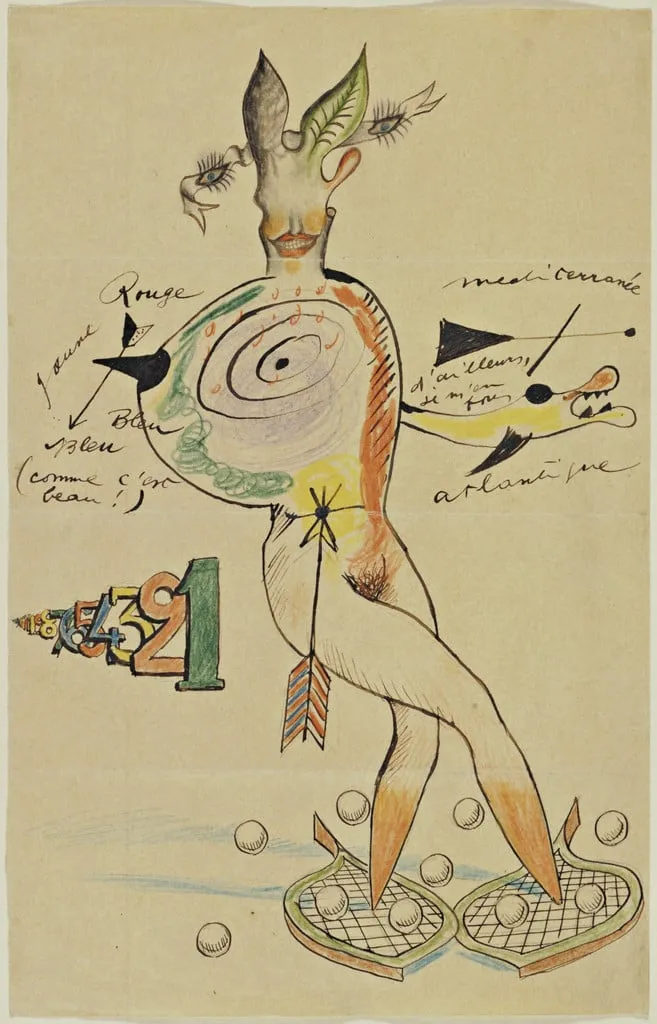
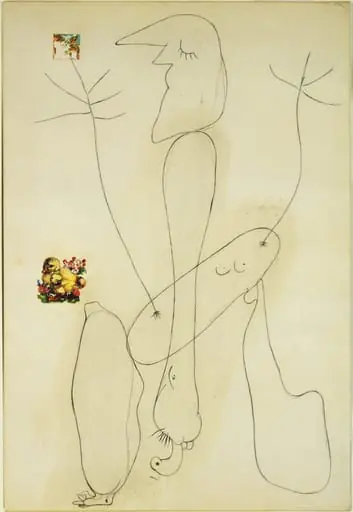
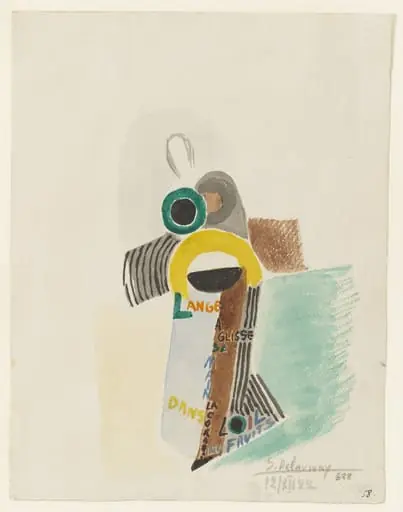
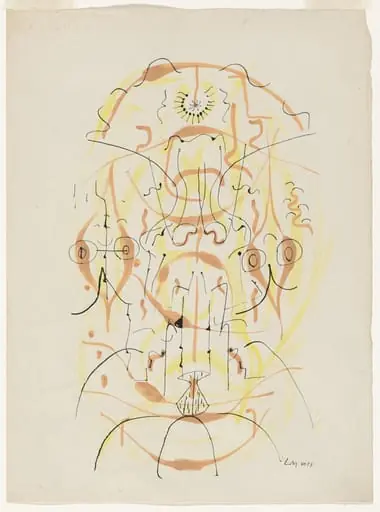
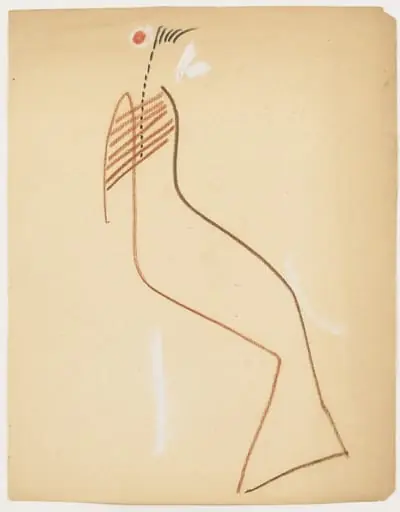
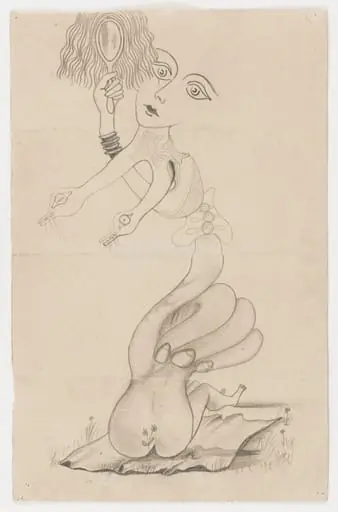
Untitled is a graphite drawing by Yves Tanguy, Joan Miró, Max Morise, Man Ray Cadavre Exquis. It dates from 1926 and is held in the collection of the Museum of Modern Art.
About this work
Overview
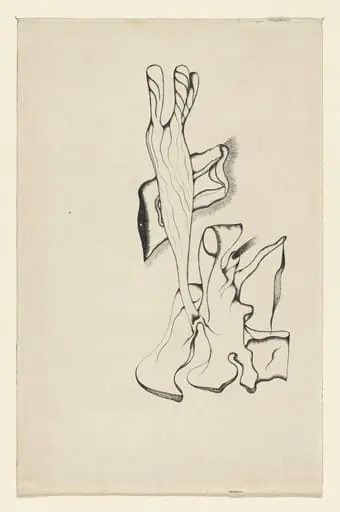
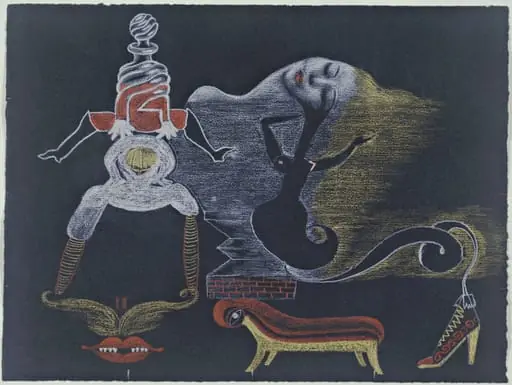
Created in 1926, this composite drawing emerged from a collaborative game among five Surrealist artists: Yves Tanguy, Joan Miró, Max Morise, Man Ray, and an unnamed participant. Executed in ink, pencil, and colored pencil on paper, the work reflects the group’s experimentation with chance and collective authorship, a hallmark of their early Surrealist practices.
Subject & Meaning
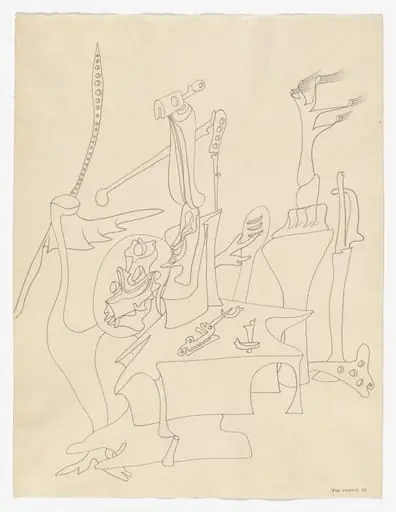
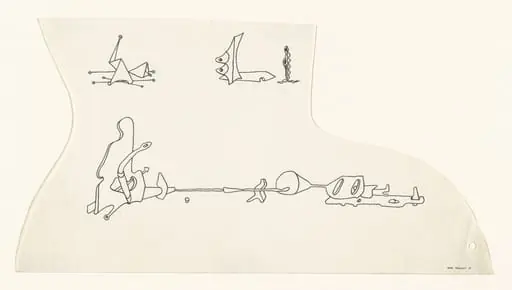
The image resists singular interpretation, composed of fragmented, biomorphic forms that suggest organic growths, abstract limbs, and ambiguous contours. Its meaning arises not from narrative but from the unconscious interplay of individual contributions, embodying the Surrealist aim to bypass rational control and access deeper psychological layers through collective improvisation.
Technique & Style
Each artist added to the drawing sequentially without seeing the full composition, resulting in abrupt transitions between styles. Ink defines sharp lines, pencil adds subtle shading, and colored pencil introduces muted hues. The lack of unified perspective or cohesive structure emphasizes spontaneity over deliberation, aligning with Surrealist ideals of automatism.
History & Provenance
The drawing was produced during a session of the Surrealist group in Paris, part of their regular collaborative exercises. It entered The Museum of Modern Art’s collection in the mid-20th century, where it remains as a rare surviving example of group-authored Surrealist drawings from the movement’s formative years.
Context
This work belongs to the tradition of Cadavre Exquis—Exquisite Corpse—a parlor game adapted by Surrealists to generate unexpected imagery. Such sessions were held to disrupt individual ego and unlock collective unconscious expression, often documented through drawings or texts. The 1926 session included key figures who would later define Surrealist visual language.
Legacy
The drawing stands as a document of early Surrealist methodology, illustrating how collaboration could challenge artistic authority and conventional composition. Though not widely exhibited, it continues to inform discussions on authorship, chance, and the role of the unconscious in creative processes within modern art.
Artist & collection
Artist
Yves Tanguy, Joan Miró, Max Morise, Man Ray Cadavre Exquis
Cadavre Exquis, Yves Tanguy, Joan Miró, Max Morise, Man Ray was a French artist.