Artwork
Almshouse
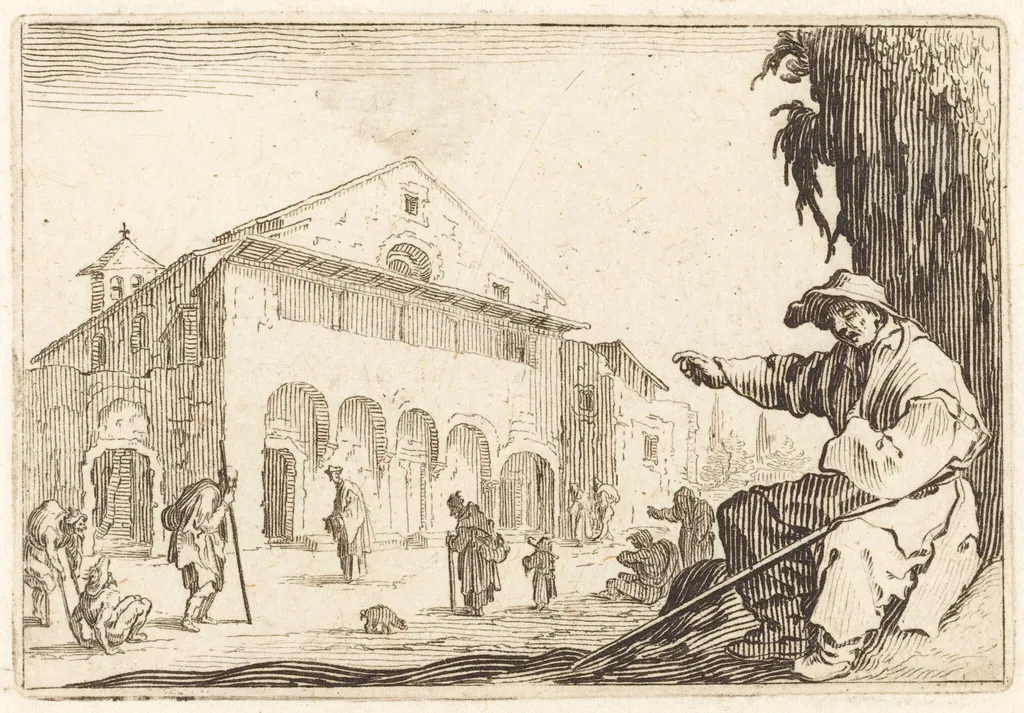
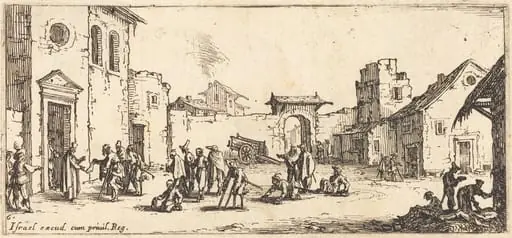
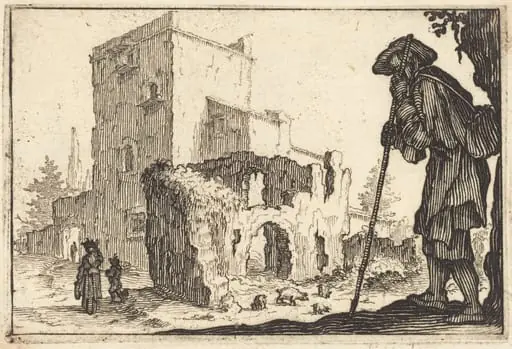
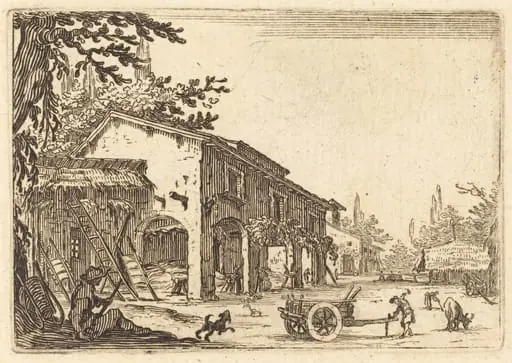
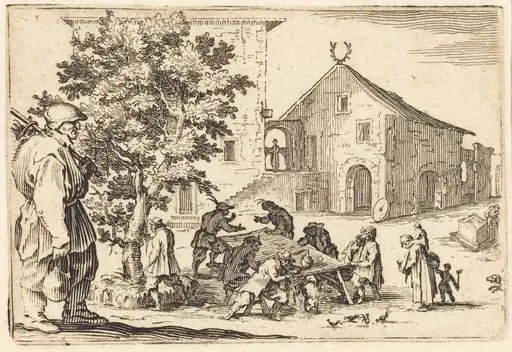
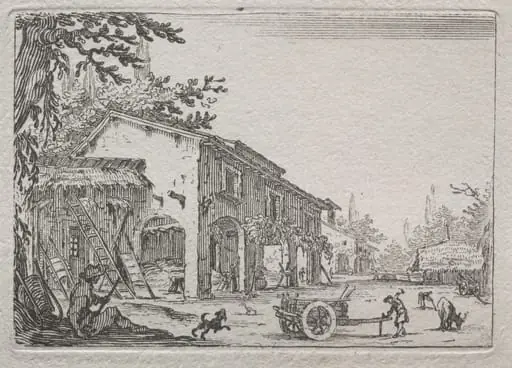
Almshouse is an ink print by the Baroque artist Jacques Callot. It dates from 1622 and is held in the collection of the National Gallery of Art.
About this work
Overview
Almshouse is an etching on laid paper created by Jacques Callot around 1622. Characteristic of his prolific output, this work documents a scene of everyday life, focusing on social themes within a specific institutional setting.
Subject & Meaning
The etching depicts a bustling street scene outside a large charitable institution, such as an almshouse. Figures engage in various activities: a prominently dressed man gestures towards discarded rags, while others move about, capturing the dynamics of daily life among the poorer classes.
Technique & Style
Callot employed sharp lines and nuanced shading to achieve detailed textures, particularly in clothing and the central pile of rags. This technical precision, coupled with the composition's energy, aligns with the observational depth of the old master print tradition.
History & Provenance
Created circa 1622 by Jacques Callot, a French baroque printmaker from Lorraine, Almshouse is one of over 1,400 etchings in his oeuvre. The piece's current location and ownership history are not specified in available information.
Context
Almshouse reflects Callot's interest in documenting 17th-century social life, including the lives of soldiers, beggars, and the urban poor, often set against detailed backdrops. This focus on the marginalized was a hallmark of his work.
Legacy
As part of Callot's extensive body of work, Almshouse contributes to the broader recognition of his technical skill and observational acuity within the old master print tradition, influencing subsequent generations of printmakers.
Artist & collection
Artist
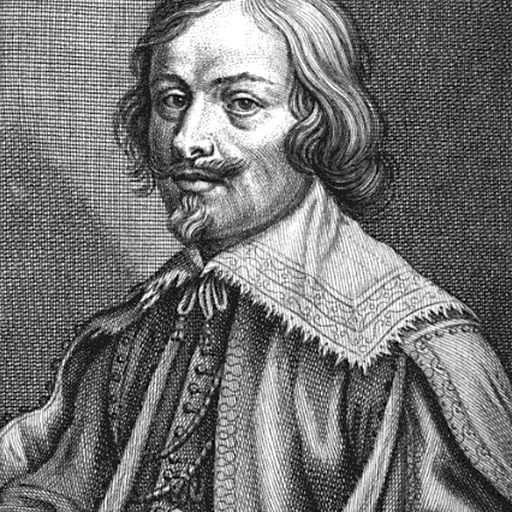
Jacques Callot was a baroque printmaker and draftsman from the Duchy of Lorraine.

 Holy Family at supper
 Restoration of the Aqueduct at Pisa
 Restoration of the Aqueduct at Pisa
 Square in Paris with Many Figures
 Square in Paris with Many Figures
 Horsemen Attacked by Robbers
 HOW WILL A COVERED PART BE CORRECTED?HOW WIKA A COVERED HEART DEED CORRECTED?
![Christ Walking on the Water [second plate], by Jacques Callot](https://artifactworldgallery.com/img/jacques-callot--christ-walking-on-the-water-second-plate--2069f3bfe4cb2126-w320.webp) Christ Walking on the Water [second plate]
Christ Walking on the Water [second plate]