Artwork
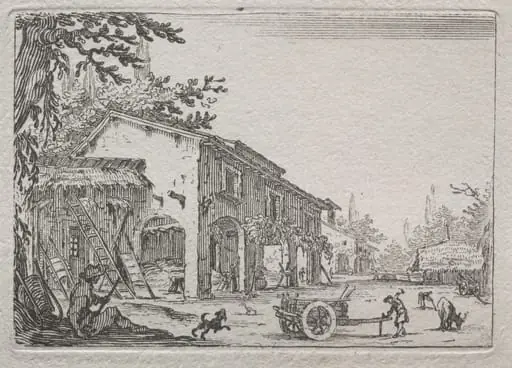
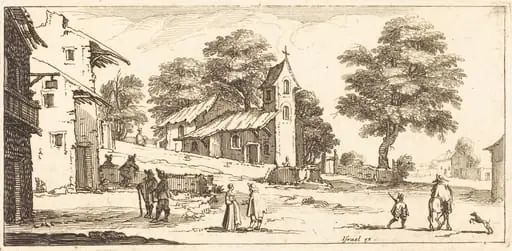
Courtyard of a Farm
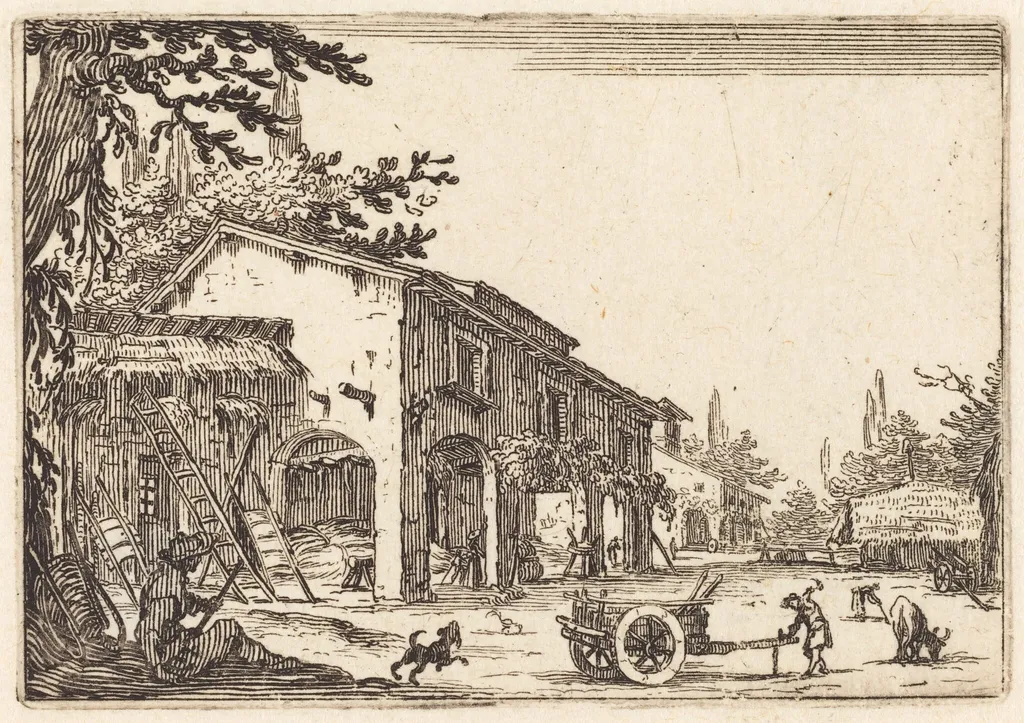
Courtyard of a Farm is an ink print by the Baroque artist Jacques Callot. It dates from 1622 and is held in the collection of the National Gallery of Art.
About this work
Overview
Courtyard of a Farm, an etching on laid paper created around 1622 by Jacques Callot, exemplifies the artist's proficiency in Baroque printmaking and drawing. This work is characteristic of Callot's prolific output, which exceeded 1,400 etchings, and his diverse subject matter.
Subject & Meaning
The etching depicts a serene yet active farm courtyard with a horse-drawn wagon, scattered figures, and natural elements like trees and fences. The scene reflects Callot's interest in documenting everyday life, ranging from rural settings to more formal contexts.
Technique & Style
Callot employed sharp lines and meticulous etching techniques to capture light and shadow, resulting in a slightly rough yet detailed appearance. This style is consistent with the aesthetic of early 17th-century old master prints.
History & Provenance
Created in the early 17th century, the etching is part of Callot's broader oeuvre, which includes landscapes, scenes of daily life, and more formal subjects, all characterized by meticulous detail.
Context
Courtyard of a Farm situates itself within the tradition of early 17th-century Baroque printmaking, alongside other old master prints of the time. Callot, from the Duchy of Lorraine, contributed significantly to this tradition with his extensive and varied body of work.
Legacy
While specific legacy details of 'Courtyard of a Farm' are not highlighted, the piece contributes to Callot's recognized influence on Baroque printmaking and the documentation of 17th-century life through art.
Artist & collection
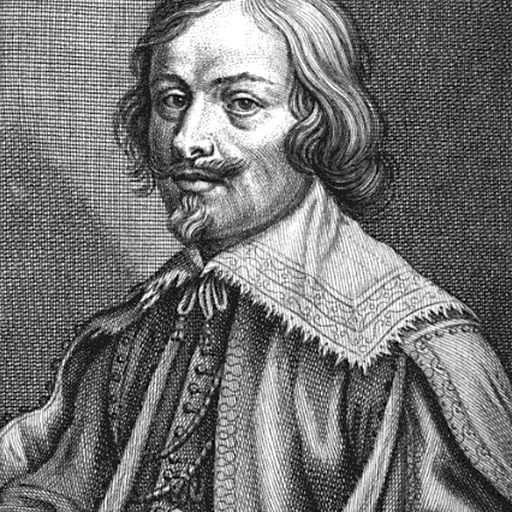
Artist
Jacques Callot was a baroque printmaker and draftsman from the Duchy of Lorraine.

 Holy Family at supper
 Restoration of the Aqueduct at Pisa
 Restoration of the Aqueduct at Pisa
 Square in Paris with Many Figures
 Square in Paris with Many Figures
 Horsemen Attacked by Robbers
 HOW WILL A COVERED PART BE CORRECTED?HOW WIKA A COVERED HEART DEED CORRECTED?
![Christ Walking on the Water [second plate], by Jacques Callot](https://artifactworldgallery.com/img/jacques-callot--christ-walking-on-the-water-second-plate--2069f3bfe4cb2126-w320.webp) Christ Walking on the Water [second plate]
Christ Walking on the Water [second plate]