Artwork
Ascension; Pentacost; Trinity; Corpus Christi
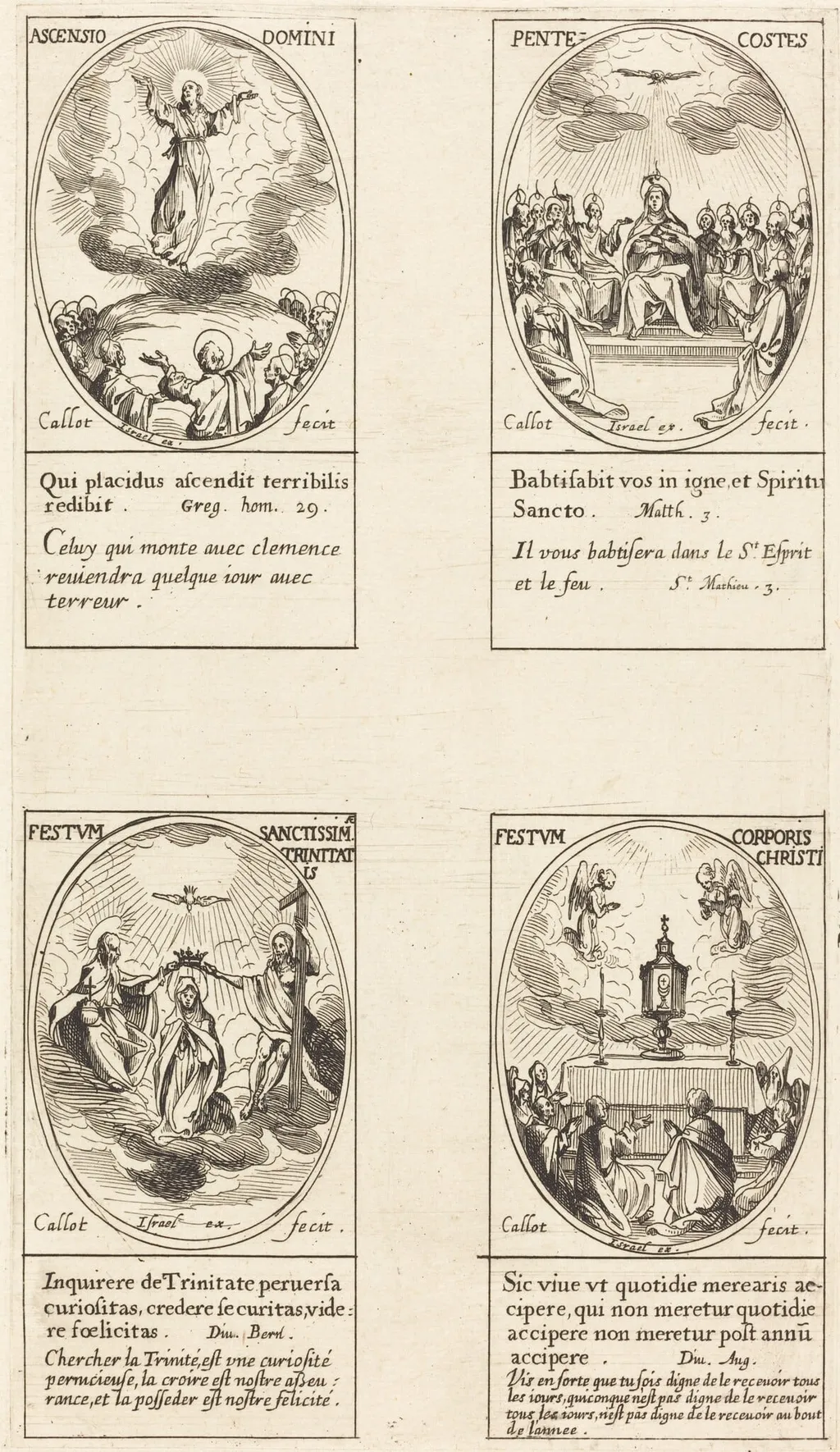
Ascension; Pentacost; Trinity; Corpus Christi is an ink print by the Baroque artist Jacques Callot. It dates from 1634 and is held in the collection of the National Gallery of Art.
About this work
Overview
Created circa 1634 by Jacques Callot, a French baroque printmaker from Lorraine, this work is an etching on laid paper that combines four distinct religious episodes within a single composition. The print measures a modest size, each scene set within an oval frame, and is executed with the fine linear detail characteristic of Callot’s extensive output of more than a thousand etchings.
Subject & Meaning
The four panels illustrate successive biblical moments: the Ascension of Christ, the descent of the Holy Spirit at Pentecost, the mystery of the Trinity, and the Eucharistic celebration of Corpus Christi. By juxtaposing these events, the print underscores the theological continuity of Christ’s life, divine presence, and sacramental worship.
Technique & Style
Callot employed delicate, closely spaced lines to model clouds, drapery, and architectural elements, creating a sense of depth and movement. The use of laid paper enhances the texture of the image, while the inclusion of Latin and French captions links each vignette to its scriptural source, a common practice in early‑17th‑century devotional prints.
History & Provenance
The etching was produced during Callot’s most prolific period, when he was establishing a reputation for both secular and sacred subjects. Though specific ownership records are scarce, the work has been catalogued among his religious series and appears in several early modern print collections.
Context
In the baroque era, prints served as accessible vehicles for religious instruction and personal devotion. Callot’s integration of multiple scenes within a single sheet reflects contemporary Counter‑Reformation strategies that emphasized visual reinforcement of doctrine.
Legacy
Callot’s meticulous line work and compositional innovation influenced later printmakers, contributing to the evolution of narrative printmaking in the seventeenth century. The etching remains a representative example of his ability to merge technical virtuosity with complex theological content.
Artist & collection
Artist
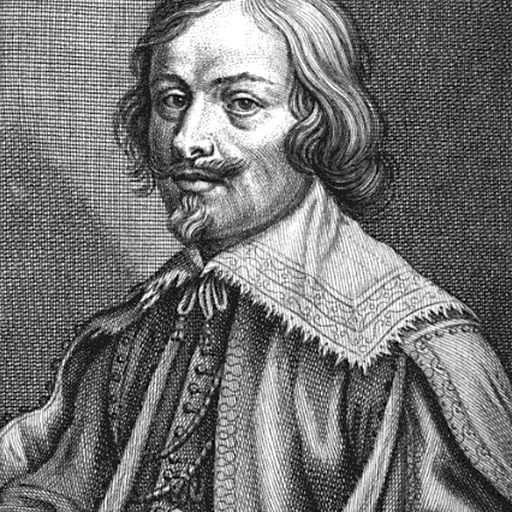
Jacques Callot was a baroque printmaker and draftsman from the Duchy of Lorraine.

 Holy Family at supper
 Restoration of the Aqueduct at Pisa
 Restoration of the Aqueduct at Pisa
 Square in Paris with Many Figures
 Square in Paris with Many Figures
 Horsemen Attacked by Robbers
 HOW WILL A COVERED PART BE CORRECTED?HOW WIKA A COVERED HEART DEED CORRECTED?
![Christ Walking on the Water [second plate], by Jacques Callot](https://artifactworldgallery.com/img/jacques-callot--christ-walking-on-the-water-second-plate--2069f3bfe4cb2126-w320.webp) Christ Walking on the Water [second plate]
Christ Walking on the Water [second plate]
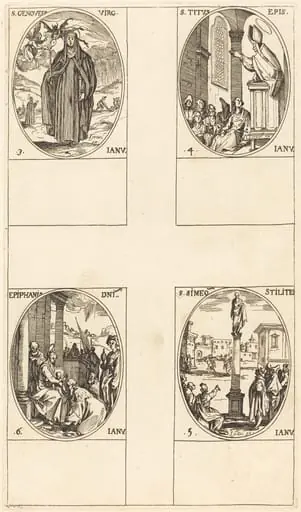 St. Genevieve; St. Titus; St. Simeon Stylites; Epiphany
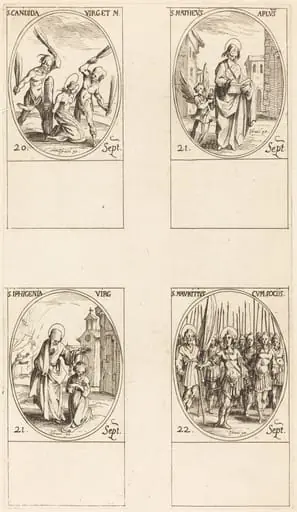 St. Canida; St. Matthew; St. Ipigenia; St. Maurice and Companions
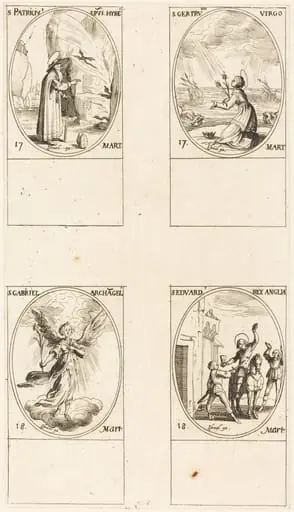 St. Patrick; St. Gertrude; St. Gabriel, Archangel; St. Edward
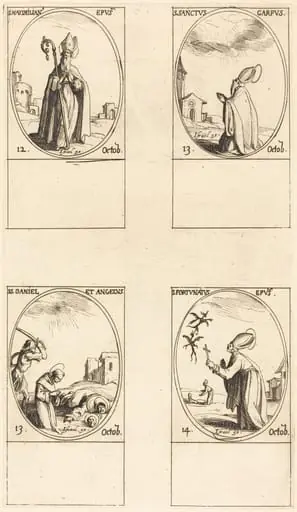 St. Maximilian; St. Carpus; St. Daniel and Angelus; St. Fortunatus
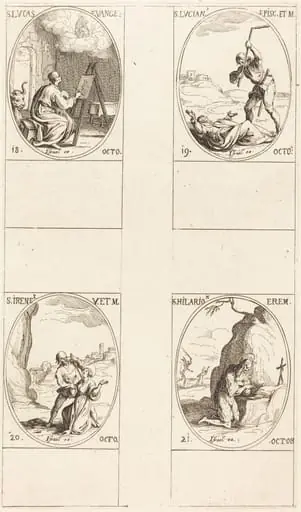 St. Luke; St. Lucian; St. Irene; St. Hilarion
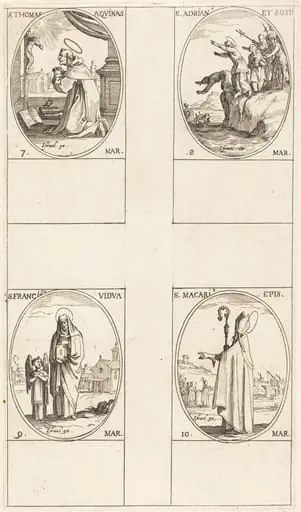 St. Thomas Aquin; St. Adrian and Companions; St. Frances; St. Macari
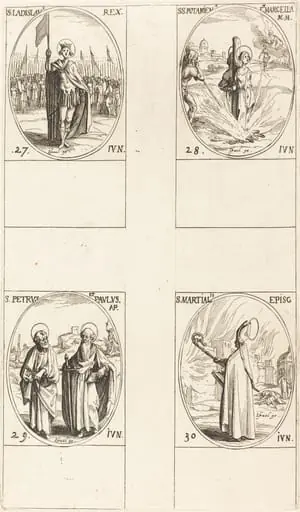 St. Ladislas; Sts. Potamiana and Marcella; Sts. Peter and Paul, Apostles; St. Martial
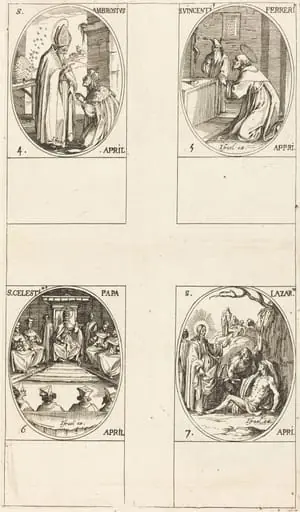 St. Ambrose; St. Vincent Ferrer; St. Celestin; St. Lazarus
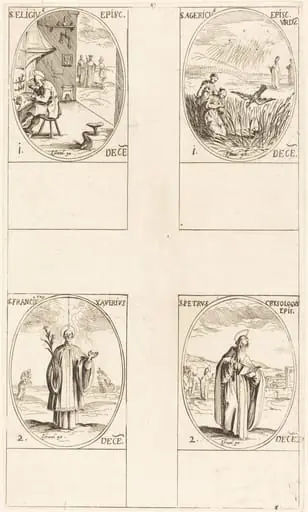 St. Eligius; St. Agericus; St. Francis Xavier; St. Peter Chrysologus