Artwork
Attributes of the Virgin
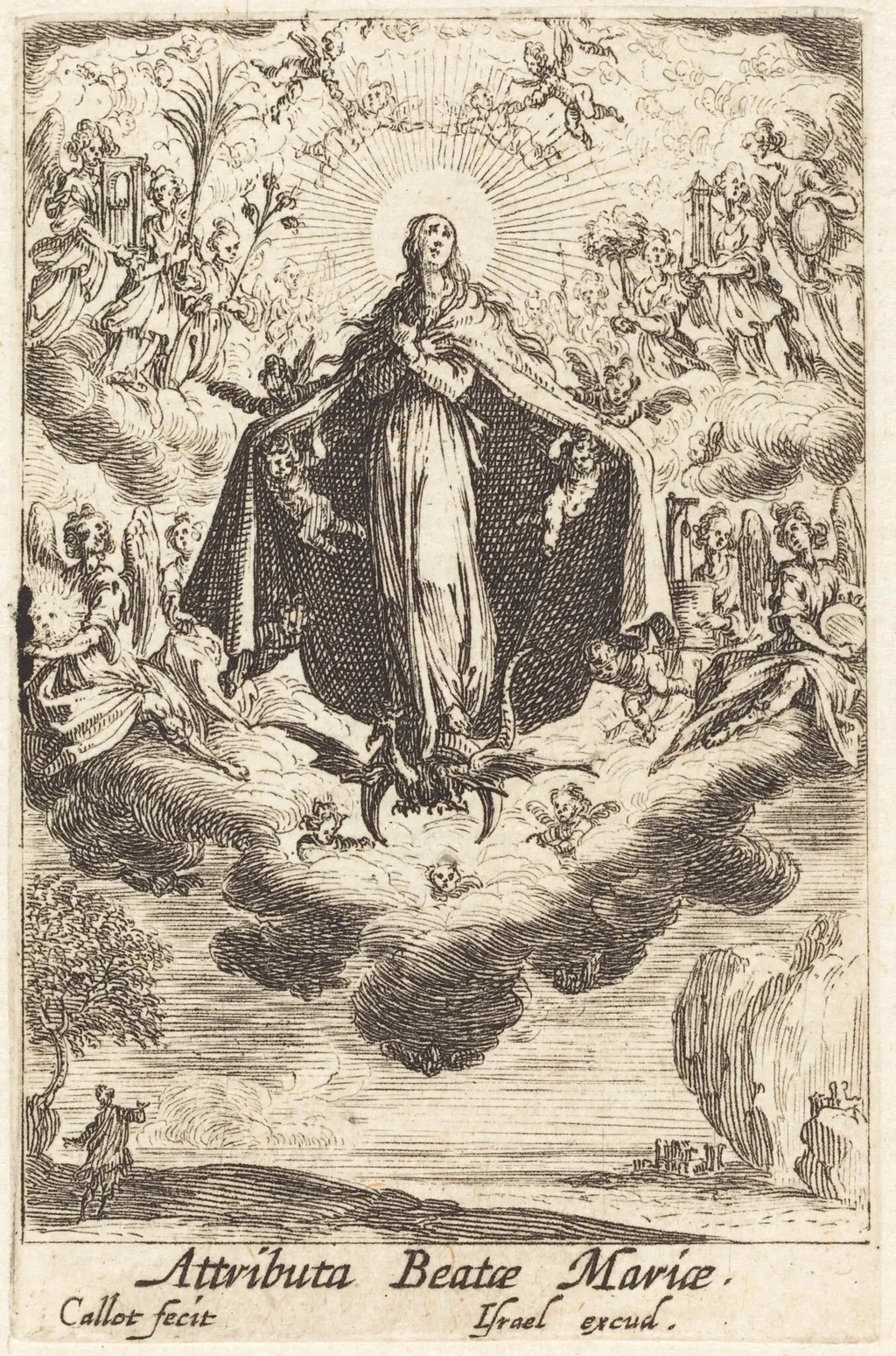
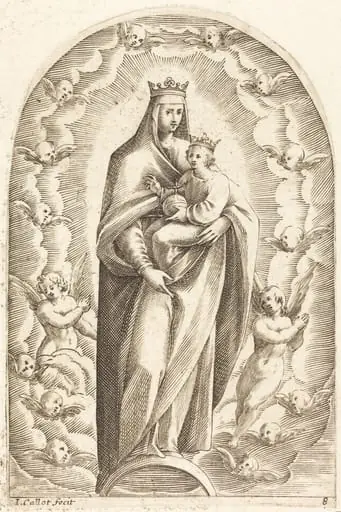
Attributes of the Virgin is an ink print by the Baroque artist Jacques Callot. It dates from 1634 and is held in the collection of the National Gallery of Art.
About this work
Overview
Created around 1634, *Attributes of the Virgin* is an etching on laid paper by Jacques Callot, a prolific French Baroque printmaker from Lorraine, known for his diverse subjects and meticulous detail.
Subject & Meaning
The etching depicts a woman, likely the Virgin, surrounded by symbolic objects representing virtues. She holds a book (knowledge/scripture) and a lily (purity/faith), conveying themes of moral excellence and religious devotion.
Technique & Style
Callot's work showcases his mastery of etching, characterized by fine details achieved through a challenging technique. The piece blends narrative and symbolic elements, typical of his approach to religious subjects.
History & Provenance
Part of Callot's extensive oeuvre of over 1,400 etchings, *Attributes of the Virgin* exemplifies his productivity and thematic range, which included soldiers, court life, and religious themes, often set within detailed landscapes.
Context
While the broader context of its creation is not specified, the work reflects the Baroque period's emphasis on expressive and symbolic religious art, with Callot's etchings contributing to the dissemination of such themes across Europe.
Legacy
As one of Callot's religious etchings, *Attributes of the Virgin* contributes to his legacy as a versatile printmaker who effectively used etching to explore religious narratives and symbolism, influencing the broader European printmaking tradition.
Artist & collection

Artist
Jacques Callot was a baroque printmaker and draftsman from the Duchy of Lorraine.

 Holy Family at supper
 Restoration of the Aqueduct at Pisa
 Restoration of the Aqueduct at Pisa
 Square in Paris with Many Figures
 Square in Paris with Many Figures
 Horsemen Attacked by Robbers
 HOW WILL A COVERED PART BE CORRECTED?HOW WIKA A COVERED HEART DEED CORRECTED?
![Christ Walking on the Water [second plate], by Jacques Callot](https://artifactworldgallery.com/img/jacques-callot--christ-walking-on-the-water-second-plate--2069f3bfe4cb2126-w320.webp) Christ Walking on the Water [second plate]
Christ Walking on the Water [second plate]