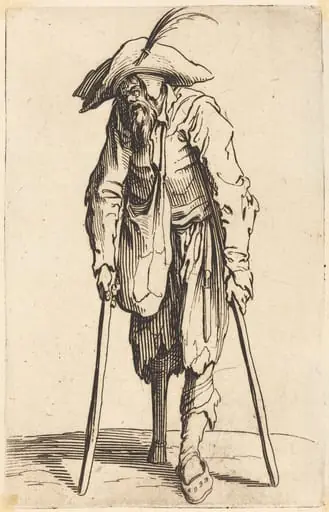
Artwork
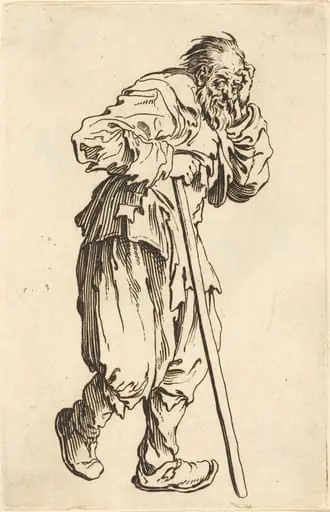
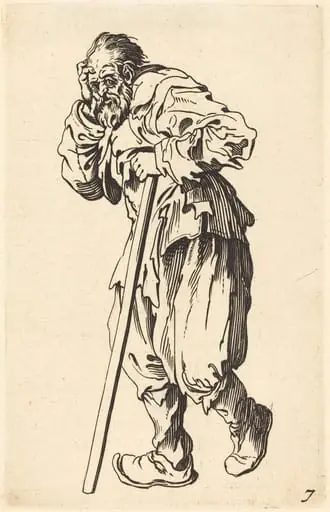
Beggar with a Stick
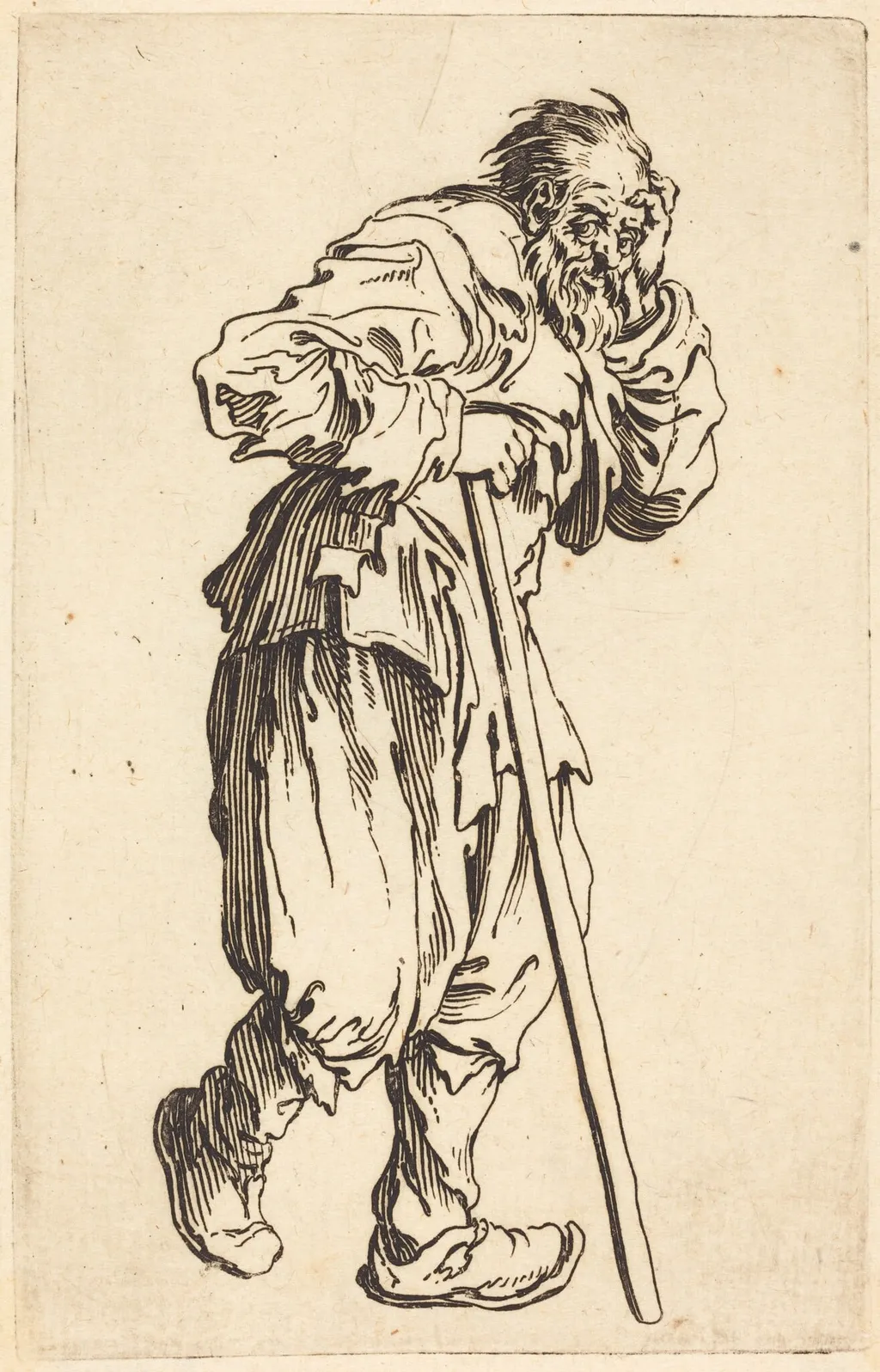
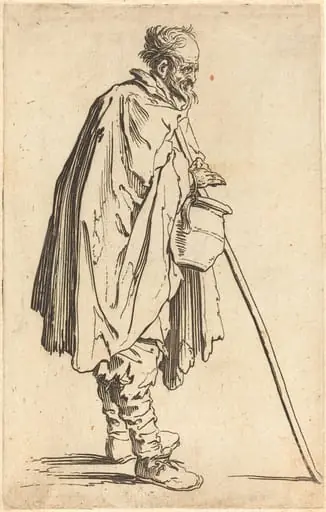
Beggar with a Stick is an ink print by the Baroque artist Jacques Callot. It dates from 1622 and is held in the collection of the National Gallery of Art.
About this work
Overview
The composition reflects Callot’s focus on everyday subjects, rendered with the precision characteristic of his extensive output of more than a thousand prints.
Jacques Callot, a French printmaker active in the early seventeenth century, produced the etching *Beggar with a Stick* circa 1622. Executed on laid paper, the work presents a solitary, elderly figure leaning on a staff within a modest landscape. The composition reflects Callot’s focus on everyday subjects, rendered with the precision characteristic of his extensive output of more than a thousand prints.
Subject & Meaning
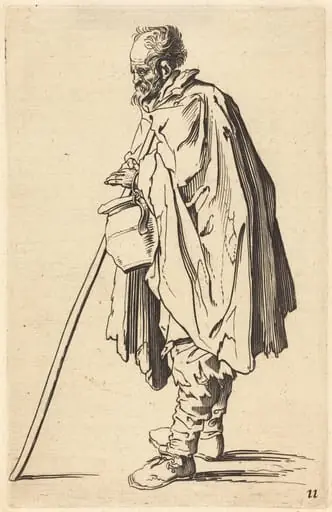
The central figure is an aged beggar, bent forward and supported by a wooden stick. He clutches a cloth‑wrapped bundle in his free hand, suggesting the possessions he carries. The weary expression and loose, wrinkled garments convey the hardships of poverty, offering a candid glimpse into the social conditions of early‑modern Europe.
Technique & Style
Callot employed the etching process, incising lines into a copper plate before transferring the image onto laid paper. The marks are intentionally rough and scratchy, a stylistic choice that imparts immediacy and a documentary quality. This approach allowed him to capture fleeting details of ordinary people with a direct, unembellished hand.
History & Provenance
Created around 1622, the print belongs to the period when Callot was establishing his reputation in Lorraine before moving to Paris. It forms part of his broader series of genre scenes that documented soldiers, beggars, and other figures of contemporary life. The work has circulated among collectors of early modern prints and is now held in several museum collections.
Context
*Beggar with a Stick* reflects the Baroque era’s interest in realism and the representation of social strata. Callot’s prints often served as visual records of the everyday, contrasting with the grand historical and religious subjects dominant in the period’s painting. His attention to detail aligns with the period’s growing curiosity about the lived experiences of the lower classes.
Artist & collection
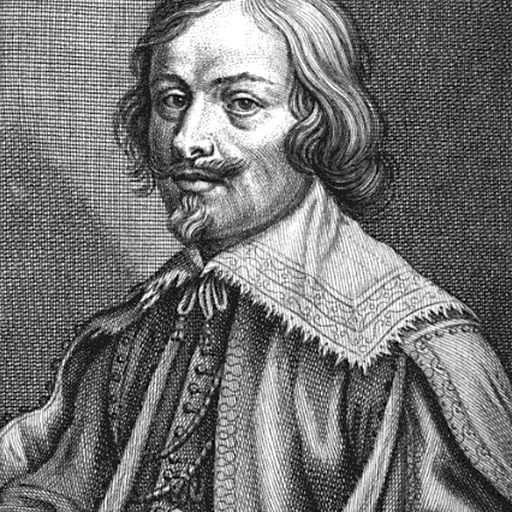
Artist
Jacques Callot was a baroque printmaker and draftsman from the Duchy of Lorraine.

 Holy Family at supper
 Restoration of the Aqueduct at Pisa
 Restoration of the Aqueduct at Pisa
 Square in Paris with Many Figures
 Square in Paris with Many Figures
 Horsemen Attacked by Robbers
 HOW WILL A COVERED PART BE CORRECTED?HOW WIKA A COVERED HEART DEED CORRECTED?
![Christ Walking on the Water [second plate], by Jacques Callot](https://artifactworldgallery.com/img/jacques-callot--christ-walking-on-the-water-second-plate--2069f3bfe4cb2126-w320.webp) Christ Walking on the Water [second plate]
Christ Walking on the Water [second plate]