Artwork
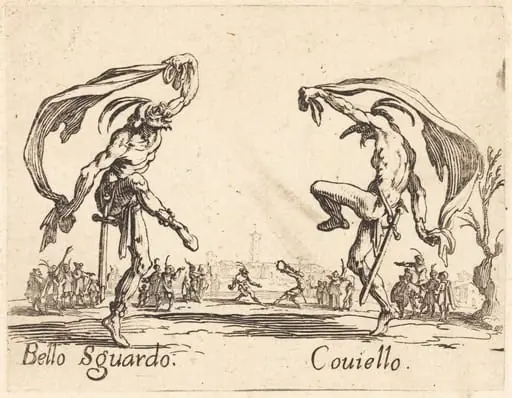
Bello Sguardo and Coviello
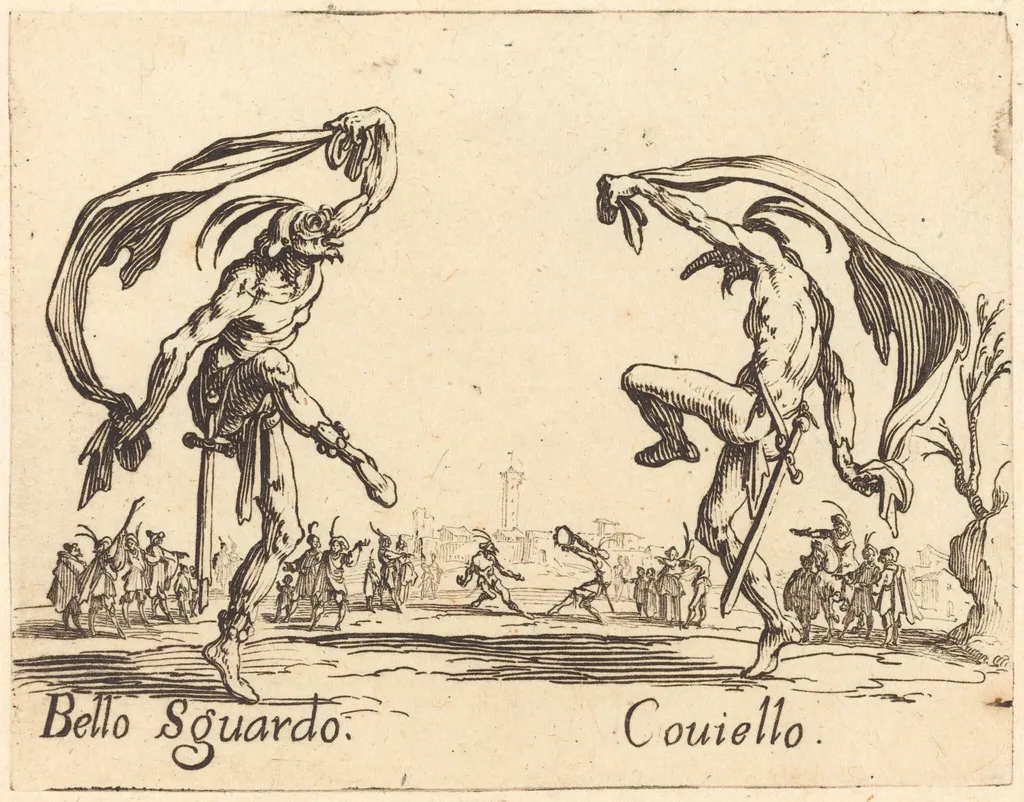
Bello Sguardo and Coviello is an ink print by the Baroque artist Jacques Callot. It dates from 1622 and is held in the collection of the National Gallery of Art.
About this work
Overview
Created circa 1622, *Bello Sguardo and Coviello* is an etching on laid paper by Jacques Callot, a prolific French printmaker active in the early seventeenth century. The composition juxtaposes two enormous, twisting figures who hoist a crowd of diminutive onlookers into the air, set against a quiet townscape of towers and a bridge in the distance.
Subject & Meaning
The two towering men, identified by the captions "Bello Sguardo" and "Coviello," dominate the scene, their blurred faces and contorted bodies suggesting a caricature rather than a literal battle. The tiny crowd below, arms raised in alarm, underscores a comic or cautionary tone, hinting that the work plays with themes of power, spectacle, and social imbalance.
Technique & Style
Callot employed the etching process, incising lines into a copper plate that were then inked and pressed onto laid paper. His characteristic precision renders both the muscular figures and the intricate background architecture. The contrast between the exaggerated foreground and the subdued town demonstrates his baroque interest in dynamic movement and detailed narrative environments.
History & Provenance
Part of Callot's extensive output—over 1,400 known prints—this work reflects his habit of documenting contemporary life, from soldiers to courtly scenes. While specific ownership records are scarce, the print has been catalogued among his early Lorraine period productions and is frequently cited in studies of seventeenth‑century printmaking.
Artist & collection
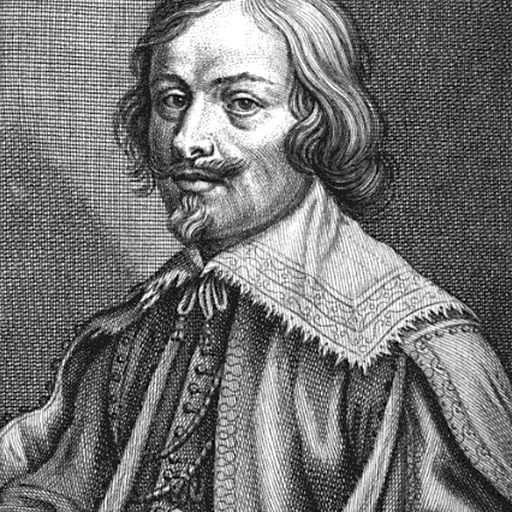
Artist
Jacques Callot was a baroque printmaker and draftsman from the Duchy of Lorraine.

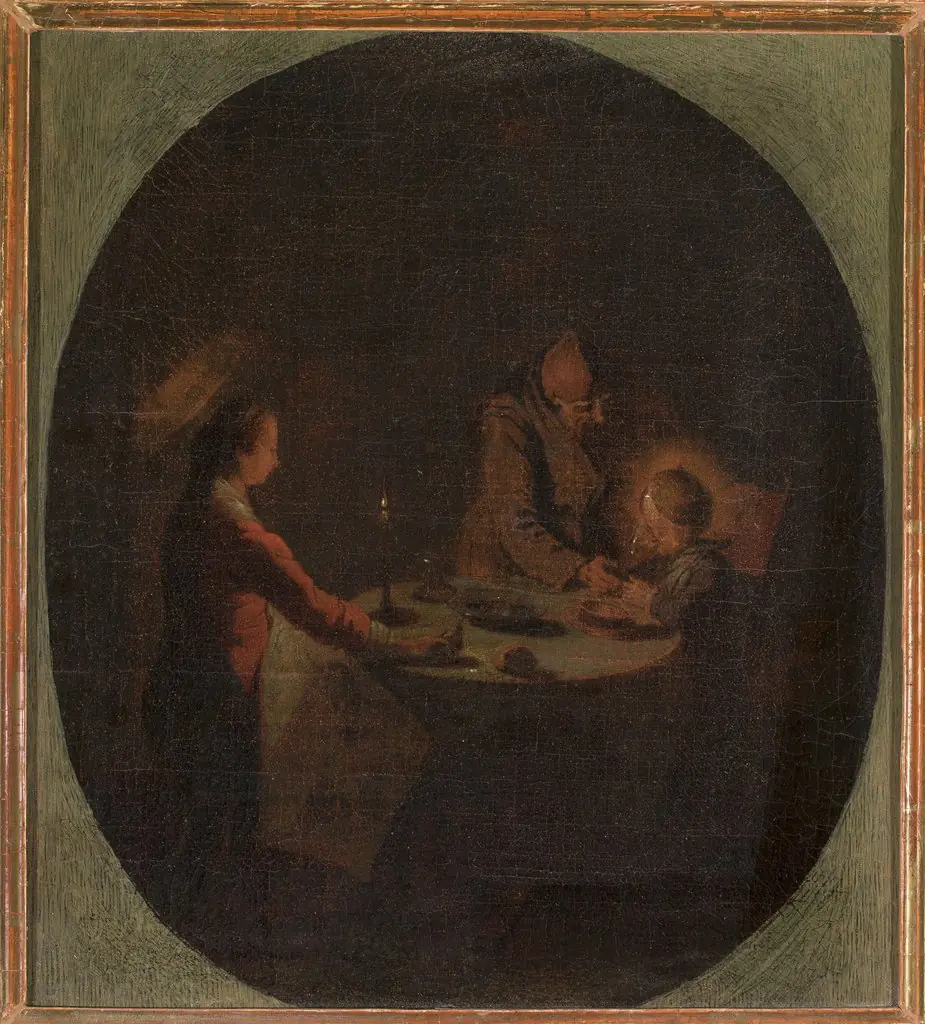 Holy Family at supper
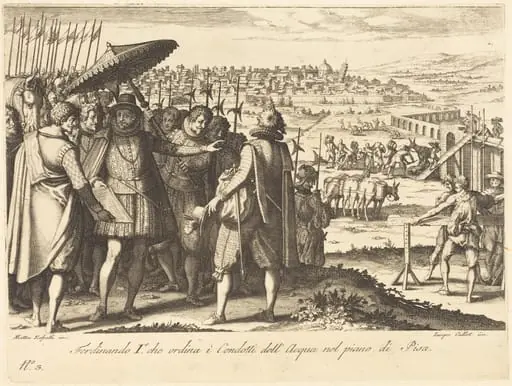 Restoration of the Aqueduct at Pisa
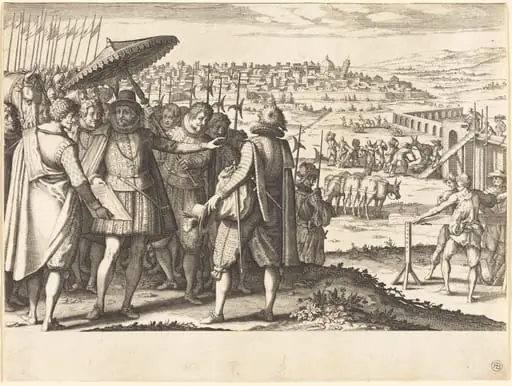 Restoration of the Aqueduct at Pisa
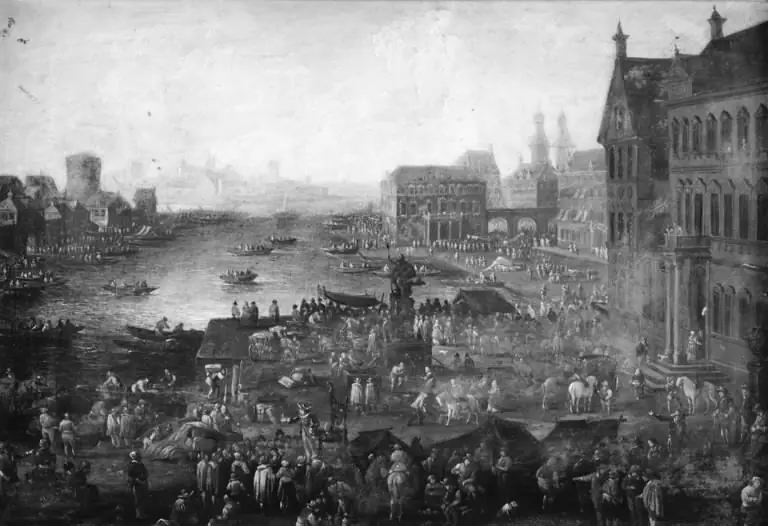 Square in Paris with Many Figures
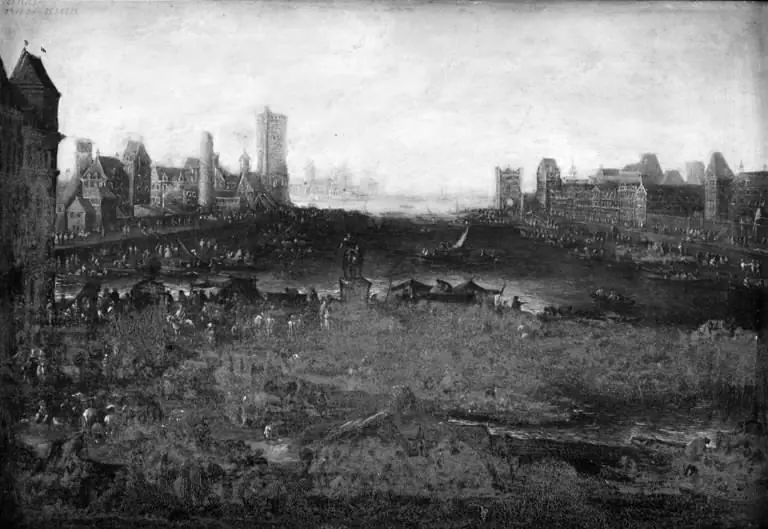 Square in Paris with Many Figures
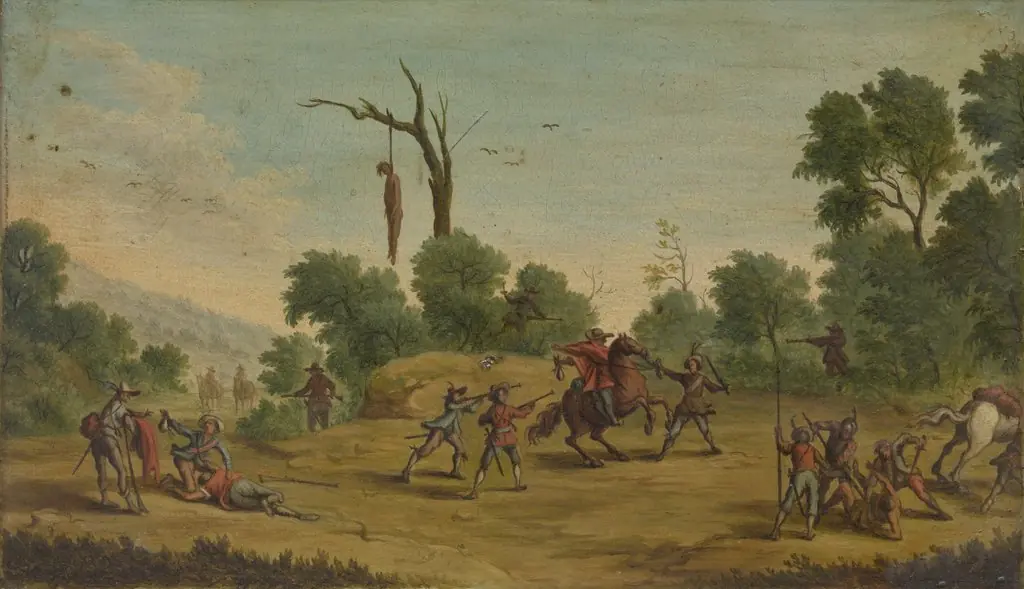 Horsemen Attacked by Robbers
 HOW WILL A COVERED PART BE CORRECTED?HOW WIKA A COVERED HEART DEED CORRECTED?
![Christ Walking on the Water [second plate], by Jacques Callot](https://artifactworldgallery.com/img/jacques-callot--christ-walking-on-the-water-second-plate--2069f3bfe4cb2126-w320.webp) Christ Walking on the Water [second plate]
Christ Walking on the Water [second plate]