Artwork
Burning Phoenix
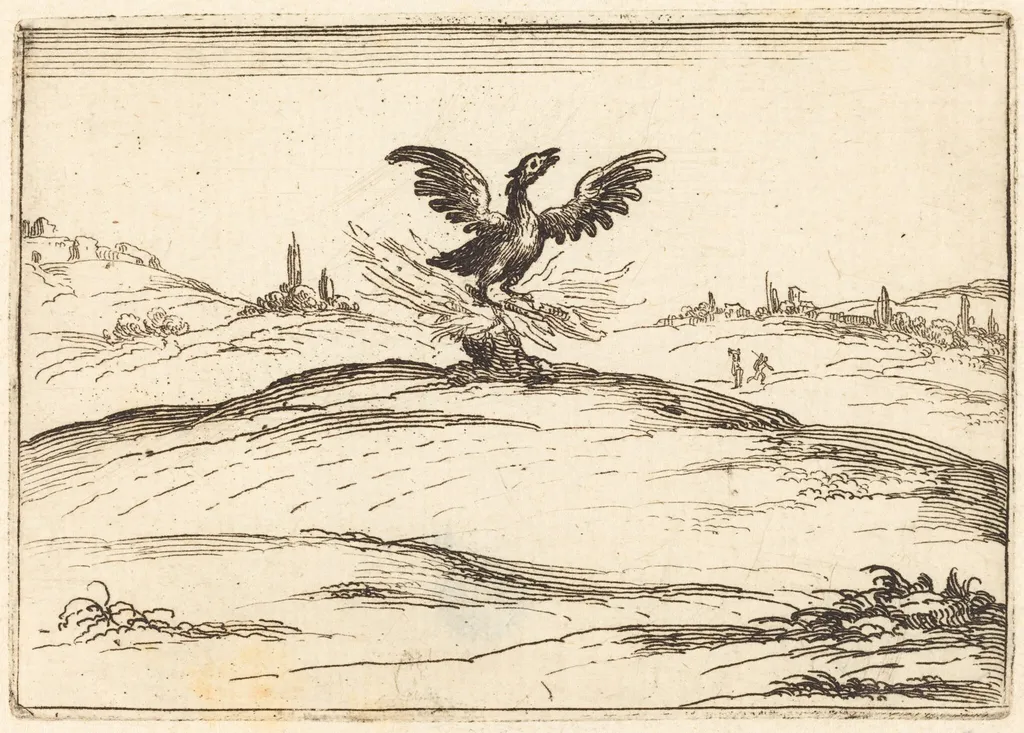
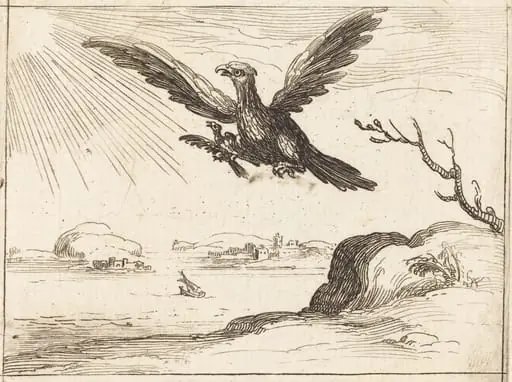
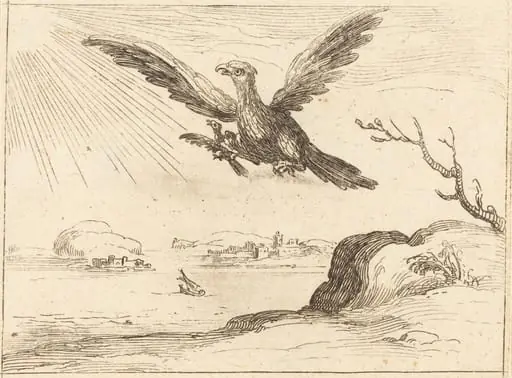
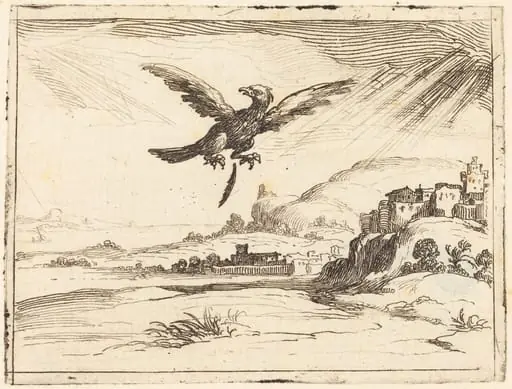
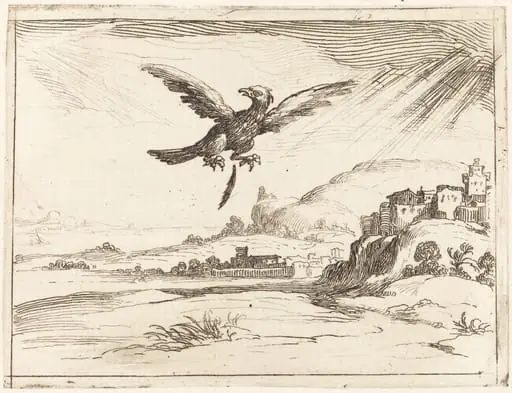
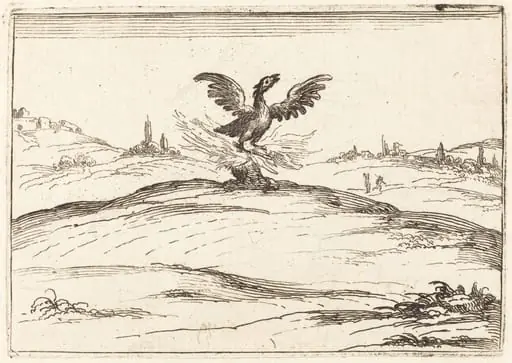
Burning Phoenix is an ink print by the Baroque artist Jacques Callot. It dates from 1628 and is held in the collection of the National Gallery of Art.
About this work
Overview
Part of a vast body of over 1,400 prints, this work exemplifies his focus on dramatic, often symbolic subjects rendered with precision.
Jacques Callot, a printmaker from the Duchy of Lorraine, produced *Burning Phoenix* in 1628 as an etching on laid paper. Part of a vast body of over 1,400 prints, this work exemplifies his focus on dramatic, often symbolic subjects rendered with precision. The technique involved incising lines into a metal plate, inked and pressed onto paper, allowing for fine detail and tonal variation characteristic of Baroque printmaking.
Subject & Meaning
The image depicts a phoenix engulfed in flames, perched on a rocky outcrop as a distant city burns. The stormy sky and turbulent sea amplify the sense of calamity. While the phoenix traditionally symbolizes rebirth, here its destruction dominates, suggesting themes of ruin, divine retribution, or the fragility of civilization amid chaos. The scene resists clear narrative, inviting contemplation rather than moral resolution.
Technique & Style
Callot employed fine, controlled etching lines to render texture and atmosphere: the bird’s feathers, the smoky horizon, and the churning waves are each defined with meticulous gradations. The dark, nearly monochromatic palette heightens contrast, with the phoenix’s fire as the sole source of luminosity. His use of layered hatching and delicate crosshatching achieves depth without color, a hallmark of his technical mastery in intaglio printmaking.
History & Provenance
Created during Callot’s mature period in Nancy, the print likely circulated among collectors and scholars familiar with allegorical imagery. Though no early ownership records are widely documented, its survival in multiple institutional collections suggests it was valued for its technical ambition and symbolic complexity. It was not commissioned for a specific patron but emerged from Callot’s independent exploration of myth and disaster.
Context
In the late 1620s, Europe was deeply affected by the Thirty Years’ War, with widespread destruction and displacement. Callot’s earlier series on military atrocities may have influenced this work’s tone. While not a direct depiction of war, *Burning Phoenix* resonates with contemporary anxieties about collapse and renewal. Its mythological subject allowed him to address violence and transformation indirectly, avoiding direct political commentary.
Legacy
The print contributed to Callot’s reputation as a master of narrative etching, influencing later artists interested in symbolic and apocalyptic themes. Though less known than his military scenes, *Burning Phoenix* remains a compelling example of how Baroque printmakers used myth to explore human suffering. Its technical refinement and emotional gravity continue to inform studies of early modern print culture.
Own this work as a print
Artist & collection
Artist
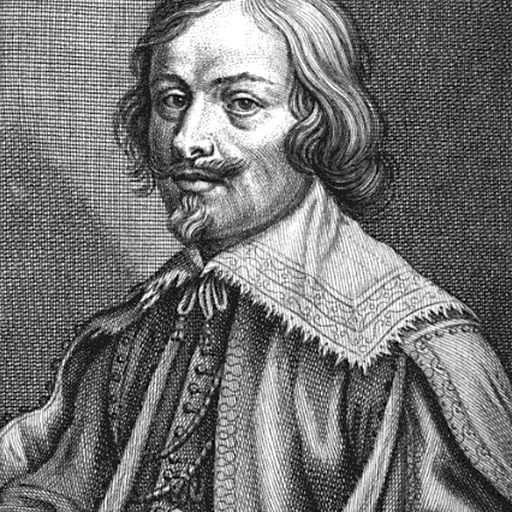
Jacques Callot was a baroque printmaker and draftsman from the Duchy of Lorraine.

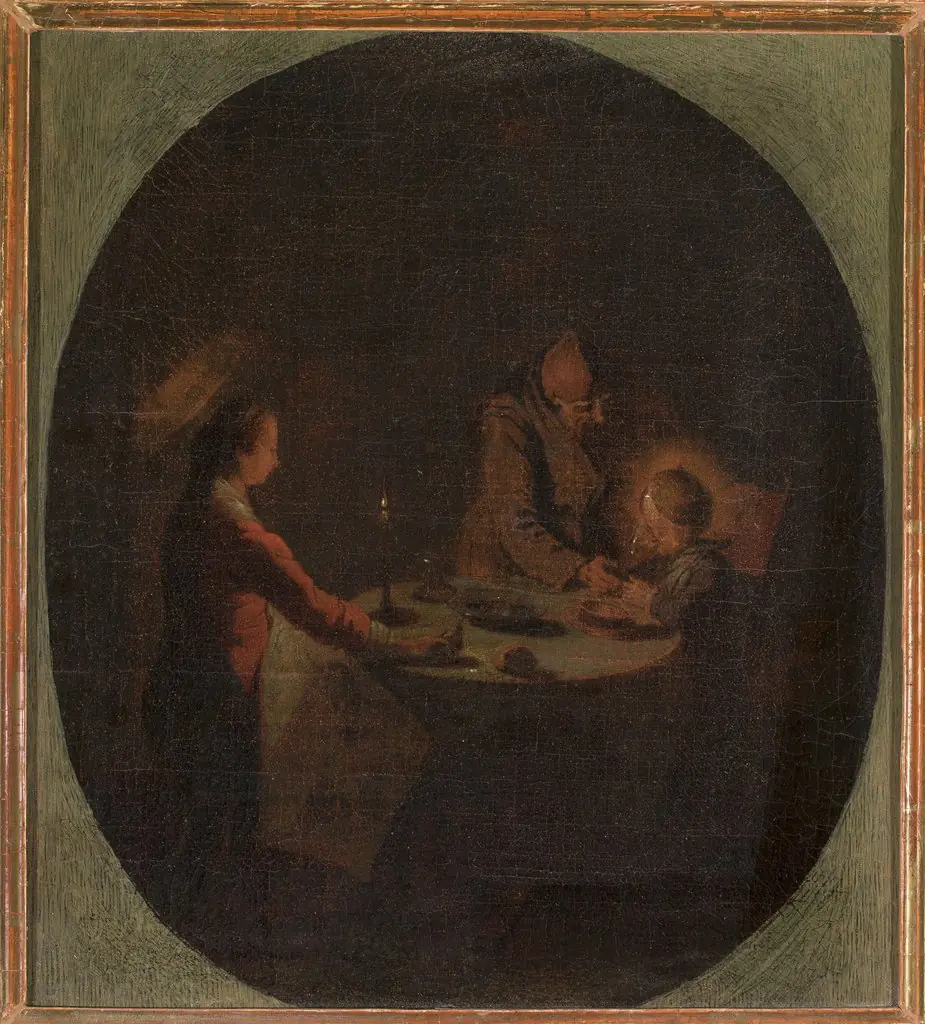 Holy Family at supper
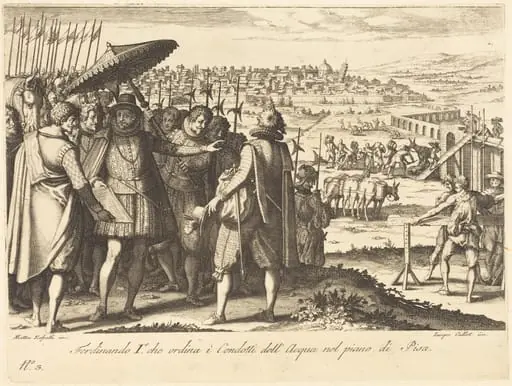 Restoration of the Aqueduct at Pisa
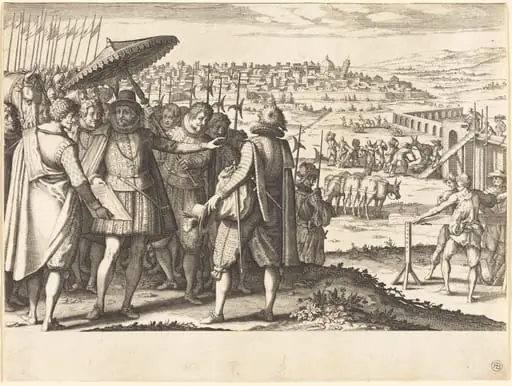 Restoration of the Aqueduct at Pisa
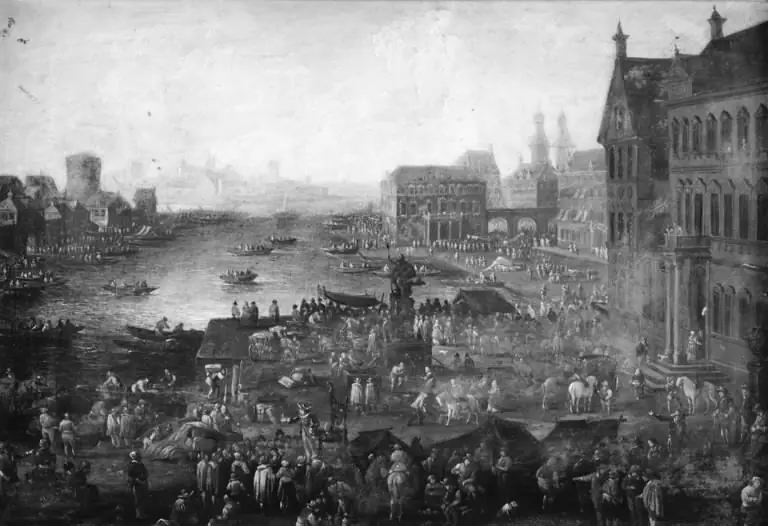 Square in Paris with Many Figures
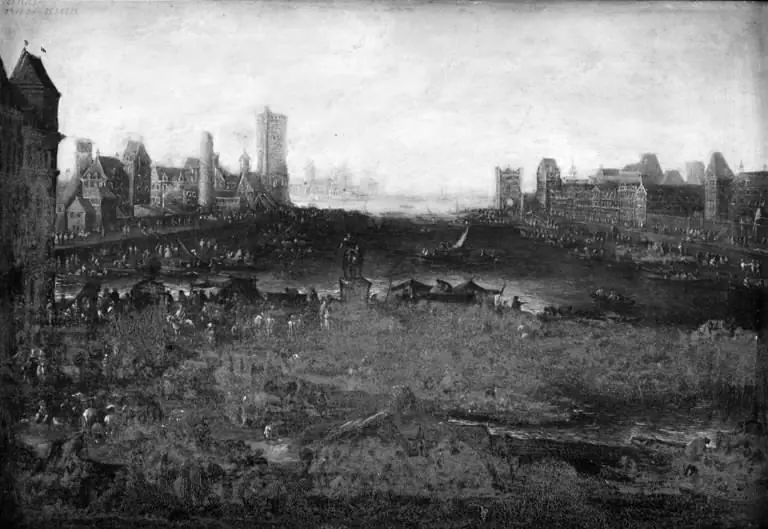 Square in Paris with Many Figures
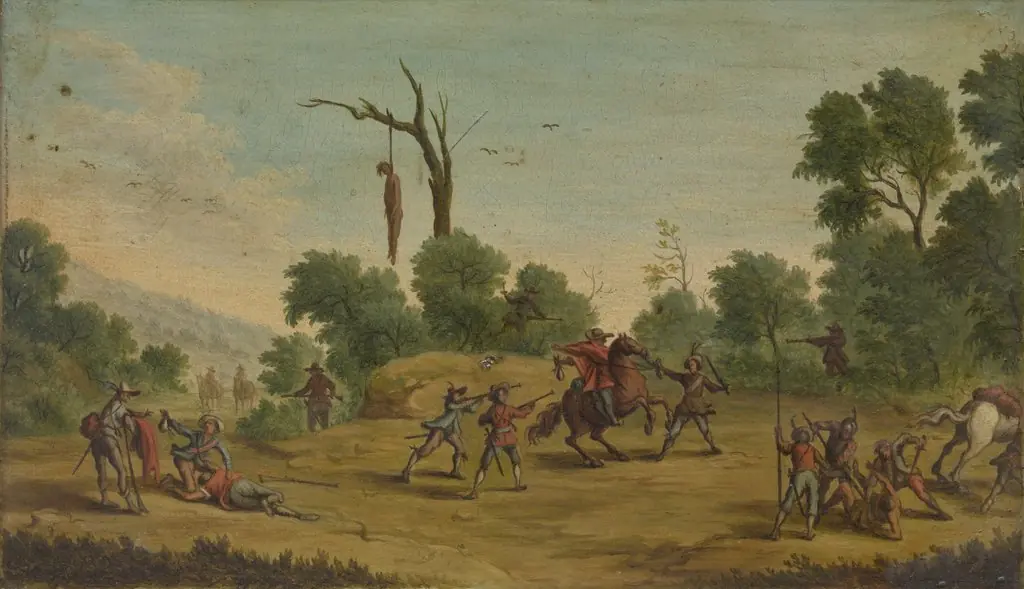 Horsemen Attacked by Robbers
 HOW WILL A COVERED PART BE CORRECTED?HOW WIKA A COVERED HEART DEED CORRECTED?
![Christ Walking on the Water [second plate], by Jacques Callot](https://artifactworldgallery.com/img/jacques-callot--christ-walking-on-the-water-second-plate--2069f3bfe4cb2126-w320.webp) Christ Walking on the Water [second plate]
Christ Walking on the Water [second plate]