Artwork
Caesar's Coin
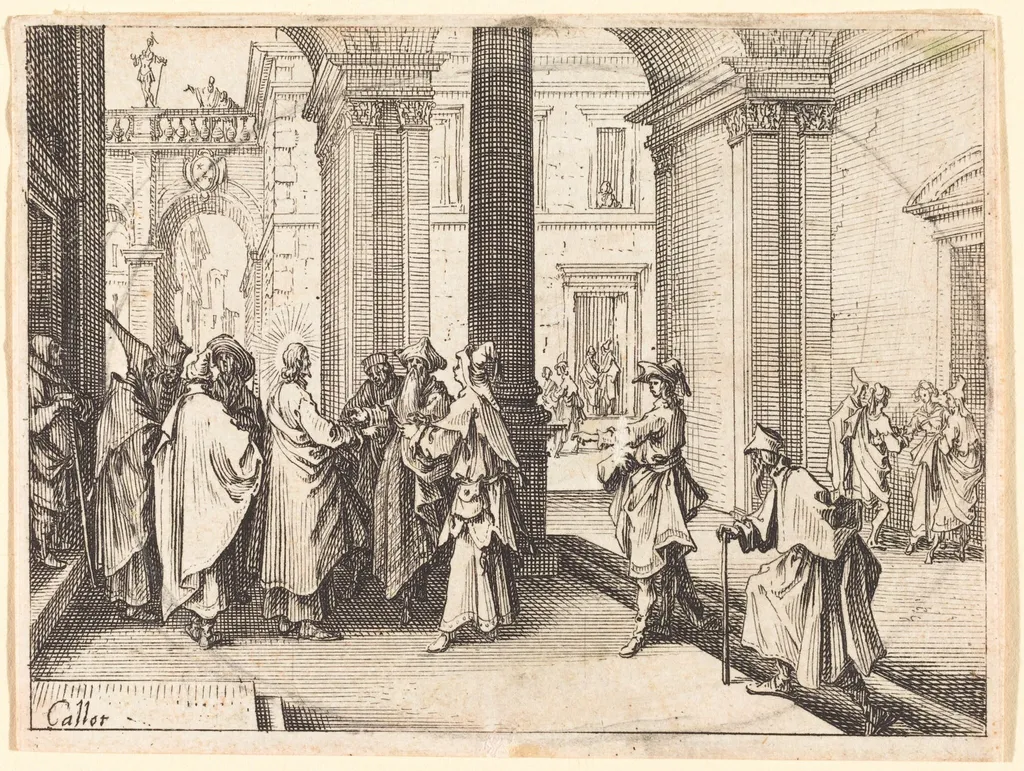
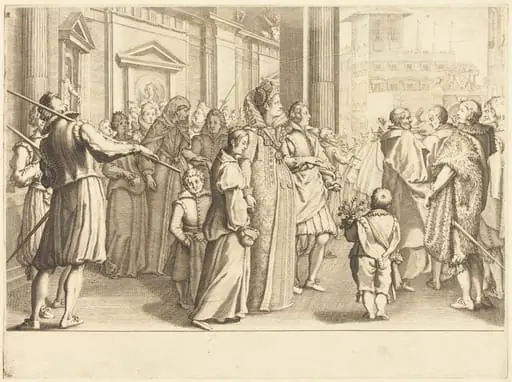
Caesar's Coin is an ink print by the Baroque artist Jacques Callot. It dates from 1635 and is held in the collection of the National Gallery of Art.
About this work
Overview
Caesar's Coin is an etching on laid paper created by Jacques Callot in 1635. A prolific French Baroque printmaker, Callot produced over 1,400 etchings, documenting various aspects of his era.
Subject & Meaning
The etching depicts a crowded, grand classical building scene where a central figure holds up a coin, captivating the attention of robed and hatted onlookers. The coin's prominence suggests its significance as a focal point of interest or transaction.
Technique & Style
Callot employed sharp lines in the etching to convey drama and movement, evoking a sense of theatricality. The detailed rendering of human figures, classical architecture, and the emphasized glow of the coin demonstrate his meticulous printmaking approach.
History & Provenance
Created in 1635 by Jacques Callot, a renowned printmaker from the Duchy of Lorraine, the work is characteristic of his extensive documentation of 17th-century life, including social, religious, and military themes.
Context
Caesar's Coin reflects the Baroque period's emphasis on dynamic composition and detailed realism. The classical setting may allude to the era's fascination with antiquity, while the scene's everyday nature grounds it in Callot's observational style.
Legacy
As part of Callot's vast oeuvre, Caesar's Coin contributes to the artist's influence on Baroque printmaking, notable for its technical precision and narrative depth, inspiring subsequent generations of printmakers.
Own this work as a print
Artist & collection

Artist
Jacques Callot was a baroque printmaker and draftsman from the Duchy of Lorraine.

 Holy Family at supper
 Restoration of the Aqueduct at Pisa
 Restoration of the Aqueduct at Pisa
 Square in Paris with Many Figures
 Square in Paris with Many Figures
 Horsemen Attacked by Robbers
 HOW WILL A COVERED PART BE CORRECTED?HOW WIKA A COVERED HEART DEED CORRECTED?
![Christ Walking on the Water [second plate], by Jacques Callot](https://artifactworldgallery.com/img/jacques-callot--christ-walking-on-the-water-second-plate--2069f3bfe4cb2126-w320.webp) Christ Walking on the Water [second plate]
Christ Walking on the Water [second plate]
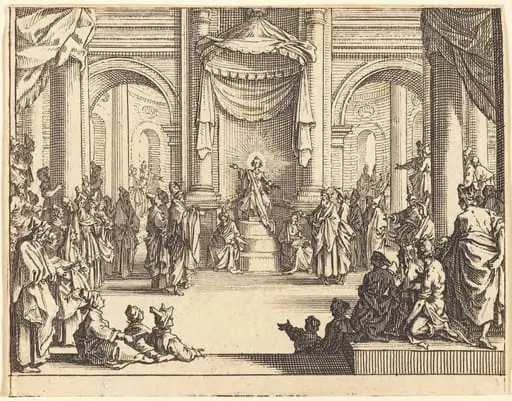 Christ Disputing with the Doctors
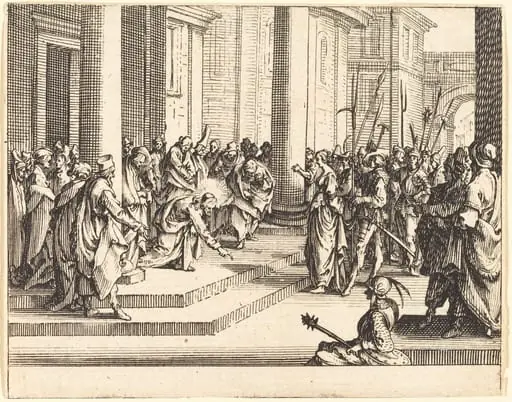 Stoning of Jesus
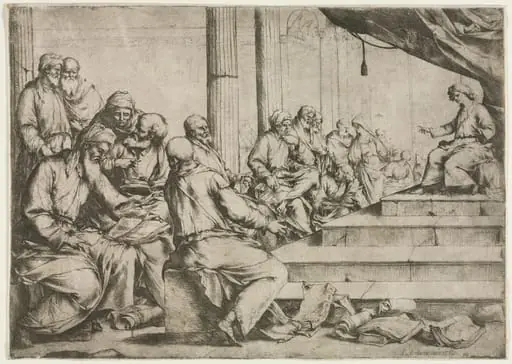 The Young Christ Teaching in the Temple
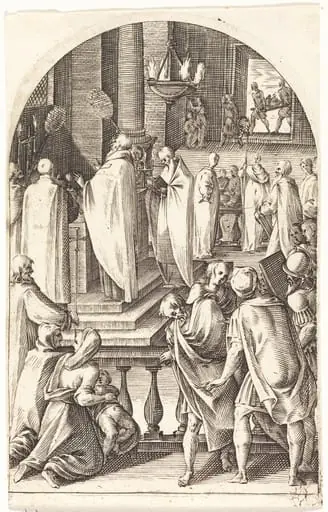 Saint Basil Celebrating the Mass
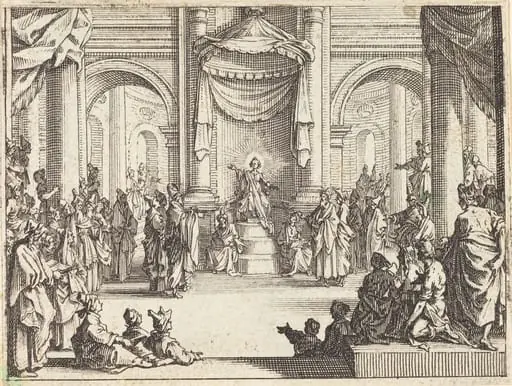 Christ Disputing with the Doctors
![The Betrothal of Margaret of Austria to Philip III, King of Spain [verso], by Raffaello Schiaminossi](https://artifactworldgallery.com/img/raffaello-schiaminossi--the-betrothal-of-margaret-of-austria-to-philip-iii-king-of-s--509229b9feb3b80f-w320.webp) The Betrothal of Margaret of Austria to Philip III, King of Spain [verso]
The Betrothal of Margaret of Austria to Philip III, King of Spain [verso]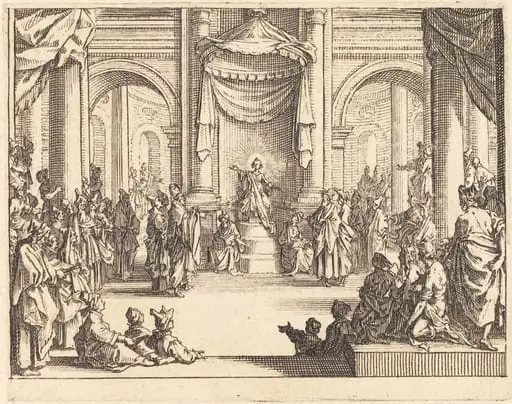 Christ Disputing with the Doctors
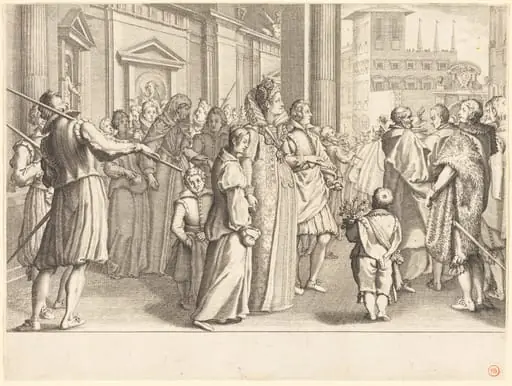 Grand Duchess at the Procession of the Young Girls
 Grand Duchess at the Procession of the Young Girls