Artwork
Entry of M. de Macey
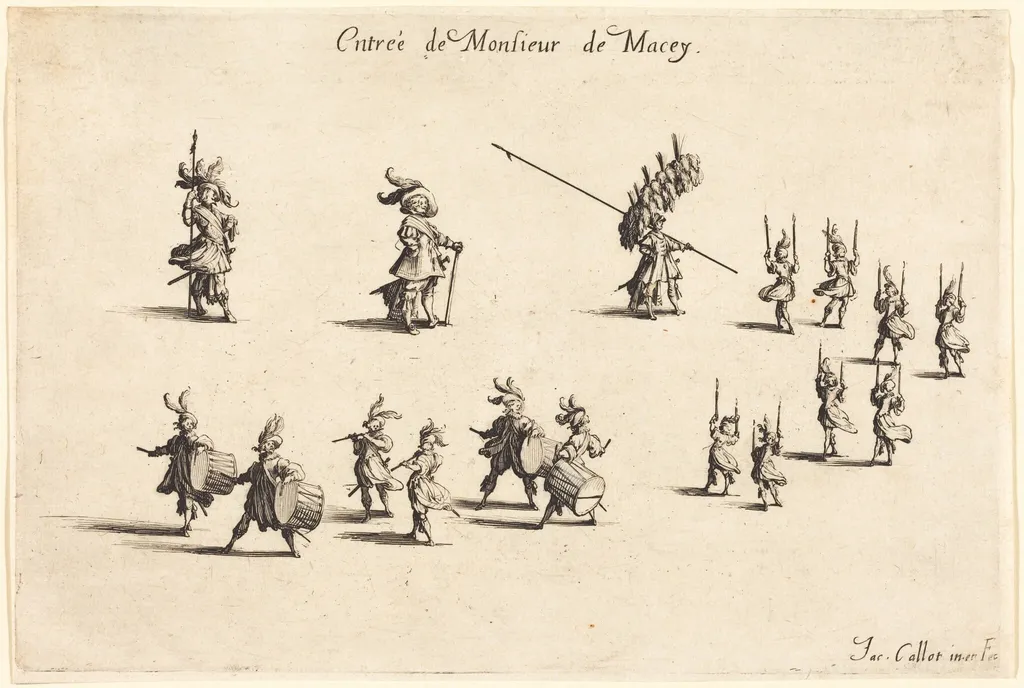
Entry of M. de Macey is an ink print by the Baroque artist Jacques Callot. It dates from 1627 and is held in the collection of the National Gallery of Art.
About this work
Overview
Jacques Callot, a French printmaker active in the early seventeenth century, produced the etching *Entry of M. de Macey* in 1627. Executed on laid paper, the work belongs to Callot’s prolific output of more than a thousand prints that record the social and military life of his time.
Subject & Meaning
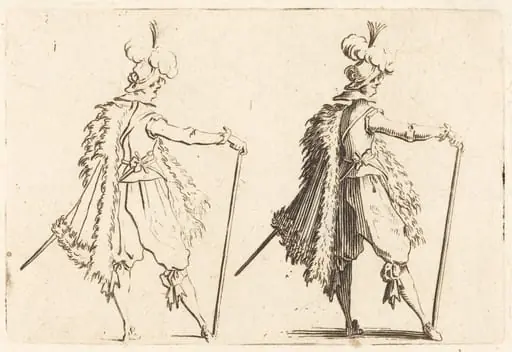
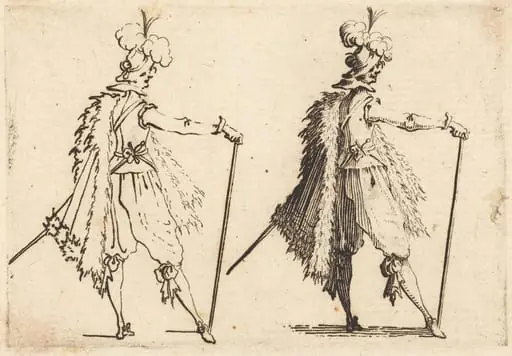
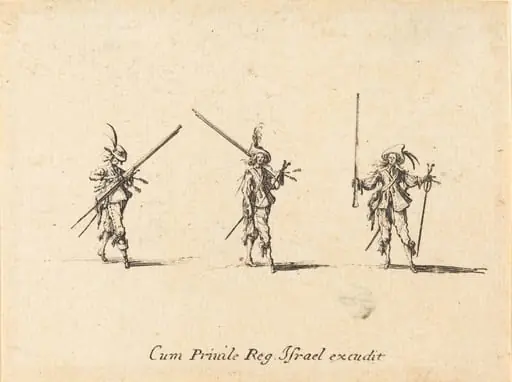
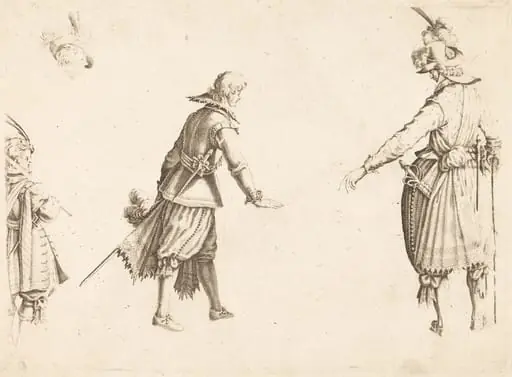
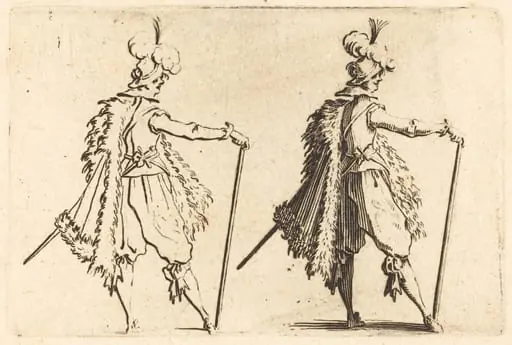
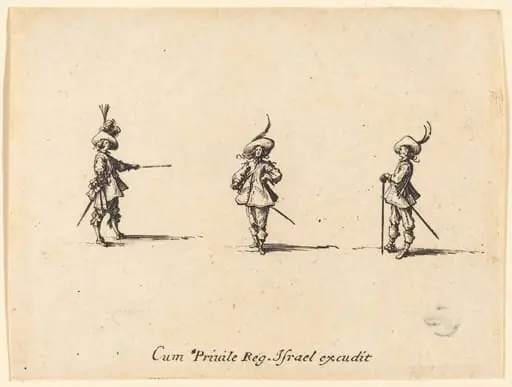
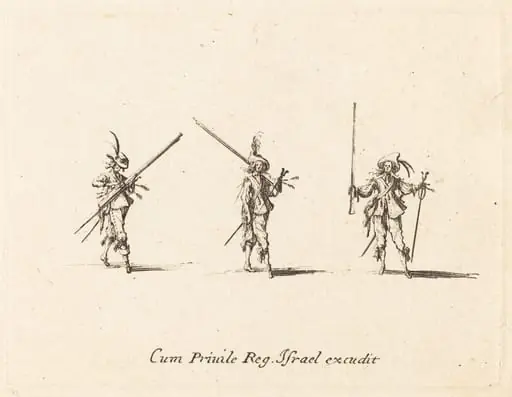
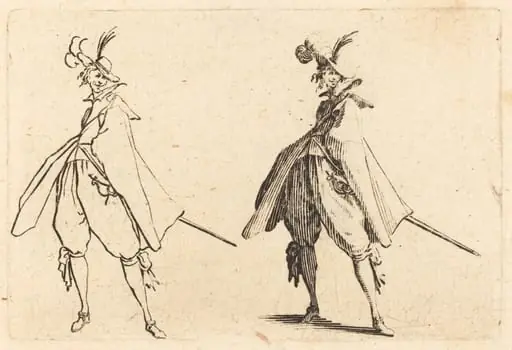
The image depicts a procession of diminutive figures marching in single file. Some participants bear swords, others carry drums or banners, and their attire—large hats, elaborate coats, and high boots—suggests a formal parade, likely honoring the titled figure named in the inscription, Monseigneur de Macey.
Technique & Style
Callot employed the etching technique, incising fine lines into a copper plate that were then transferred to paper. The drawing is characterized by crisp, precise lines that give motion to the tiny, stylized figures, while the flat, unmodulated background emphasizes the linear rhythm of the march.
History & Provenance
Created in 1627, the print is part of Callot’s early period when he was establishing his reputation in Lorraine. It circulated among collectors of prints and served as a visual record of contemporary ceremonial events, though no specific ownership trail is recorded beyond its inclusion in later catalogues of Callot’s work.
Context
During the Baroque era, French artists often documented courtly and military spectacles. Callot’s prints stand out for their combination of narrative detail and technical exactness, reflecting a broader interest in portraying public ceremonies with a level of documentary fidelity.
Artist & collection
Artist
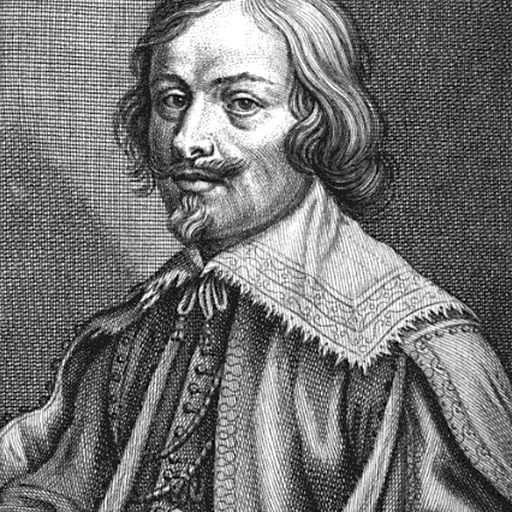
Jacques Callot was a baroque printmaker and draftsman from the Duchy of Lorraine.

 Holy Family at supper
 Restoration of the Aqueduct at Pisa
 Restoration of the Aqueduct at Pisa
 Square in Paris with Many Figures
 Square in Paris with Many Figures
 Horsemen Attacked by Robbers
 HOW WILL A COVERED PART BE CORRECTED?HOW WIKA A COVERED HEART DEED CORRECTED?
![Christ Walking on the Water [second plate], by Jacques Callot](https://artifactworldgallery.com/img/jacques-callot--christ-walking-on-the-water-second-plate--2069f3bfe4cb2126-w320.webp) Christ Walking on the Water [second plate]
Christ Walking on the Water [second plate]