Artwork
Il Solimano, Act I
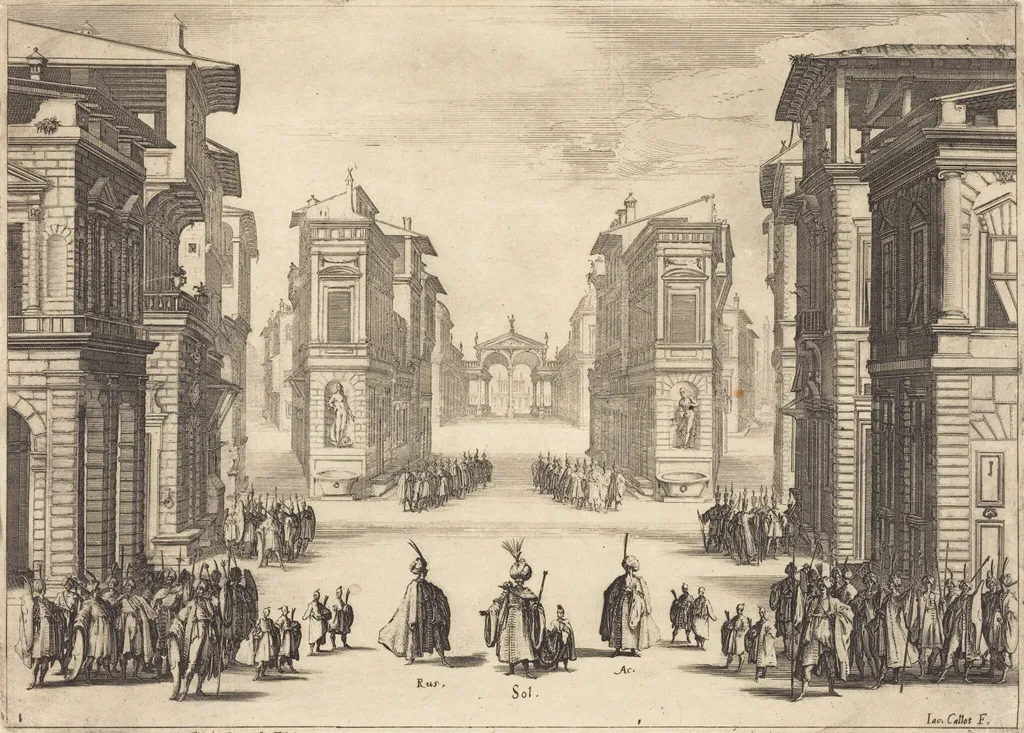
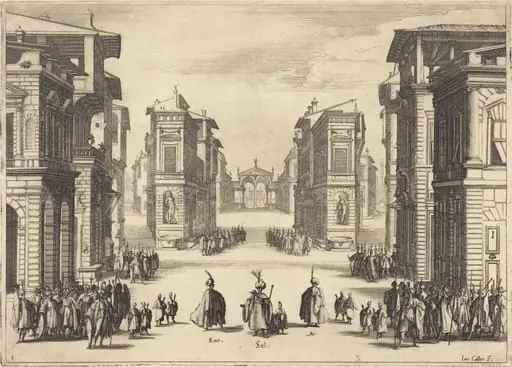
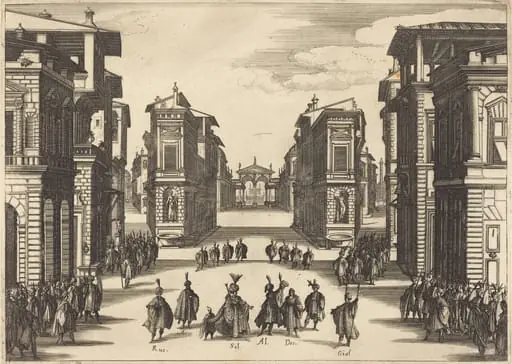
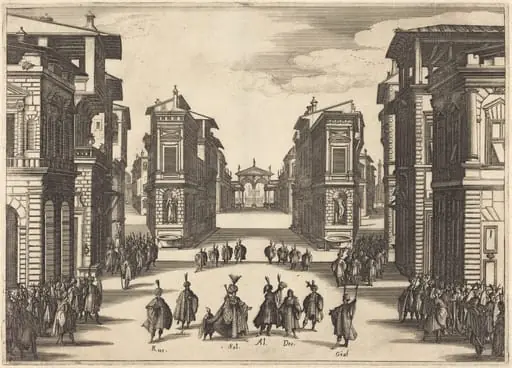
Il Solimano, Act I is an ink print by the Baroque artist Jacques Callot. It dates from 1620 and is held in the collection of the National Gallery of Art.
About this work
Overview
The work belongs to Callot’s prolific output of more than a thousand prints, which range from military subjects to courtly and religious scenes.
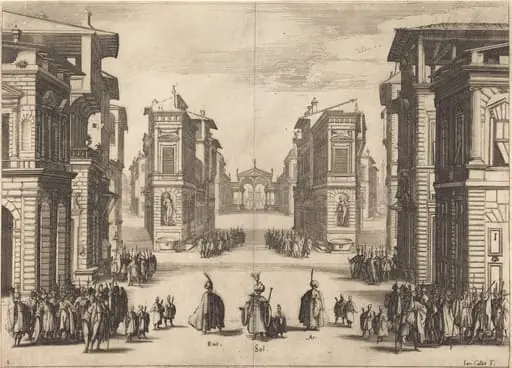
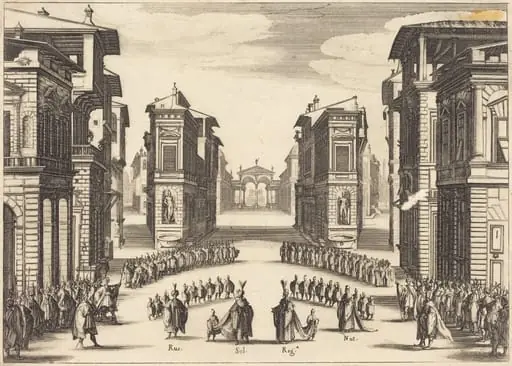
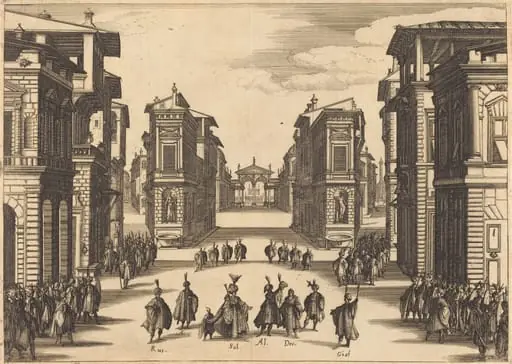
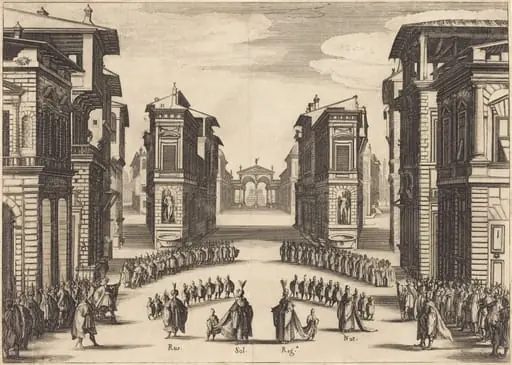
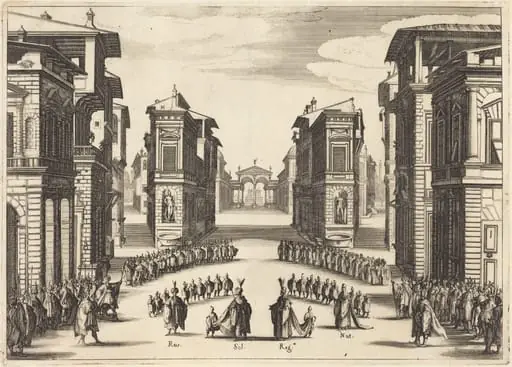
Created in 1620 by the French printmaker Jacques Callot, *Il Solimano, Act I* is an etching and engraving executed on laid paper. The work belongs to Callot’s prolific output of more than a thousand prints, which range from military subjects to courtly and religious scenes. This particular image captures a bustling urban square populated by a crowd and a group of richly dressed figures, rendered with the meticulous detail typical of his practice.
Subject & Meaning
The composition illustrates a moment from the drama *Il Solimano*, set in a city plaza framed by surrounding architecture. In the foreground, a dense assemblage of onlookers creates a sense of public spectacle, while centrally positioned characters in elaborate attire suggest a narrative focal point, perhaps a ceremonial or confrontational episode within the play’s storyline.
Technique & Style
Callot combined etching and engraving to achieve a fine network of lines that model surfaces, textures, and shadows. The use of laid paper contributes a subtle tooth that enhances the depth of his incised marks. Light and dark contrasts are carefully modulated, producing a dramatic chiaroscuro that aligns the work with Baroque aesthetics of movement, tension, and visual richness.
History & Provenance
The print emerged during Callot’s early career while he was active in the Duchy of Lorraine, a period when he was establishing his reputation across Europe. Although specific ownership records are scarce, the piece has been documented in several catalogues of his oeuvre and appears in collections that focus on 17th‑century French printmaking.
Context
*Il Solomano, Act I* reflects the Baroque fascination with grand public scenes and theatricality. Callot’s interest in portraying contemporary life—military camps, court festivities, and urban gatherings—finds expression here, where the crowded square becomes a stage for narrative drama, echoing the broader cultural emphasis on spectacle and elaborate costume in early 17th‑century Europe.
Artist & collection
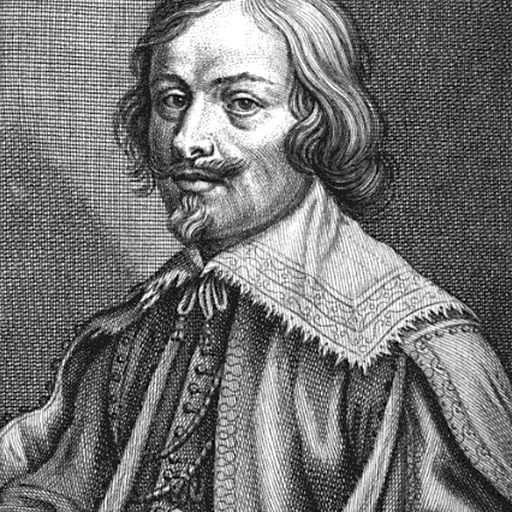
Artist
Jacques Callot was a baroque printmaker and draftsman from the Duchy of Lorraine.

 Holy Family at supper
 Restoration of the Aqueduct at Pisa
 Restoration of the Aqueduct at Pisa
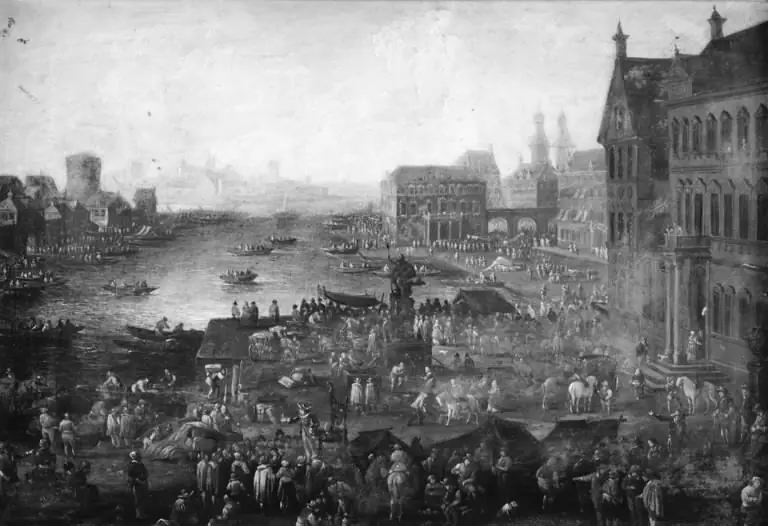 Square in Paris with Many Figures
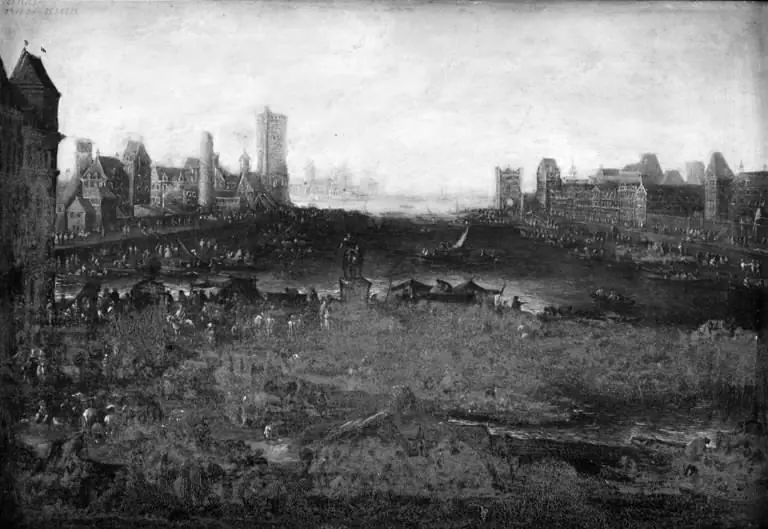 Square in Paris with Many Figures
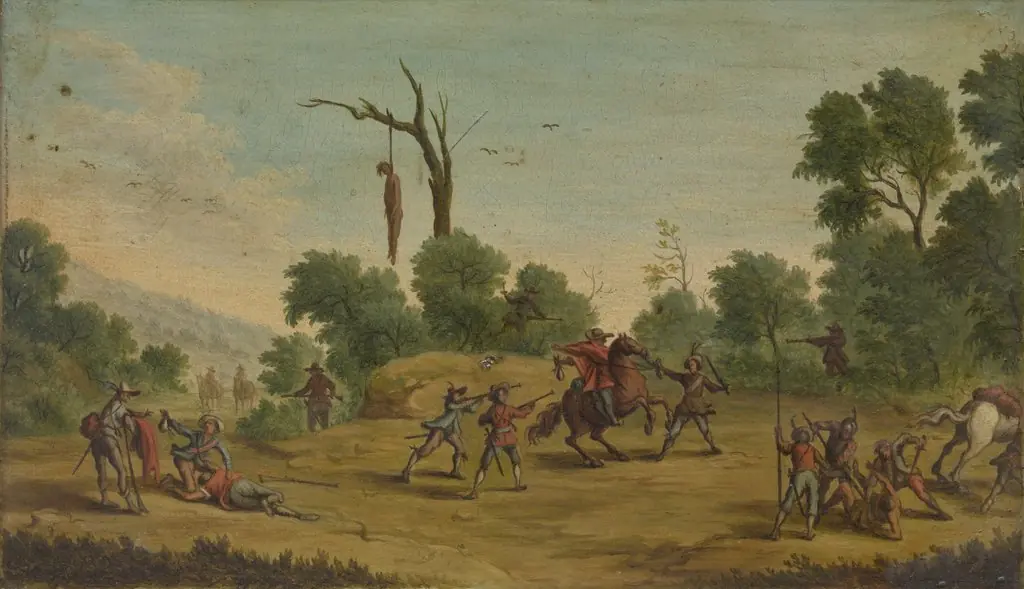 Horsemen Attacked by Robbers
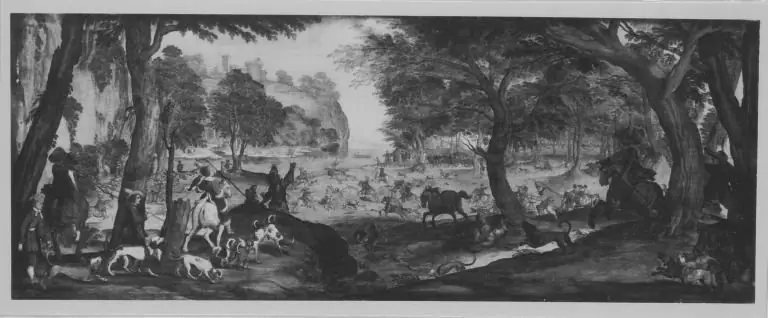 HOW WILL A COVERED PART BE CORRECTED?HOW WIKA A COVERED HEART DEED CORRECTED?
![Christ Walking on the Water [second plate], by Jacques Callot](https://artifactworldgallery.com/img/jacques-callot--christ-walking-on-the-water-second-plate--2069f3bfe4cb2126-w320.webp) Christ Walking on the Water [second plate]
Christ Walking on the Water [second plate]