Artwork
Mysteries of the Passion
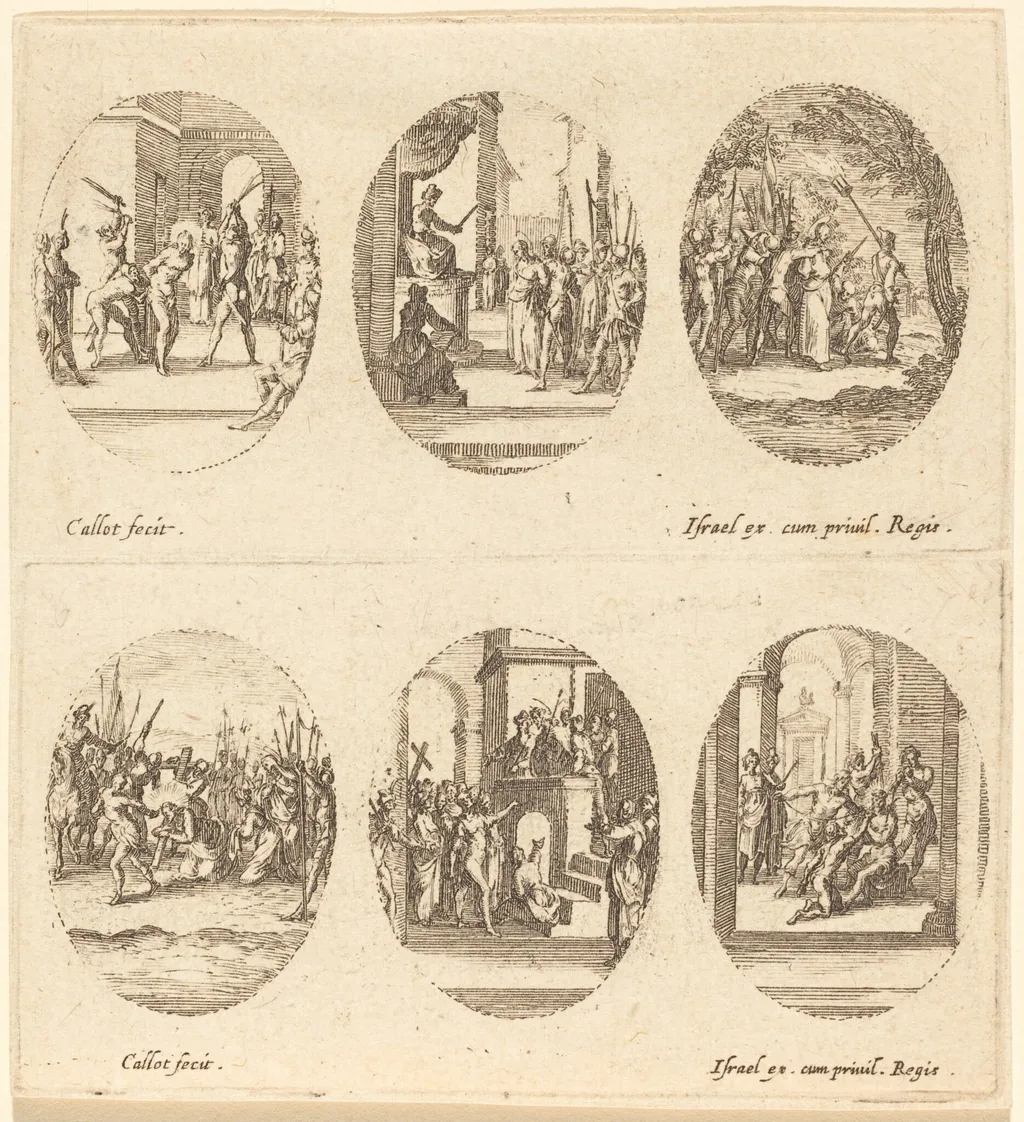
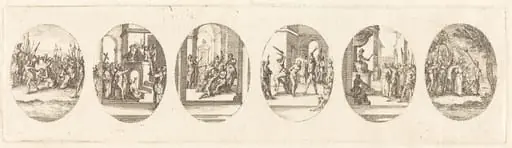
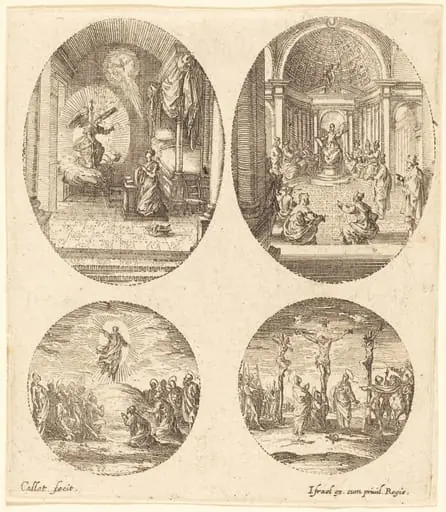
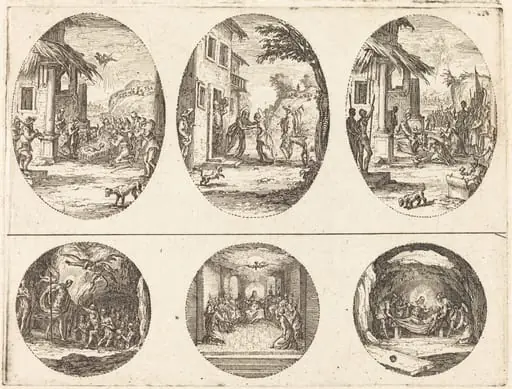
Mysteries of the Passion is an ink print by the Baroque artist Jacques Callot. It dates from 1631 and is held in the collection of the National Gallery of Art.
About this work
Overview
This piece exemplifies his mastery of the etching technique, using fine lines to compress multiple scenes into a single composition, each framed within an oval.
Created around 1631, Jacques Callot’s *Mysteries of the Passion* is an etching on laid paper that forms part of a larger religious series. As a leading printmaker from the Duchy of Lorraine, Callot produced over 1,400 works, blending religious narratives with keen observation of human behavior. This piece exemplifies his mastery of the etching technique, using fine lines to compress multiple scenes into a single composition, each framed within an oval.
Subject & Meaning
The print presents five compact episodes from the Passion of Christ, arranged in a rhythmic sequence. Each scene captures a moment of suffering, accusation, or reaction—figures gesture, kneel, or recoil with emotional intensity. The inclusion of a pierced figure in the lower-left corner alludes to Christ’s crucifixion, while surrounding crowds reflect varied responses to divine tragedy. The arrangement invites contemplation of collective witness and individual grief.
Technique & Style
Callot employed fine, controlled etching lines to achieve remarkable detail and depth. Cross-hatching builds shadow and volume, while dense, precise strokes animate the throngs of figures. Architectural backdrops—arches, columns, and shallow stages—frame each scene like a theatrical setting. The composition’s tightness and clarity reflect his technical discipline, turning the limitations of the medium into a strength for narrative compression.
History & Provenance
This print emerged during Callot’s mature period, when his religious works gained recognition across Europe. Though no specific early ownership records are documented, the work was likely circulated among collectors and clergy familiar with devotional imagery. Its survival in multiple impressions suggests it was widely reproduced, reflecting both artistic demand and the role of prints in spreading religious narratives beyond painted altarpieces.
Context
In early 17th-century Europe, religious prints served as accessible tools for meditation and instruction, especially amid the tensions of the Reformation and Counter-Reformation. Callot’s series aligned with Catholic devotional practices, offering viewers a visual liturgy. His focus on crowd dynamics and emotional realism distinguished his approach from more idealized depictions, grounding sacred events in observable human behavior.
Legacy
Callot’s *Mysteries of the Passion* influenced later printmakers through its narrative density and technical precision. His ability to convey complex stories in small formats became a model for sequential imagery in print. Though overshadowed in popular memory by painters, his etchings helped define the expressive potential of the medium, leaving a lasting imprint on the evolution of graphic storytelling.
Artist & collection
Artist
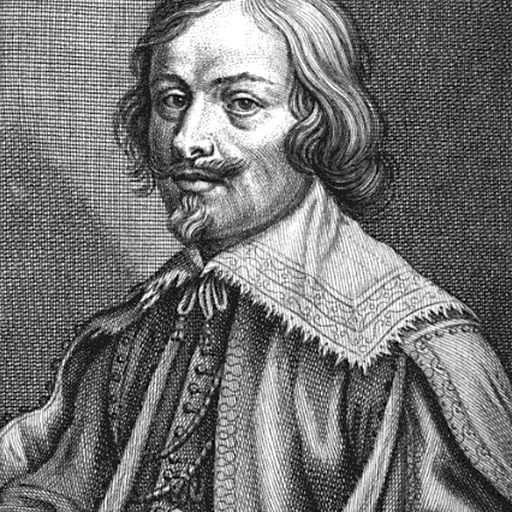
Jacques Callot was a baroque printmaker and draftsman from the Duchy of Lorraine.

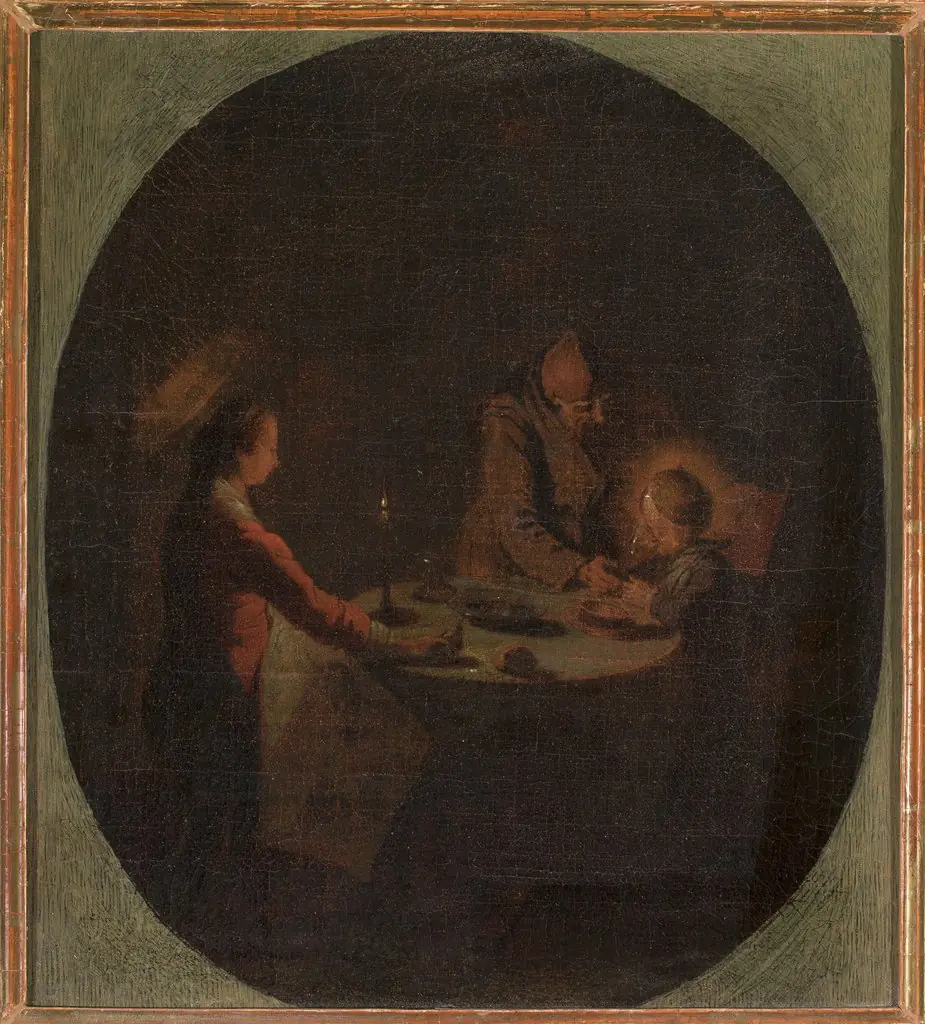 Holy Family at supper
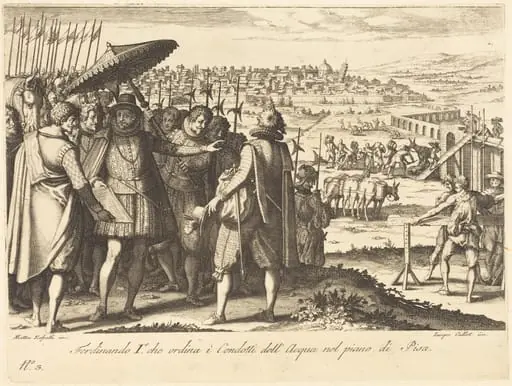 Restoration of the Aqueduct at Pisa
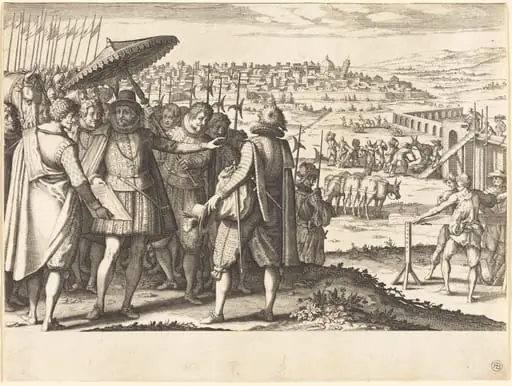 Restoration of the Aqueduct at Pisa
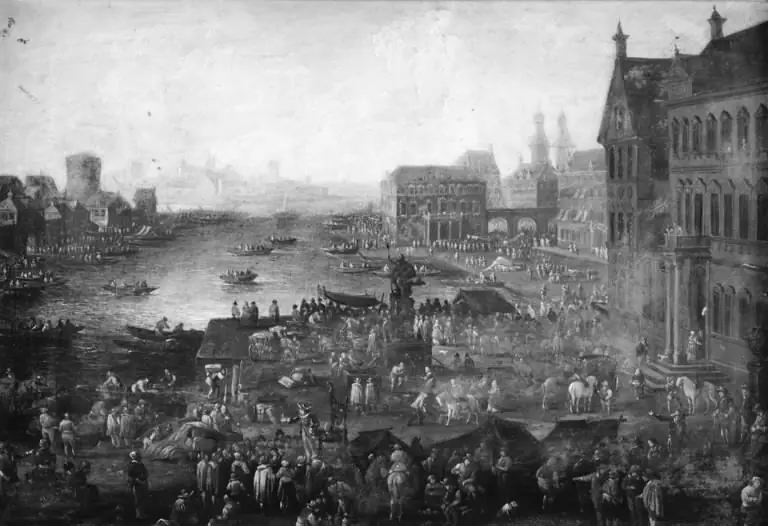 Square in Paris with Many Figures
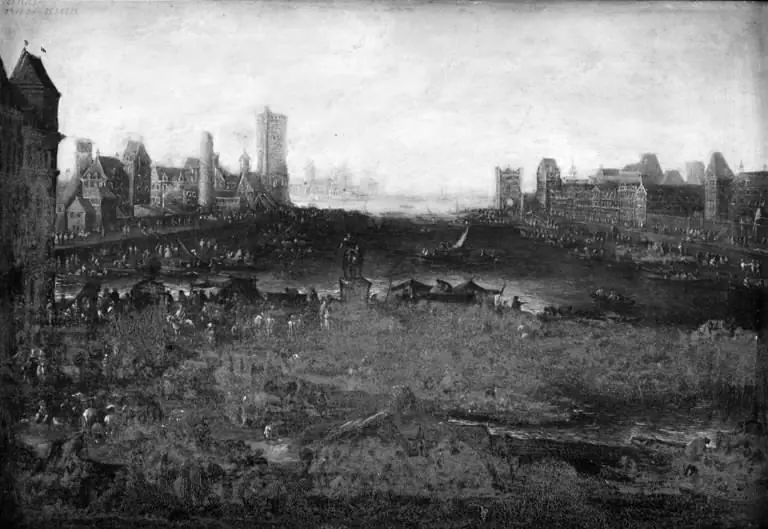 Square in Paris with Many Figures
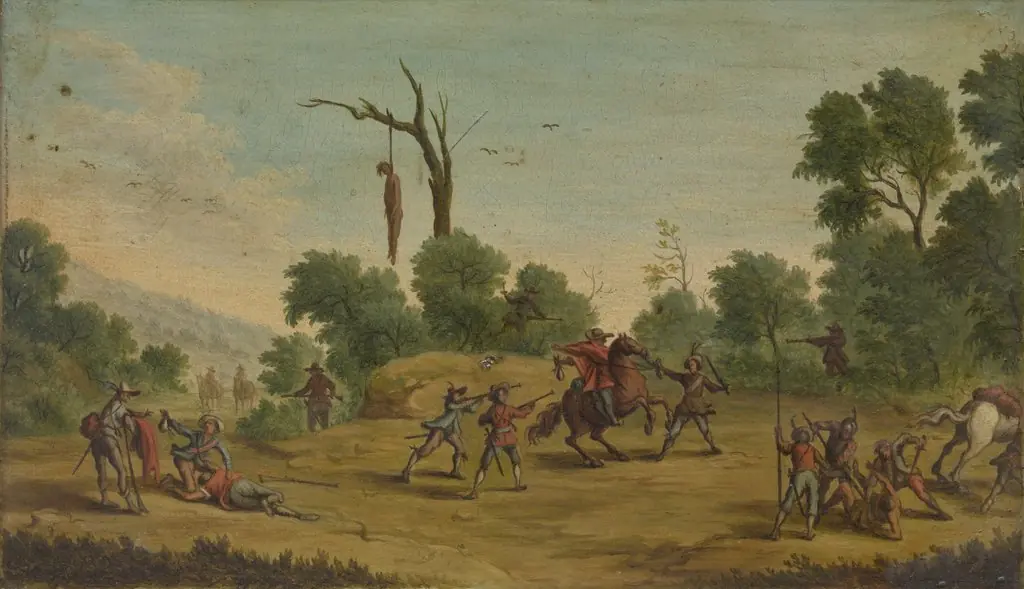 Horsemen Attacked by Robbers
 HOW WILL A COVERED PART BE CORRECTED?HOW WIKA A COVERED HEART DEED CORRECTED?
![Christ Walking on the Water [second plate], by Jacques Callot](https://artifactworldgallery.com/img/jacques-callot--christ-walking-on-the-water-second-plate--2069f3bfe4cb2126-w320.webp) Christ Walking on the Water [second plate]
Christ Walking on the Water [second plate]