Artwork
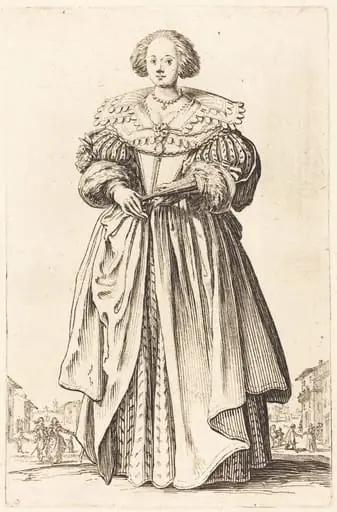
Noble Woman with a Small Hat
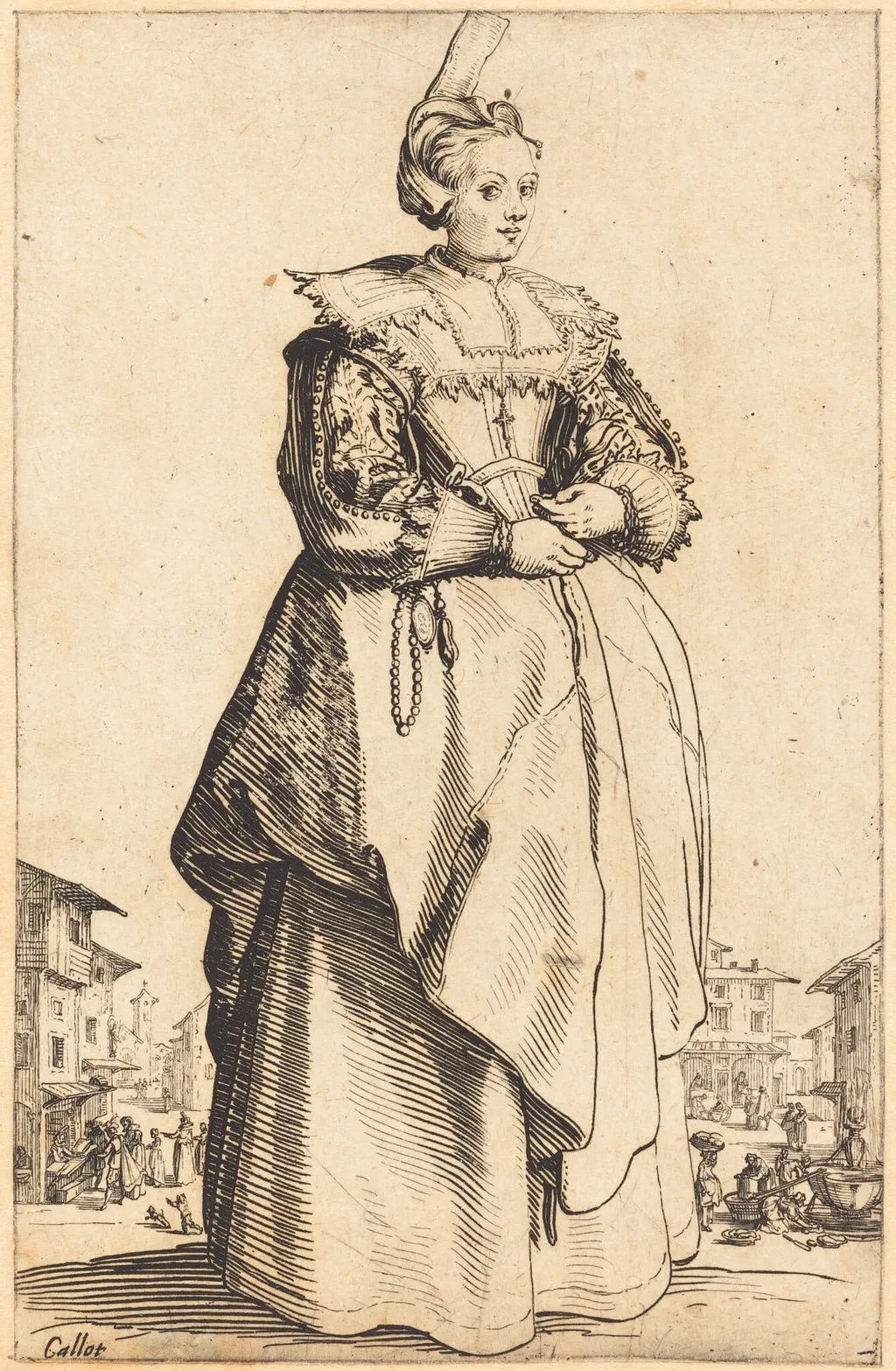
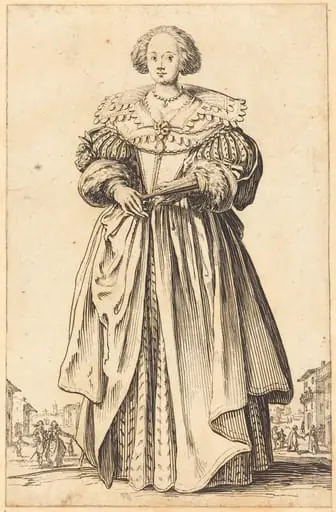
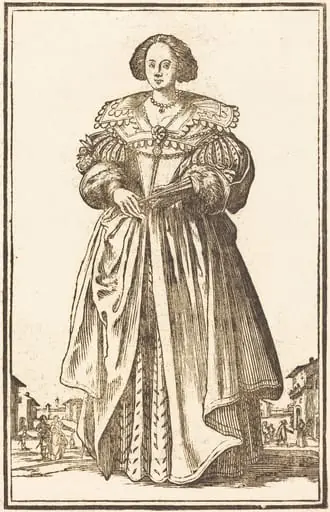
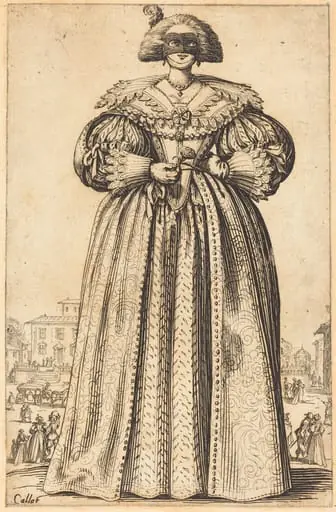
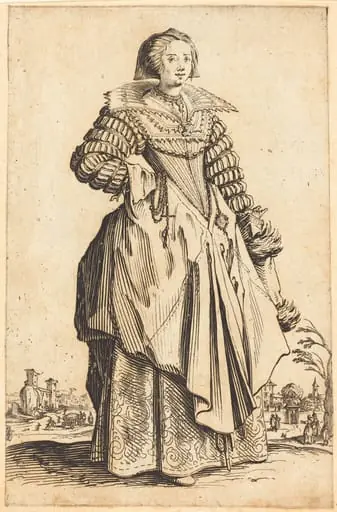
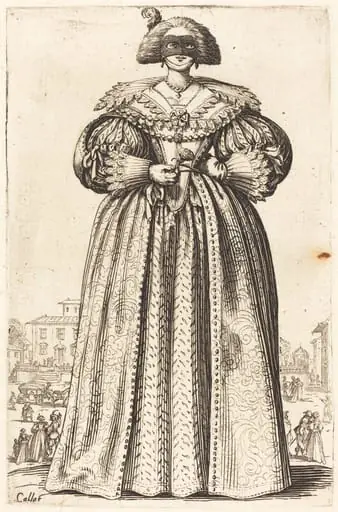
Noble Woman with a Small Hat is an ink print by the Baroque artist Jacques Callot. It dates from 1622 and is held in the collection of the National Gallery of Art.
About this work
Overview
Created around 1622 by Jacques Callot, this etching on laid paper portrays a noblewoman in refined attire, capturing a moment of quiet dignity amid the bustling urban environment. As one of over 1,400 prints by the Lorraine-born artist, it exemplifies his focus on the social fabric of early 17th-century Europe, blending portraiture with atmospheric background detail to suggest context beyond the individual.
Subject & Meaning
Her small hat and poised stance reflect contemporary courtly fashion.
The figure is a woman of status, dressed in a high-collared gown with lace trim, a wide skirt, and a delicate beaded necklace, holding a fan as a symbol of composure and leisure. Her small hat and poised stance reflect contemporary courtly fashion. The faintly rendered street scene behind her implies her place within a larger social world, subtly reinforcing the hierarchy and visibility of aristocratic women in public life.
Technique & Style
Callot employed fine, controlled lines to render the textures of fabric, lace, and beads with precision. His use of cross-hatching and delicate shading creates volume and depth, transforming flat paper into a sense of three-dimensional form. The background, populated with miniature figures and architecture, is rendered with sparse but suggestive strokes, a hallmark of his ability to imply complexity without overcrowding the composition.
History & Provenance
The print emerged during Callot’s most productive period in Florence and Paris, where he served aristocratic patrons and absorbed the visual culture of elite circles. Though its early ownership is undocumented, it aligns with a broader corpus of his genre scenes and portraits circulated among collectors in France and the Low Countries, valued for their observational clarity and technical finesse.
Context
In the early 1600s, etching became a favored medium for documenting daily life and social types, especially among Northern European artists. Callot’s work responded to growing interest in portraiture beyond royalty, capturing middle and upper-class individuals with psychological nuance. The detailed urban backdrop reflects a broader trend of situating figures within recognizable, lived environments.
Legacy
Callot’s precise etching technique influenced generations of printmakers, particularly in the depiction of costume and urban detail. While not widely exhibited as a standalone work today, this print contributes to the understanding of how print culture democratized access to images of nobility, preserving the aesthetics and social codes of an era through meticulous draftsmanship.
Artist & collection
Artist
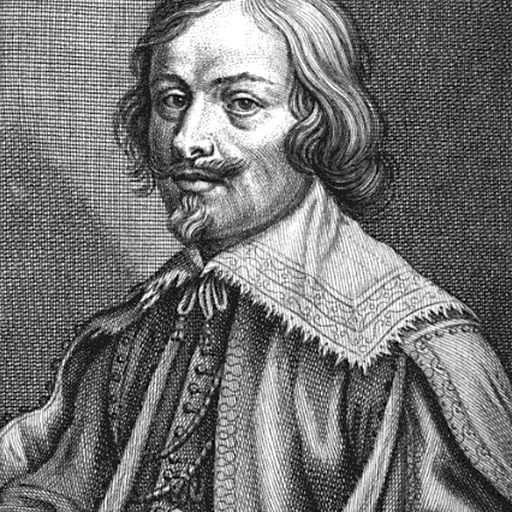
Jacques Callot was a baroque printmaker and draftsman from the Duchy of Lorraine.

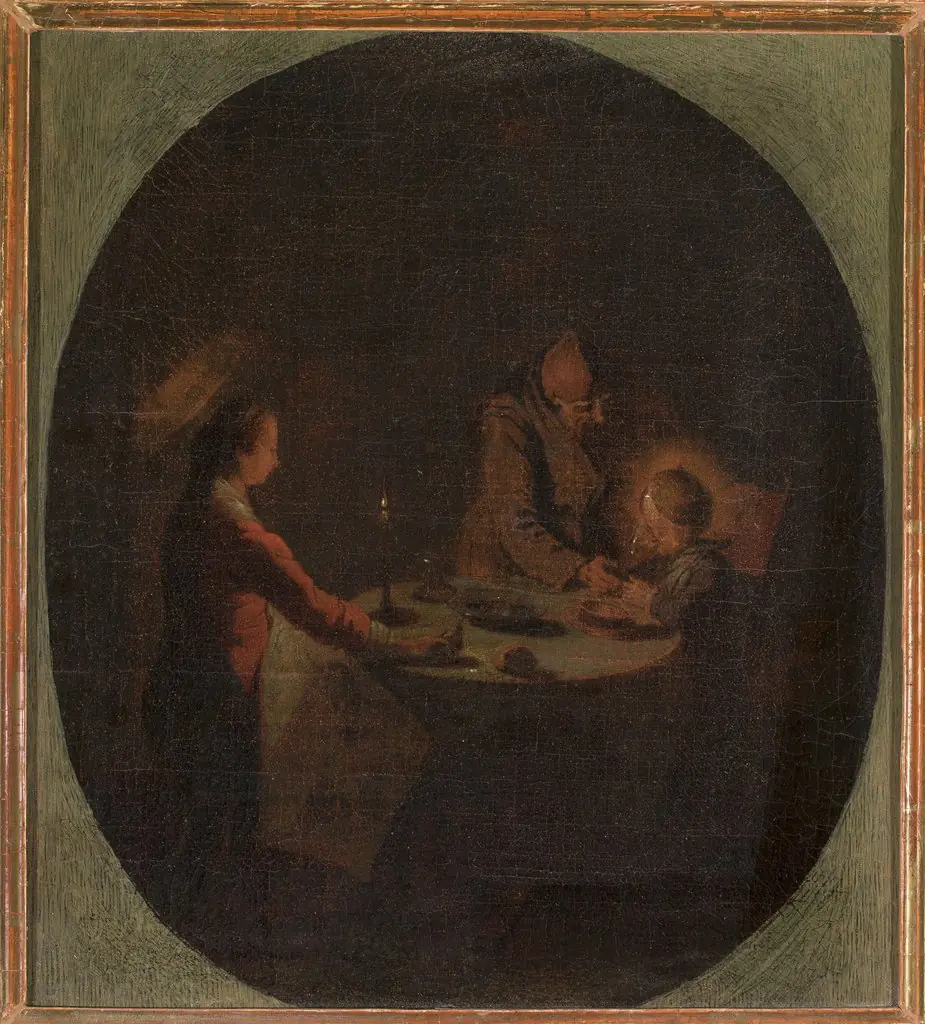 Holy Family at supper
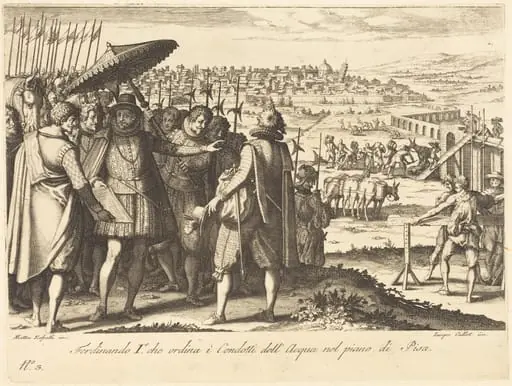 Restoration of the Aqueduct at Pisa
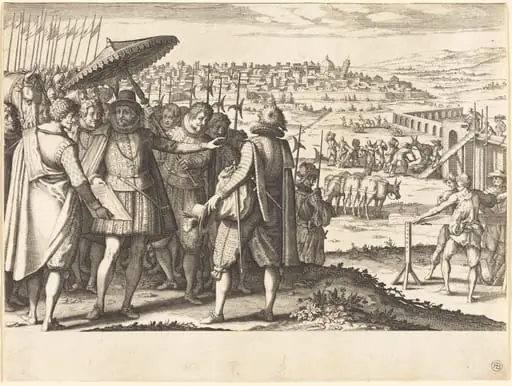 Restoration of the Aqueduct at Pisa
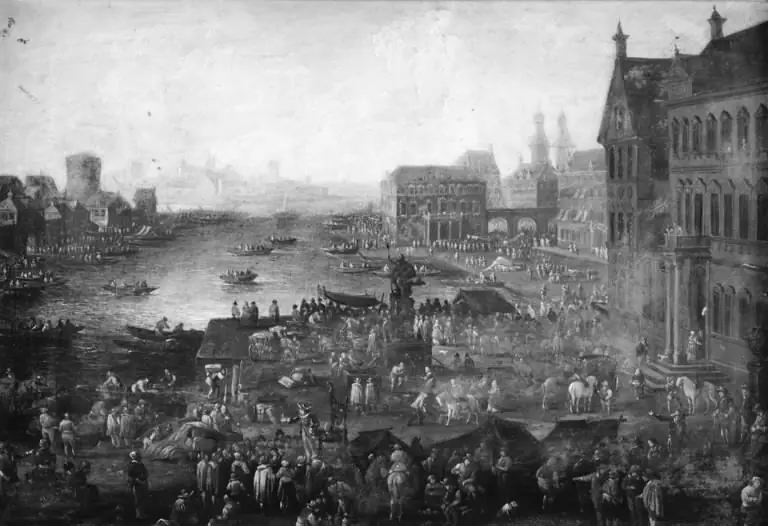 Square in Paris with Many Figures
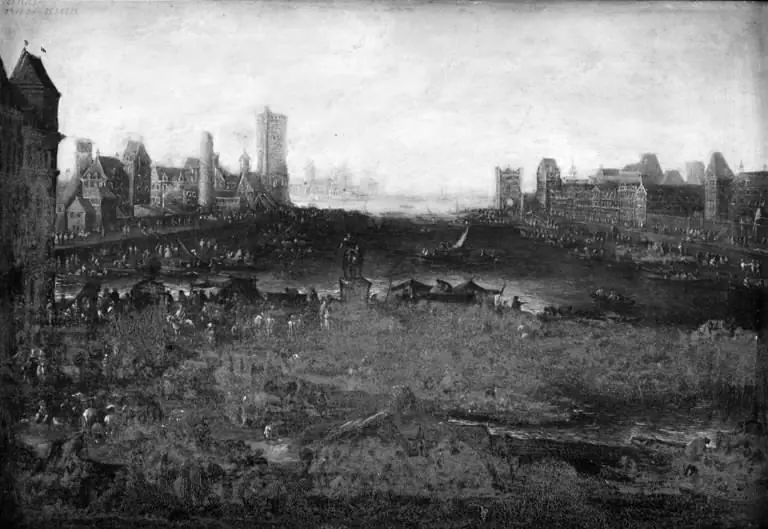 Square in Paris with Many Figures
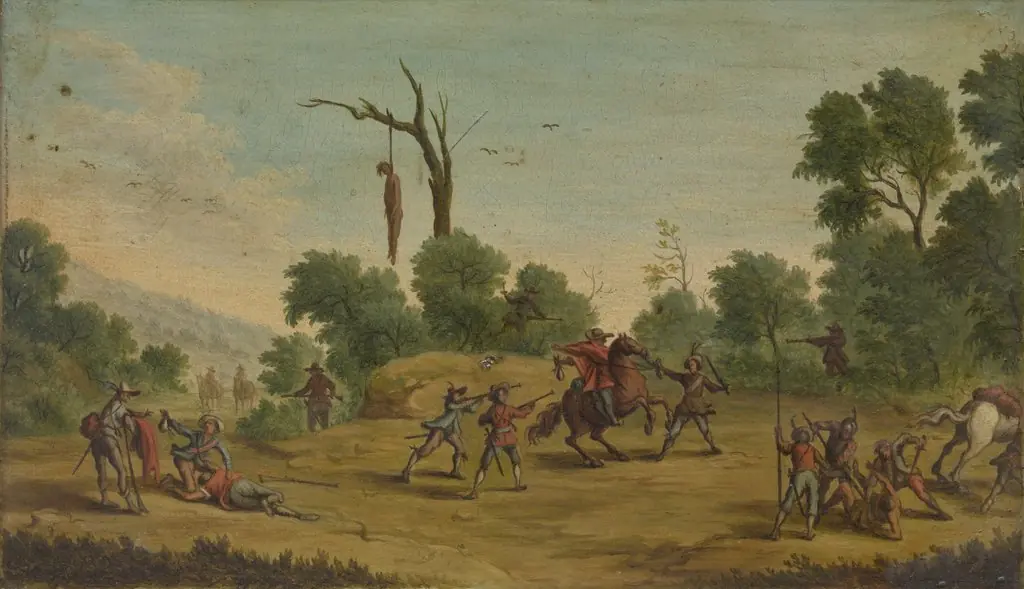 Horsemen Attacked by Robbers
 HOW WILL A COVERED PART BE CORRECTED?HOW WIKA A COVERED HEART DEED CORRECTED?
![Christ Walking on the Water [second plate], by Jacques Callot](https://artifactworldgallery.com/img/jacques-callot--christ-walking-on-the-water-second-plate--2069f3bfe4cb2126-w320.webp) Christ Walking on the Water [second plate]
Christ Walking on the Water [second plate]