Artwork
Mulier Coloniensis Exspatians
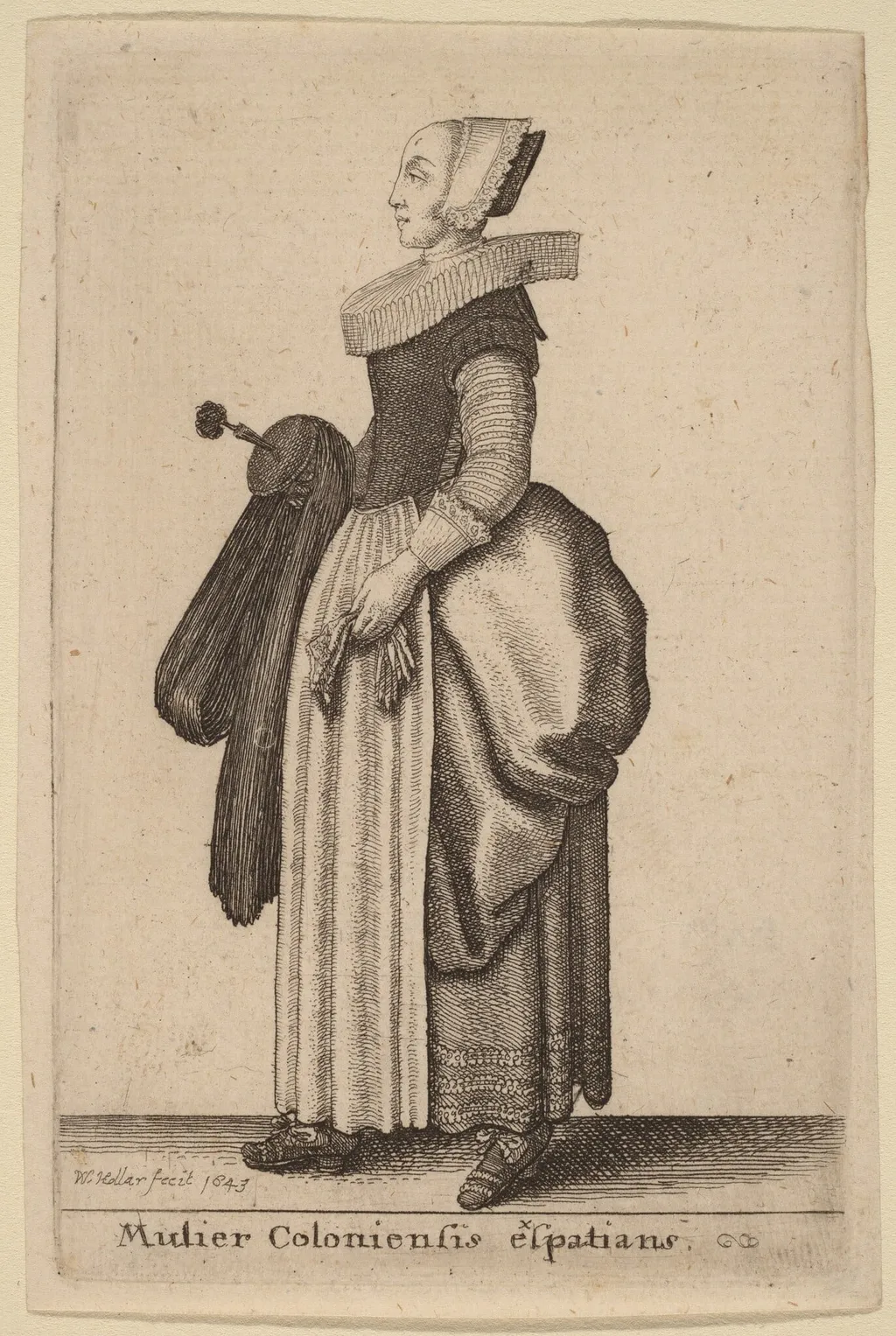
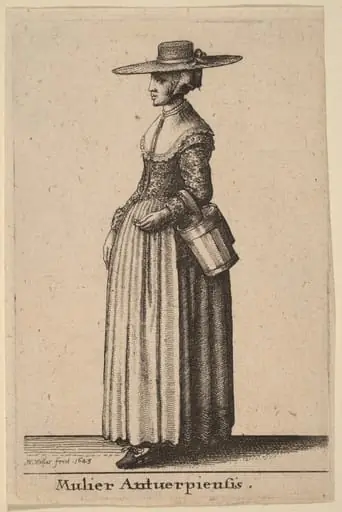
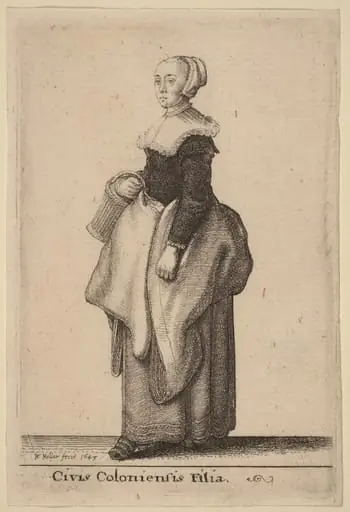
Mulier Coloniensis Exspatians is an ink print by the Baroque artist Wenceslaus Hollar. It dates from 1643 and is held in the collection of the National Gallery of Art.
About this work
Overview
Hollar, known for his topographical prints, applied his technical mastery to this portrait-like figure, emphasizing texture and form through fine etched lines.
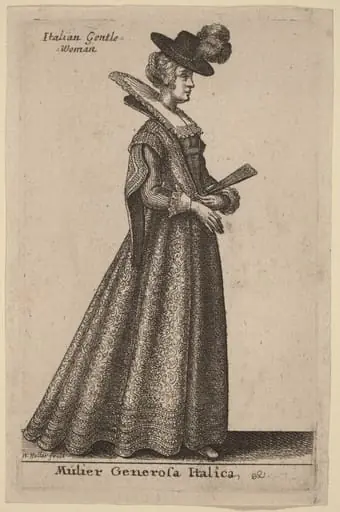
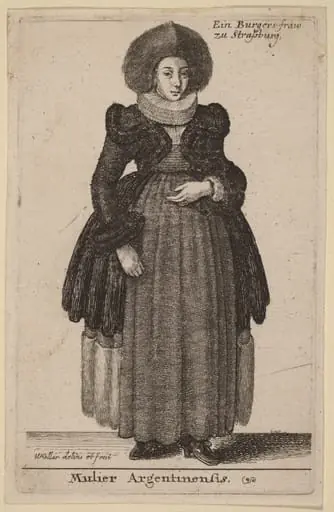
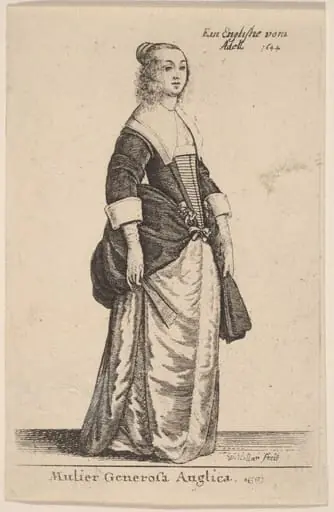
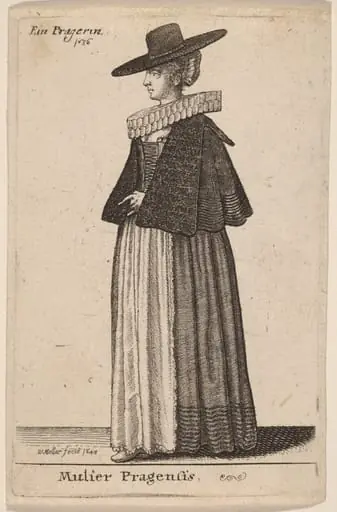
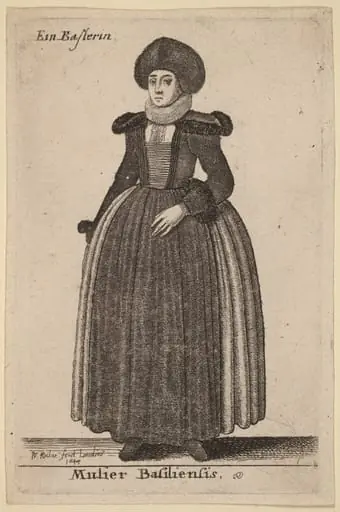
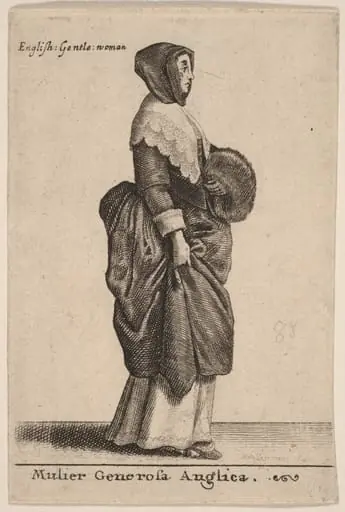
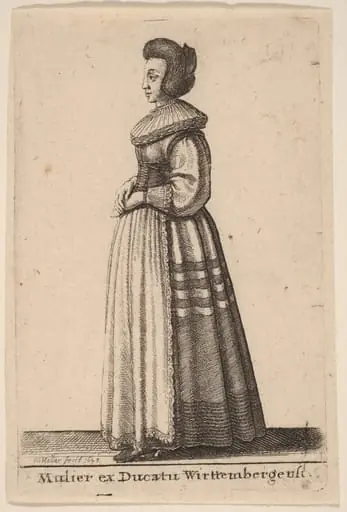
Created in 1643 by Wenceslaus Hollar, a Czech artist active in England, this etching captures a woman in regional dress with precise line work. Hollar, known for his topographical prints, applied his technical mastery to this portrait-like figure, emphasizing texture and form through fine etched lines. The work belongs to a series of character studies documenting contemporary dress and social types across Europe.
Subject & Meaning
The figure is identified as a woman from Cologne, indicated by the title. Her attire—tight bodice, full skirt, ruffled collar, and draped cloak—reflects mid-17th-century regional fashion. The hat held in her hand and her turned posture suggest movement or pause, possibly evoking a traveler or urban resident. The image functions as a visual record of local costume rather than a narrative scene.
Technique & Style
Hollar employed fine-line etching to render fabric folds, lace, and hair with remarkable clarity. The delicate cross-hatching and controlled burin work create subtle tonal variations, lending volume and realism to the figure. His approach avoids dramatic lighting, favoring even illumination that highlights the structure of clothing and posture, consistent with his documentary style.
History & Provenance
Hollar produced this print during his years in London, where he worked under the patronage of Thomas, Earl of Arundel. The etching was likely part of a broader collection of costume studies compiled in the 1640s. It circulated among collectors and scholars interested in European dress, and later entered institutional holdings through 18th- and 19th-century acquisitions.
Context
In the 1640s, European artists increasingly documented regional attire as cultural curiosity and ethnographic interest grew. Hollar’s prints contributed to this trend, offering visual references for scholars and aristocrats. His work coincided with the rise of printed costume books, which sought to catalog the diversity of European dress amid increasing travel and exchange.
Legacy
Hollar’s etchings, including this one, remain valuable resources for historians studying 17th-century fashion and social identity. His precise technique influenced later printmakers and continues to inform museum exhibitions on early modern material culture. Though not widely exhibited today, the image endures in academic and archival collections as a quiet testament to everyday life.
Artist & collection
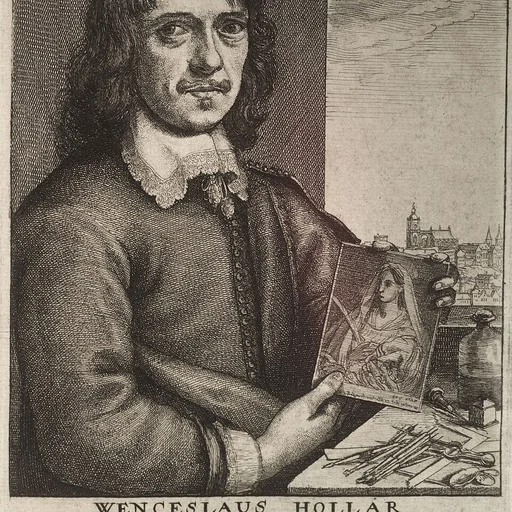
Artist
Wenceslaus Hollar (Czech: Václav Hollar (Czech pronunciation: ), German: Wenzel Hollar; 23 July 1607 – 25 March 1677) was a Czech engraver, etcher and painter.