Artwork
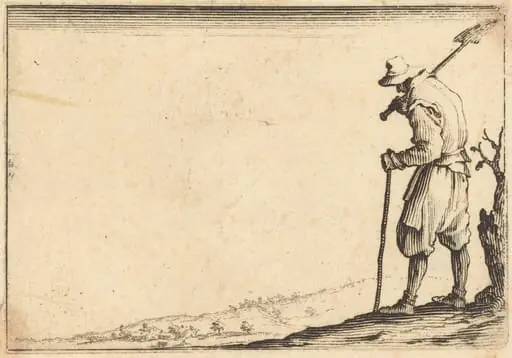
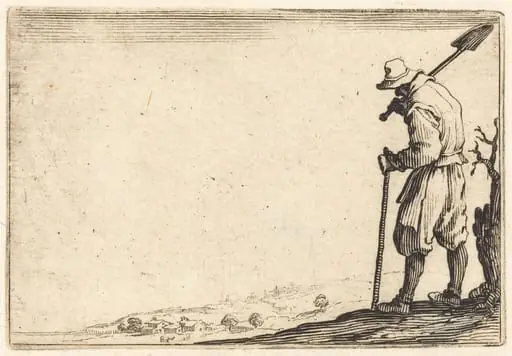
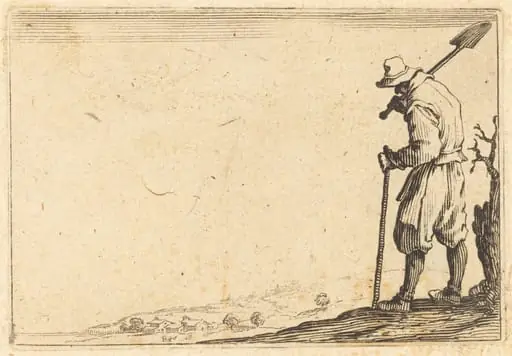
Peasant with Sack
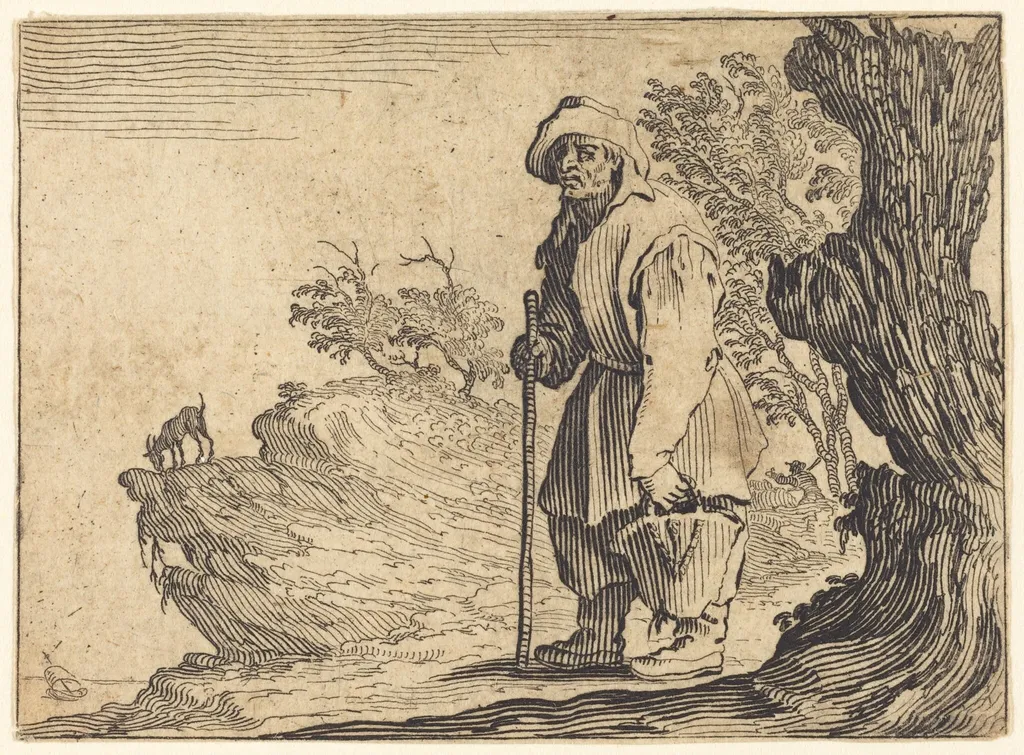
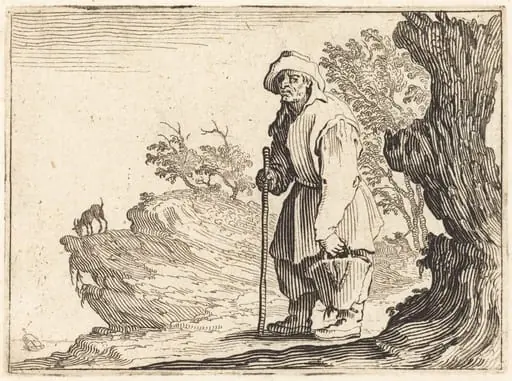
Peasant with Sack is an ink print by the Baroque artist Jacques Callot. It dates from 1622 and is held in the collection of the National Gallery of Art.
About this work
Overview
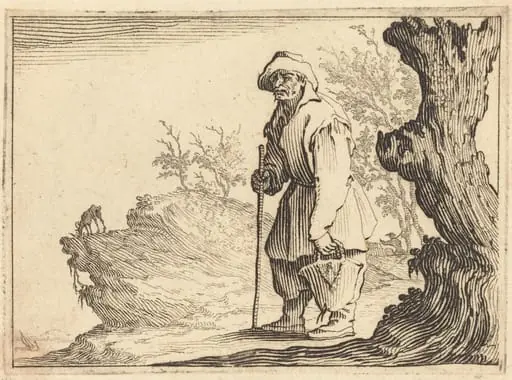
Created around 1622 by Jacques Callot, *Peasant with Sack* is an etching on laid paper that captures a solitary rural laborer in quiet motion.
Created around 1622 by Jacques Callot, *Peasant with Sack* is an etching on laid paper that captures a solitary rural laborer in quiet motion. As part of a larger body of over 1,400 prints, this work exemplifies Callot’s focus on ordinary individuals rather than elite subjects. His technique, refined through meticulous line work, conveys texture and movement with minimal means, reflecting his commitment to observing the lives of those on society’s margins.
Subject & Meaning
The figure is an elderly peasant, stooped under the weight of a heavy sack, supported by a walking stick. His patched garments and weary posture suggest hardship and endurance. Callot presents him without sentimentality or idealization, emphasizing dignity in labor and resilience in poverty. The absence of narrative context invites contemplation of the individual’s place within a broader social landscape, consistent with Callot’s interest in the unseen lives of common people.
Technique & Style
Callot employed fine, incised lines to model form and texture, using the etching needle to create a dynamic range of marks—from delicate hatching to bold, gestural strokes. The paper’s laid texture subtly enhances the tactile quality of the peasant’s clothing and the roughness of the ground. His controlled yet expressive line work avoids ornamentation, prioritizing clarity and emotional resonance over decorative flourish, a hallmark of his approach to printmaking.
History & Provenance
The print emerged during Callot’s most productive period in Nancy and Florence, when he was deeply engaged in documenting social types across class and region. While the specific early ownership of this impression is unrecorded, it aligns with collections formed by 17th-century connoisseurs interested in the emerging genre of genre printmaking. Its survival in institutions like the National Gallery of Art reflects its enduring value as a document of early modern visual culture.
Context
In early 17th-century Europe, printmaking became a vehicle for recording everyday life beyond religious or mythological themes. Callot’s depictions of peasants, soldiers, and beggars responded to growing public interest in realism and social observation. His work paralleled developments in Dutch genre painting and French literary portrayals of the lower classes, contributing to a broader cultural shift toward representing the non-elite with attention and nuance.
Legacy
Callot’s technical innovations in etching, including the use of the *échoppe* needle and precise biting techniques, influenced generations of printmakers. His commitment to portraying marginalized figures with dignity helped establish genre subjects as legitimate artistic material. *Peasant with Sack* remains a quiet testament to his ability to convey human presence through minimal means, shaping how later artists approached realism in print.
Own this work as a print
Artist & collection
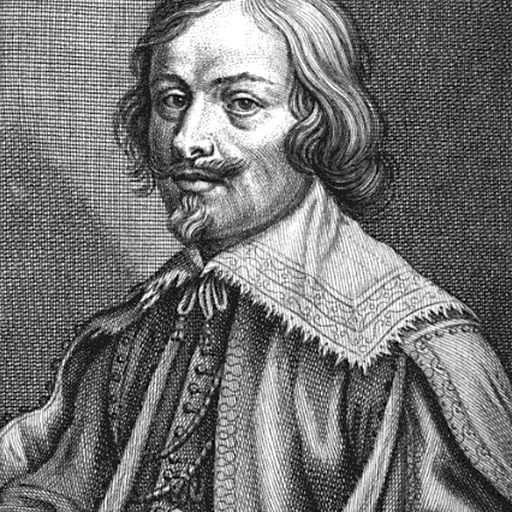
Artist
Jacques Callot was a baroque printmaker and draftsman from the Duchy of Lorraine.

 Holy Family at supper
 Restoration of the Aqueduct at Pisa
 Restoration of the Aqueduct at Pisa
 Square in Paris with Many Figures
 Square in Paris with Many Figures
 Horsemen Attacked by Robbers
 HOW WILL A COVERED PART BE CORRECTED?HOW WIKA A COVERED HEART DEED CORRECTED?
![Christ Walking on the Water [second plate], by Jacques Callot](https://artifactworldgallery.com/img/jacques-callot--christ-walking-on-the-water-second-plate--2069f3bfe4cb2126-w320.webp) Christ Walking on the Water [second plate]
Christ Walking on the Water [second plate]