Artwork
Peasant with Sack
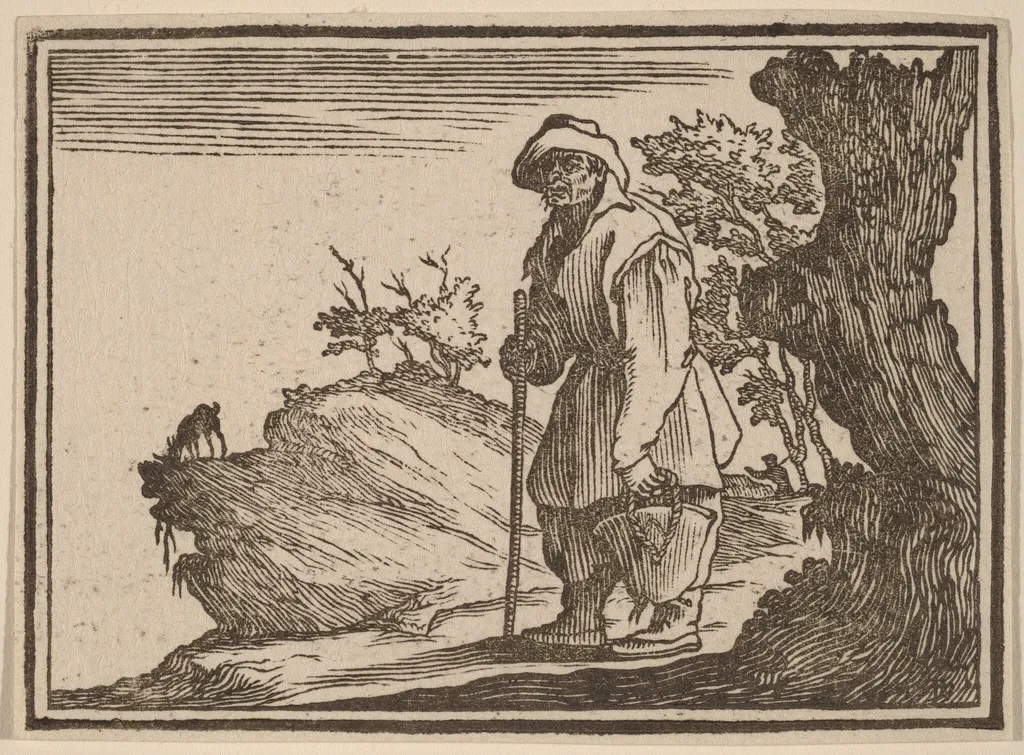
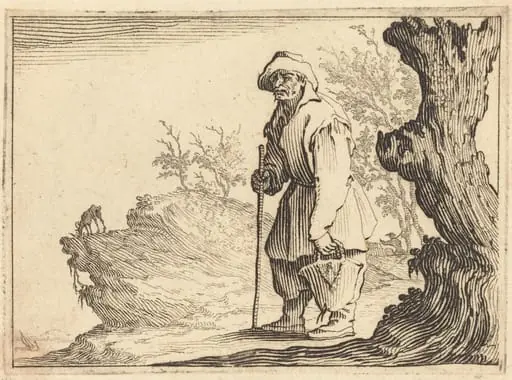
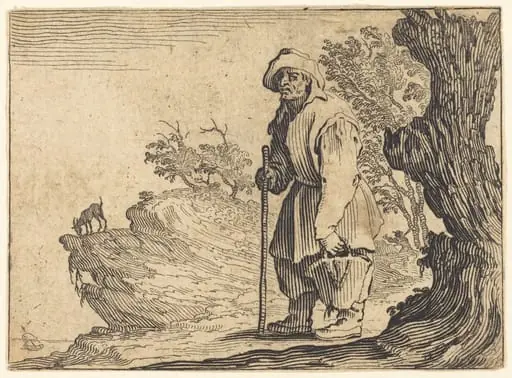
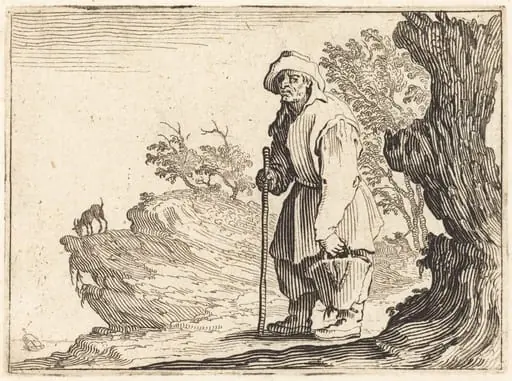
Peasant with Sack is an ink print by the Baroque artist Edouard Eckman. It dates from 1621 and is held in the collection of the National Gallery of Art.
About this work
This print shows a man bent over, hoisting a heavy sack on his back.
This print shows a man bent over, hoisting a heavy sack on his back. The rough lines and deep shadows make the weight feel real. See how his hands grip the sack’s ropes? The paper has a bumpy texture from being handmade.
Edouard Eckman only made one print in 1621. That’s all we know about him. His name appears on this work alone.
It’s a woodcut. Watch how light hits the man’s back to show his effort.
Overview
Created in 1621, Peasant with Sack is a single known woodcut by Edouard Eckman, an artist otherwise unrecorded in historical sources. Executed on handmade laid paper, the print bears the tactile qualities of its medium—irregular fibers and subtle surface texture. The image stands as Eckman’s only documented work, making it a rare and isolated artifact of early 17th-century printmaking.
Subject & Meaning
The figure is a laborer, stooped under the burden of a large sack slung across his shoulders. His hands clutch the ropes tightly, muscles tensed, conveying physical strain without overt drama. The scene offers no narrative context—no landscape, no tools, no companions—focusing solely on the act of carrying, suggesting themes of endurance and quiet toil in rural life.
Technique & Style
The image is carved in wood, with bold, uneven lines and deep recesses that cast strong shadows. The artist used contrast to emphasize weight: light falls along the figure’s spine, highlighting the curve of his back, while the sack and limbs recede into darkness. The roughness of the carving mirrors the texture of the paper, reinforcing the tactile reality of the labor depicted.
History & Provenance
No records exist of Eckman’s life, training, or other works. The print is the sole surviving evidence of his activity as a printmaker. Its origin is unknown, and its early ownership is untraced. The 1621 date is inscribed on the print itself, but no contemporary references or copies have been identified, leaving its circulation and reception a mystery.
Context
In early 17th-century Europe, woodcuts were commonly used for religious imagery or book illustrations. This print diverges from those norms, depicting a solitary laborer without symbolic or narrative framing. Its focus on everyday toil aligns with emerging interest in peasant life, though it lacks the moralizing tone often found in similar subjects of the period.
Legacy
Eckman’s print remains an enigma—neither widely circulated nor influential in its time. It survives as a solitary example of a quiet, unadorned observation of labor. Today, it is valued not for its artistic lineage but for its directness, offering a glimpse into the visual culture of a forgotten hand.
Artist & collection