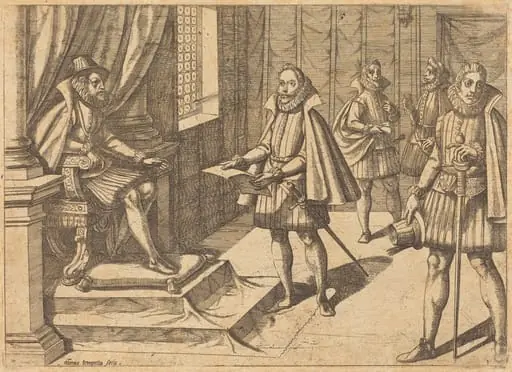
Artwork
Reception at Mantua
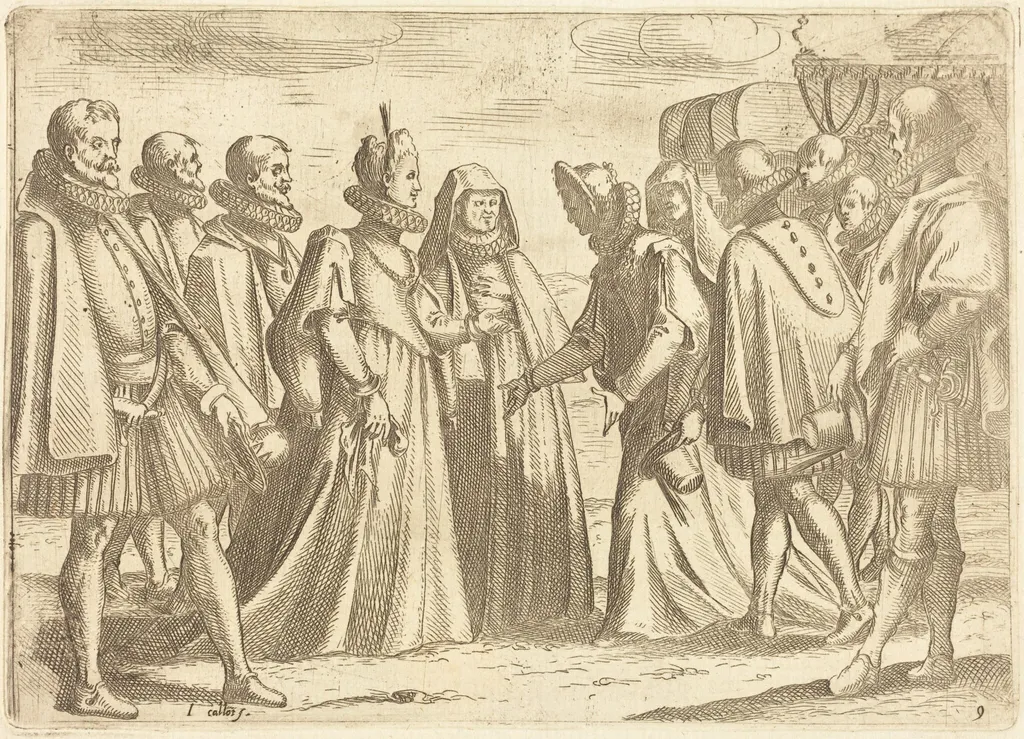
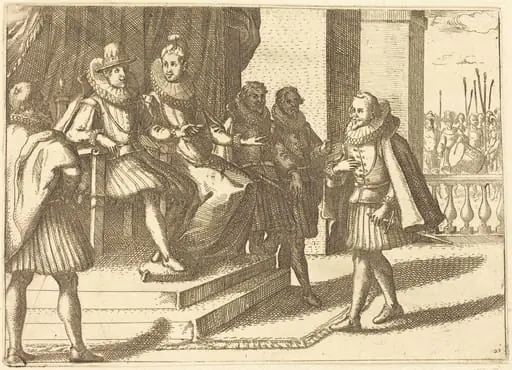
Reception at Mantua is an ink print by the Baroque artist Jacques Callot. It dates from 1612 and is held in the collection of the National Gallery of Art. This etching on laid paper, produced as a later restrike, captures a moment of formal interaction within a noble court.
About this work
Overview
The composition centers on a gathering of courtiers, rendered with precise linework that emphasizes posture, attire, and subtle interpersonal dynamics.
This etching on laid paper, produced as a later restrike, captures a moment of formal interaction within a noble court. Created by Jacques Callot around 1612, it belongs to a series of works documenting early 17th-century European social rituals. The composition centers on a gathering of courtiers, rendered with precise linework that emphasizes posture, attire, and subtle interpersonal dynamics. Though not part of a larger narrative cycle, it exemplifies Callot’s interest in the rituals of aristocratic life.
Subject & Meaning
The scene portrays a formal reception, likely at the Gonzaga court in Mantua, where dignitaries engage in polite exchange. Figures are arranged in a compact group, suggesting hierarchy and decorum. The central woman, holding a fan, may signify status or serve as a focal point of attention. The presence of swords and elaborate dress underscores the ceremonial nature of the encounter. No overt action occurs; the meaning lies in the quiet assertion of social order and refined conduct.
Technique & Style
Callot employed fine, controlled etching lines to render textures of fabric, lace, and hair with remarkable clarity. The use of cross-hatching and delicate stippling creates depth in folds of clothing and the sheen of metallic accessories. The composition avoids dramatic perspective, favoring a flattened, almost tapestry-like arrangement that prioritizes detail over spatial illusion. His technique reflects mastery of the etching needle, allowing for both precision and expressive nuance in minute elements.
History & Provenance
The original plate was cut by Callot in 1612 during his time in Mantua, where he served the Gonzaga family. This impression is a restrike, made after his death, likely from the original copper plate preserved in collections. Restrikes were common in the 17th and 18th centuries as demand for Callot’s works grew. The paper type and watermark suggest a posthumous printing, consistent with known practices among European print publishers of the period.
Context
Callot worked during a period when printmaking became a key medium for documenting courtly and military life across Europe. His depictions of aristocratic gatherings contrast with his more famous war scenes, yet both reveal a keen eye for social structure. The Mantuan court, known for its cultural patronage, provided rich subject matter. This print aligns with broader trends in Northern European print culture, where detailed observation replaced idealized forms in favor of authentic representation.
Legacy
Callot’s etchings influenced generations of printmakers through their technical rigor and observational depth. While *Reception at Mantua* is not among his most widely reproduced works, it exemplifies his contribution to the documentation of everyday aristocratic life. His ability to capture nuance in gesture and dress helped elevate etching from a reproductive craft to a vehicle for social commentary, shaping the development of narrative printmaking in the Baroque era.
Artist & collection
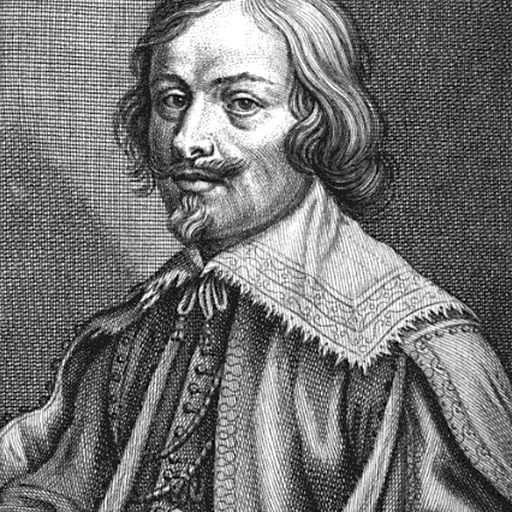
Artist
Jacques Callot was a baroque printmaker and draftsman from the Duchy of Lorraine.

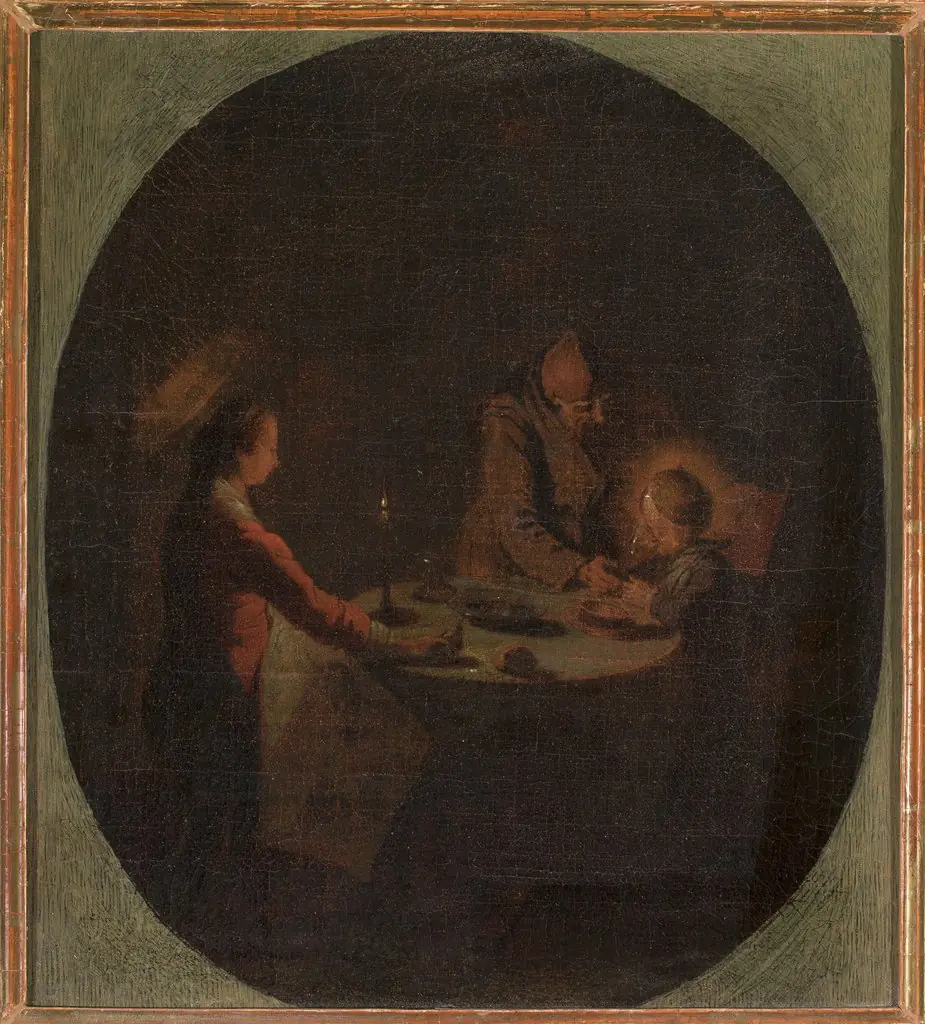 Holy Family at supper
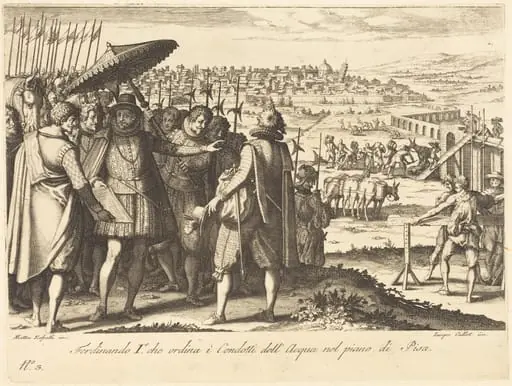 Restoration of the Aqueduct at Pisa
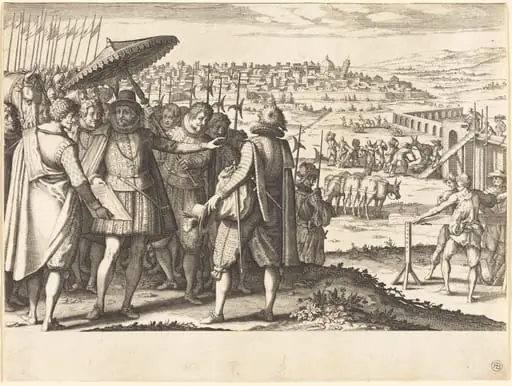 Restoration of the Aqueduct at Pisa
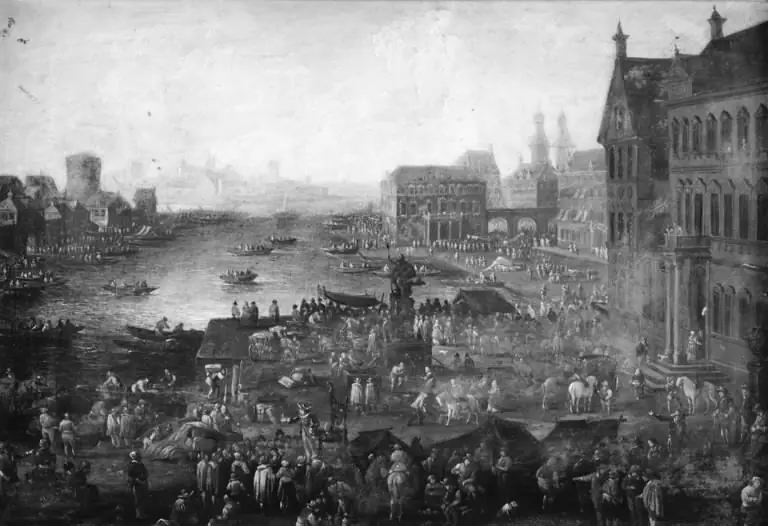 Square in Paris with Many Figures
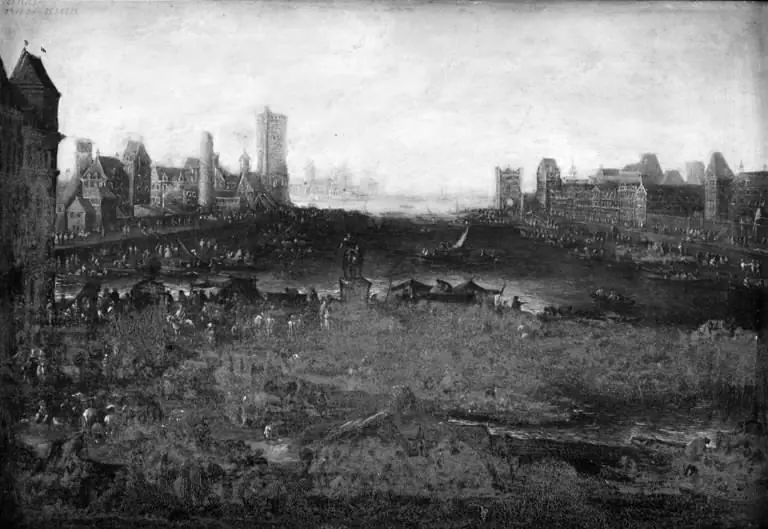 Square in Paris with Many Figures
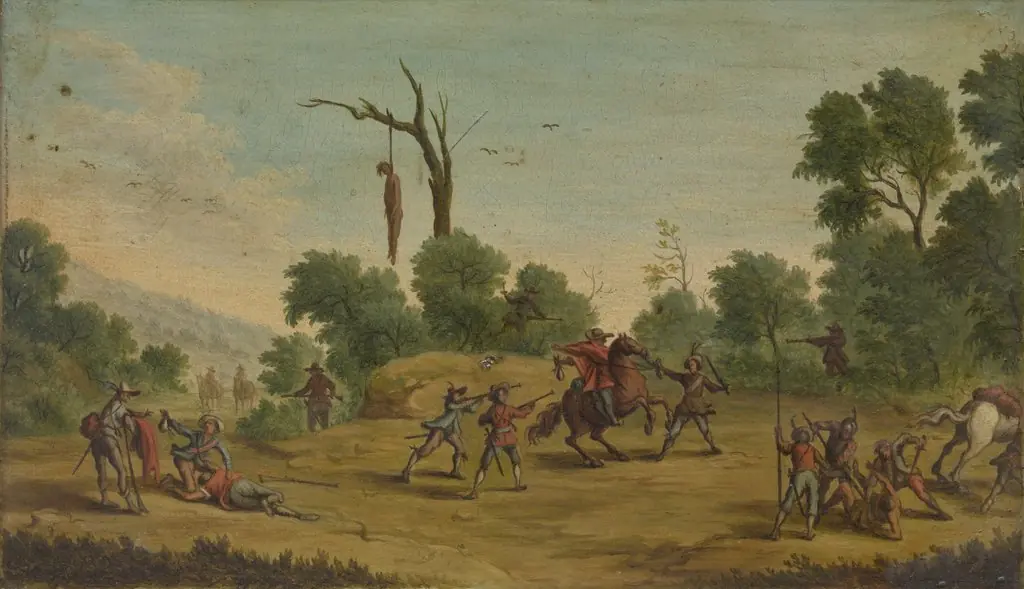 Horsemen Attacked by Robbers
 HOW WILL A COVERED PART BE CORRECTED?HOW WIKA A COVERED HEART DEED CORRECTED?
![Christ Walking on the Water [second plate], by Jacques Callot](https://artifactworldgallery.com/img/jacques-callot--christ-walking-on-the-water-second-plate--2069f3bfe4cb2126-w320.webp) Christ Walking on the Water [second plate]
Christ Walking on the Water [second plate]
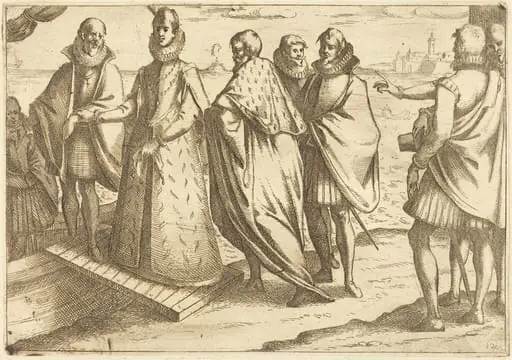
![Embarkation at Genoa [recto], by Jacques Callot](https://artifactworldgallery.com/img/jacques-callot--embarkation-at-genoa-recto--1268aacde904a48c-w320.webp)
![King and Queen in Consultation about the Turks [recto], by Jacques Callot](https://artifactworldgallery.com/img/jacques-callot--king-and-queen-in-consultation-about-the-turks-recto--5b03792b86815455-w320.webp)