Artwork
King and Queen in Consultation about the Turks
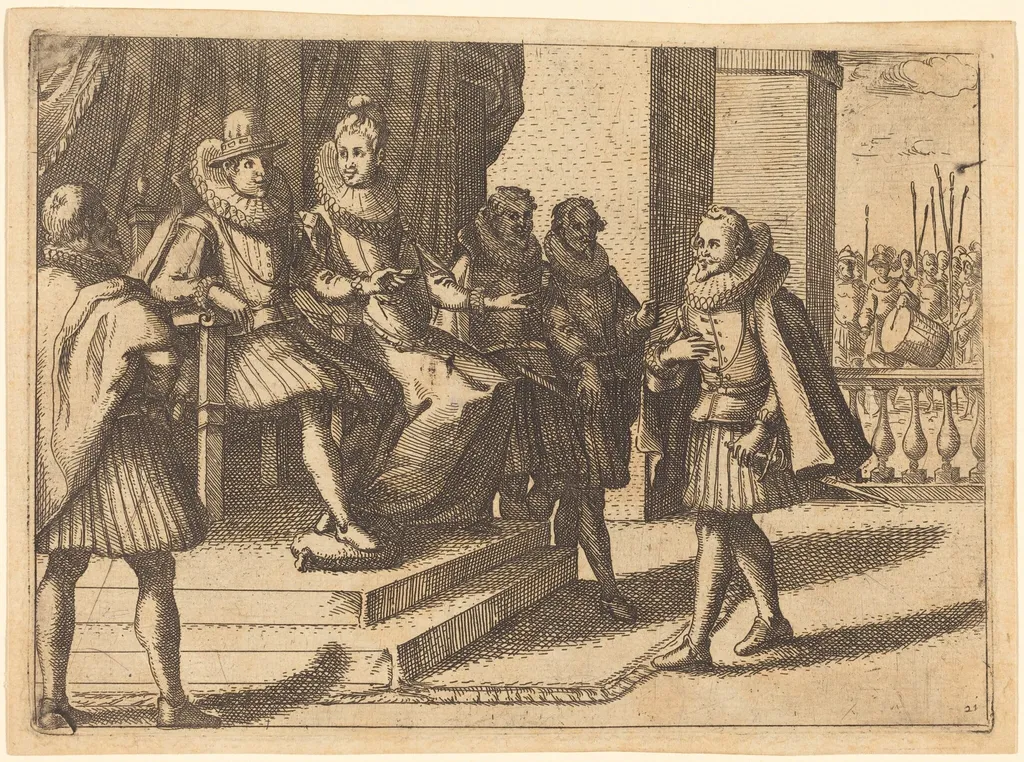
King and Queen in Consultation about the Turks is an ink print by the Baroque artist Jacques Callot. It dates from 1612 and is held in the collection of the National Gallery of Art.
About this work
Overview
Jacques Callot, a French printmaker from the early seventeenth century, produced the etching *King and Queen in Consultation about the Turks* in 1612.
Jacques Callot, a French printmaker from the early seventeenth century, produced the etching *King and Queen in Consultation about the Turks* in 1612. Executed on laid paper, the work measures a modest size typical of his prolific output, which exceeds fourteen hundred prints. It captures a moment of royal deliberation surrounded by courtiers and soldiers, rendered with the precise line work characteristic of Callot’s etching technique.
Subject & Meaning
The composition places a monarch and his consort at the centre of a bustling interior, surrounded by advisors, musicians, and armed men. The presence of wine vessels and a lute suggests a courtly atmosphere, while the soldiers in the background hint at a military concern—presumably the ongoing conflict with the Ottoman Empire. The scene conveys a tense yet ceremonial decision‑making process.
Technique & Style
Callot employed fine, incised lines and strong chiaroscuro to model figures and architectural elements, creating a sense of depth on the flat surface of the paper. The etching’s sharp contours and detailed rendering of fabrics, faces, and weaponry exemplify his skill in translating complex, crowded scenes into a clear, readable print.
History & Provenance
Created in 1612, the print belongs to the early phase of Callot’s career, when he was establishing his reputation across Europe. It circulated among collectors of the period, contributing to his fame as a chronicler of contemporary events. The work has since entered museum collections, where it is cited as an example of early modern print culture.
Context
The image reflects the baroque fascination with power, ceremony, and the geopolitical anxieties of early seventeenth‑century Europe, particularly the threat posed by the Turks. Callot’s meticulous approach to crowd scenes influenced later printmakers and helped shape the development of narrative etching, positioning him as a pivotal figure in the transition from Renaissance to baroque printmaking.
Artist & collection

Artist
Jacques Callot was a baroque printmaker and draftsman from the Duchy of Lorraine.

 Holy Family at supper
 Restoration of the Aqueduct at Pisa
 Restoration of the Aqueduct at Pisa
 Square in Paris with Many Figures
 Square in Paris with Many Figures
 Horsemen Attacked by Robbers
 HOW WILL A COVERED PART BE CORRECTED?HOW WIKA A COVERED HEART DEED CORRECTED?
![Christ Walking on the Water [second plate], by Jacques Callot](https://artifactworldgallery.com/img/jacques-callot--christ-walking-on-the-water-second-plate--2069f3bfe4cb2126-w320.webp) Christ Walking on the Water [second plate]
Christ Walking on the Water [second plate]
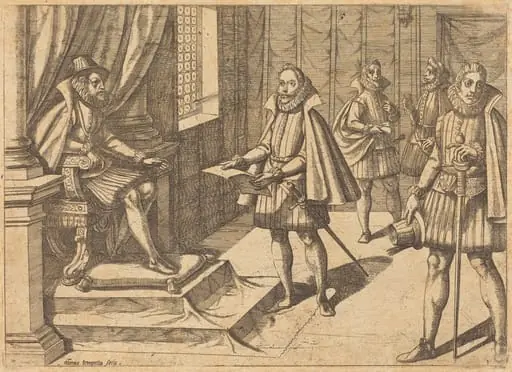 Philip II of Spain on His Throne
 Philip II of Spain on His Throne
![Reception of the Envoy of Poland [recto], by Jacques Callot](https://artifactworldgallery.com/img/jacques-callot--reception-of-the-envoy-of-poland-recto--b391a89639ee42f8-w320.webp) Reception of the Envoy of Poland [recto]
Reception of the Envoy of Poland [recto]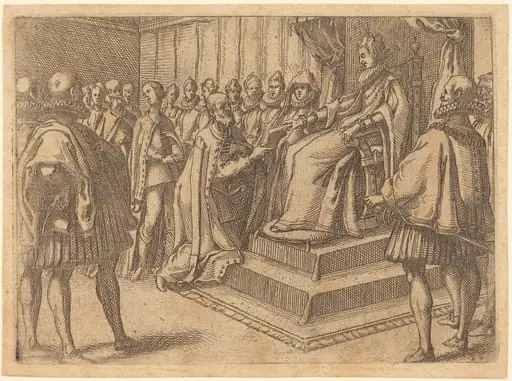 Reception of the Envoy of Poland
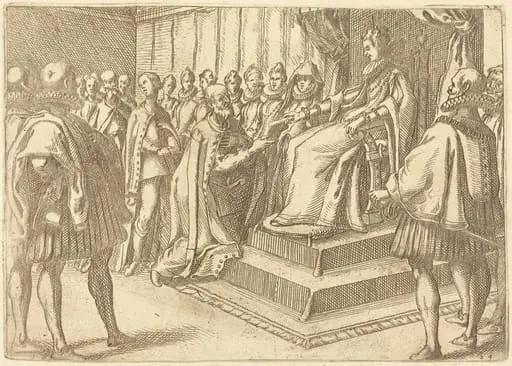 Reception of the Envoy of Poland
![Embarkation at Genoa [recto], by Jacques Callot](https://artifactworldgallery.com/img/jacques-callot--embarkation-at-genoa-recto--1268aacde904a48c-w320.webp) Embarkation at Genoa [recto]
Embarkation at Genoa [recto]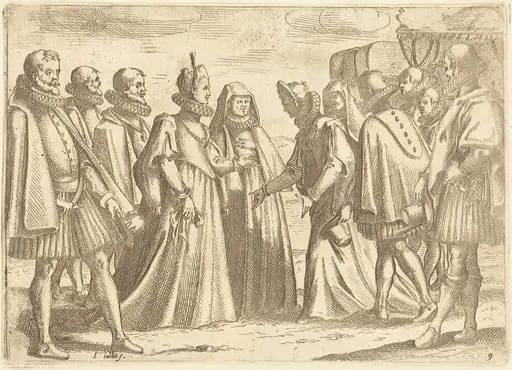 Reception at Mantua
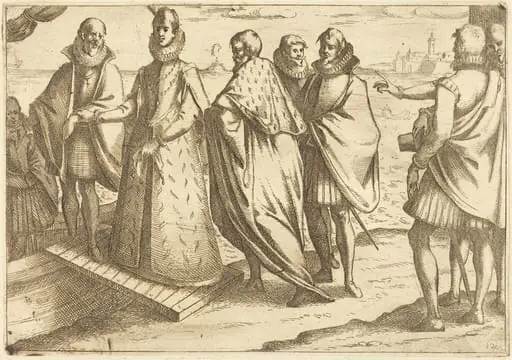 Embarkation at Genoa
![Reception at Mantua [recto], by Jacques Callot](https://artifactworldgallery.com/img/jacques-callot--reception-at-mantua-recto--84e33047dd2baf0a-w320.webp) Reception at Mantua [recto]
Reception at Mantua [recto]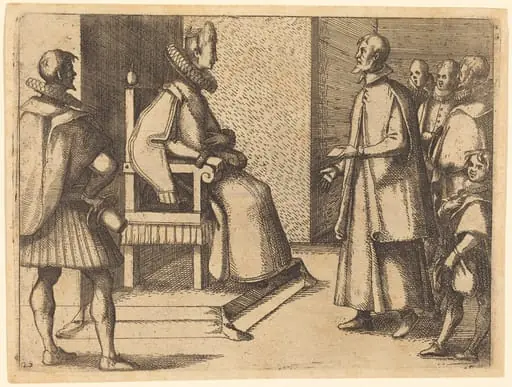 The Envoy of Tuscany thanking the Queen