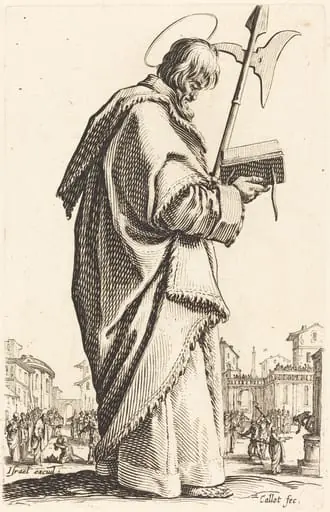
Artwork
Saint James the Great
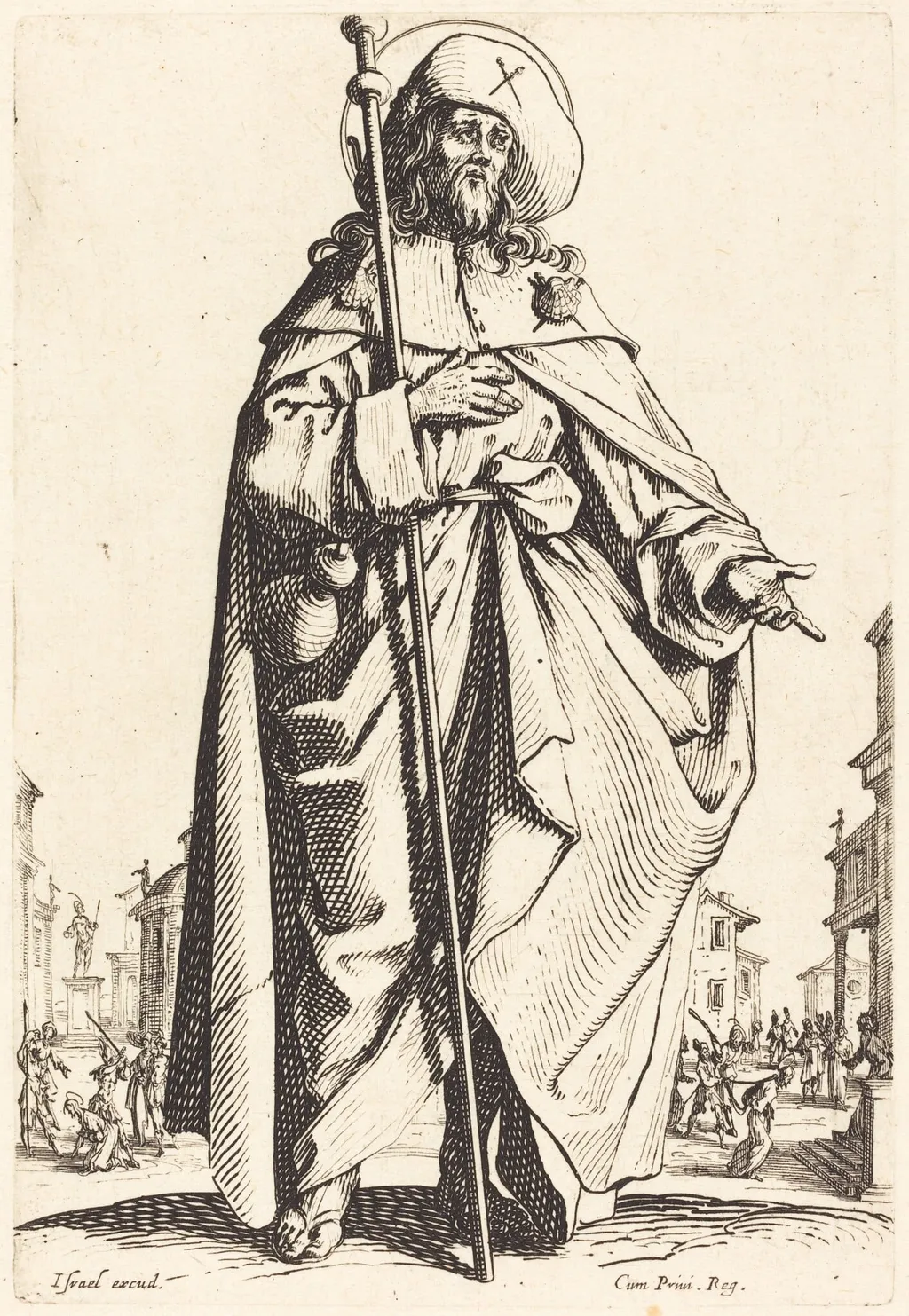
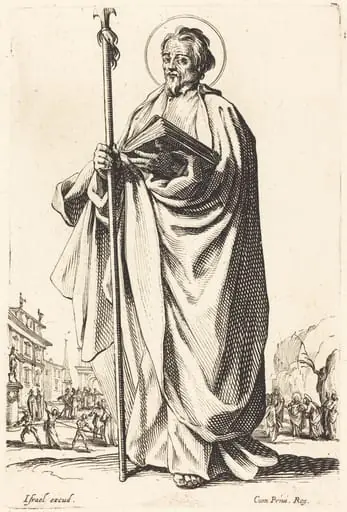
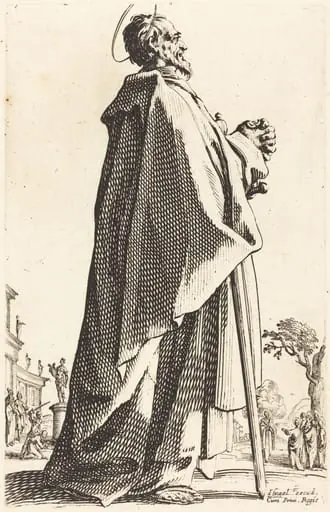
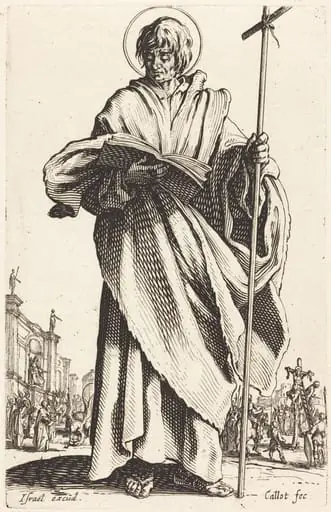
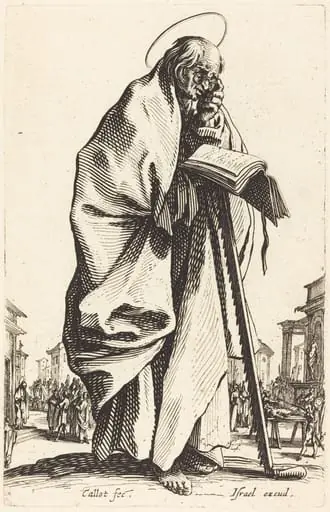
Saint James the Great is an ink print by the Baroque artist Jacques Callot. It dates from 1631 and is held in the collection of the National Gallery of Art.
About this work
Overview
Created in 1631 by Jacques Callot, this etching on laid paper portrays Saint James the Great as part of the artist’s extensive series of religious subjects.
Created in 1631 by Jacques Callot, this etching on laid paper portrays Saint James the Great as part of the artist’s extensive series of religious subjects. Callot, active in the Duchy of Lorraine, was renowned for his precise etching technique and prolific output, producing over 1,400 prints that captured both sacred and secular scenes. This small-scale work exemplifies his ability to convey depth and character through fine linear detail.
Subject & Meaning
The figure of Saint James is rendered in conventional iconography: a pilgrim’s staff in hand, dressed in modest garments that suggest humility and travel. His simplified form avoids theatrical grandeur, emphasizing spiritual devotion over heroic spectacle. The quiet dignity of the figure aligns with Counter-Reformation ideals that valued personal piety and the saint as a model of faithful endurance.
Technique & Style
Callot employed fine, controlled etching lines to define the saint’s face, drapery, and staff with clarity and economy. The use of laid paper, with its subtle texture, enhances the tonal subtlety of the inked lines. His approach avoids heavy shading, relying instead on linear precision to suggest volume and movement, characteristic of his mature style and technical mastery of the etching medium.
History & Provenance
The print was produced during Callot’s most active period in Nancy, where he served as court artist. While the specific early ownership of this impression is unrecorded, it belongs to a known series of religious etchings circulated among collectors and religious institutions in early 17th-century Europe. Its survival in good condition reflects its careful handling and enduring appeal.
Context
In the early 1600s, religious imagery remained central to print culture, especially in Catholic regions like Lorraine. Callot’s depictions of saints responded to both devotional needs and the demand for accessible, reproducible sacred art. His focus on ordinary human presence within sacred subjects distinguished his work from more ornate contemporary styles.
Legacy
Callot’s etchings, including this one, influenced generations of printmakers through their technical refinement and narrative restraint. His ability to imbue religious figures with quiet humanity helped shift the perception of printmaking from mere reproduction to a legitimate medium for expressive, contemplative art.
Artist & collection
Artist
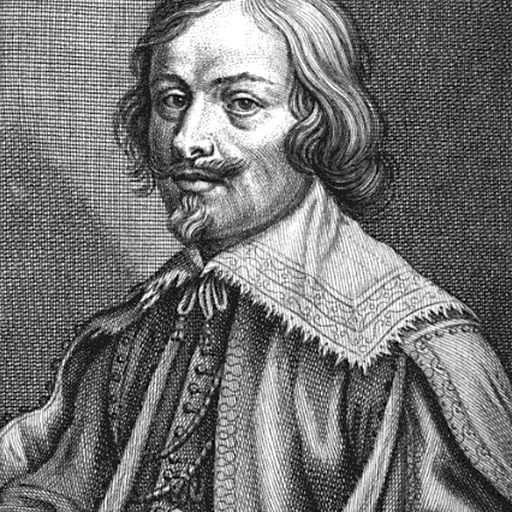
Jacques Callot was a baroque printmaker and draftsman from the Duchy of Lorraine.

 Holy Family at supper
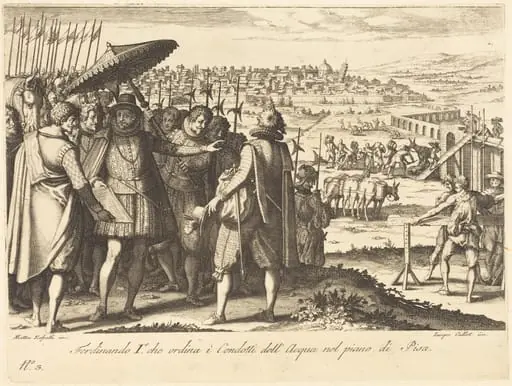 Restoration of the Aqueduct at Pisa
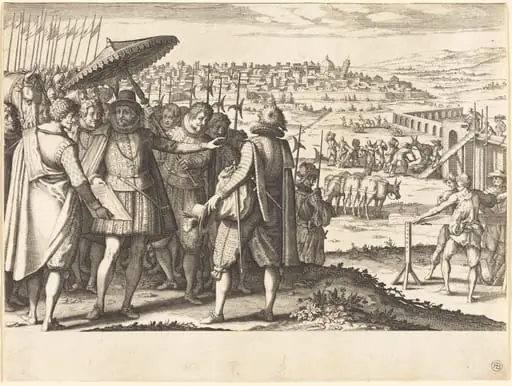 Restoration of the Aqueduct at Pisa
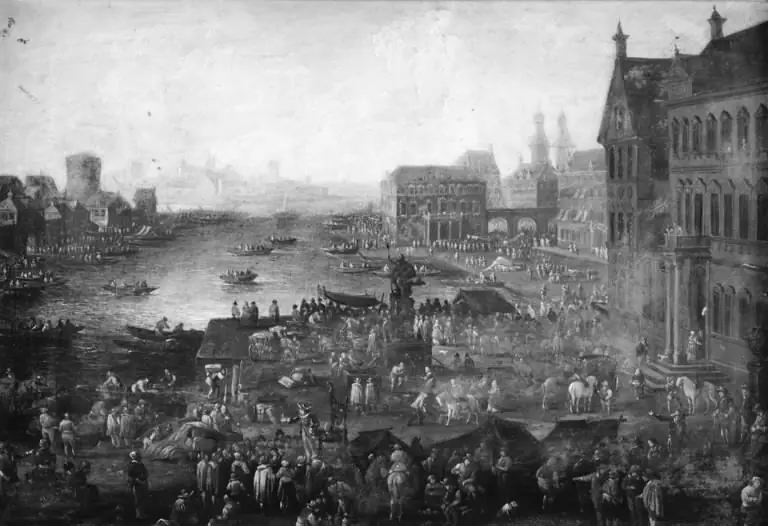 Square in Paris with Many Figures
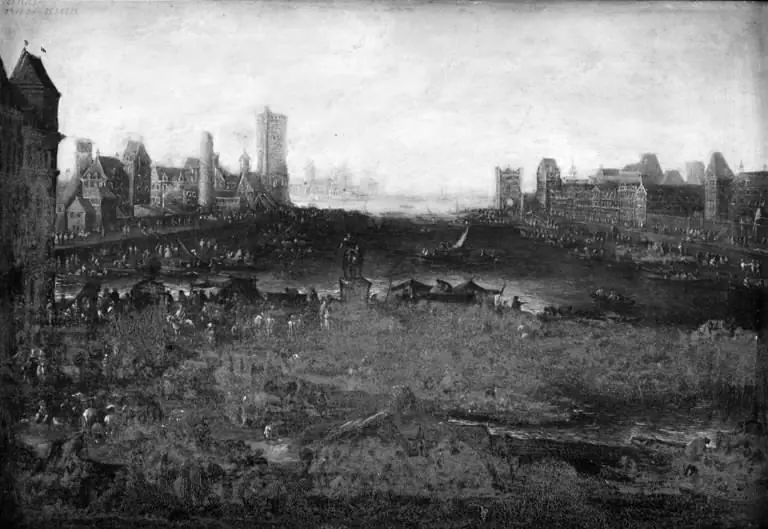 Square in Paris with Many Figures
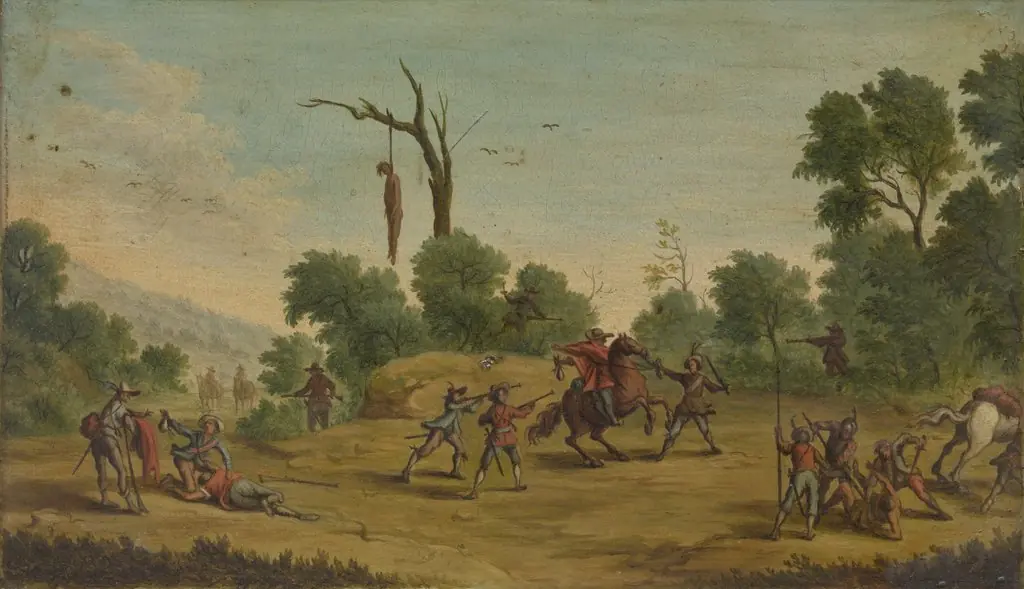 Horsemen Attacked by Robbers
 HOW WILL A COVERED PART BE CORRECTED?HOW WIKA A COVERED HEART DEED CORRECTED?
![Christ Walking on the Water [second plate], by Jacques Callot](https://artifactworldgallery.com/img/jacques-callot--christ-walking-on-the-water-second-plate--2069f3bfe4cb2126-w320.webp) Christ Walking on the Water [second plate]
Christ Walking on the Water [second plate]