Artwork
Saint John the Evangelist
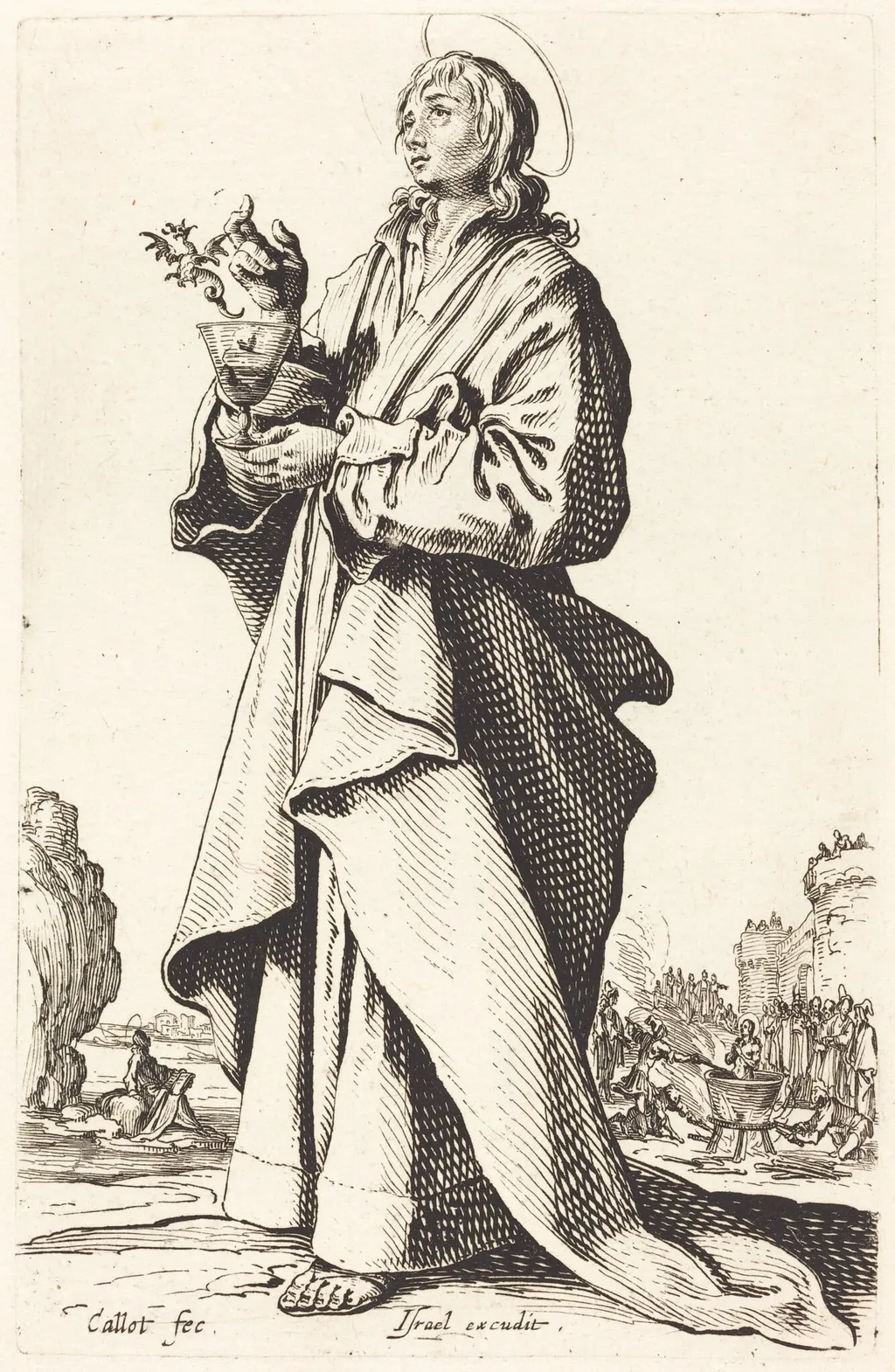
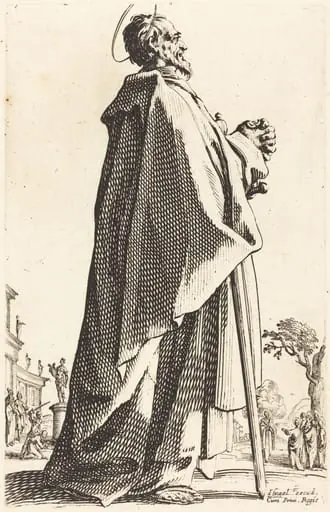
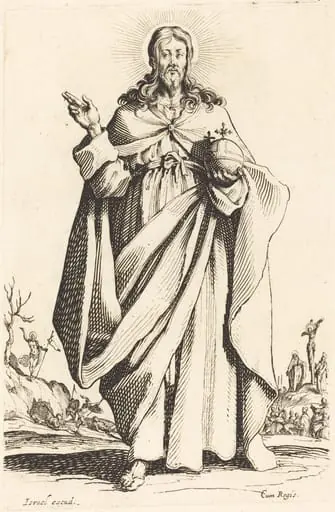
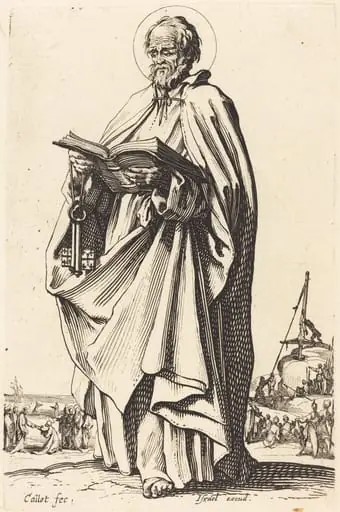
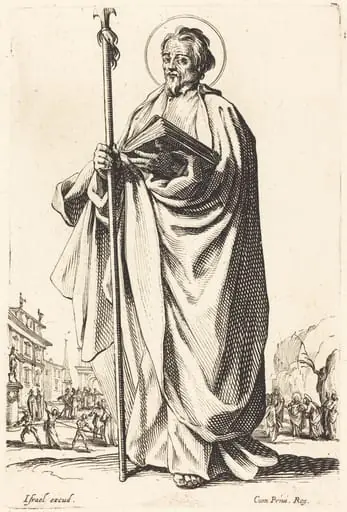
Saint John the Evangelist is an ink print by the Baroque artist Jacques Callot. It dates from 1631 and is held in the collection of the National Gallery of Art.
About this work
Overview
Executed on laid paper, the work belongs to a prolific series of prints the artist produced during his career, many of which engaged with religious narratives.
Created in 1631, this etching by Jacques Callot depicts Saint John the Evangelist as a contemplative figure in monastic robes. Executed on laid paper, the work belongs to a prolific series of prints the artist produced during his career, many of which engaged with religious narratives. Callot’s technical precision and attention to atmospheric detail distinguish this piece among his extensive output of over 1,400 etchings.
Subject & Meaning
The figure of Saint John, identified by his halo, holds a scroll—symbolizing his authorship of the Gospel—and a miniature architectural model, likely referencing the Temple or the New Jerusalem. Behind him, a gathering crowd and a solitary seated figure suggest a moment of teaching or revelation. The composition balances spiritual gravity with everyday human presence, reflecting the saint’s role as both divine witness and earthly teacher.
Technique & Style
Callot employed fine, controlled lines to render texture in the saint’s drapery, hair, and the distant architecture. The etching’s tonal range emerges from delicate cross-hatching and varying line density, characteristic of his refined approach to the medium. Background elements are suggested with sparse but deliberate strokes, creating depth without clutter. The use of laid paper enhances the subtle gradations of ink, typical of early 17th-century printmaking practices.
History & Provenance
The print was made during Callot’s mature period in Nancy, after his return from Florence and Rome. While no specific early ownership records are documented for this individual impression, it aligns with his broader output of religious prints circulated among collectors and clergy in Lorraine and beyond. Its survival in multiple institutional collections suggests consistent interest in his devotional imagery during the Baroque era.
Context
In early 17th-century Europe, religious imagery remained central to print culture, even amid rising secular interests. Callot’s work responded to Counter-Reformation demands for clear, emotionally resonant sacred figures. His etchings, often distributed widely, served both devotional and educational purposes. This image reflects a trend of integrating biblical subjects into detailed, topographically grounded settings, bridging the sacred and the observed world.
Legacy
Callot’s technical innovations in etching influenced generations of printmakers across Europe. His ability to convey narrative complexity through fine line work set a standard for religious and genre prints. Though less celebrated than his war scenes, works like this Saint John demonstrate his enduring contribution to the expressive potential of the medium, preserving a quiet, introspective vision of sanctity within the broader Baroque aesthetic.
Artist & collection
Artist
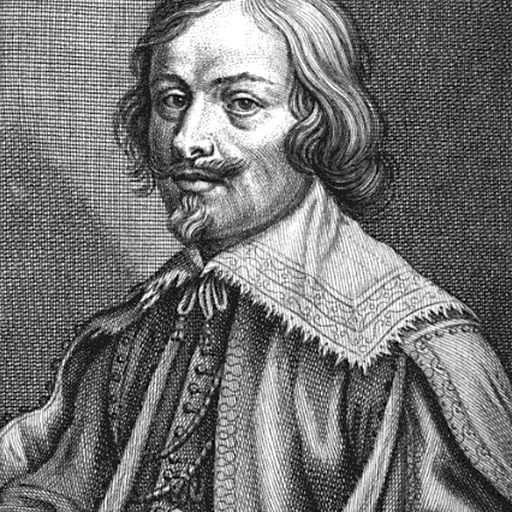
Jacques Callot was a baroque printmaker and draftsman from the Duchy of Lorraine.

 Holy Family at supper
 Restoration of the Aqueduct at Pisa
 Restoration of the Aqueduct at Pisa
 Square in Paris with Many Figures
 Square in Paris with Many Figures
 Horsemen Attacked by Robbers
 HOW WILL A COVERED PART BE CORRECTED?HOW WIKA A COVERED HEART DEED CORRECTED?
![Christ Walking on the Water [second plate], by Jacques Callot](https://artifactworldgallery.com/img/jacques-callot--christ-walking-on-the-water-second-plate--2069f3bfe4cb2126-w320.webp) Christ Walking on the Water [second plate]
Christ Walking on the Water [second plate]