Artwork
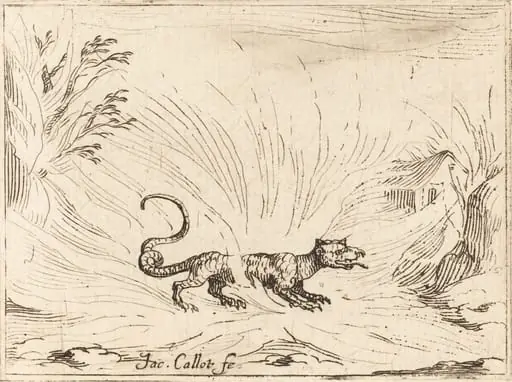
Salamander Surrounded by Flames
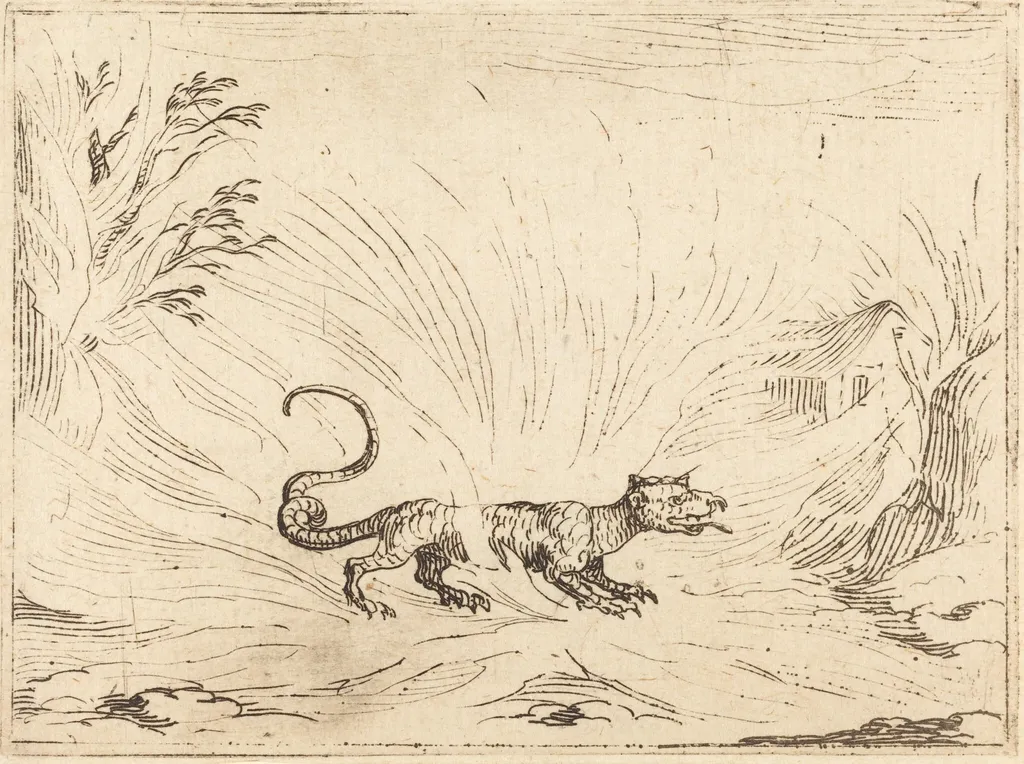
Salamander Surrounded by Flames is an ink print by the Renaissance artist Jacques Callot. It dates from 1628 and is held in the collection of the National Gallery of Art.
About this work
Overview
Jacques Callot created this etching in 1628 on laid paper, part of a vast body of work that includes over 1,400 prints. A native of the Duchy of Lorraine, he was known for his precise line work and keen observation of both natural and fantastical subjects. This piece belongs to a series exploring symbolic creatures, blending scientific curiosity with artistic imagination.
Subject & Meaning
The salamander, depicted calmly walking through flames, reflects medieval and Renaissance beliefs that it could endure fire unharmed. Rather than a literal animal, it functioned as an emblem of resilience and elemental harmony. Callot’s choice to place it amid burning vegetation and distant architecture suggests a symbolic landscape, where nature and human structures coexist under transformation.
Technique & Style
Callot employed fine, controlled etching lines to render the swirling flames and textured scales of the salamander with remarkable clarity.
Callot employed fine, controlled etching lines to render the swirling flames and textured scales of the salamander with remarkable clarity. His use of delicate cross-hatching and varying line weight creates depth and movement, while the sparse background elements—plants and a building—remain subtly defined. The composition balances detail with restraint, characteristic of his mature printmaking style.
History & Provenance
Produced during Callot’s most prolific period in Nancy and Paris, the print was likely made for collectors interested in natural philosophy and emblematic imagery. Though its early ownership is undocumented, it aligns with other works from his series on symbolic creatures, which circulated widely among scholars and art patrons in early 17th-century Europe.
Context
In the early 1600s, natural history and allegory often merged in visual culture. Salamanders appeared in bestiaries and scientific texts as fire-resistant beings, and artists like Callot drew on these ideas to explore themes of endurance and transformation. His prints responded to a broader intellectual climate that valued observation, symbolism, and the blending of fact with myth.
Legacy
Callot’s etchings, including this one, influenced later generations of printmakers through their technical precision and conceptual depth. While not widely exhibited today, the work remains a quiet example of how early modern artists used natural imagery to convey abstract ideas, bridging empirical curiosity with poetic representation.
Artist & collection
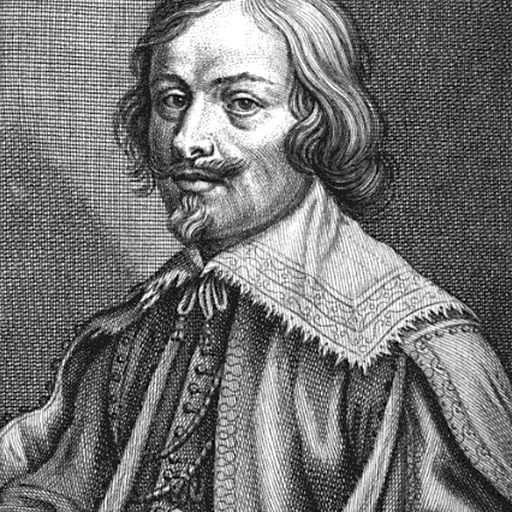
Artist
Jacques Callot was a baroque printmaker and draftsman from the Duchy of Lorraine.

 Holy Family at supper
 Restoration of the Aqueduct at Pisa
 Restoration of the Aqueduct at Pisa
 Square in Paris with Many Figures
 Square in Paris with Many Figures
 Horsemen Attacked by Robbers
 HOW WILL A COVERED PART BE CORRECTED?HOW WIKA A COVERED HEART DEED CORRECTED?
![Christ Walking on the Water [second plate], by Jacques Callot](https://artifactworldgallery.com/img/jacques-callot--christ-walking-on-the-water-second-plate--2069f3bfe4cb2126-w320.webp) Christ Walking on the Water [second plate]
Christ Walking on the Water [second plate]