Artwork
St. Bibiana; St. Birinus; St. Barbara; St. Sabbas
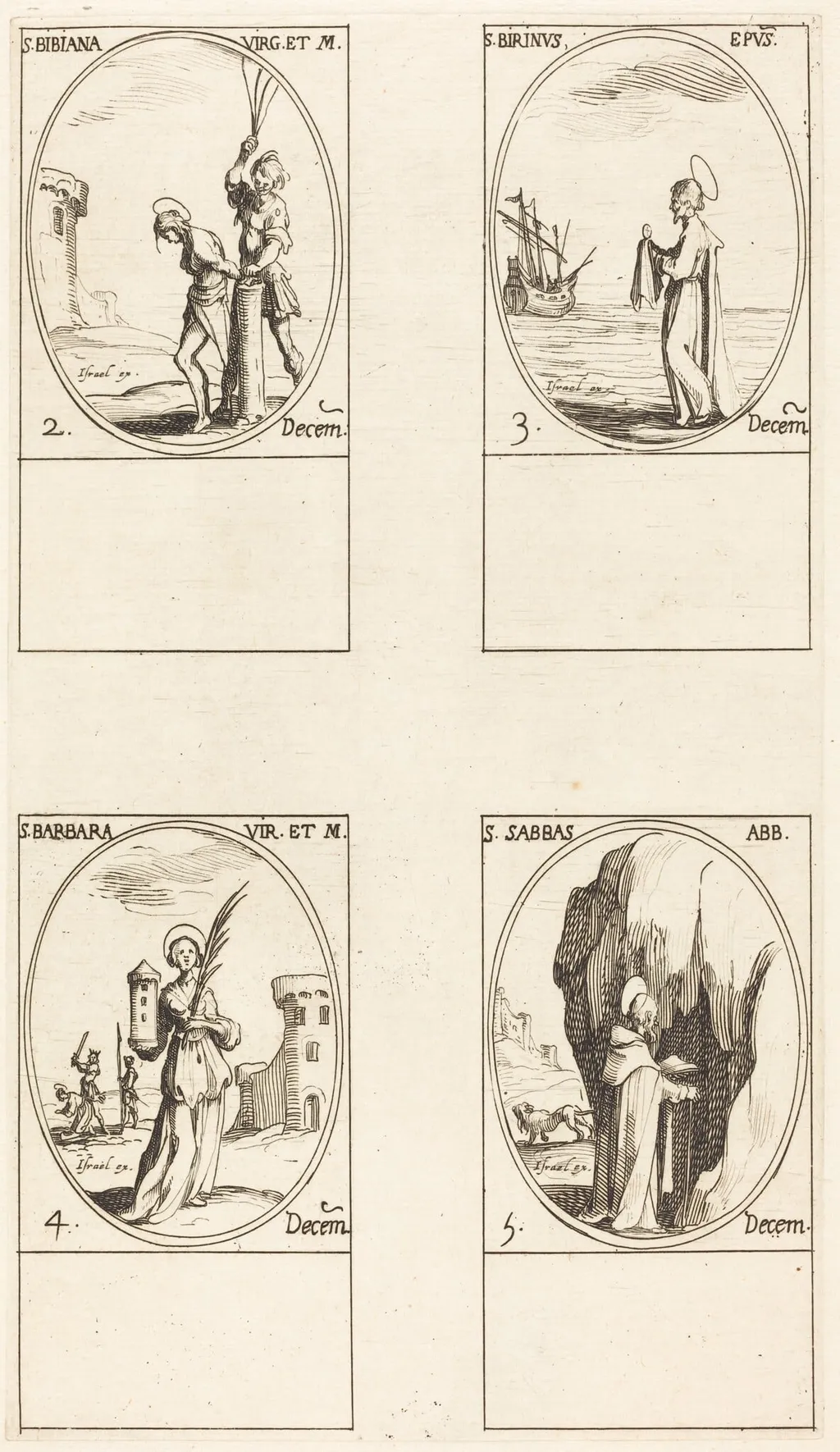
St. Bibiana; St. Birinus; St. Barbara; St. Sabbas is an ink print by the Baroque artist Jacques Callot. It dates from 1634 and is held in the collection of the National Gallery of Art.
About this work
Overview
Executed on laid paper, the work belongs to a series of devotional prints he created during his time in Florence.
Jacques Callot produced this etching around 1634, depicting four Christian saints in individual oval frames. Executed on laid paper, the work belongs to a series of devotional prints he created during his time in Florence. Known for his meticulous line work and prolific output, Callot often combined religious themes with keen observation of human and architectural detail, making these images suitable for private contemplation rather than public display.
Subject & Meaning
Each saint is rendered with symbolic attributes: one holds a palm branch, signifying martyrdom; another stands near a ship, alluding to missionary journeys; a third is shown under a protective cloak, referencing legend; and a fourth is depicted at the moment of beheading. These vignettes draw from hagiographic traditions, offering viewers visual anchors for prayer and meditation, reinforcing virtues of faith, sacrifice, and divine protection.
Technique & Style
Callot employed fine, controlled etching lines to build texture and depth, with dense cross-hatching defining shadows and fabric folds. The backgrounds are filled with miniature architectural elements—towers, trees, animals—rendered with surprising clarity despite their scale. The scratchy, dark lines create a sense of urgency and intimacy, contrasting the stillness of the figures with the bustling, crowded settings around them.
History & Provenance
Created during Callot’s stay in Italy, this print likely circulated among devout collectors and religious communities in Tuscany and beyond. Though no specific early ownership records survive, similar etchings from this period were commonly bound into devotional albums or sold individually by print dealers. Its survival in good condition suggests it was carefully preserved, possibly within a private chapel or household shrine.
Context
In early 17th-century Europe, devotional prints like this served as accessible tools for personal piety, especially amid the Counter-Reformation’s emphasis on visual spirituality. Callot’s work responded to this demand, translating complex saintly narratives into compact, reproducible images. His technical innovations in etching allowed for greater detail than woodcuts, making such prints both spiritually resonant and artistically advanced.
Legacy
Callot’s precise etching technique influenced generations of printmakers across Europe, particularly in the depiction of narrative detail within small formats. While this specific composition is not among his most widely studied, it exemplifies his ability to infuse religious imagery with psychological nuance and environmental richness, bridging the gap between devotional function and artistic ambition.
Artist & collection

Artist
Jacques Callot was a baroque printmaker and draftsman from the Duchy of Lorraine.

 Holy Family at supper
 Restoration of the Aqueduct at Pisa
 Restoration of the Aqueduct at Pisa
 Square in Paris with Many Figures
 Square in Paris with Many Figures
 Horsemen Attacked by Robbers
 HOW WILL A COVERED PART BE CORRECTED?HOW WIKA A COVERED HEART DEED CORRECTED?
![Christ Walking on the Water [second plate], by Jacques Callot](https://artifactworldgallery.com/img/jacques-callot--christ-walking-on-the-water-second-plate--2069f3bfe4cb2126-w320.webp) Christ Walking on the Water [second plate]
Christ Walking on the Water [second plate]
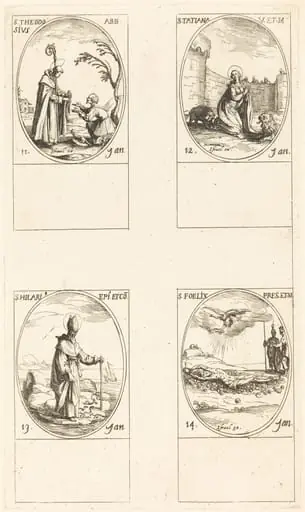 St. Theodosius; St. Tatiana; St. Hilary; St. Felix
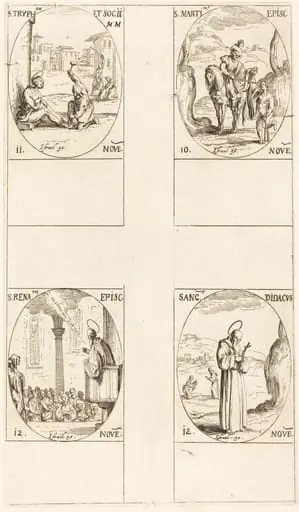 St. Martin; St. Tryphon and Companions; St. Renatus; St. Didacus
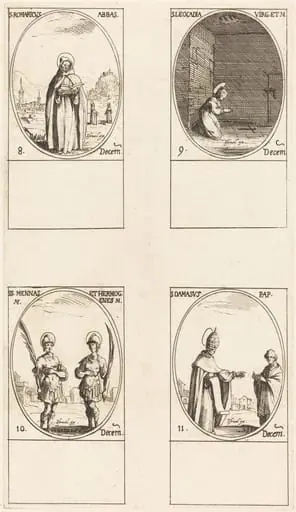 St. Romaricus; St. Leocadia; Sts. Mennas and Hermogenes; St. Damasus
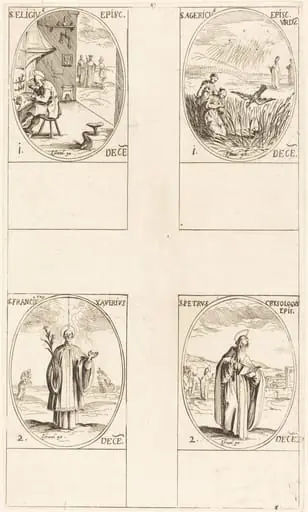 St. Eligius; St. Agericus; St. Francis Xavier; St. Peter Chrysologus
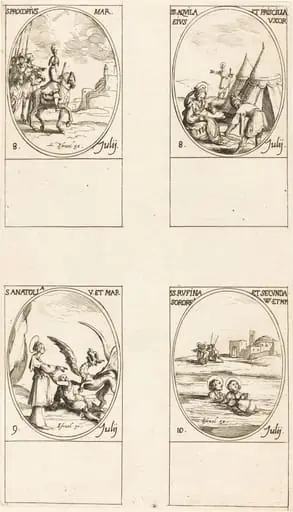 St. Procopius; Sts. Aquila and Prisca; St. Anatolia; Sts. Rufina and Secunda
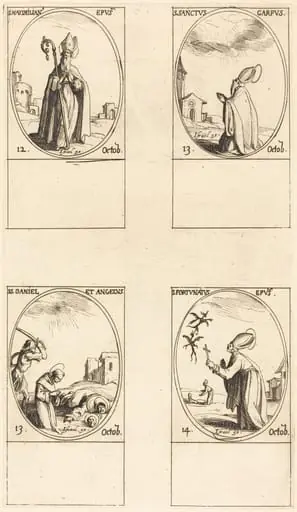 St. Maximilian; St. Carpus; St. Daniel and Angelus; St. Fortunatus
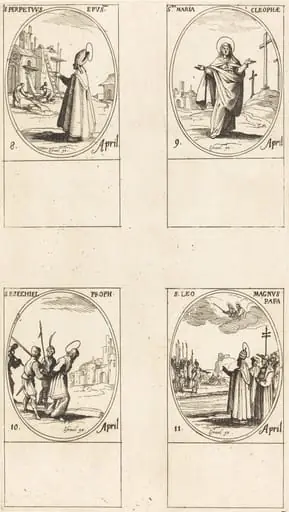 St. Perpetuus; St. Mary of Cleophas; St. Ezechiel; St. Leo the Great
 St. Helen; St. Donatus; St. Ludovicus, Bishop; St. Bernard