Artwork
St. Perpetuus; St. Mary of Cleophas; St. Ezechiel; St. Leo the Great
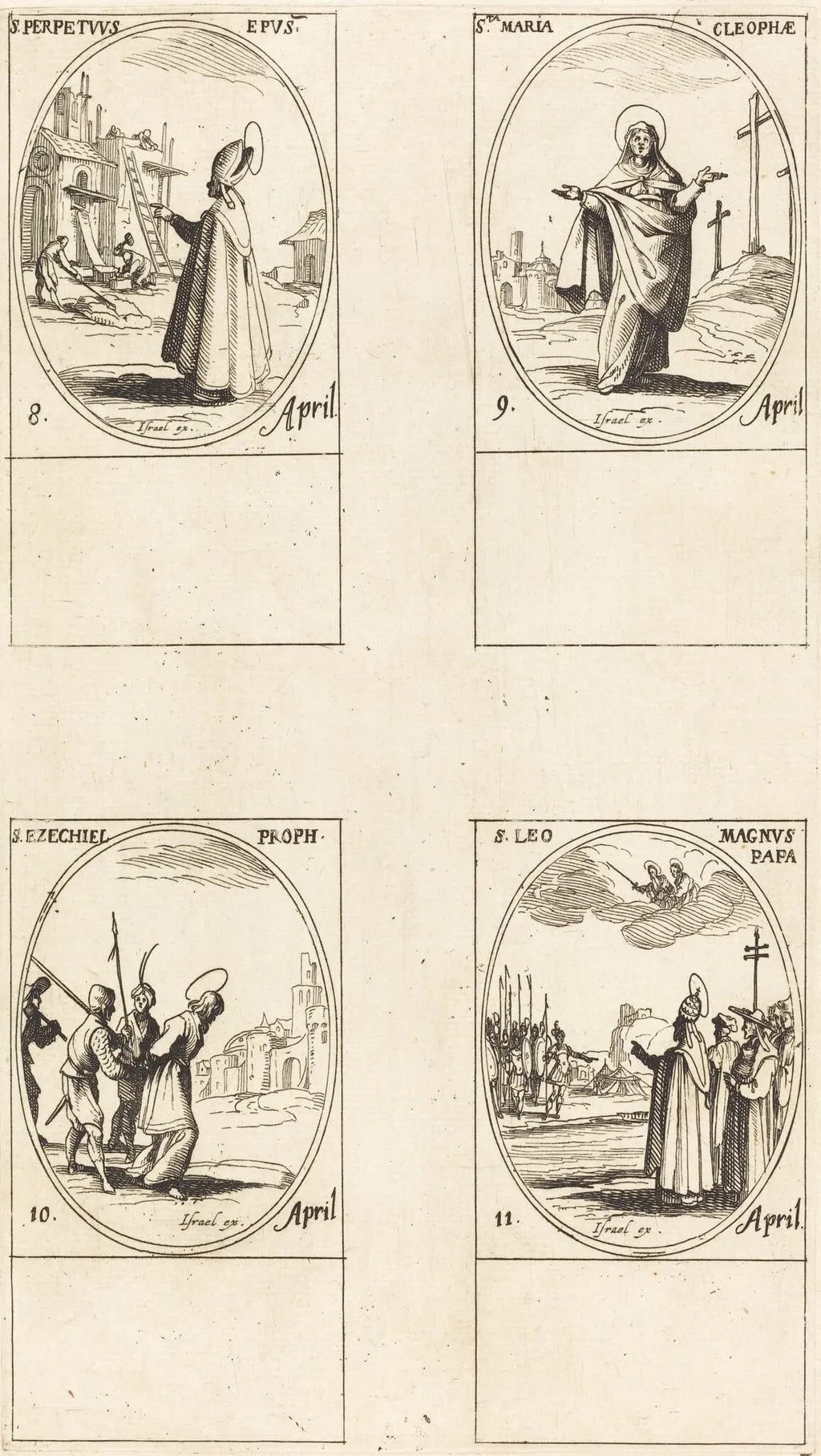
St. Perpetuus; St. Mary of Cleophas; St. Ezechiel; St. Leo the Great is an ink print by the Baroque artist Jacques Callot. It dates from 1634 and is held in the collection of the National Gallery of Art.
About this work
Overview
Each saint occupies an oval frame, labeled with a name and the word “April,” and is set against a modest backdrop of architecture, trees, or shoreline.
Around 1634, French printmaker Jacques Callot produced an etching on laid paper that presents four distinct saintly figures. Each saint occupies an oval frame, labeled with a name and the word “April,” and is set against a modest backdrop of architecture, trees, or shoreline. The composition unites these separate scenes into a single plate, exemplifying Callot’s systematic approach to religious imagery.
Subject & Meaning
The work depicts St. Perpetuus, St. Mary of Cleophas, St. Ezekiel, and St. Leo the Great, each rendered in a compact vignette. The saints are identified by attributes such as a scroll or a maritime setting, suggesting their traditional iconography. By grouping them together, Callot offers a visual catalogue of holy figures, likely intended for devotional contemplation or instructional use.
Technique & Style
Executed as an etching, the image relies on fine, incised lines and cross‑hatching to model volume and create tonal contrast. Callot’s characteristic precision yields sharply defined figures and a clear sense of depth despite the limited scale of each oval. The use of laid paper adds a subtle texture that interacts with the ink, enhancing the overall clarity of the print.
History & Provenance
Created during Callot’s prolific early‑17th‑century period, this plate is part of a larger corpus of more than 1,400 etchings that the artist produced, ranging from military scenes to religious subjects. While the original ownership record is unclear, the print has circulated among collectors of Baroque prints and appears in several catalogues of Callot’s oeuvre.
Context
The etching reflects the Baroque era’s interest in detailed, didactic religious imagery, a response to Counter‑Reformation demands for clear visual instruction. Callot, operating from the Duchy of Lorraine, combined his observational skill with the technical possibilities of etching to produce works that could be widely disseminated, aligning with contemporary practices of print distribution.
Artist & collection

Artist
Jacques Callot was a baroque printmaker and draftsman from the Duchy of Lorraine.

 Holy Family at supper
 Restoration of the Aqueduct at Pisa
 Restoration of the Aqueduct at Pisa
 Square in Paris with Many Figures
 Square in Paris with Many Figures
 Horsemen Attacked by Robbers
 HOW WILL A COVERED PART BE CORRECTED?HOW WIKA A COVERED HEART DEED CORRECTED?
![Christ Walking on the Water [second plate], by Jacques Callot](https://artifactworldgallery.com/img/jacques-callot--christ-walking-on-the-water-second-plate--2069f3bfe4cb2126-w320.webp) Christ Walking on the Water [second plate]
Christ Walking on the Water [second plate]
 St. Helen; St. Donatus; St. Ludovicus, Bishop; St. Bernard
 St. Theodosius; St. Tatiana; St. Hilary; St. Felix
 St. Romaricus; St. Leocadia; Sts. Mennas and Hermogenes; St. Damasus
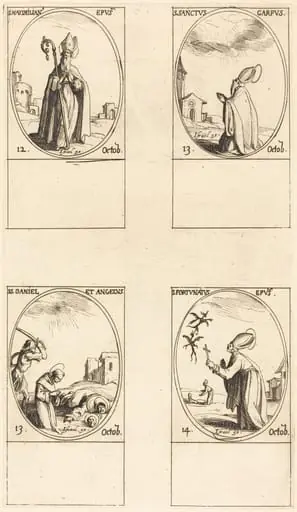 St. Maximilian; St. Carpus; St. Daniel and Angelus; St. Fortunatus
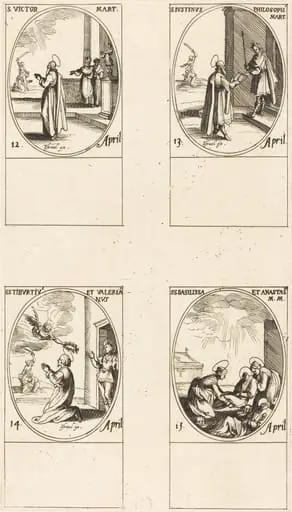 St. Victor; St. Justinus; Sts. Tiburtius and Valerianus; Sts. Basilissa and Anastasia
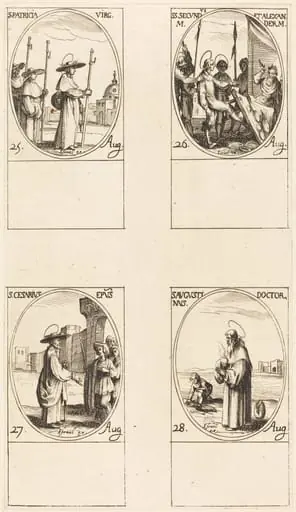 St. Patricia; Sts. Secundus and Alexander; St. Cesarius; St. Augustine
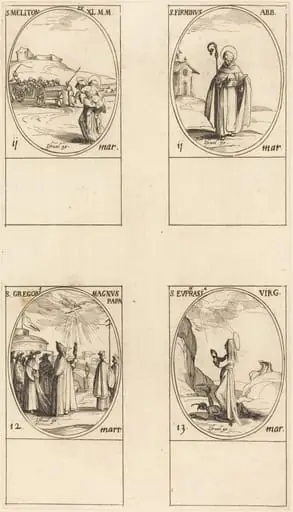 St. Meliton; St. Firminus; St. Gregory the Great; St. Euphrasia
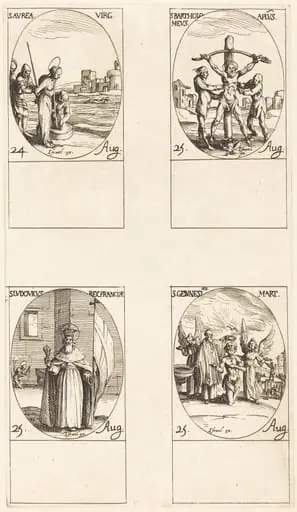 St. Aurea; St. Bartholomew; St. Louis; St. Genesius
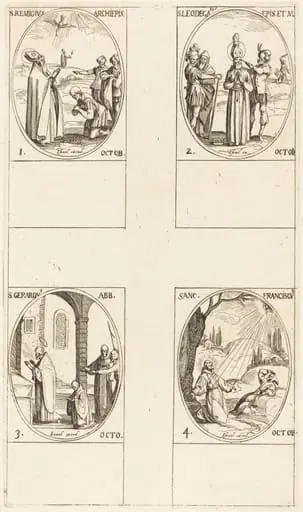 St. Remigius; St. Leodegarius; St. Gerard, Abbot; St. Francis of Assisi
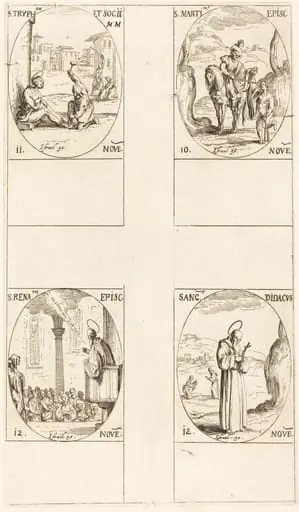 St. Martin; St. Tryphon and Companions; St. Renatus; St. Didacus