Artwork
St. Dionysius, Rusticus & Eleutherius; St. Abraham; St. Gereon & Companions; Sts. Probus & Andronichus
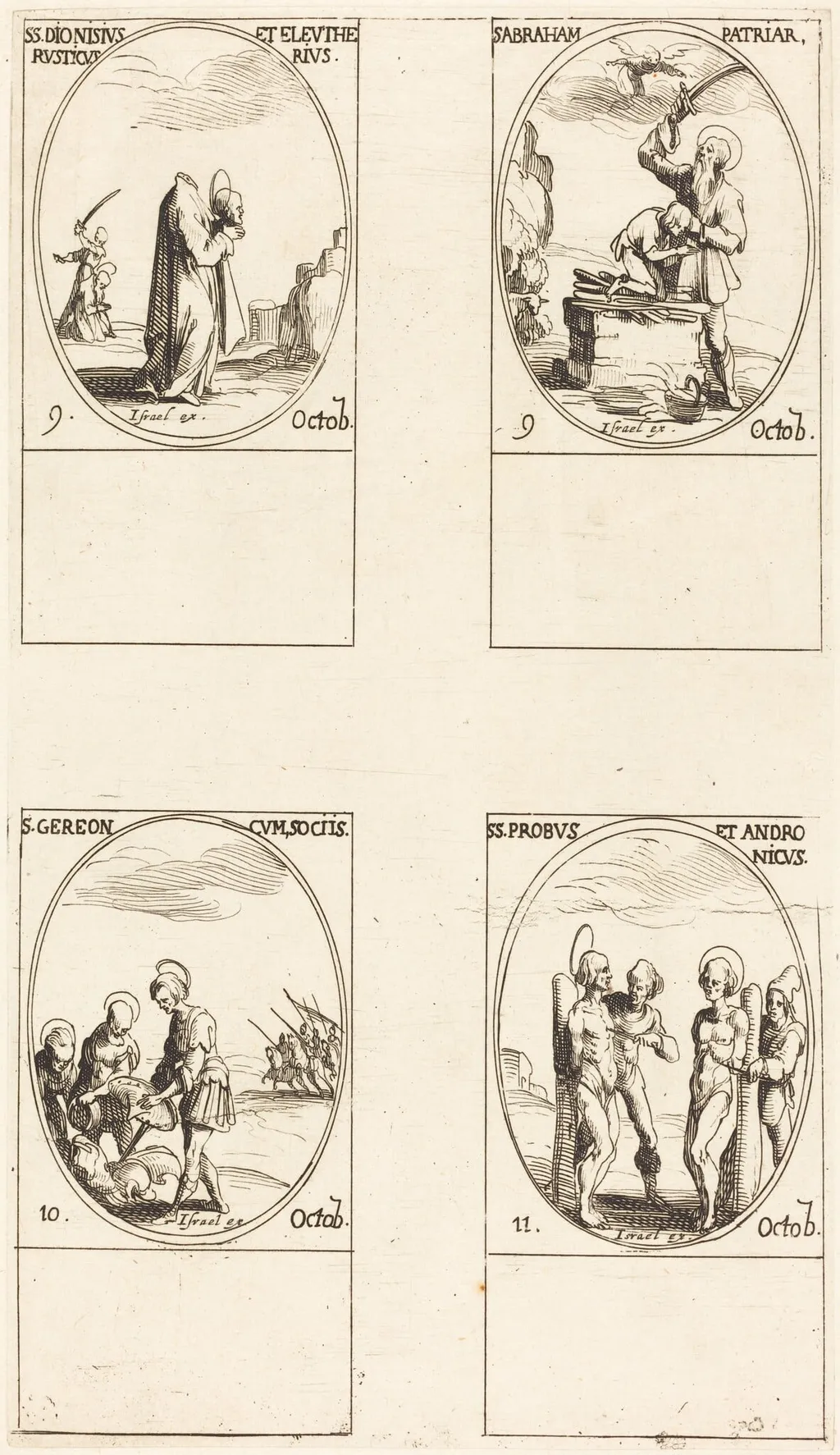
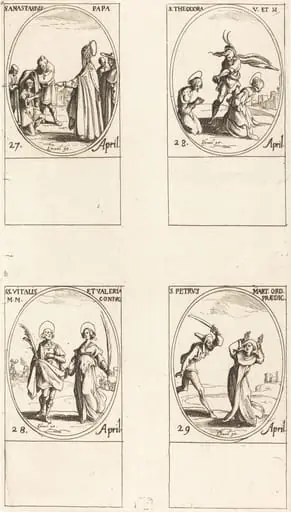
St. Dionysius, Rusticus & Eleutherius; St. Abraham; St. Gereon & Companions; Sts. Probus & Andronichus is an ink print by the Baroque artist Jacques Callot. It dates from 1634 and is held in the collection of the National Gallery of Art. Created circa 1634, this etching on laid paper presents a quartet of oval‑framed scenes that each portray a different group of saints.
About this work
Overview
By arranging four distinct narratives within a single plate, the image functions as a compact visual compendium of martyrdom and sanctity.
Created circa 1634, this etching on laid paper presents a quartet of oval‑framed scenes that each portray a different group of saints. The work combines sharply rendered figures with meticulous cross‑hatching, characteristic of Jacques Callot’s baroque printmaking. By arranging four distinct narratives within a single plate, the image functions as a compact visual compendium of martyrdom and sanctity.
Subject & Meaning
Each oval vignette identifies a specific saint or group of saints: the top left shows a scholarly figure and a sword‑bearing companion, likely representing St. Dionysius with his martyr companions Rusticus and Eleutherius; the top right depicts a man on a scaffold with a sword‑wielding overseer, suggesting the execution of St. Abraham. The lower left gathers kneeling figures and a pointing gesture, evoking St. Gereon and his companions, while the lower right presents two chained men, identified as Sts. Probus and Andronichus, emphasizing themes of sacrifice and steadfast faith.
Technique & Style
Callot employed the etching process, incising lines into a copper plate coated with acid‑resistant ground before exposing the design to acid. The resulting fine lines and dense cross‑hatching create a range of tonal values, allowing detailed rendering of clothing, architecture, and expressive gestures. The use of oval frames organizes the composition, a device that reinforces the narrative separation of each saint’s story while maintaining visual unity across the plate.
History & Provenance
Jacques Callot, a prolific French printmaker from the Duchy of Lorraine, produced over 1,400 etchings during his career, spanning military, courtly, and religious subjects. This particular plate belongs to his series of devotional prints, likely intended for private collectors or devotional use in the mid‑17th century. Surviving impressions are found in several European museum collections, indicating the work’s circulation among connoisseurs of printed religious imagery.
Context
The early 1630s saw heightened demand for printed saints’ lives, driven by Counter‑Reformation efforts to promote models of piety. Callot’s etching aligns with this trend, offering a portable, reproducible visual aid for contemplation. Its baroque sensibility—dramatic gestures, stark contrasts, and dynamic composition—reflects contemporary artistic currents in both French and Italian print circles.
Artist & collection
Artist
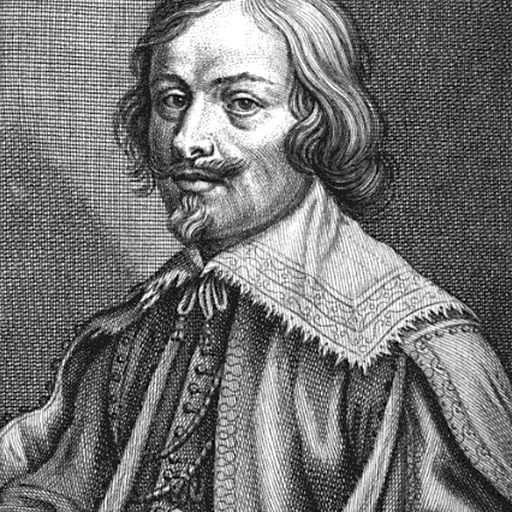
Jacques Callot was a baroque printmaker and draftsman from the Duchy of Lorraine.

 Holy Family at supper
 Restoration of the Aqueduct at Pisa
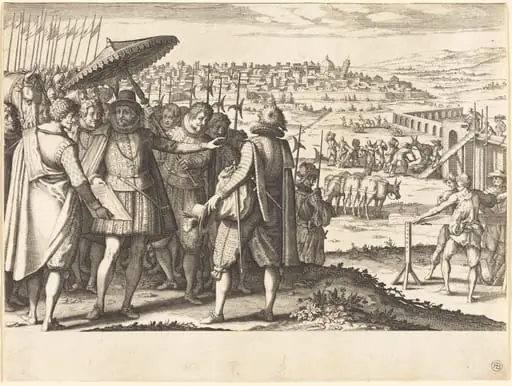 Restoration of the Aqueduct at Pisa
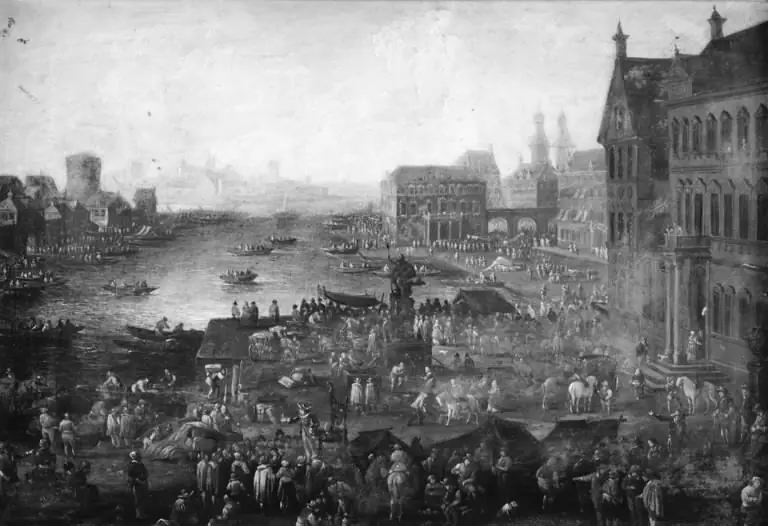 Square in Paris with Many Figures
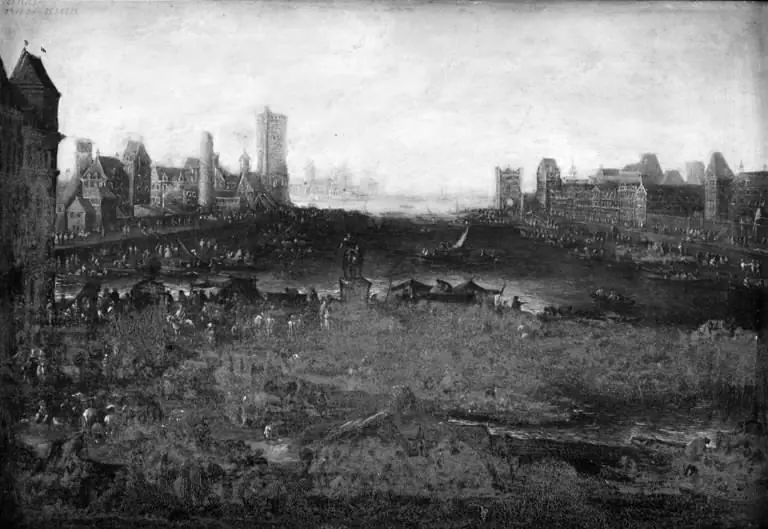 Square in Paris with Many Figures
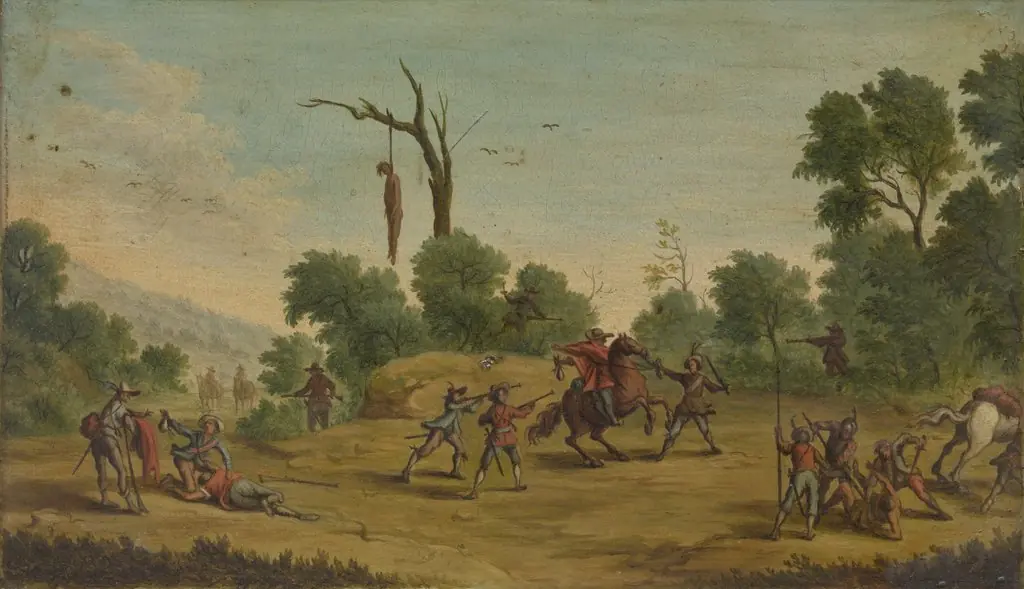 Horsemen Attacked by Robbers
 HOW WILL A COVERED PART BE CORRECTED?HOW WIKA A COVERED HEART DEED CORRECTED?
![Christ Walking on the Water [second plate], by Jacques Callot](https://artifactworldgallery.com/img/jacques-callot--christ-walking-on-the-water-second-plate--2069f3bfe4cb2126-w320.webp) Christ Walking on the Water [second plate]
Christ Walking on the Water [second plate]
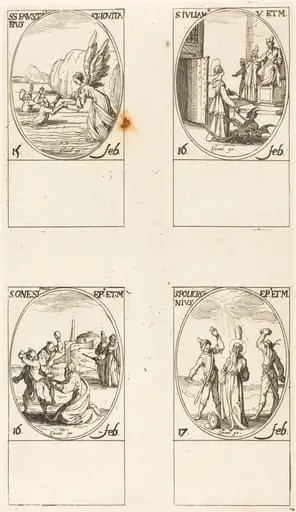 Sts. Faustinus and Jovita; St. Juliana; St. Onesimus; St. Policronius
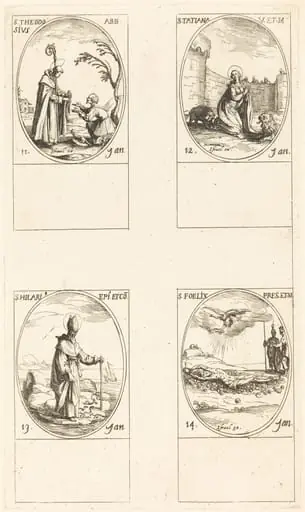 St. Theodosius; St. Tatiana; St. Hilary; St. Felix
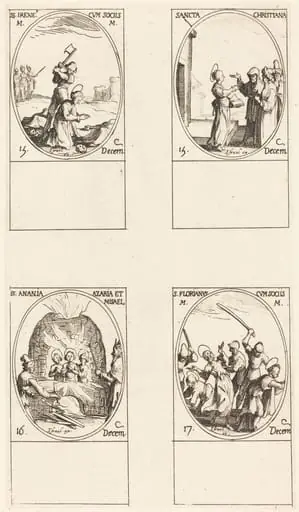 St. Irene & Companions; St. Christiana; Sts. Anania, Azaria & Misael; St. Florianus & Companions
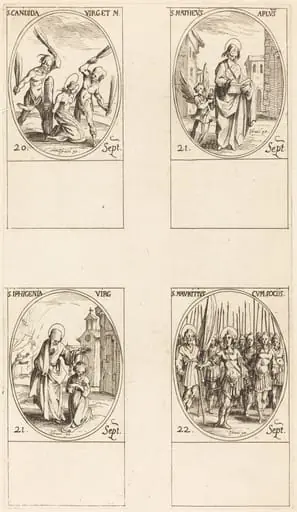 St. Canida; St. Matthew; St. Ipigenia; St. Maurice and Companions
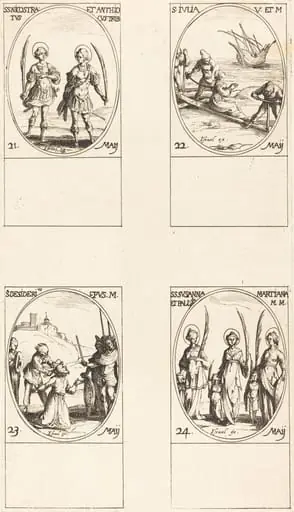 Sts. Nicostratus and Anthiocus; St. Julia; St. Desiderius; Sts. Susanna, Palladia, and Martiana
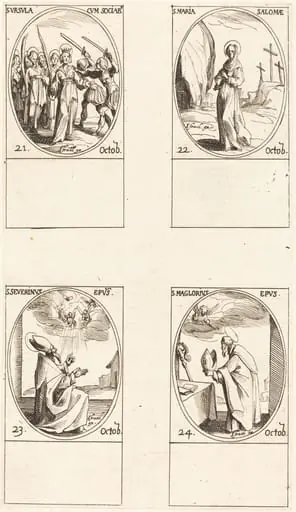 St. Ursula and Companions; St. Mary Salome; St. Severinus; St. Maglorius
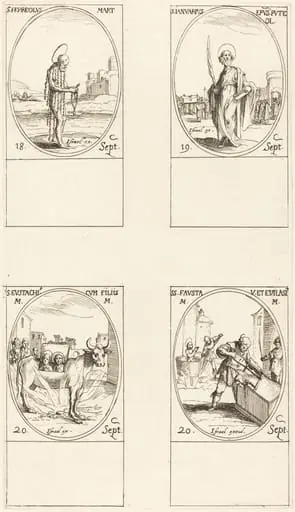 St. Ferreolus; St. Januarius; St. Eustachius & his Children; Sts. Fausta & Evelasius
 St. Anastasius; St. Theodora; Sts. Vitalis and Valeria; St. Peter Martyr