Artwork
Sts. Nicostratus and Anthiocus; St. Julia; St. Desiderius; Sts. Susanna, Palladia, and Martiana
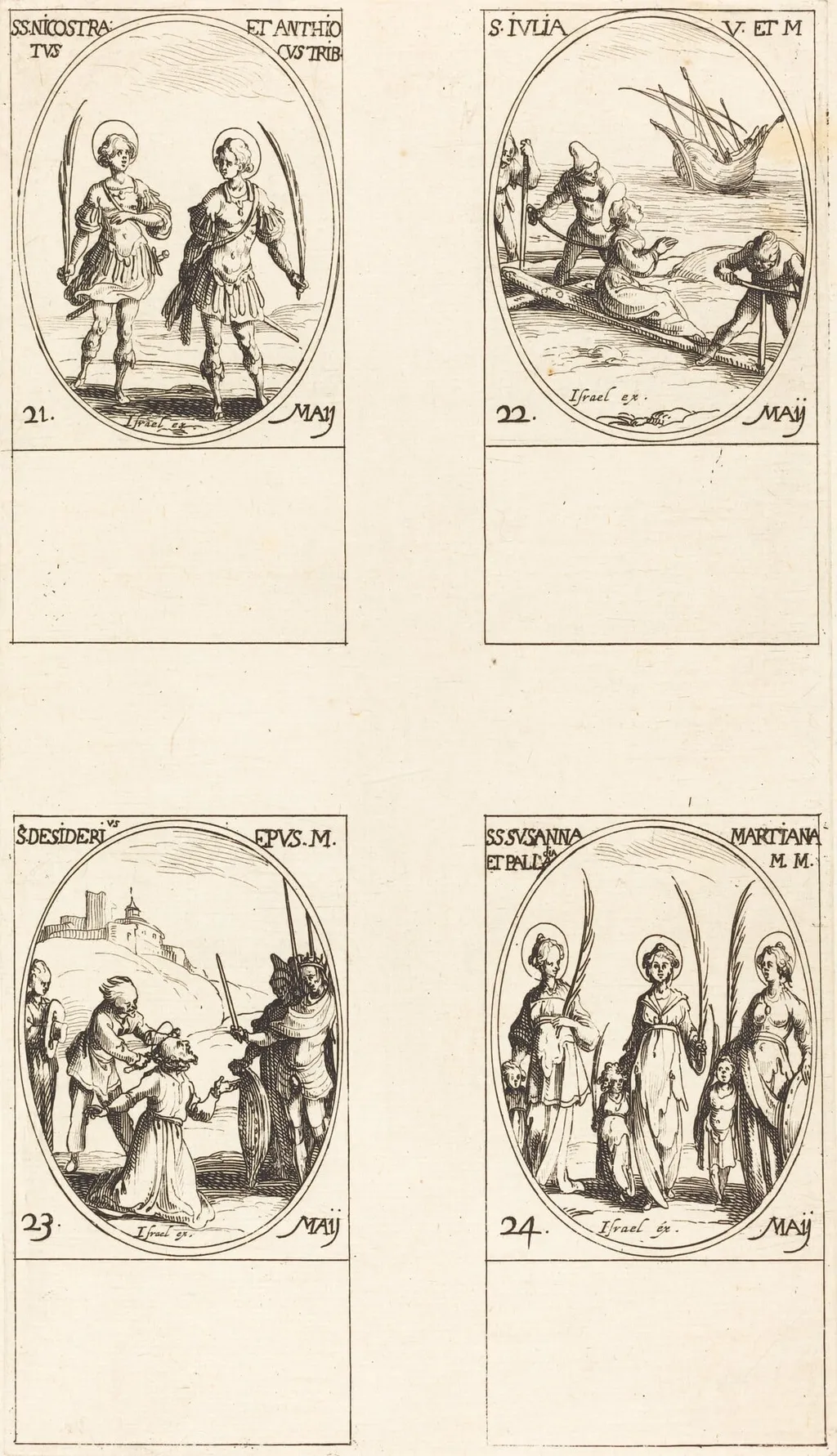
Sts. Nicostratus and Anthiocus; St. Julia; St. Desiderius; Sts. Susanna, Palladia, and Martiana is an ink print by the Baroque artist Jacques Callot. It dates from 1634 and is held in the collection of the National Gallery of Art.
About this work
This print shows seven saints standing in a row. The saints wear long robes and hold objects like books or palms. Their faces look calm, not fancy.
Jacques Callot made this in France around 1633. He used etching and drypoint, scratching lines into metal plates. The lines look soft but sharp at the same time.
See more of his prints at the National Gallery of Art, Washington.
Overview
Jacques Callot’s print, dated circa 1634, presents a procession of seven saints rendered in a single, linear arrangement. Executed on laid paper, the work belongs to the baroque period and reflects Callot’s prolific output of more than a thousand etchings. The figures stand in solemn repose, each distinguished by simple robes and modest attributes such as books or palm fronds.
Subject & Meaning
The composition gathers saints Nicostratus, Anthiocus, Julia, Desiderius, Susanna, Palladia and Martiana, linking them through a shared visual language of humility and devotion. Their calm expressions and unadorned gestures emphasize spiritual contemplation rather than narrative drama, suggesting a devotional purpose that aligns with the Counter‑Reformation’s focus on personal piety.
Technique & Style
Callot employed a combination of etching and drypoint on a copper plate, allowing him to produce lines that are both delicate and crisply defined. The soft, slightly fuzzy edges characteristic of drypoint contrast with the precise incisions of the etched areas, creating a nuanced surface texture that enhances the figures’ drapery and facial features.
History & Provenance
Created in the Duchy of Lorraine, then part of France, the print reflects Callot’s engagement with both secular and sacred themes. It is now part of the collection of the National Gallery of Art in Washington, where it is displayed alongside other works that illustrate the artist’s extensive documentation of 17th‑century life.
Artist & collection

Artist
Jacques Callot was a baroque printmaker and draftsman from the Duchy of Lorraine.

 Holy Family at supper
 Restoration of the Aqueduct at Pisa
 Restoration of the Aqueduct at Pisa
 Square in Paris with Many Figures
 Square in Paris with Many Figures
 Horsemen Attacked by Robbers
 HOW WILL A COVERED PART BE CORRECTED?HOW WIKA A COVERED HEART DEED CORRECTED?
![Christ Walking on the Water [second plate], by Jacques Callot](https://artifactworldgallery.com/img/jacques-callot--christ-walking-on-the-water-second-plate--2069f3bfe4cb2126-w320.webp) Christ Walking on the Water [second plate]
Christ Walking on the Water [second plate]
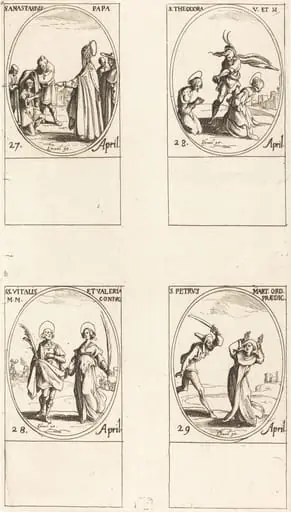 St. Anastasius; St. Theodora; Sts. Vitalis and Valeria; St. Peter Martyr
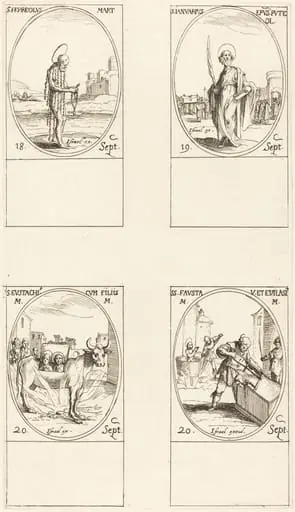 St. Ferreolus; St. Januarius; St. Eustachius & his Children; Sts. Fausta & Evelasius
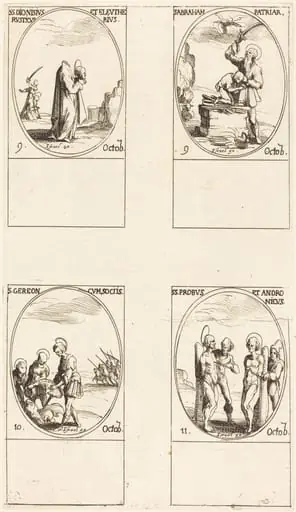 St. Dionysius, Rusticus & Eleutherius; St. Abraham; St. Gereon & Companions; Sts. Probus & Andronichus
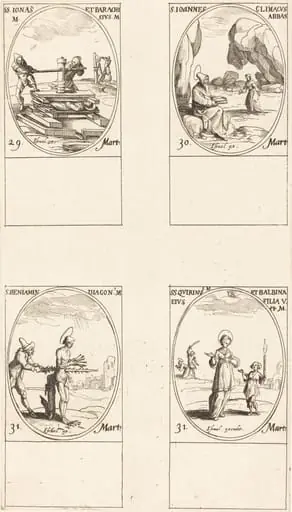 Sts. Jonas & Barachisius; St. John Climacus, Abbot; St. Benjamin; Sts. Quirinus & Bal
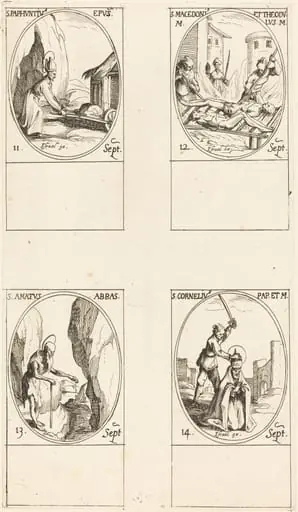 St. Paphnutius; Sts. Macedonius and Theodulus; St. Amatus; St. Cornelias
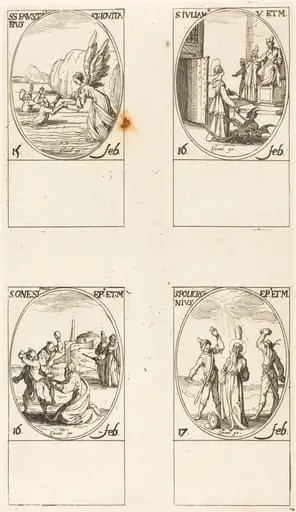 Sts. Faustinus and Jovita; St. Juliana; St. Onesimus; St. Policronius
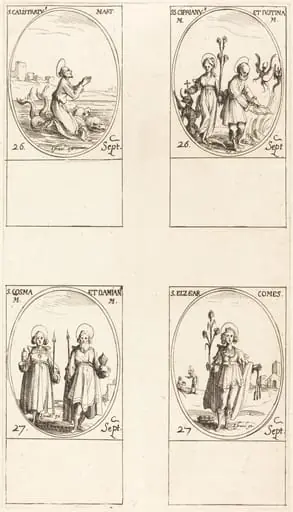 St. Calistratus; Sts. Cyprian and Justina; Sts. Comus and Damian; St. Elzear, Count
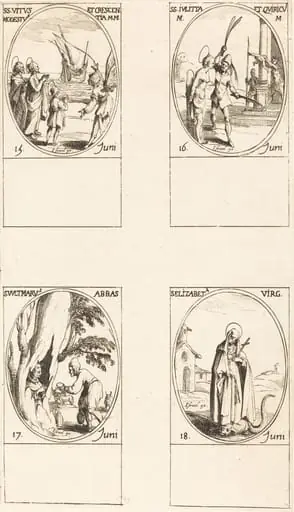 Sts. Vitus, Modestus, & Crescentia; Sts. Julitta & Quiricus; St. Avitus, Abbot; St. Elizabeth, Virgin
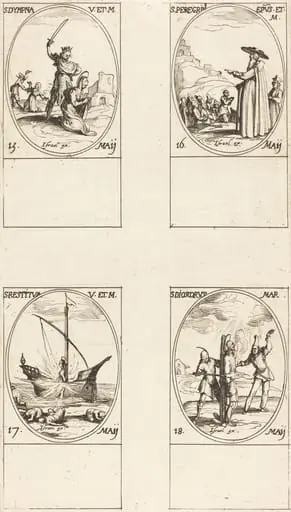 St. Dympna; St. Peregrinus; St. Restituta; St. Dioscorus
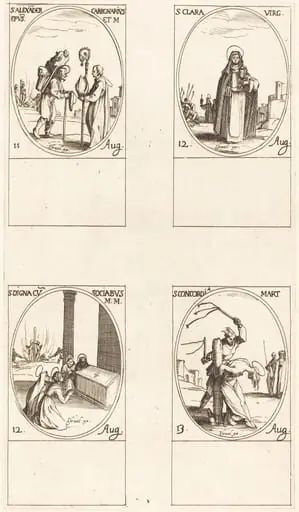 St. Alexander Carbonarius; St. Clare; St. Digna and Companions; St. Concordia