Artwork
St. Dympna; St. Peregrinus; St. Restituta; St. Dioscorus
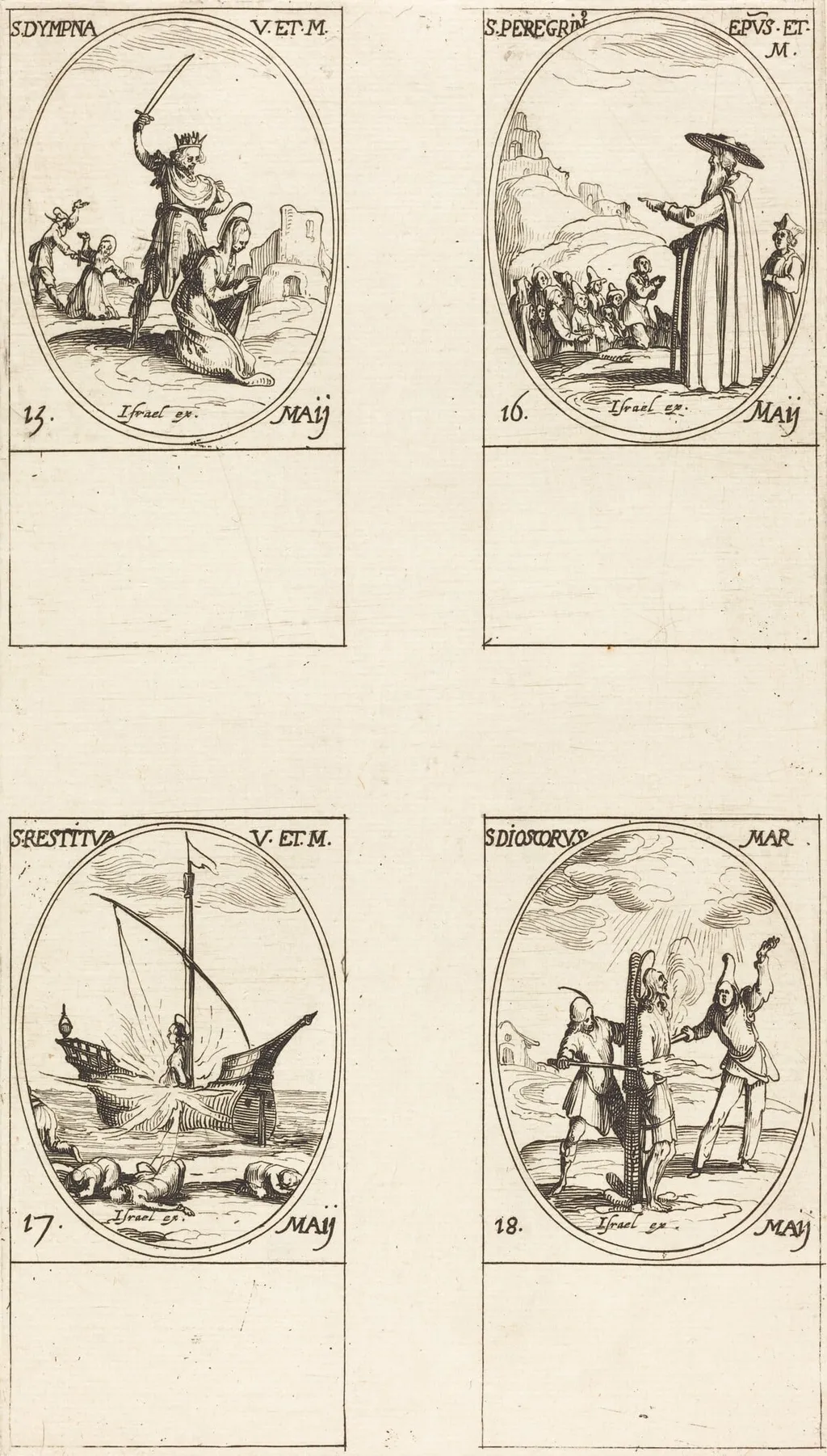
St. Dympna; St. Peregrinus; St. Restituta; St. Dioscorus is an ink print by the Baroque artist Jacques Callot. It dates from 1634 and is held in the collection of the National Gallery of Art. Created circa 1634, this etching on laid paper presents four distinct oval vignettes, each illustrating a different saint.
About this work
Overview
Created circa 1634, this etching on laid paper presents four distinct oval vignettes, each illustrating a different saint.
Created circa 1634, this etching on laid paper presents four distinct oval vignettes, each illustrating a different saint. The compositions are rendered in fine, intricate lines that give the images a delicate, slightly textured appearance. Jacques Callot, a French printmaker active in the early seventeenth century, executed the work as part of his extensive output of religious and secular subjects.
Subject & Meaning
Each panel focuses on a separate holy figure—St. Dymma, St. Peregrine, St. Restituta, and St. Dioscorus—showing them in moments of devotion or martyrdom. The scenes include a kneeling figure, a sword‑bearing saint, a pilgrim in a wide‑brimmed hat among a crowd, a ship bearing a cross, and a standing figure holding a cross‑topped pole, suggesting narratives of sacrifice, pilgrimage, and steadfast faith.
Technique & Style
The work employs the etching process, in which Callot incised the design into a copper plate before printing onto laid paper. His characteristic use of fine, cross‑hatched lines creates a detailed yet slightly rough texture, allowing subtle modeling of figures and architectural elements within the confined oval frames.
History & Provenance
Produced during Callot’s prolific period in the Duchy of Lorraine, the print reflects his broader interest in documenting contemporary religious iconography. While the original ownership trail is not fully recorded, the piece belongs to the corpus of over 1,400 etchings that circulated among collectors and patrons in the mid‑seventeenth century.
Context
The early 1630s saw heightened demand for devotional imagery amid the Counter‑Reformation, and Callot’s prints catered to both private devotion and the market for illustrated religious literature. The inclusion of multiple saints in a single sheet aligns with the period’s practice of compiling didactic visual programs for contemplation.
Artist & collection
Artist
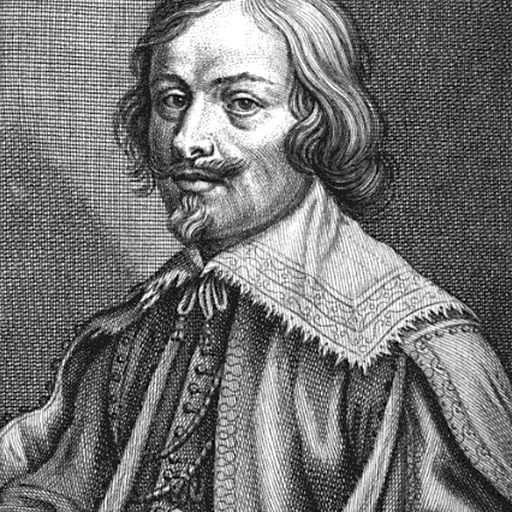
Jacques Callot was a baroque printmaker and draftsman from the Duchy of Lorraine.

 Holy Family at supper
 Restoration of the Aqueduct at Pisa
 Restoration of the Aqueduct at Pisa
 Square in Paris with Many Figures
 Square in Paris with Many Figures
 Horsemen Attacked by Robbers
 HOW WILL A COVERED PART BE CORRECTED?HOW WIKA A COVERED HEART DEED CORRECTED?
![Christ Walking on the Water [second plate], by Jacques Callot](https://artifactworldgallery.com/img/jacques-callot--christ-walking-on-the-water-second-plate--2069f3bfe4cb2126-w320.webp) Christ Walking on the Water [second plate]
Christ Walking on the Water [second plate]
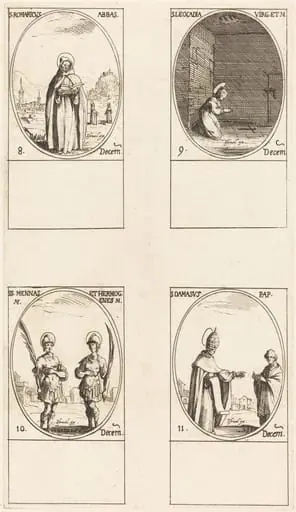 St. Romaricus; St. Leocadia; Sts. Mennas and Hermogenes; St. Damasus
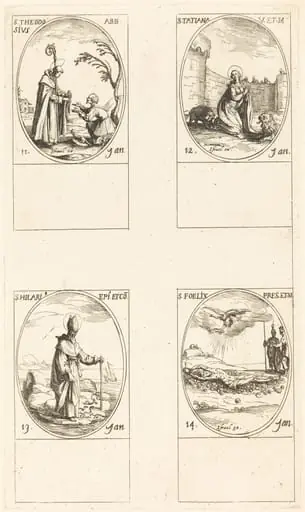 St. Theodosius; St. Tatiana; St. Hilary; St. Felix
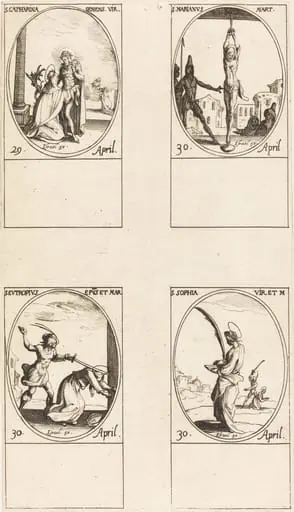 St. Catharine of Siena; St. Marian; St. Eutropius; St. Sophia
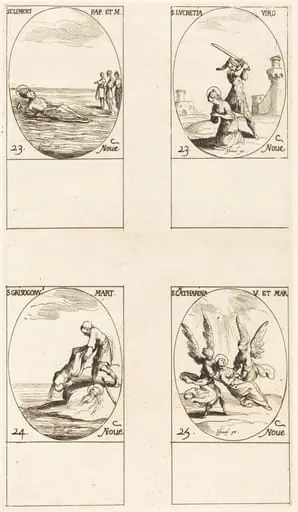 St. Clement; St. Lucretia; St. Chrysogonus; St. Catharine
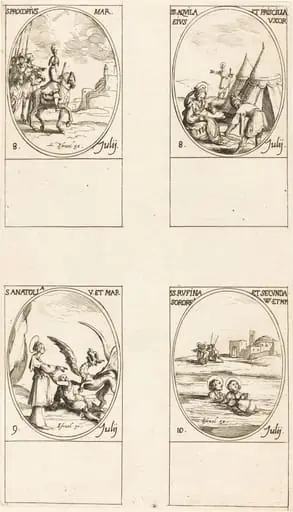 St. Procopius; Sts. Aquila and Prisca; St. Anatolia; Sts. Rufina and Secunda
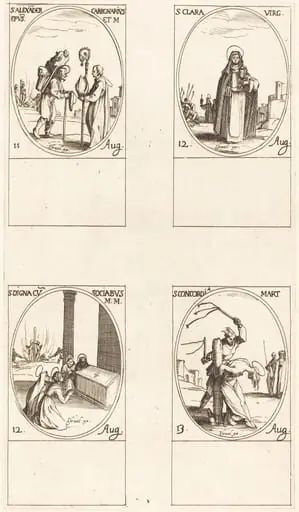 St. Alexander Carbonarius; St. Clare; St. Digna and Companions; St. Concordia
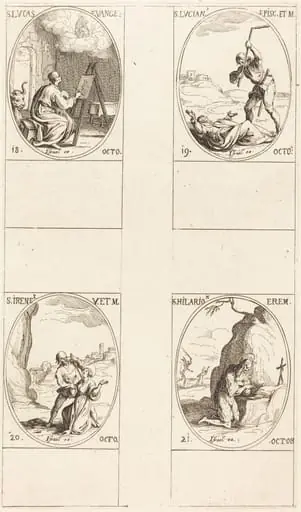 St. Luke; St. Lucian; St. Irene; St. Hilarion
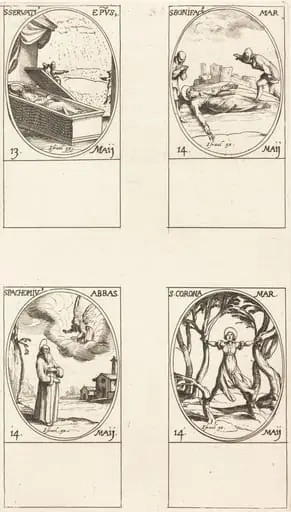 St. Servatius; St. Boniface; St. Pachomius; St. Corona
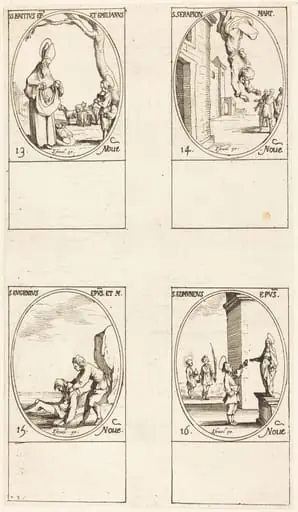 St. Brice; St. Serapion; St. Eugenius; St. Edmund
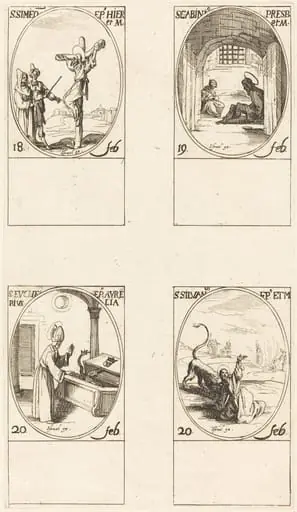 St. Simeon; St. Gabinius; St. Eucharius; St. Silvanus