Artwork
St. Flavian; St. Victoria; St. Servulus; St. Tharsilla
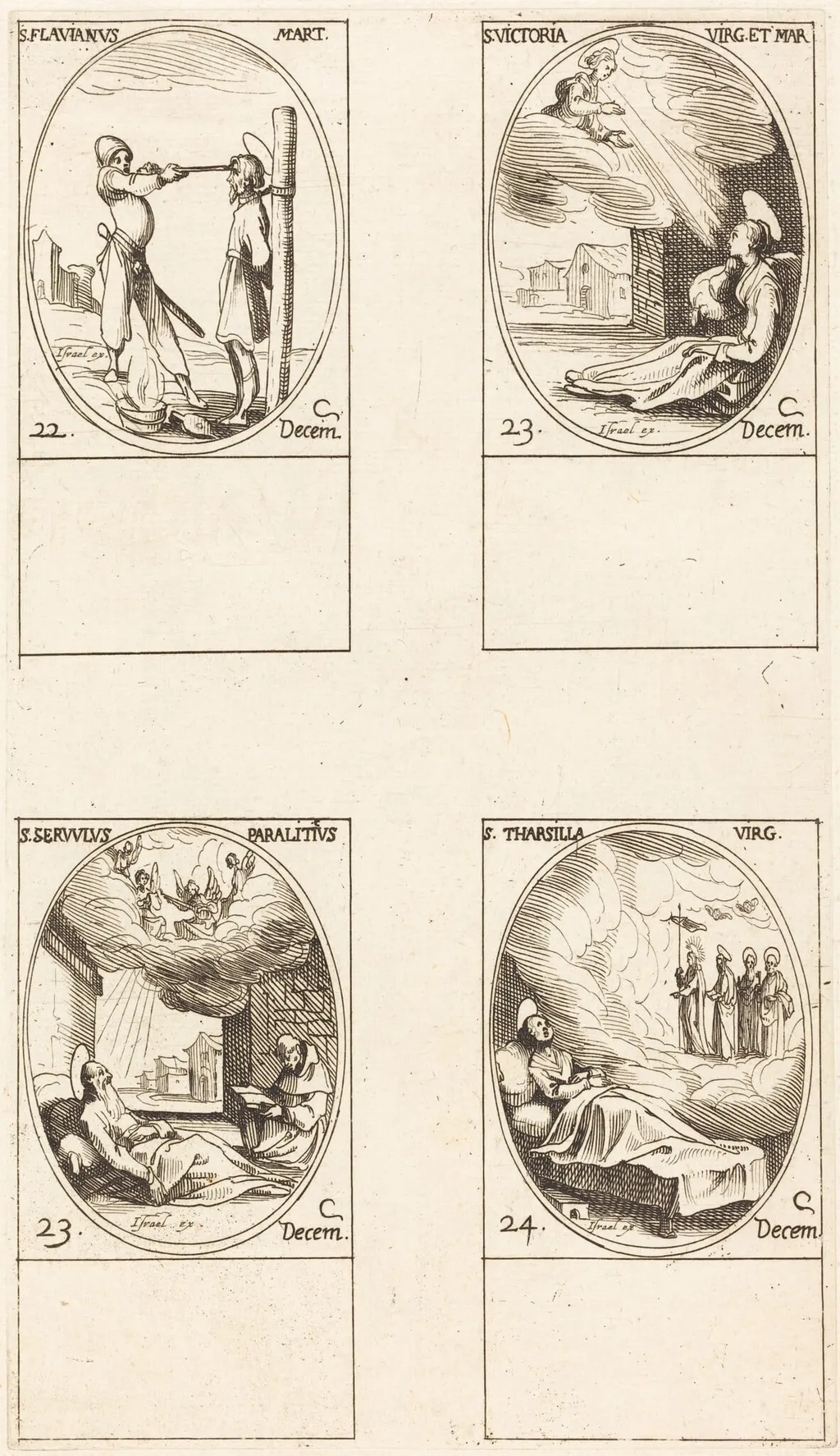
St. Flavian; St. Victoria; St. Servulus; St. Tharsilla is an ink print by the Baroque artist Jacques Callot. It dates from 1634 and is held in the collection of the National Gallery of Art.
About this work
Overview
Created around 1634 by Jacques Callot, this etching on laid paper presents four distinct scenes of Christian saints, each enclosed in an oval frame.
Created around 1634 by Jacques Callot, this etching on laid paper presents four distinct scenes of Christian saints, each enclosed in an oval frame. As one of over 1,400 prints by the Lorrainer artist, the work exemplifies his mastery of fine-line etching and his interest in religious narratives alongside secular subjects. The composition is compact yet rich in narrative detail, arranged to guide the viewer through individual moments of sanctity and suffering.
Subject & Meaning
The four saints—Flavian, Victoria, Servulus, and Tharsilla—are depicted in moments tied to their hagiographies: martyrdom, divine intervention, or healing. Flavian is shown near a cross, possibly referencing his persecution; Victoria hovers above a kneeling figure, suggesting ascension; Servulus is attended by a celestial presence as he lies ill; Tharsilla is comforted by a cross-bearing figure at her deathbed. These scenes emphasize endurance and divine grace, aligning with Counter-Reformation devotional ideals.
Technique & Style
Callot employed fine etched lines to render delicate textures and spatial depth within small frames. Subtle shading defines volume without heavy ink, preserving the paper’s natural tone. The figures are simplified but expressive, their gestures and postures conveying emotion through minimal means. Each oval functions as a self-contained vignette, unified by consistent line quality and a restrained palette of ink on paper.
History & Provenance
The print was produced during Callot’s mature period in Nancy, after his time in Florence and Paris. It likely served devotional or educational purposes, circulated among religious communities or collectors interested in saintly imagery. No specific early ownership records are documented, but its survival in multiple institutional collections suggests it was reproduced and preserved as part of broader print circulation in 17th-century Europe.
Context
In the 1630s, religious prints remained vital tools for spiritual instruction amid ongoing tensions between Catholic and Protestant communities. Callot’s focus on lesser-known saints reflects a trend toward personal, intimate devotion rather than grand public iconography. His technical precision and narrative clarity made such prints accessible to a literate, middle-class audience seeking visual aids for prayer and reflection.
Legacy
Though not among Callot’s most widely recognized works, this etching illustrates his consistent engagement with religious themes and his ability to compress complex stories into compact, legible forms. It contributes to the understanding of how printmaking extended the reach of Counter-Reformation spirituality beyond painting and sculpture, offering portable, reproducible imagery for private contemplation.
Artist & collection
Artist
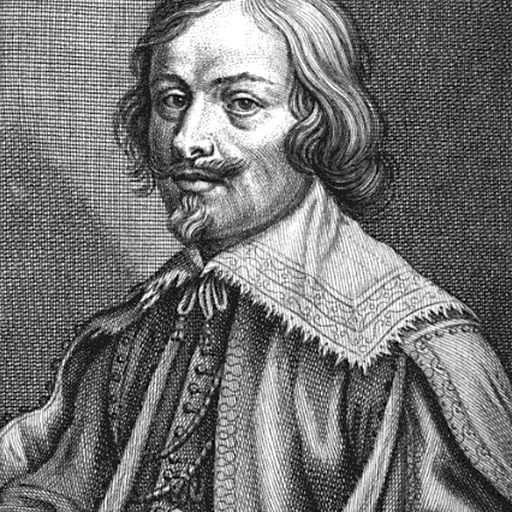
Jacques Callot was a baroque printmaker and draftsman from the Duchy of Lorraine.

 Holy Family at supper
 Restoration of the Aqueduct at Pisa
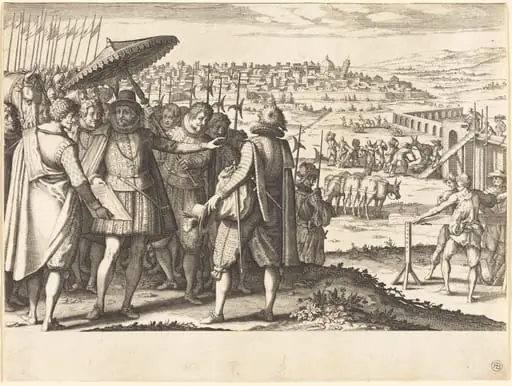 Restoration of the Aqueduct at Pisa
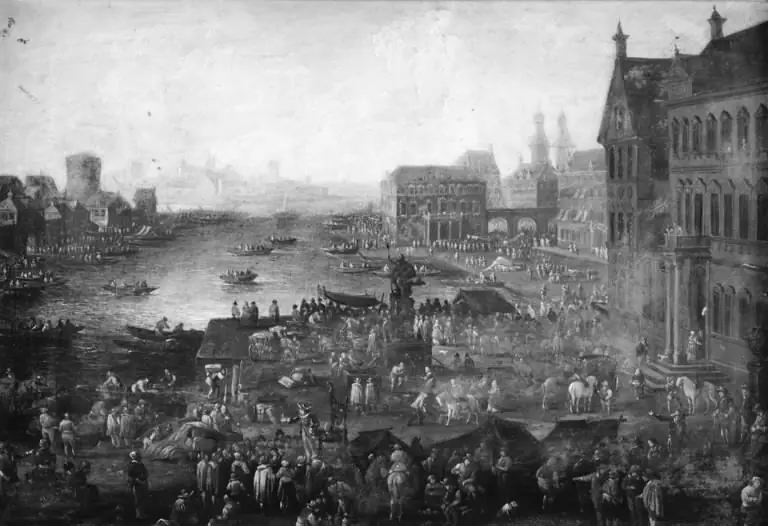 Square in Paris with Many Figures
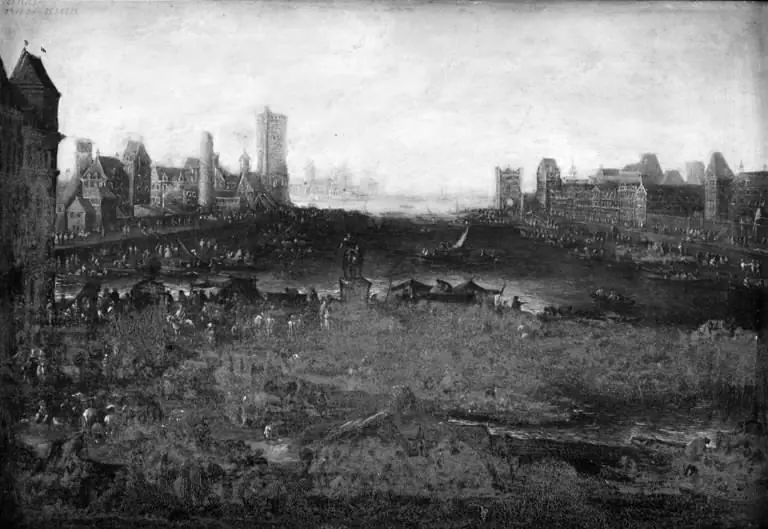 Square in Paris with Many Figures
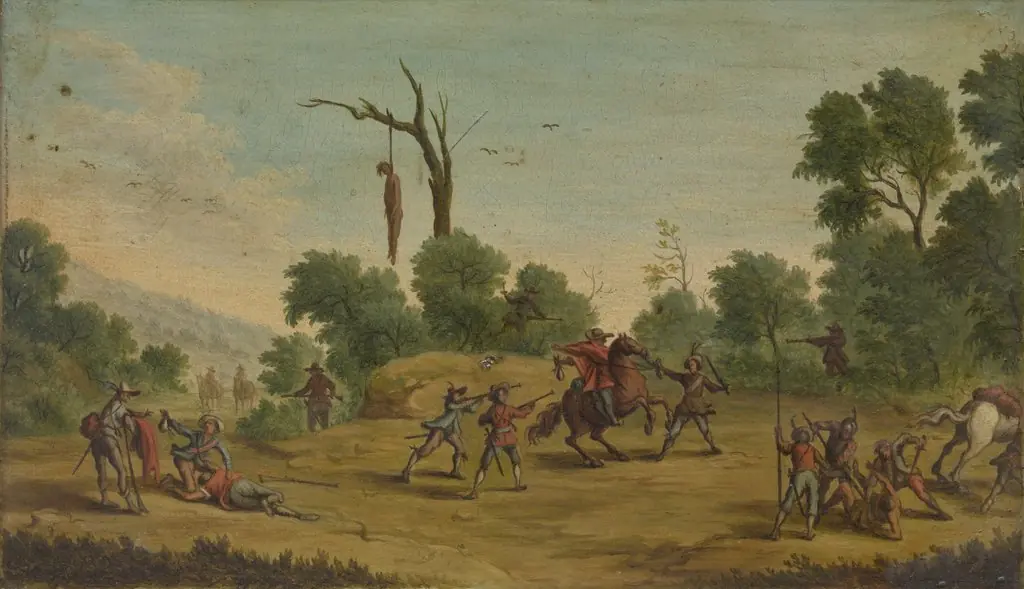 Horsemen Attacked by Robbers
 HOW WILL A COVERED PART BE CORRECTED?HOW WIKA A COVERED HEART DEED CORRECTED?
![Christ Walking on the Water [second plate], by Jacques Callot](https://artifactworldgallery.com/img/jacques-callot--christ-walking-on-the-water-second-plate--2069f3bfe4cb2126-w320.webp) Christ Walking on the Water [second plate]
Christ Walking on the Water [second plate]
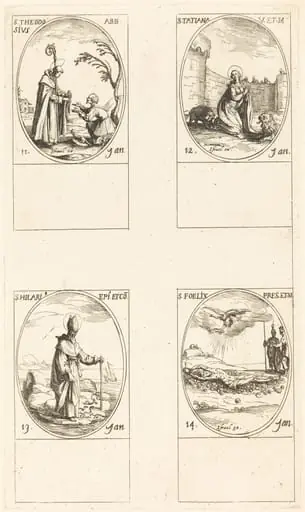 St. Theodosius; St. Tatiana; St. Hilary; St. Felix
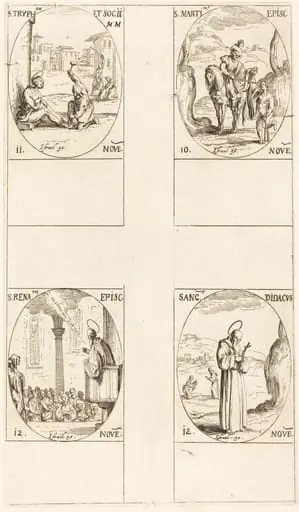 St. Martin; St. Tryphon and Companions; St. Renatus; St. Didacus
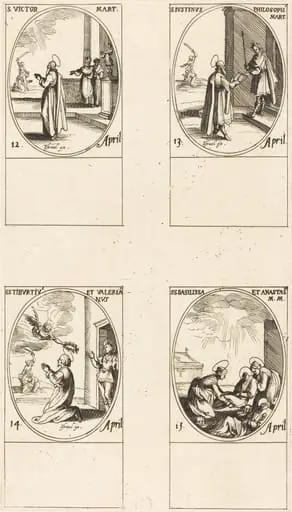 St. Victor; St. Justinus; Sts. Tiburtius and Valerianus; Sts. Basilissa and Anastasia
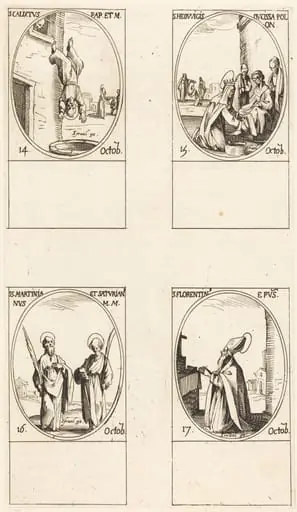 St. Calixtus; St. Hedwiges; Sts. Martinian and Saturian; St. Florentinus
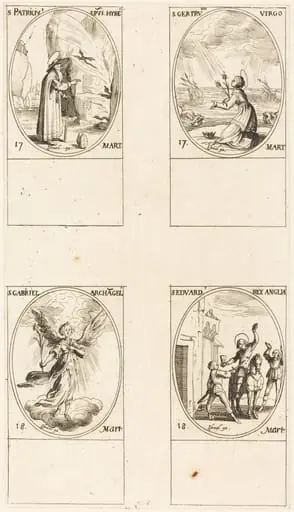 St. Patrick; St. Gertrude; St. Gabriel, Archangel; St. Edward
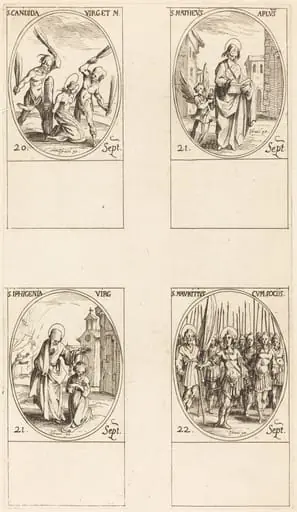 St. Canida; St. Matthew; St. Ipigenia; St. Maurice and Companions
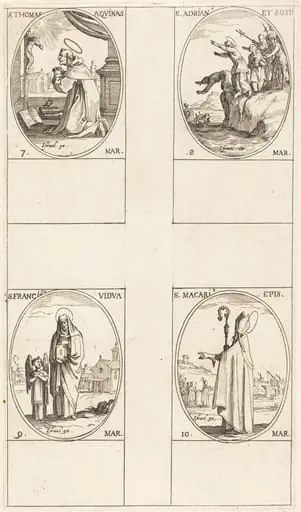 St. Thomas Aquin; St. Adrian and Companions; St. Frances; St. Macari