Artwork
St. Victor; St. Justinus; Sts. Tiburtius and Valerianus; Sts. Basilissa and Anastasia
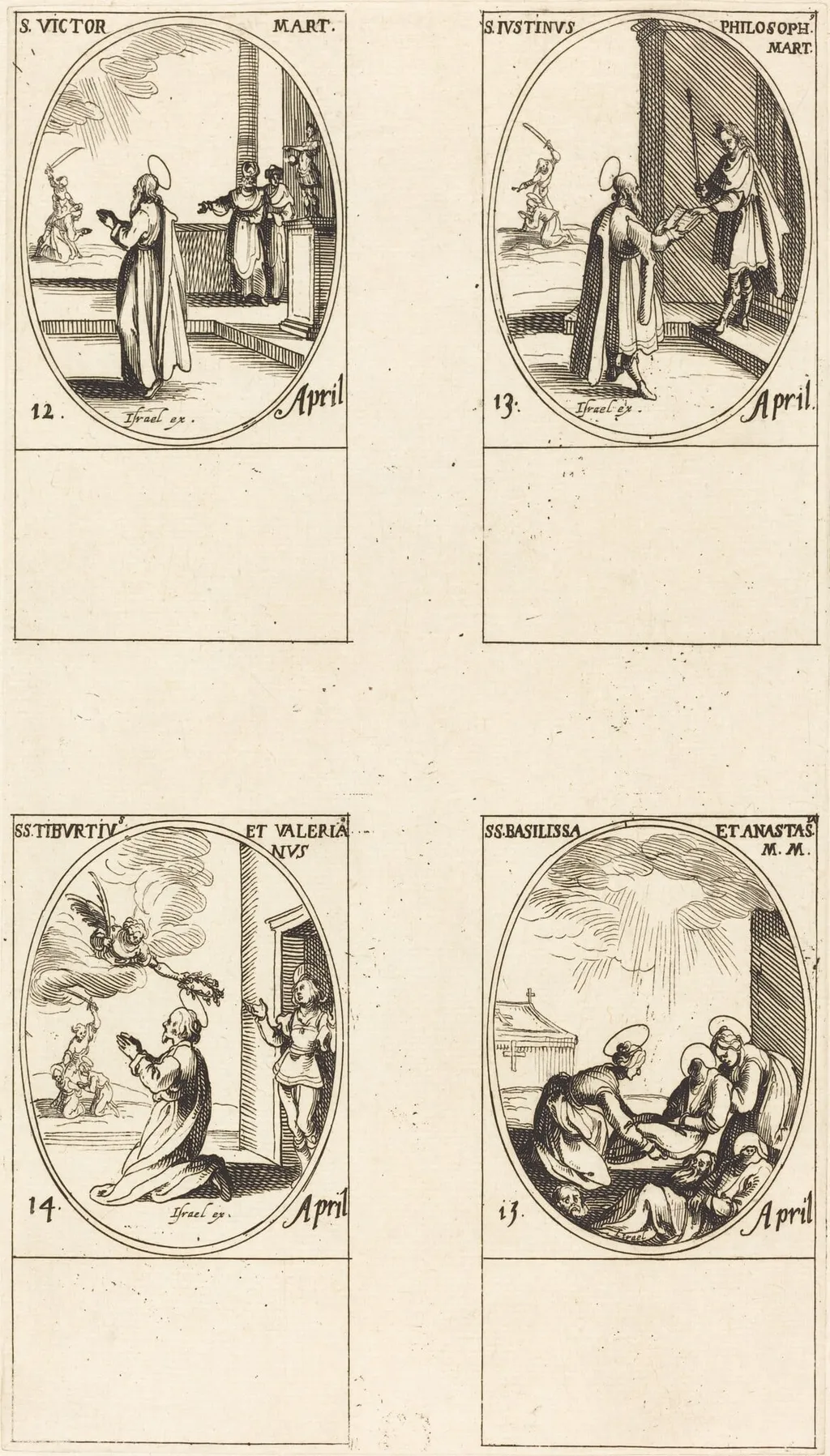
St. Victor; St. Justinus; Sts. Tiburtius and Valerianus; Sts. Basilissa and Anastasia is an ink print by the Baroque artist Jacques Callot. It dates from 1634 and is held in the collection of the National Gallery of Art.
About this work
Overview
Created around 1634, this etching by Jacques Callot presents a quartet of saints—Victor, Justinus, Tiburtius and Valerianus, and Basilissa with Anastasia—within a compact, oval composition. Executed on laid paper, the work belongs to the Baroque period and exemplifies Callot’s prolific output of religious imagery alongside his more secular subjects.
Subject & Meaning
The print gathers four distinct hagiographic figures, each rendered in modest, dark attire. Some are shown in prayer, others receive angelic visitation or stand beside a doorway, suggesting moments of divine encounter or martyrdom. The grouping underscores themes of piety, intercession, and the collective veneration of early Christian saints.
Technique & Style
Callot employed traditional etching, incising fine lines into a copper plate and transferring the ink onto laid paper. The image is defined by crisp contours and delicate cross‑hatching that creates subtle tonal variation. Backgrounds are restrained, offering just enough architectural or landscape suggestion to locate the saints without distracting from their gestures.
History & Provenance
Part of Callot’s extensive series of over fourteen hundred prints, this piece reflects his dual interest in documenting contemporary life and producing devotional works. While the original plate’s ownership history is not fully documented, prints of this type circulated widely among collectors in 17th‑century France and later entered museum collections.
Context
During the early Baroque, French printmakers like Callot responded to both Counter‑Reformation demands for accessible religious imagery and a growing market for affordable prints. The intimate scale and clear iconography of this work made it suitable for private devotion, aligning with the period’s emphasis on personal engagement with saintly exemplars.
Artist & collection
Artist
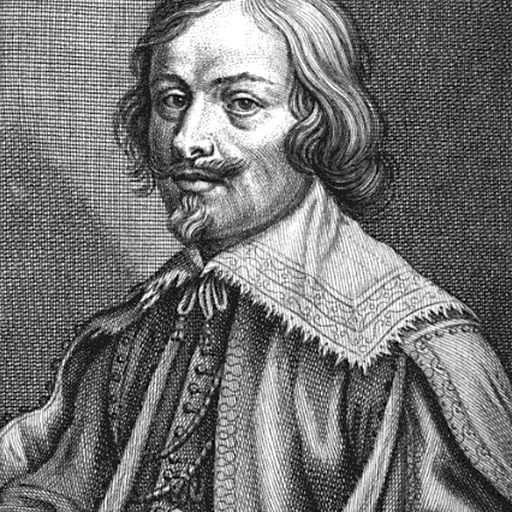
Jacques Callot was a baroque printmaker and draftsman from the Duchy of Lorraine.

 Holy Family at supper
 Restoration of the Aqueduct at Pisa
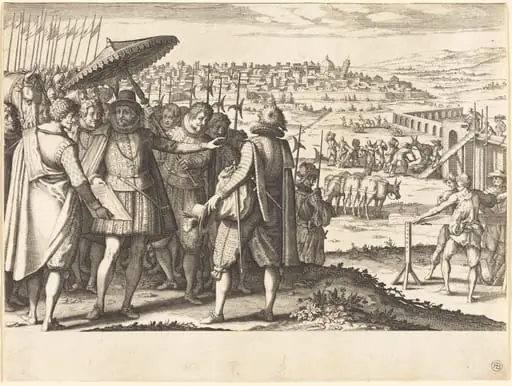 Restoration of the Aqueduct at Pisa
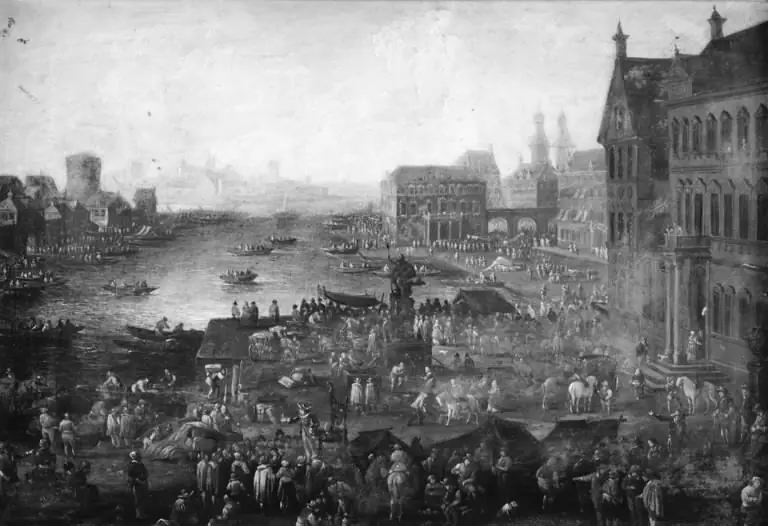 Square in Paris with Many Figures
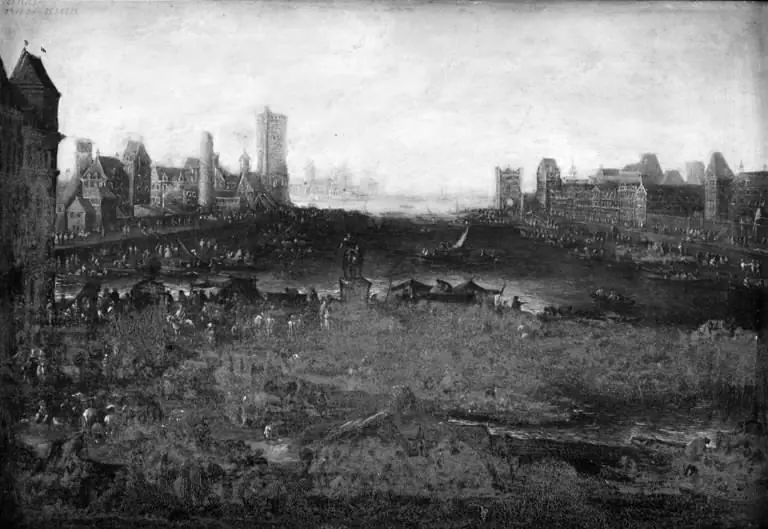 Square in Paris with Many Figures
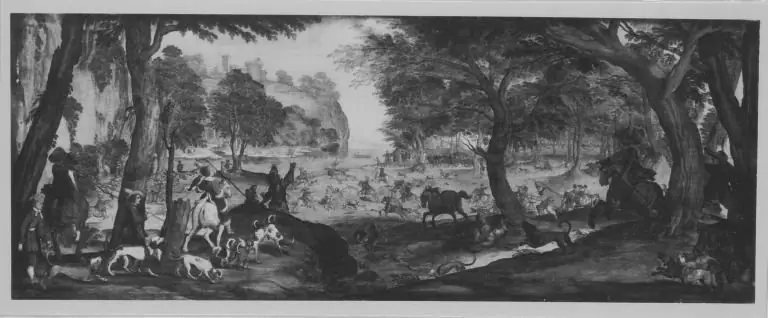
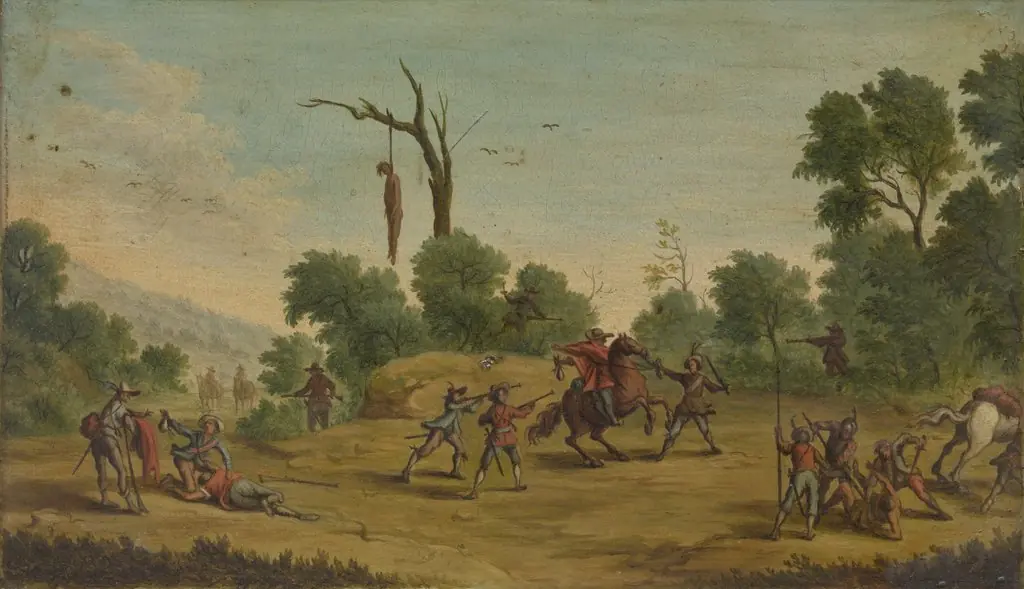 Horsemen Attacked by Robbers
 HOW WILL A COVERED PART BE CORRECTED?HOW WIKA A COVERED HEART DEED CORRECTED?
![Christ Walking on the Water [second plate], by Jacques Callot](https://artifactworldgallery.com/img/jacques-callot--christ-walking-on-the-water-second-plate--2069f3bfe4cb2126-w320.webp) Christ Walking on the Water [second plate]
Christ Walking on the Water [second plate]
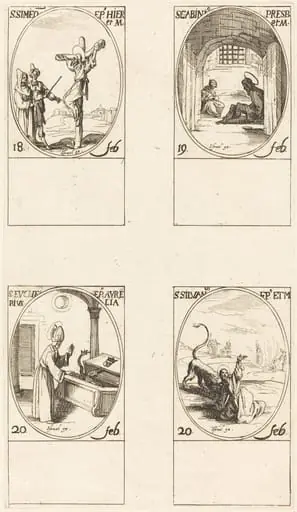 St. Simeon; St. Gabinius; St. Eucharius; St. Silvanus
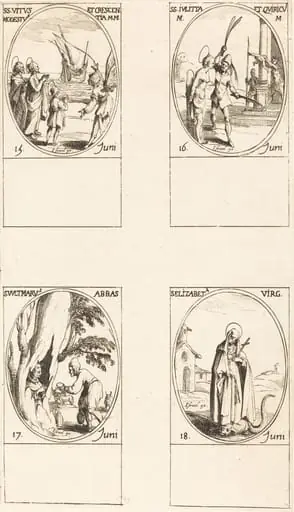 Sts. Vitus, Modestus, & Crescentia; Sts. Julitta & Quiricus; St. Avitus, Abbot; St. Elizabeth, Virgin
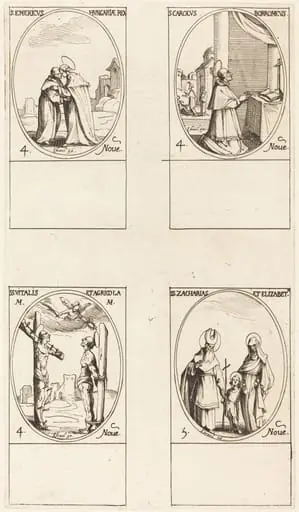 St. Emeric; St. Charles Borromeo; St. Vitalis & Agricola; Sts. Zachary & Elizabeth
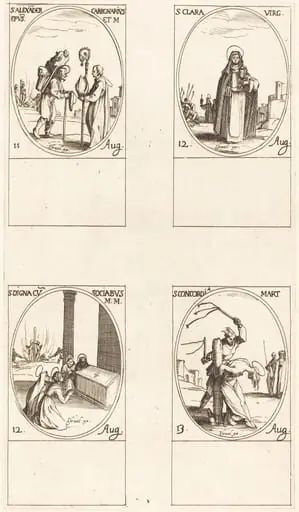 St. Alexander Carbonarius; St. Clare; St. Digna and Companions; St. Concordia
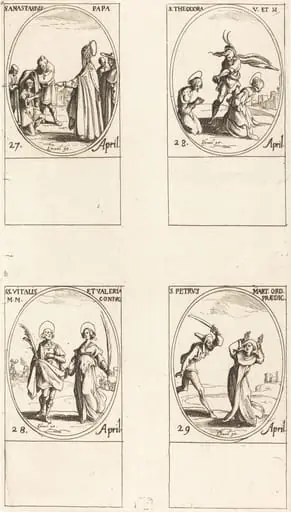 St. Anastasius; St. Theodora; Sts. Vitalis and Valeria; St. Peter Martyr
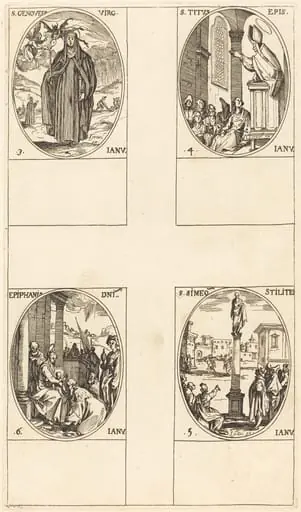 St. Genevieve; St. Titus; St. Simeon Stylites; Epiphany
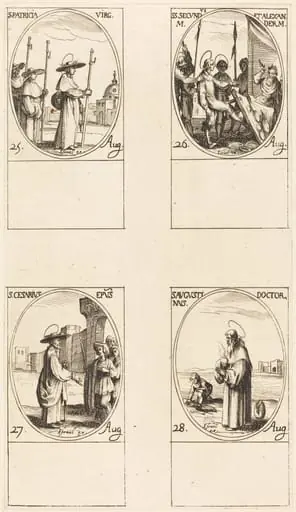 St. Patricia; Sts. Secundus and Alexander; St. Cesarius; St. Augustine
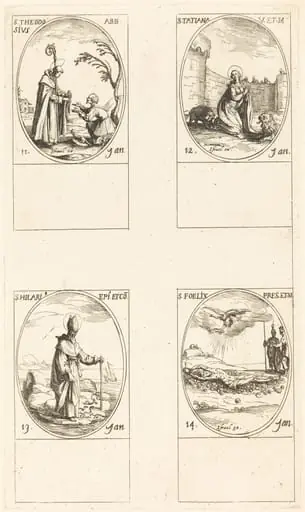 St. Theodosius; St. Tatiana; St. Hilary; St. Felix
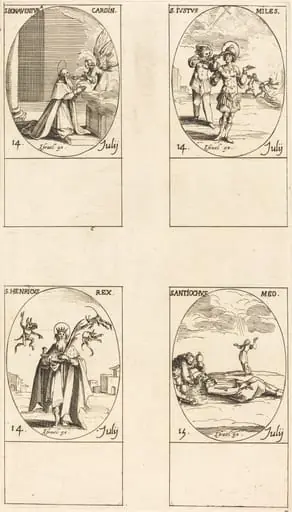 St. Bonaventura; St. Justus; St. Henry, Emperor; St. Antiochus