Artwork
St. Othilia; Sts. Nicasius & Eutropia; St. Agnelus; Sts. Thyrsus & Callinicus
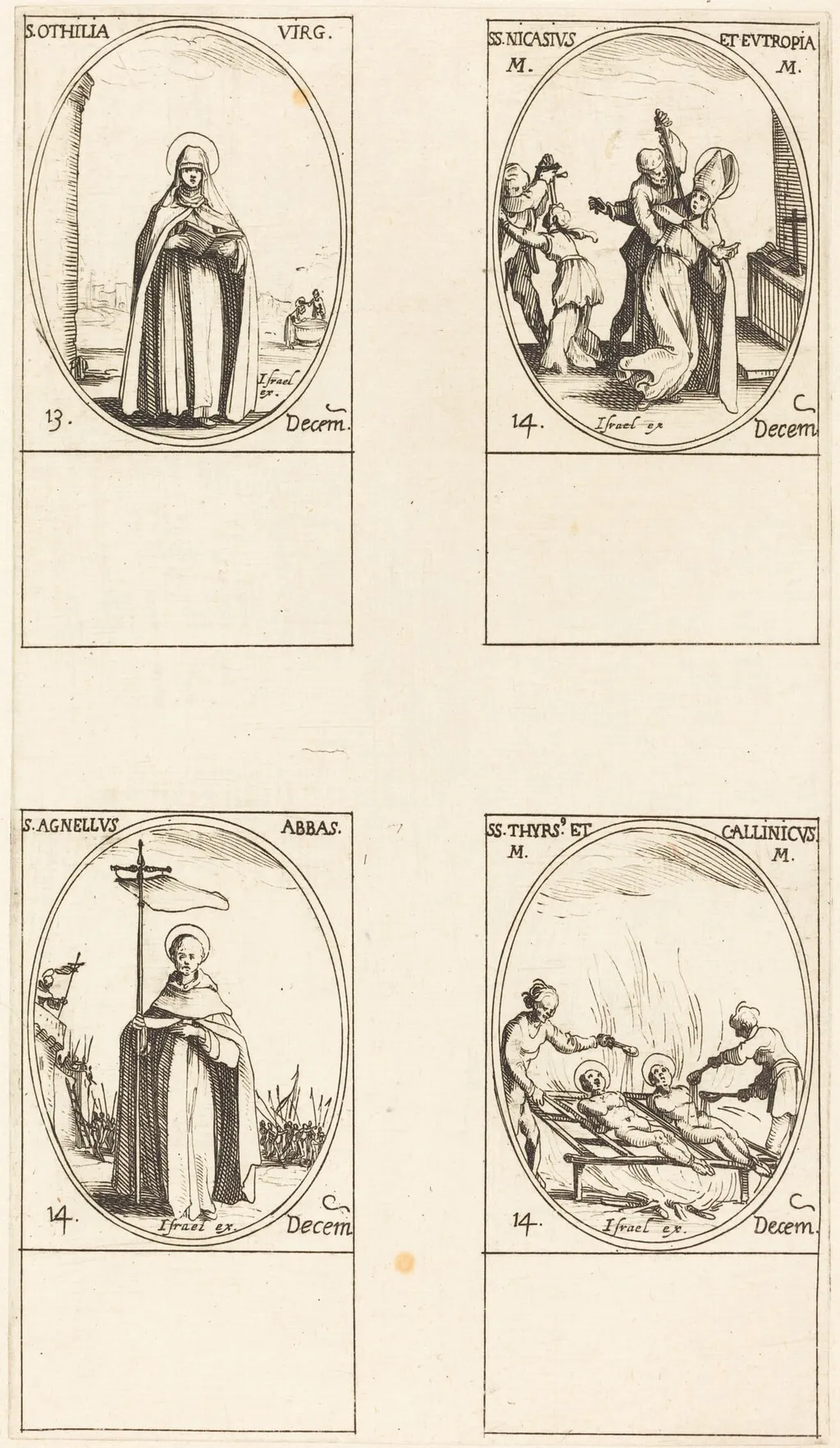
St. Othilia; Sts. Nicasius & Eutropia; St. Agnelus; Sts. Thyrsus & Callinicus is an ink print by the Baroque artist Jacques Callot. It dates from 1634 and is held in the collection of the National Gallery of Art.
About this work
Overview
Executed on laid paper using the etching technique, the work is part of a larger body of religious prints produced by the French artist from Lorraine.
Created around 1634, this etching by Jacques Callot depicts seven Christian saints arranged in a single file against an empty background. Executed on laid paper using the etching technique, the work is part of a larger body of religious prints produced by the French artist from Lorraine. Callot’s precision in line and composition characterizes this piece, reflecting his mastery of the medium and his consistent focus on devotional imagery during this period.
Subject & Meaning
The print portrays St. Othilia, Sts. Nicasius and Eutropia, St. Agnelus, and Sts. Thyrsus and Callinicus—figures venerated in Christian tradition. Each saint is identified by distinctive attributes: books, staffs, or other symbolic objects. Their halos, subtly rendered, suggest divine presence without overt ornamentation. The arrangement emphasizes individual sanctity while uniting them in a shared devotional context, typical of Callot’s approach to religious narrative.
Technique & Style
Callot employed fine-line etching to achieve remarkable detail, scratching through a wax ground on a metal plate before acid biting the exposed lines. The resulting print features crisp, controlled strokes that define each figure’s drapery and posture. Despite the flatness of the composition, the contrast between light and shadow gives the saints a quiet presence. The lack of background enhances focus on the figures, a hallmark of Callot’s smaller-scale religious prints.
History & Provenance
This print originates from Callot’s prolific output during the 1630s, a time when he was actively producing devotional imagery for private and ecclesiastical use. While the specific early ownership of this sheet is undocumented, it aligns with other religious etchings from his series that circulated among collectors and religious institutions in France and the Low Countries. Its survival reflects the enduring interest in his technical precision and spiritual themes.
Context
In early 17th-century Europe, religious prints served both devotional and educational purposes, especially amid the Counter-Reformation’s emphasis on visual piety. Callot, working in Nancy and later Florence, responded to this demand with compositions that balanced narrative clarity and technical refinement. His depictions of saints, often drawn from hagiographic sources, catered to audiences seeking accessible representations of sacred figures.
Legacy
Callot’s etchings, including this one, influenced generations of printmakers through their disciplined line work and compositional economy. Though less celebrated than his battle scenes or courtly scenes, his religious prints remain significant for their quiet intensity and craftsmanship. This work exemplifies how a single medium could convey spiritual gravity without grandeur, contributing to the broader tradition of Northern European printmaking.
Artist & collection
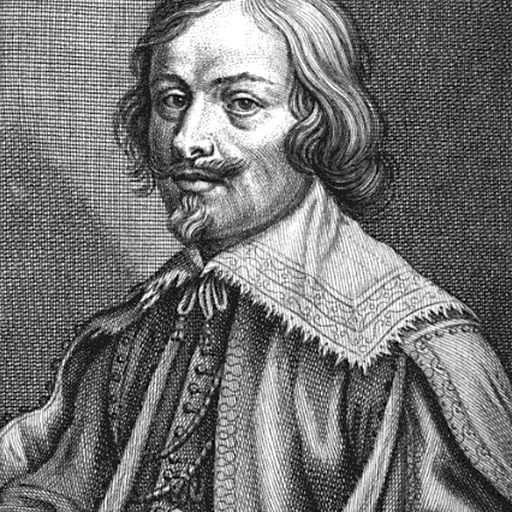
Artist
Jacques Callot was a baroque printmaker and draftsman from the Duchy of Lorraine.

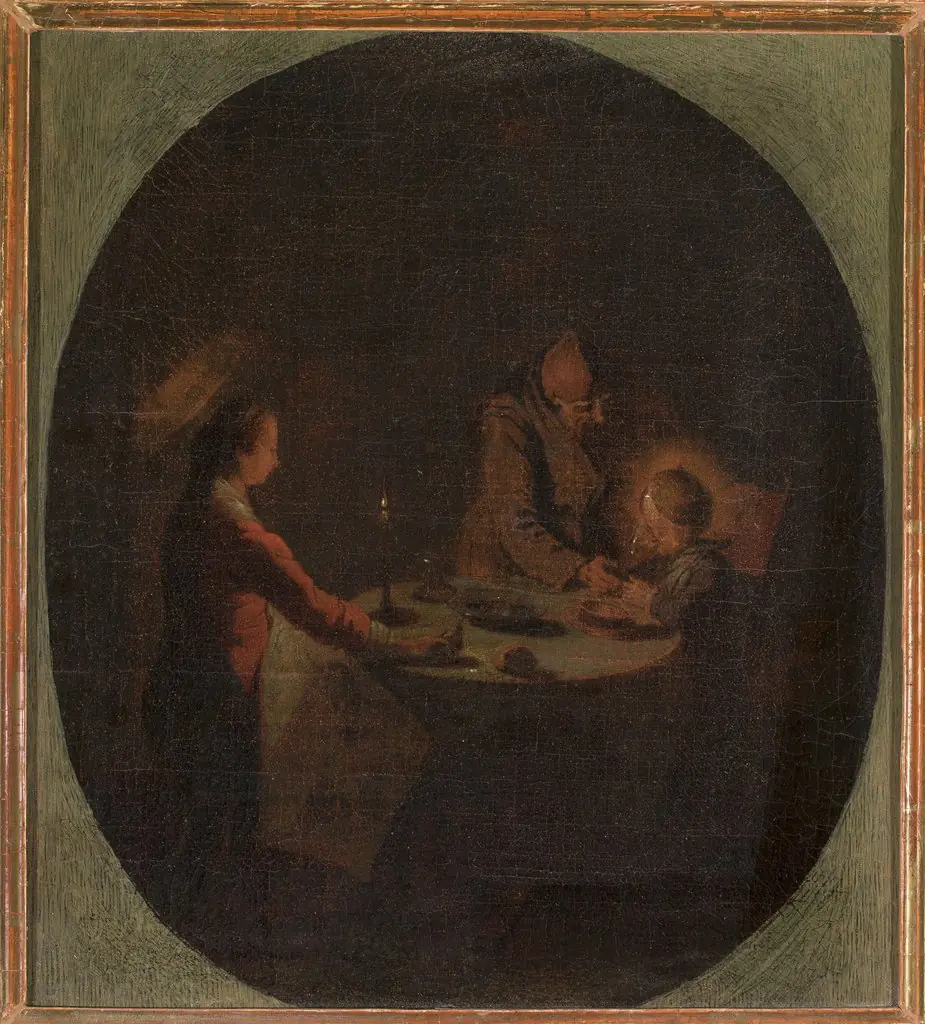 Holy Family at supper
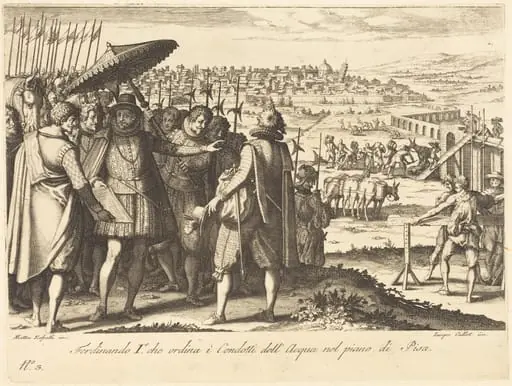 Restoration of the Aqueduct at Pisa
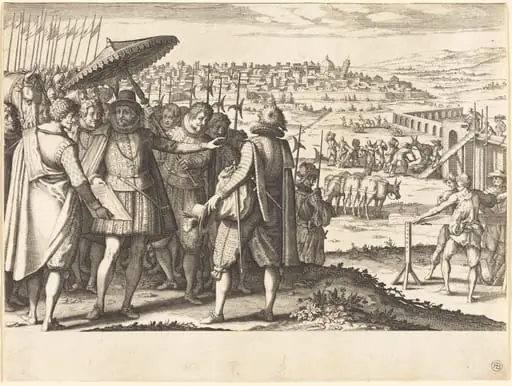 Restoration of the Aqueduct at Pisa
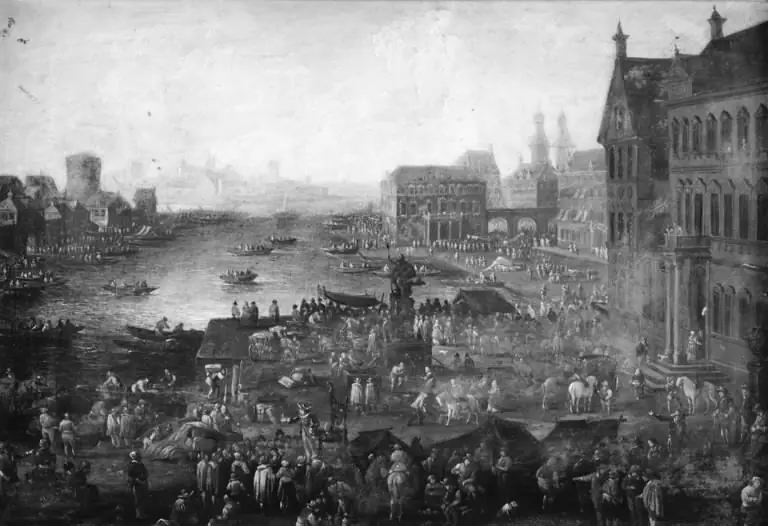 Square in Paris with Many Figures
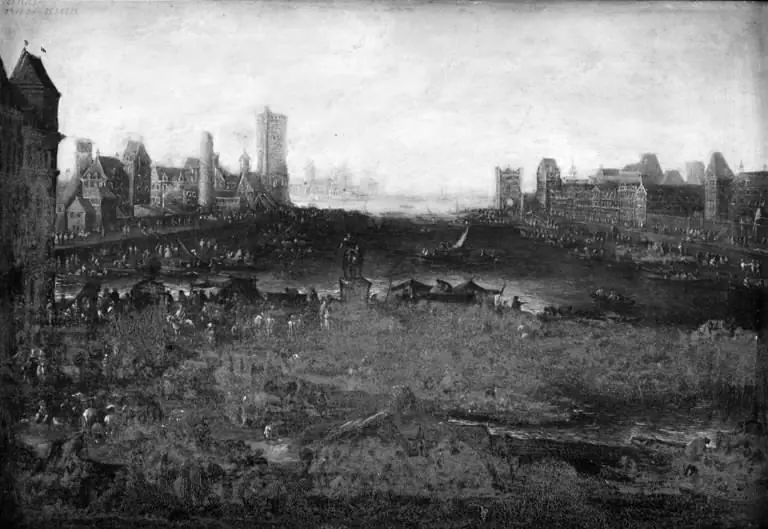 Square in Paris with Many Figures
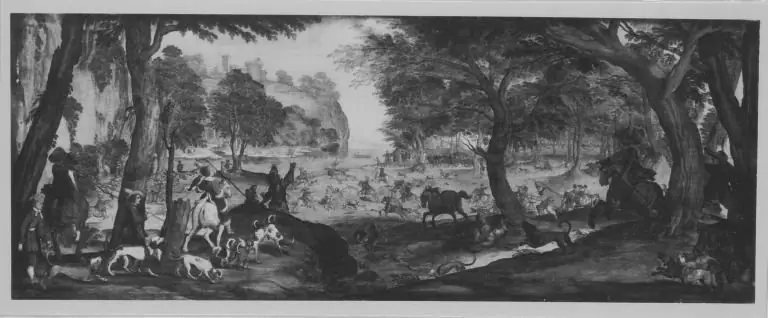
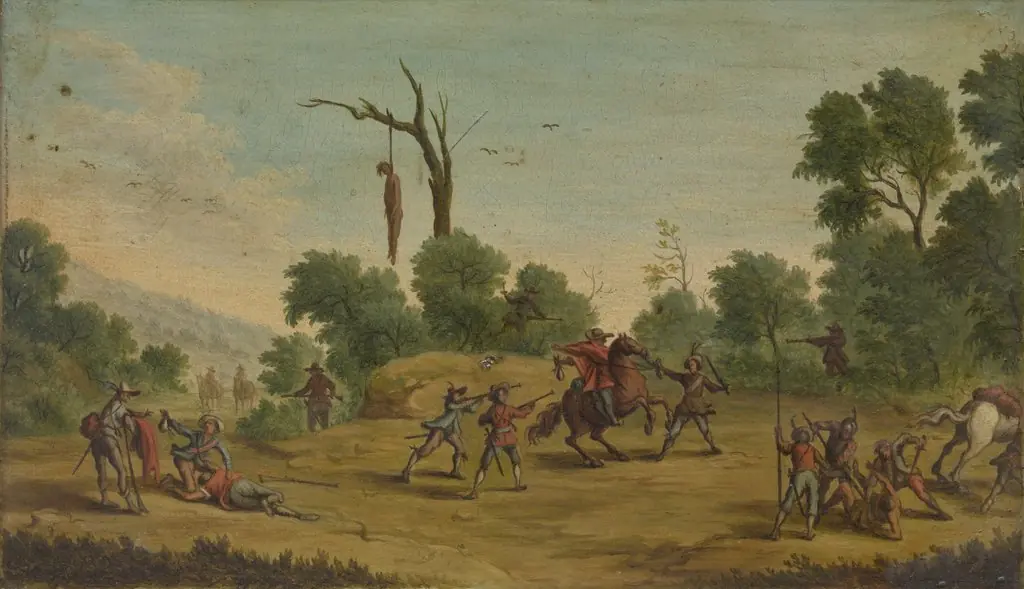 Horsemen Attacked by Robbers
 HOW WILL A COVERED PART BE CORRECTED?HOW WIKA A COVERED HEART DEED CORRECTED?
![Christ Walking on the Water [second plate], by Jacques Callot](https://artifactworldgallery.com/img/jacques-callot--christ-walking-on-the-water-second-plate--2069f3bfe4cb2126-w320.webp) Christ Walking on the Water [second plate]
Christ Walking on the Water [second plate]
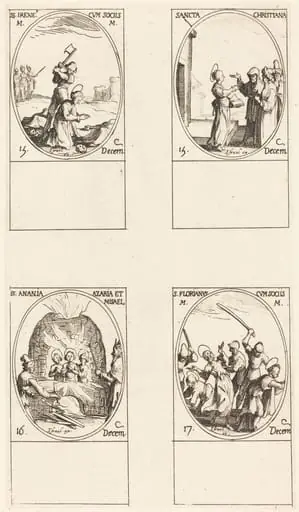 St. Irene & Companions; St. Christiana; Sts. Anania, Azaria & Misael; St. Florianus & Companions
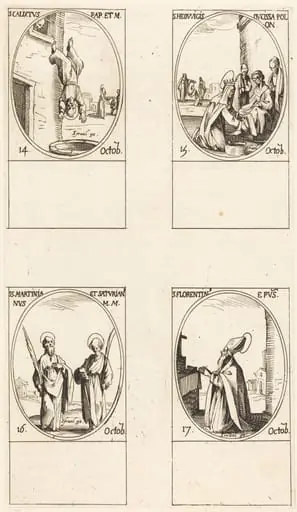 St. Calixtus; St. Hedwiges; Sts. Martinian and Saturian; St. Florentinus
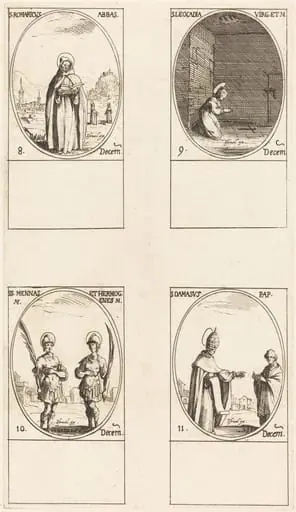 St. Romaricus; St. Leocadia; Sts. Mennas and Hermogenes; St. Damasus
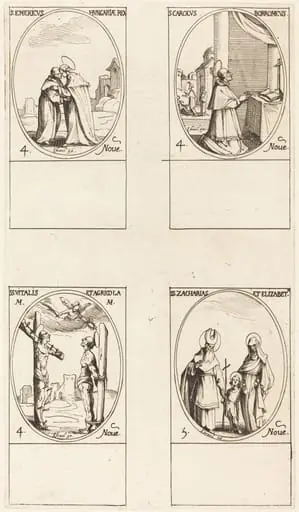 St. Emeric; St. Charles Borromeo; St. Vitalis & Agricola; Sts. Zachary & Elizabeth
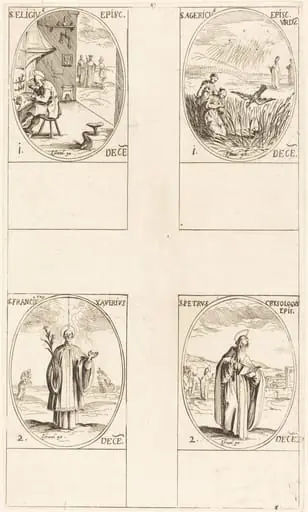 St. Eligius; St. Agericus; St. Francis Xavier; St. Peter Chrysologus
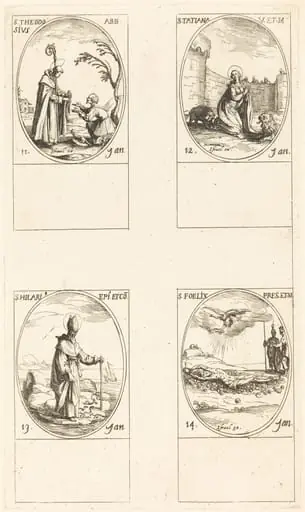 St. Theodosius; St. Tatiana; St. Hilary; St. Felix
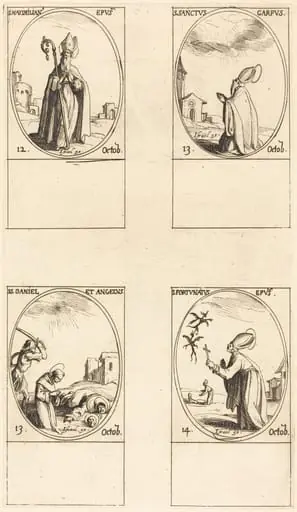 St. Maximilian; St. Carpus; St. Daniel and Angelus; St. Fortunatus
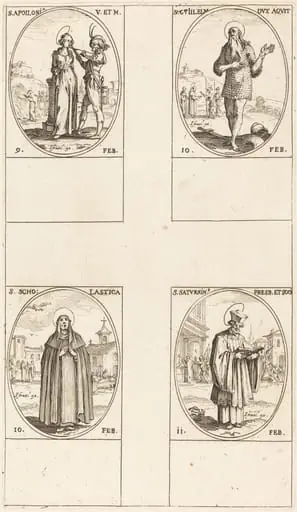 St. Apollonia; St. Guillaume; St. Scholastica; St. Saturnin