Artwork
St. Emeric; St. Charles Borromeo; St. Vitalis & Agricola; Sts. Zachary & Elizabeth
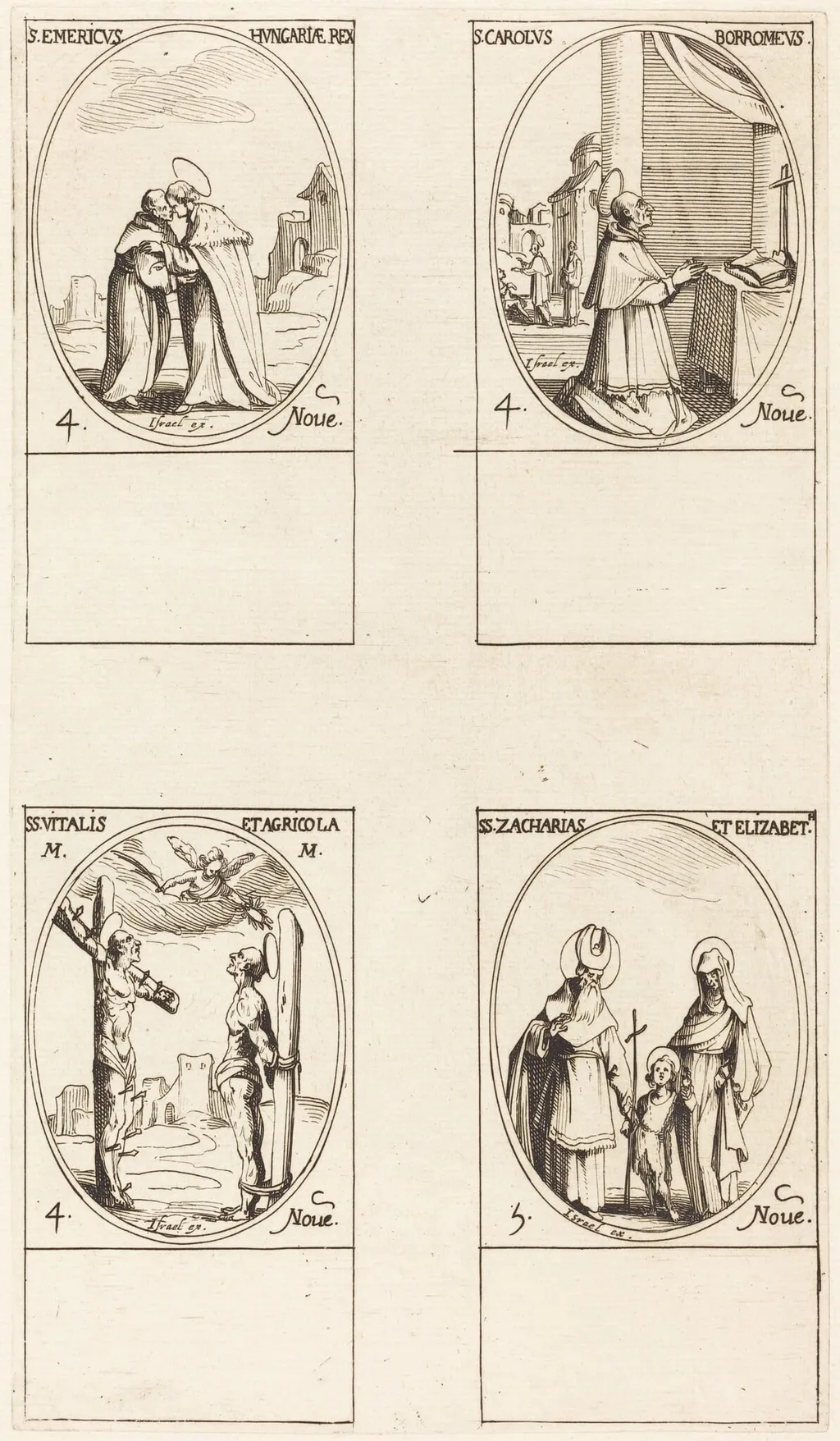
St. Emeric; St. Charles Borromeo; St. Vitalis & Agricola; Sts. Zachary & Elizabeth is an ink print by the Baroque artist Jacques Callot. It dates from 1634 and is held in the collection of the National Gallery of Art.
About this work
Overview
Created around 1634 by Jacques Callot, this etching on laid paper presents four distinct religious scenes arranged in oval frames across a single sheet.
Created around 1634 by Jacques Callot, this etching on laid paper presents four distinct religious scenes arranged in oval frames across a single sheet. As one of over 1,400 prints in Callot’s career, it reflects his consistent engagement with sacred narratives. The composition unites multiple saints in a compact format, demonstrating his skill in condensing complex iconography into a unified visual field without overcrowding the space.
Subject & Meaning
Each oval depicts a different saint or pair: St. Emeric and St. Charles Borromeo are shown in moments of spiritual connection, while Sts. Vitalis and Agricola appear in a gesture of transmission. The crucifixion scene with an angel references martyrdom, and the final panel portrays Sts. Zachary and Elizabeth with the young John the Baptist. Together, they form a devotional sequence emphasizing sanctity, legacy, and divine favor, common themes in Counter-Reformation imagery.
Technique & Style
Callot employed fine etching lines to define figures and subtle tonal gradations to suggest volume. The backgrounds are deliberately sparse, directing focus to the gestures and interactions of the saints. Halos and robes are rendered with clarity, avoiding excessive ornamentation. The oval frames unify the scenes while allowing each to function as a self-contained narrative, showcasing Callot’s precision in controlling line and composition within tight spatial limits.
History & Provenance
The print emerged during Callot’s mature period in Nancy, where he produced numerous religious and genre subjects for both ecclesiastical and private patrons. Though its early ownership is undocumented, it aligns with a broader trend of devotional prints circulated in Catholic regions of Europe. Its survival in multiple museum collections suggests it was widely reproduced and valued for its compact spiritual messaging.
Context
Produced during the height of the Counter-Reformation, the print responds to the Church’s push for accessible religious imagery to reinforce faith among the laity. Callot’s integration of multiple saints into one sheet mirrors the devotional practices of the time, where private prayer books and small prints served as tools for meditation. His style balances narrative clarity with artistic restraint, fitting the era’s demand for didactic yet dignified visuals.
Legacy
Callot’s ability to convey complex religious stories in miniature etchings influenced later generations of printmakers across Europe. This work exemplifies his role in elevating etching as a medium for serious religious expression, distinct from purely decorative or satirical uses. While not widely exhibited today, it remains a representative example of 17th-century devotional print culture and Callot’s technical mastery in small-scale narrative composition.
Artist & collection
Artist
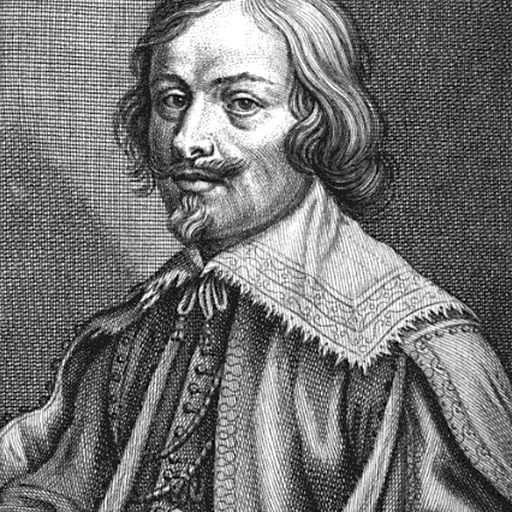
Jacques Callot was a baroque printmaker and draftsman from the Duchy of Lorraine.

 Holy Family at supper
 Restoration of the Aqueduct at Pisa
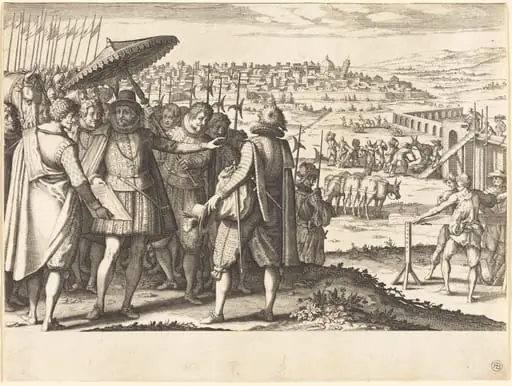 Restoration of the Aqueduct at Pisa
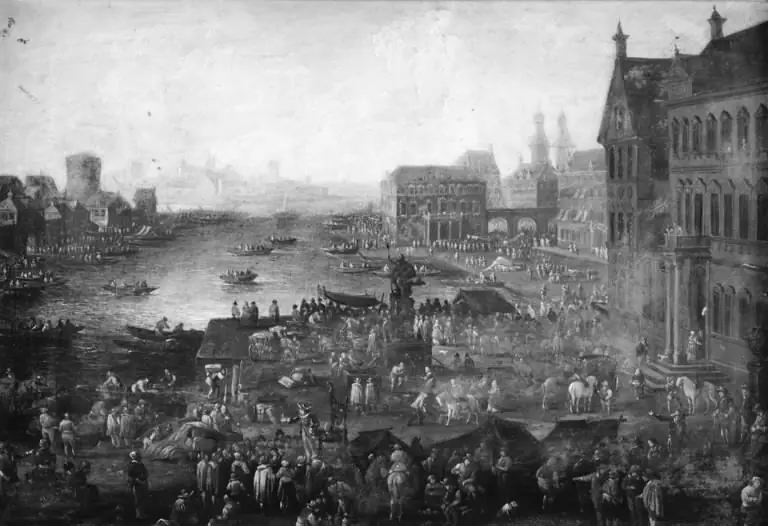 Square in Paris with Many Figures
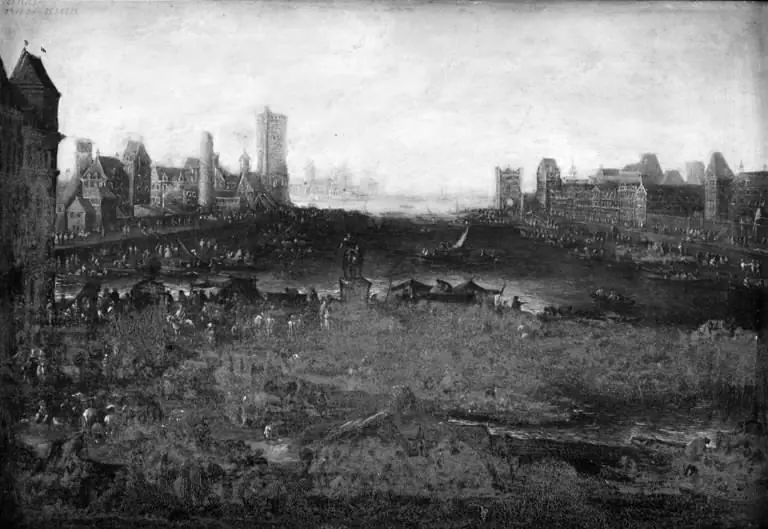 Square in Paris with Many Figures
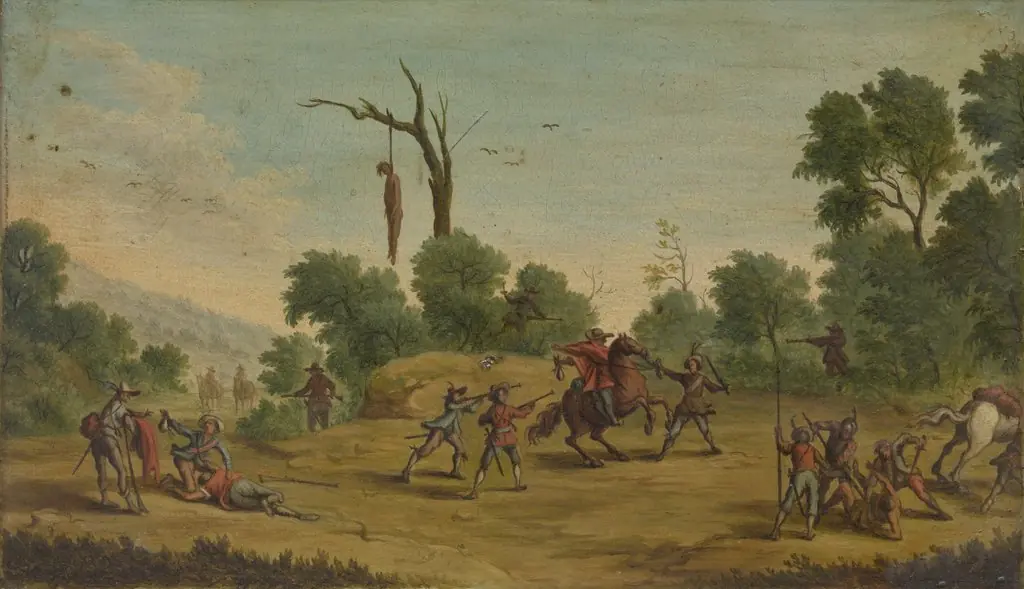 Horsemen Attacked by Robbers
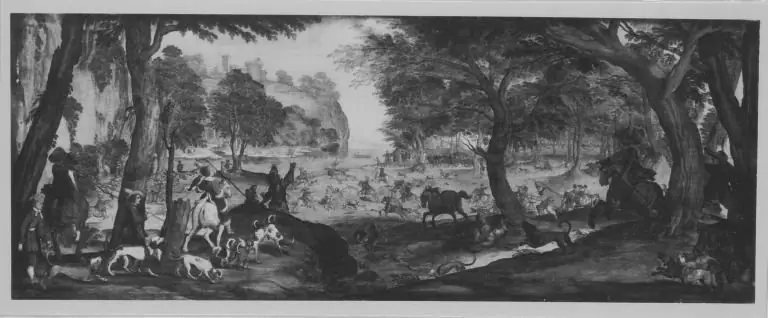 HOW WILL A COVERED PART BE CORRECTED?HOW WIKA A COVERED HEART DEED CORRECTED?
![Christ Walking on the Water [second plate], by Jacques Callot](https://artifactworldgallery.com/img/jacques-callot--christ-walking-on-the-water-second-plate--2069f3bfe4cb2126-w320.webp) Christ Walking on the Water [second plate]
Christ Walking on the Water [second plate]
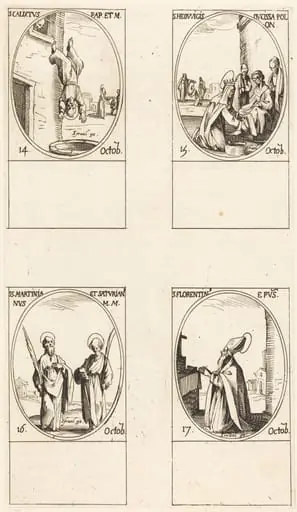 St. Calixtus; St. Hedwiges; Sts. Martinian and Saturian; St. Florentinus
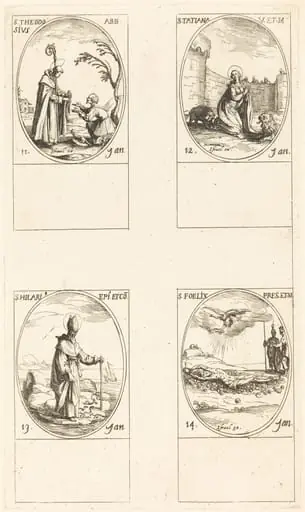 St. Theodosius; St. Tatiana; St. Hilary; St. Felix
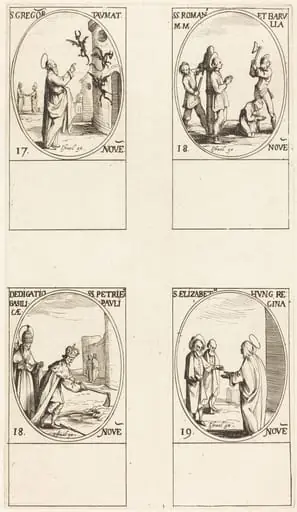 St. Gregory; Sts. Romanus & Barulla; Dedication of the Basilicas of Sts. Peter & Paul; St. Elizabeth
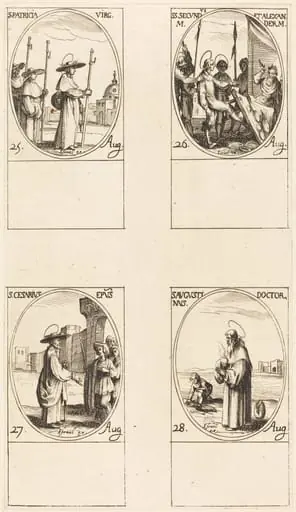 St. Patricia; Sts. Secundus and Alexander; St. Cesarius; St. Augustine
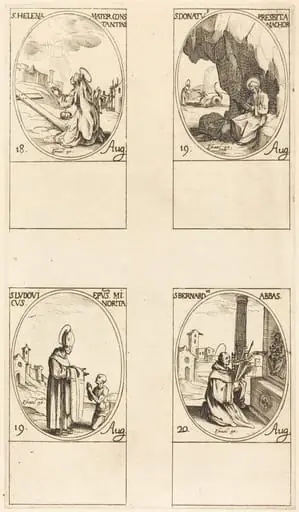 St. Helen; St. Donatus; St. Ludovicus, Bishop; St. Bernard
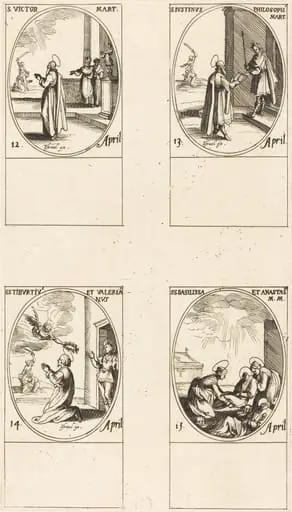 St. Victor; St. Justinus; Sts. Tiburtius and Valerianus; Sts. Basilissa and Anastasia
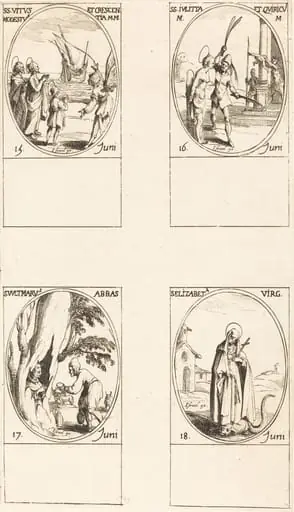 Sts. Vitus, Modestus, & Crescentia; Sts. Julitta & Quiricus; St. Avitus, Abbot; St. Elizabeth, Virgin
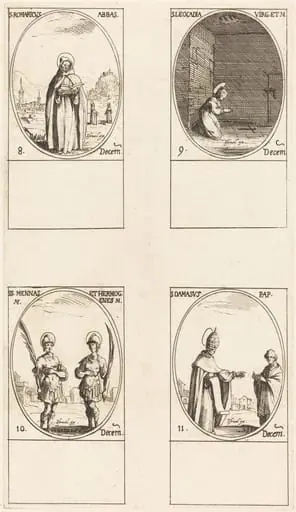 St. Romaricus; St. Leocadia; Sts. Mennas and Hermogenes; St. Damasus
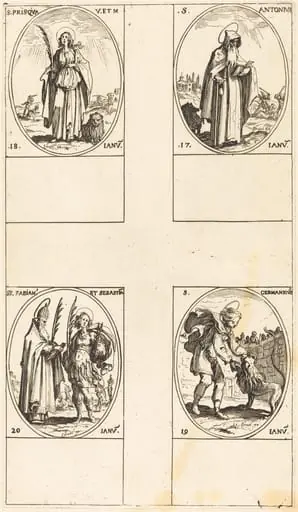 St. Anthony; St. Prisca; St. Germanicus; Sts. Fabian and Sebastian
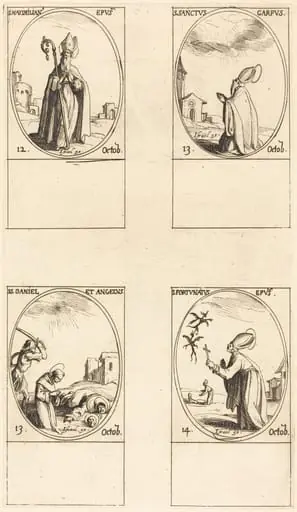 St. Maximilian; St. Carpus; St. Daniel and Angelus; St. Fortunatus
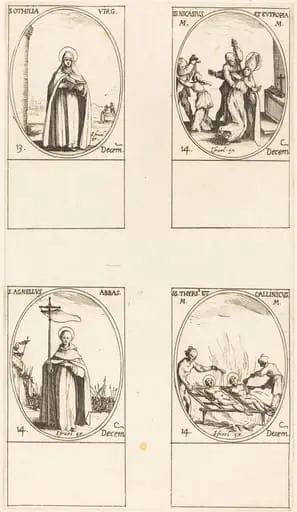 St. Othilia; Sts. Nicasius & Eutropia; St. Agnelus; Sts. Thyrsus & Callinicus