Artwork
St. Theodorus; St. Agnes of Monte Pulciano; St. Anselme, Archbishop of Canterbury; St. Opportuna and Virgin
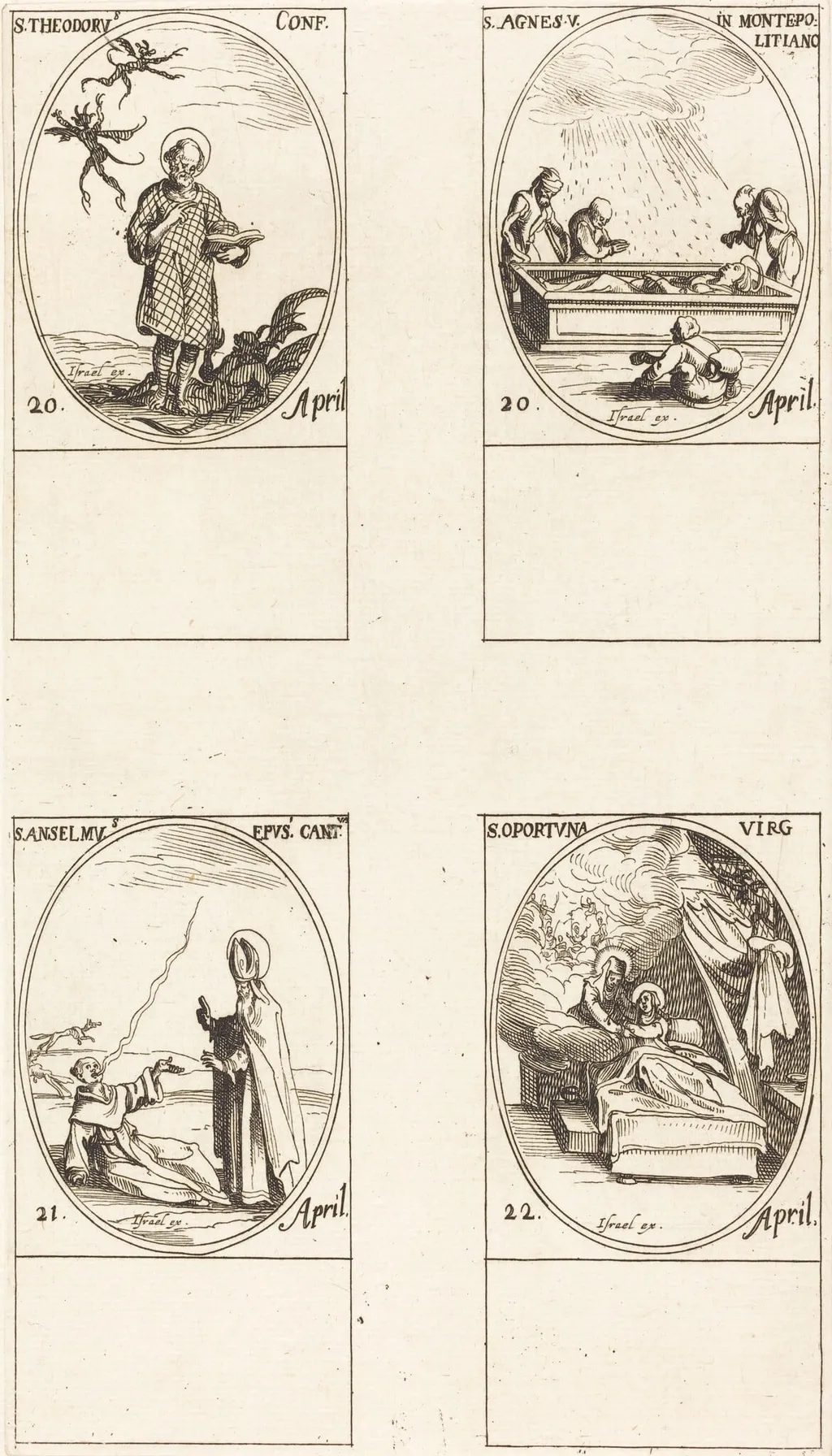
St. Theodorus; St. Agnes of Monte Pulciano; St. Anselme, Archbishop of Canterbury; St. Opportuna and Virgin is an ink print by the Baroque artist Jacques Callot. It dates from 1634 and is held in the collection of the National Gallery of Art.
About this work
This etching shows five saints standing in a line. Each has a halo and holds a symbolic object. Their robes fold in sharp lines around their feet.
Jacques Callot made this print around 1632. He used fine needles to scratch lines into metal, then filled them with ink. The style feels crisp and precise.
Look up the artist Jacques Callot.
Overview
Created circa 1634, this etching by Jacques Callot presents a procession of five saints arranged in a linear composition. Executed on laid paper, the work exemplifies the Baroque interest in dynamic arrangement and detailed rendering, combining devotional imagery with a meticulous approach to line and space.
Subject & Meaning
The figures include St. Theodorus, St. Agnes of Monte Pulciano, St. Anselm, Archbishop of Canterbury, St. Opportuna, and the Virgin Mary. Each saint bears a halo and holds an attribute that identifies his or her particular patronage, inviting viewers to contemplate their intercessory roles within a unified sacred narrative.
Technique & Style
Callot employed the traditional etching process, incising fine lines into a copper plate with a needle before inking and pressing the image onto paper. The resulting lines are crisp and sharply delineated, especially evident in the tightly folded drapery at the saints’ feet, while the background displays a careful rendering of landscape elements.
Context
Working in the Duchy of Lorraine, Callot was a prolific draftsman whose output exceeds 1,400 prints, encompassing both secular scenes of contemporary life and a substantial body of religious subjects. This piece reflects the Baroque era’s emphasis on dramatic composition and the artist’s reputation for precise figure and landscape drawing.
Legacy
The etching stands as a representative example of Callot’s ability to integrate multiple holy figures within a single, coherent visual field. Its technical clarity and compositional balance have informed subsequent studies of early modern printmaking and the visual strategies employed in devotional imagery.
Artist & collection

Artist
Jacques Callot was a baroque printmaker and draftsman from the Duchy of Lorraine.

 Holy Family at supper
 Restoration of the Aqueduct at Pisa
 Restoration of the Aqueduct at Pisa
 Square in Paris with Many Figures
 Square in Paris with Many Figures
 Horsemen Attacked by Robbers
 HOW WILL A COVERED PART BE CORRECTED?HOW WIKA A COVERED HEART DEED CORRECTED?
![Christ Walking on the Water [second plate], by Jacques Callot](https://artifactworldgallery.com/img/jacques-callot--christ-walking-on-the-water-second-plate--2069f3bfe4cb2126-w320.webp) Christ Walking on the Water [second plate]
Christ Walking on the Water [second plate]
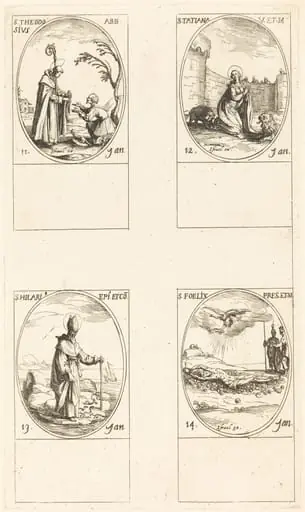 St. Theodosius; St. Tatiana; St. Hilary; St. Felix
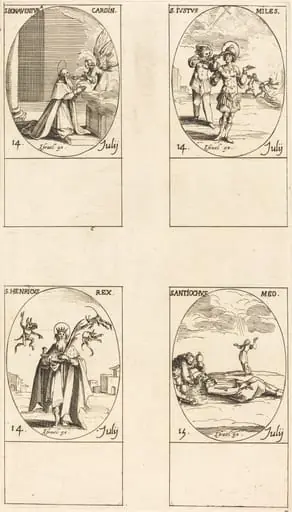 St. Bonaventura; St. Justus; St. Henry, Emperor; St. Antiochus
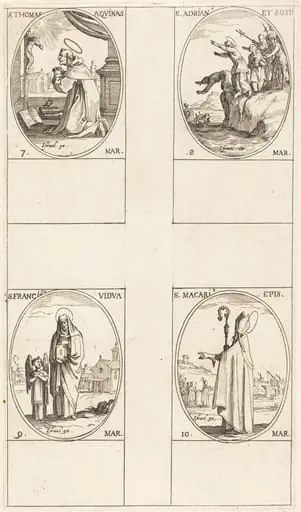 St. Thomas Aquin; St. Adrian and Companions; St. Frances; St. Macari
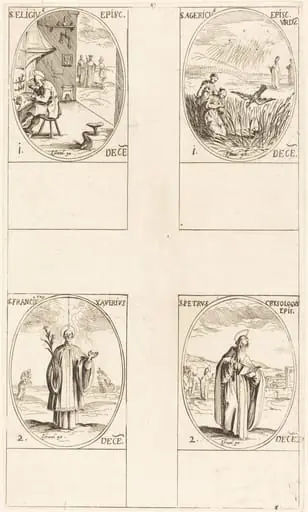 St. Eligius; St. Agericus; St. Francis Xavier; St. Peter Chrysologus
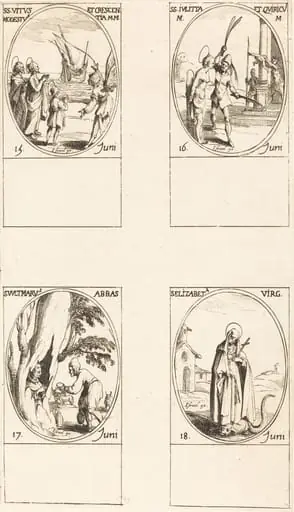 Sts. Vitus, Modestus, & Crescentia; Sts. Julitta & Quiricus; St. Avitus, Abbot; St. Elizabeth, Virgin
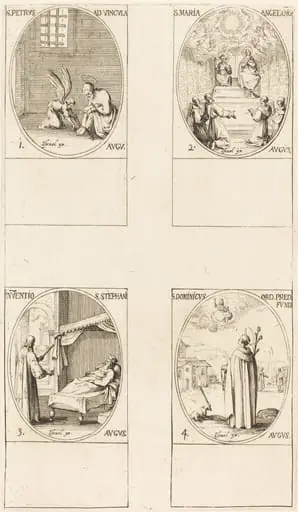 St. Peter, Apostle; St. Mary of Angels; Discovery of the Body of St. Stephen; St. Dominicus
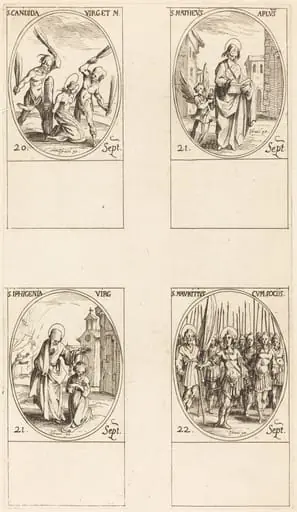 St. Canida; St. Matthew; St. Ipigenia; St. Maurice and Companions
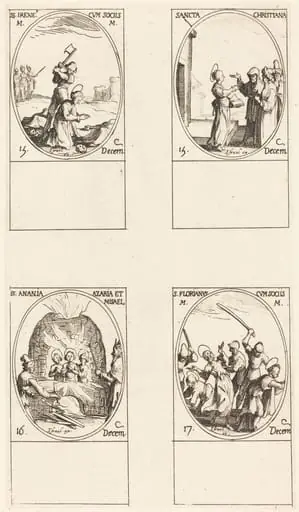 St. Irene & Companions; St. Christiana; Sts. Anania, Azaria & Misael; St. Florianus & Companions