Artwork
Sts. Vitus, Modestus, & Crescentia; Sts. Julitta & Quiricus; St. Avitus, Abbot; St. Elizabeth, Virgin
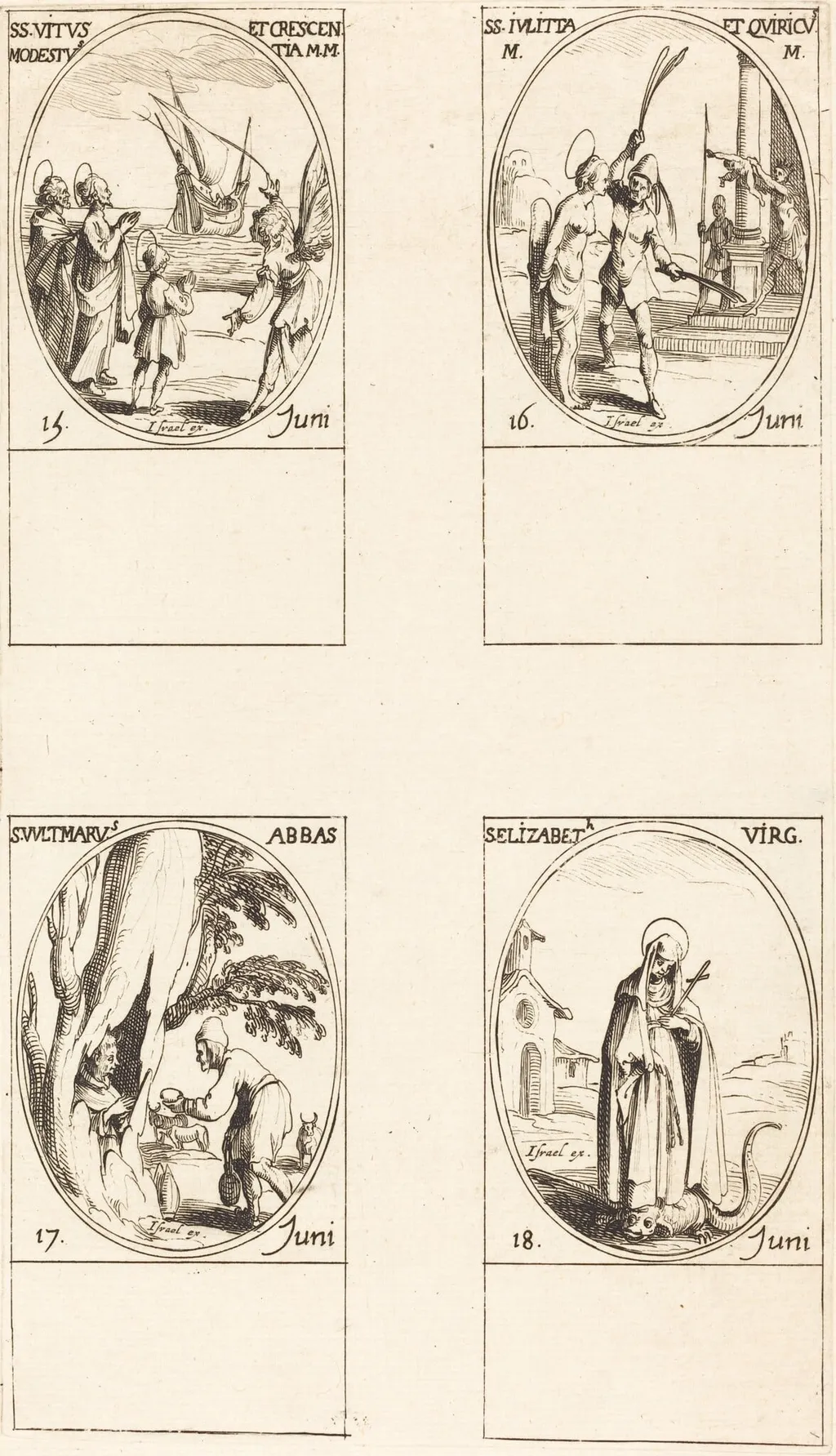
Sts. Vitus, Modestus, & Crescentia; Sts. Julitta & Quiricus; St. Avitus, Abbot; St. Elizabeth, Virgin is an ink print by the Baroque artist Jacques Callot. It dates from 1634 and is held in the collection of the National Gallery of Art.
About this work
Overview
Created circa 1634, this print by Jacques Callot presents a quartet of small oval images, each portraying a distinct saintly figure or group. Executed as an etching on laid paper, the work exemplifies Callot’s baroque sensibility, combining precise linear detail with a compact, narrative composition that brings together several religious icons in a single sheet.
Subject & Meaning
The four panels depict, respectively, the martyr saints Vitus, Modestus, and Crescentia; the mother Julitta with her child Quiricus; the abbot Saint Avitus; and the virgin Saint Elizabeth. By assembling saints from varied hagiographic traditions, the print underscores themes of martyrdom, piety, and intercessory virtue, inviting contemplation of their collective spiritual significance.
Technique & Style
Callot employed traditional etching methods, incising fine lines into a metal plate before transferring the image onto laid paper. The resulting shadows and crisp contours convey a dramatic clarity, while the tight arrangement of figures within each oval reflects his characteristic attention to detail and compositional balance.
History & Provenance
Part of Callot’s extensive output of more than 1,400 prints, this piece belongs to his series of religious subjects produced during his mature period in Lorraine. Though specific ownership records are scarce, the work circulated among collectors of devotional prints in the mid‑17th century, contributing to Callot’s reputation as a prolific documenter of sacred themes.
Context
Operating in the Duchy of Lorraine, Callot blended courtly observation with religious narrative, a practice evident in this print’s juxtaposition of saintly figures against modest landscape elements. The work reflects the broader baroque interest in vivid storytelling and the didactic role of printed images in reinforcing Catholic devotion.
Legacy
The etching illustrates Callot’s influence on later printmakers who adopted his meticulous line work and multi‑figure compositions. Its preservation in museum collections demonstrates the lasting value of his religious series as both artistic achievements and historical records of 17th‑century devotional iconography.
Artist & collection
Artist
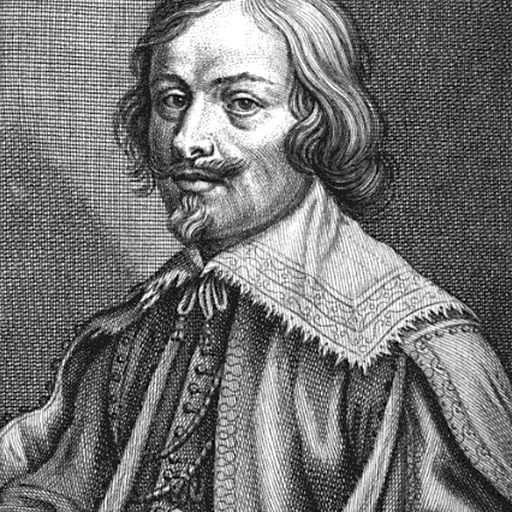
Jacques Callot was a baroque printmaker and draftsman from the Duchy of Lorraine.

 Holy Family at supper
 Restoration of the Aqueduct at Pisa
 Restoration of the Aqueduct at Pisa
 Square in Paris with Many Figures
 Square in Paris with Many Figures
 Horsemen Attacked by Robbers
 HOW WILL A COVERED PART BE CORRECTED?HOW WIKA A COVERED HEART DEED CORRECTED?
![Christ Walking on the Water [second plate], by Jacques Callot](https://artifactworldgallery.com/img/jacques-callot--christ-walking-on-the-water-second-plate--2069f3bfe4cb2126-w320.webp) Christ Walking on the Water [second plate]
Christ Walking on the Water [second plate]
 St. Othilia; Sts. Nicasius & Eutropia; St. Agnelus; Sts. Thyrsus & Callinicus
 St. Theodosius; St. Tatiana; St. Hilary; St. Felix
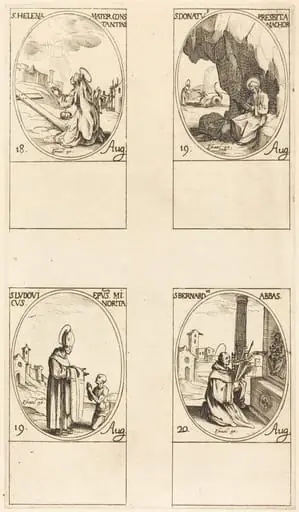 St. Helen; St. Donatus; St. Ludovicus, Bishop; St. Bernard
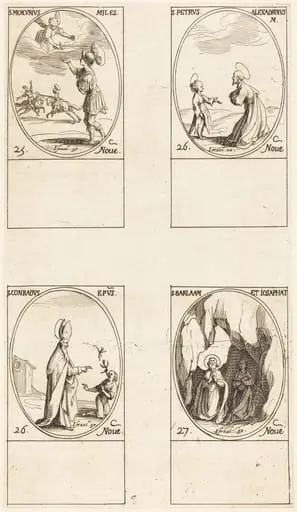 St. Mercury; St. Peter of Alexandria; St. Conrad; Sts. Barlaam and Josaphat
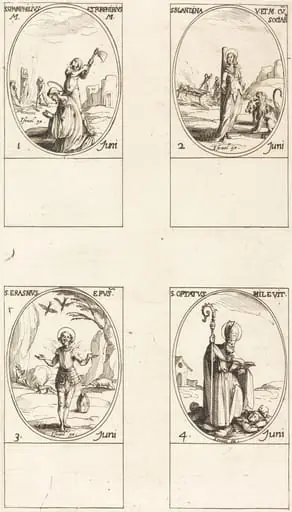 Sts. Pamphilius and Porphyrius; St. Blandina and Companions; St. Erasmus; St. Optatus
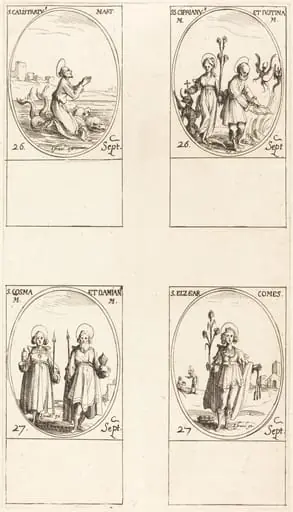 St. Calistratus; Sts. Cyprian and Justina; Sts. Comus and Damian; St. Elzear, Count