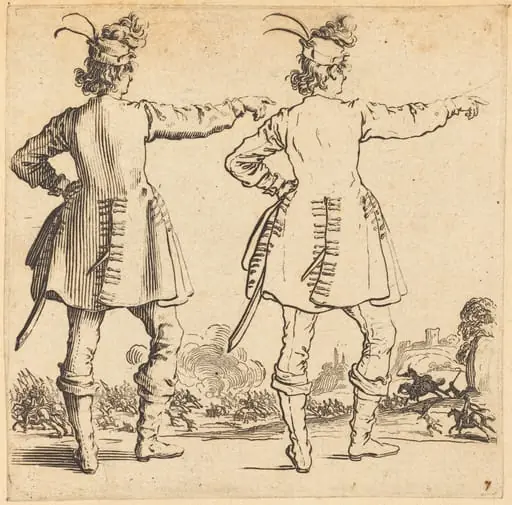
Artwork
Taglia Cantoni and Fracasso
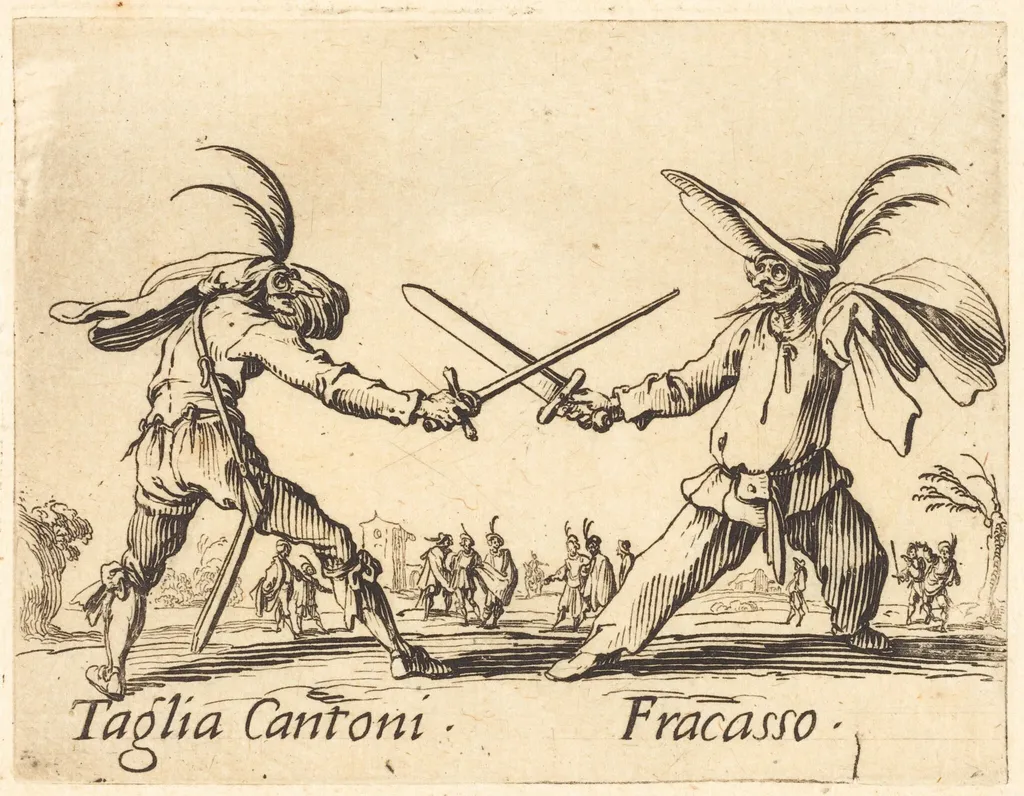
Taglia Cantoni and Fracasso is an ink print by the Baroque artist Jacques Callot. It dates from 1622 and is held in the collection of the National Gallery of Art.
About this work
Overview
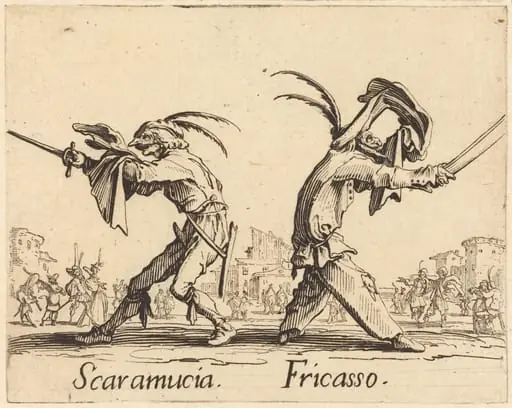
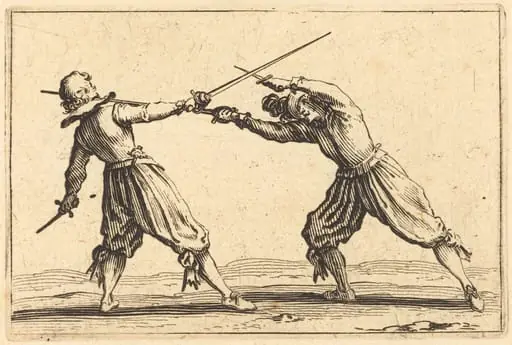
Created around 1622, this etching by Jacques Callot depicts a street duel between two figures identified by their nicknames, Taglia Cantoni and Fracasso.
Created around 1622, this etching by Jacques Callot depicts a street duel between two figures identified by their nicknames, Taglia Cantoni and Fracasso. Executed on laid paper, the work is part of a vast body of over 1,400 prints produced by the Lorrainer artist, who used etching to record the textures and rhythms of everyday life in early 17th-century Europe. The scene captures a moment of public spectacle, rendered with precision and narrative immediacy.
Subject & Meaning
The two combatants, distinguished by their clothing and exaggerated postures, appear to be professional fighters or street performers engaged in a public contest. Their nicknames suggest they were known figures, possibly mercenaries or entertainers. The onlookers surrounding them—some seated, others leaning—hint at the communal nature of such events. The image does not glorify violence but observes it as a familiar, if rough, facet of urban life.
Technique & Style
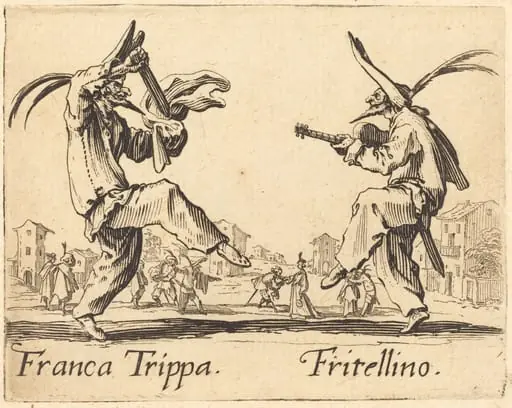
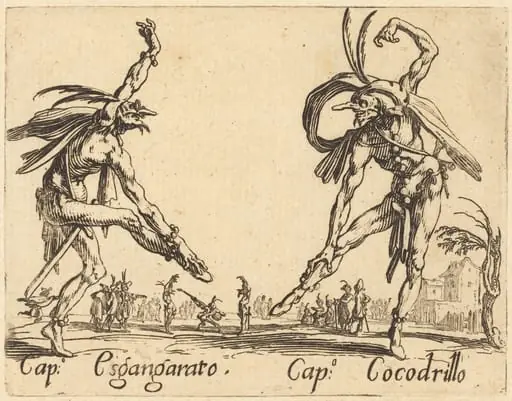
Callot employed fine, controlled lines to define the figures’ garments, weapons, and the architectural backdrop, demonstrating mastery of the etching needle. The sharp contrasts and dense hatching create depth and movement, while the crowded composition draws the eye across the scene. His use of exaggerated gestures and detailed surroundings reflects a documentary impulse, blending realism with theatricality to heighten narrative impact.
History & Provenance
The print emerged during Callot’s most prolific period, when he was based in Florence and producing scenes of military and civilian life for a European audience. While the specific provenance of this impression is undocumented, it aligns with his series of genre scenes that circulated widely among collectors. Its survival in multiple copies suggests it was reproduced and distributed as part of his broader commercial print output.
Context
In early 17th-century Italy, public duels and street brawls were common spectacles, often involving soldiers, mercenaries, or itinerant performers. Callot, who traveled extensively, recorded these events with ethnographic interest. His prints served as both artistic expression and social record, capturing the tensions and diversions of a society still shaped by war, mobility, and class friction.
Legacy
Callot’s etchings, including this one, influenced later generations of printmakers through their technical innovation and observational depth. His ability to render complex scenes with fine detail set new standards for narrative printmaking. Though not widely exhibited as standalone works, his genre scenes remain vital references for understanding the visual culture of early modern Europe.
Artist & collection
Artist
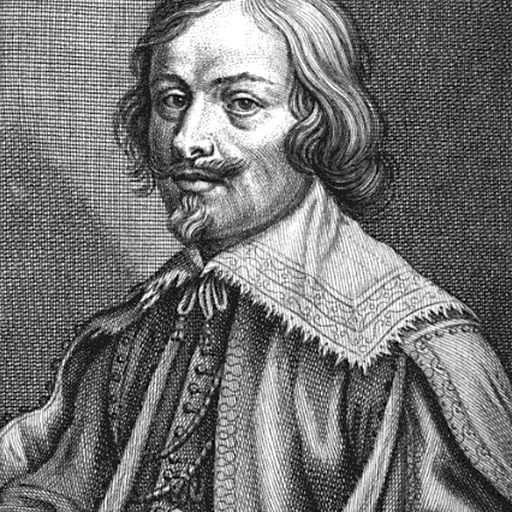
Jacques Callot was a baroque printmaker and draftsman from the Duchy of Lorraine.

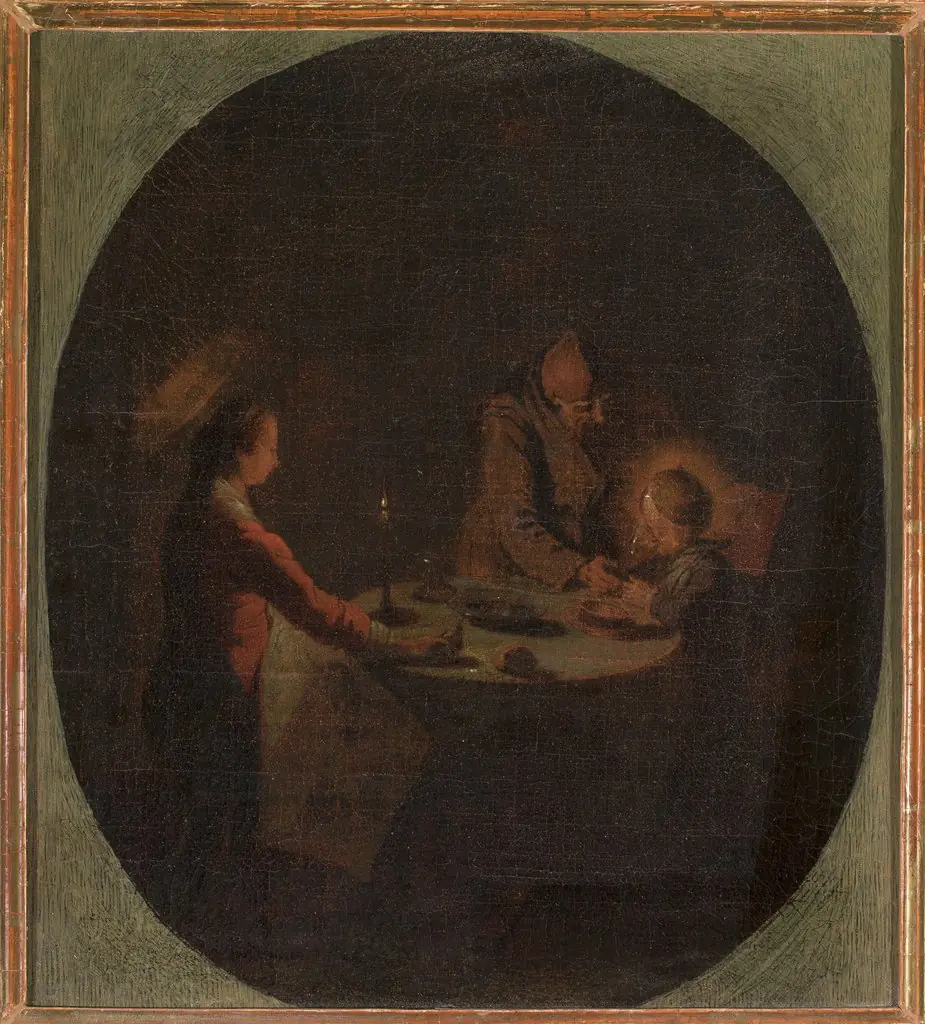 Holy Family at supper
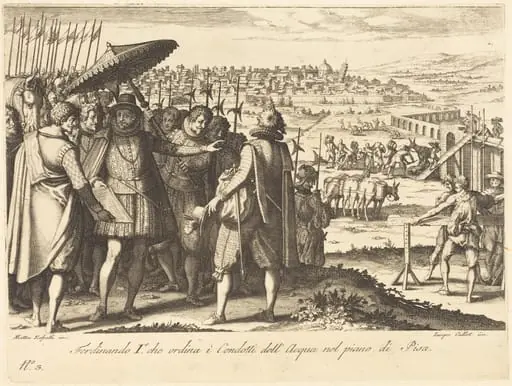 Restoration of the Aqueduct at Pisa
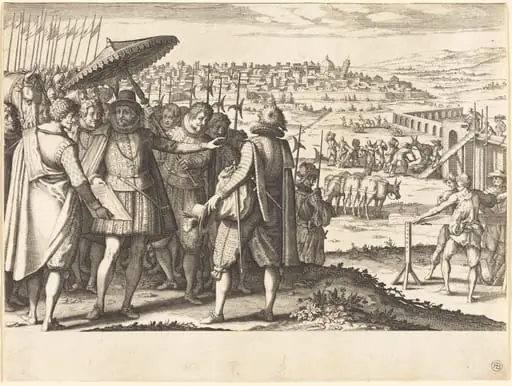 Restoration of the Aqueduct at Pisa
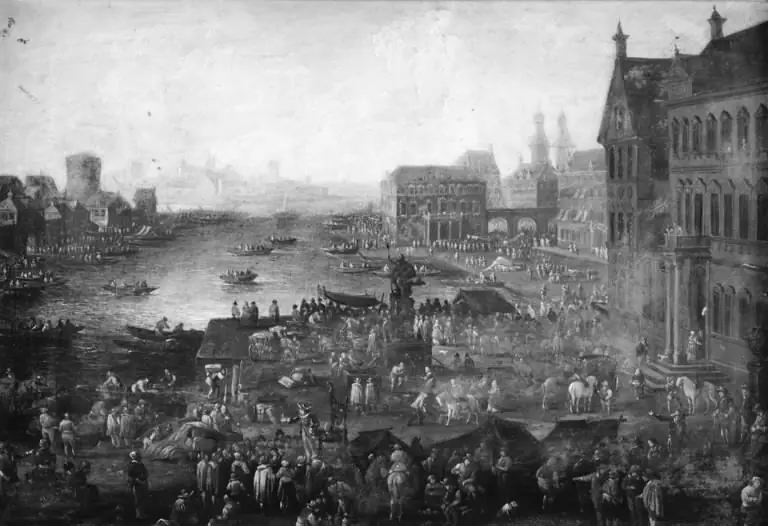 Square in Paris with Many Figures
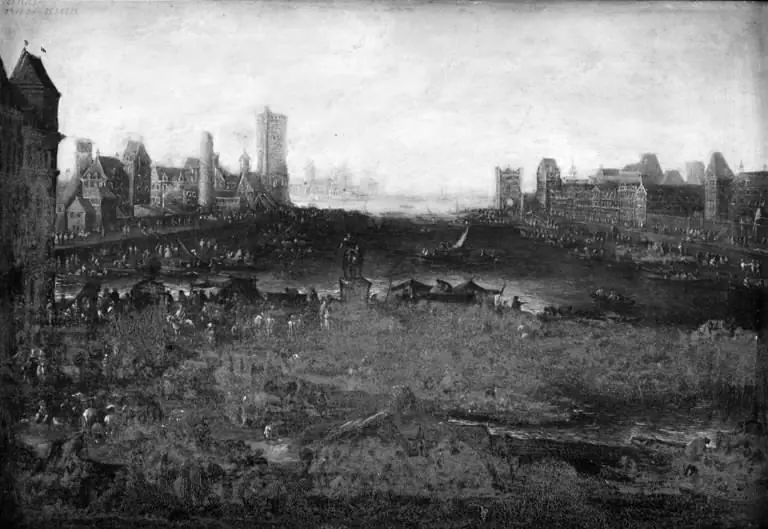 Square in Paris with Many Figures
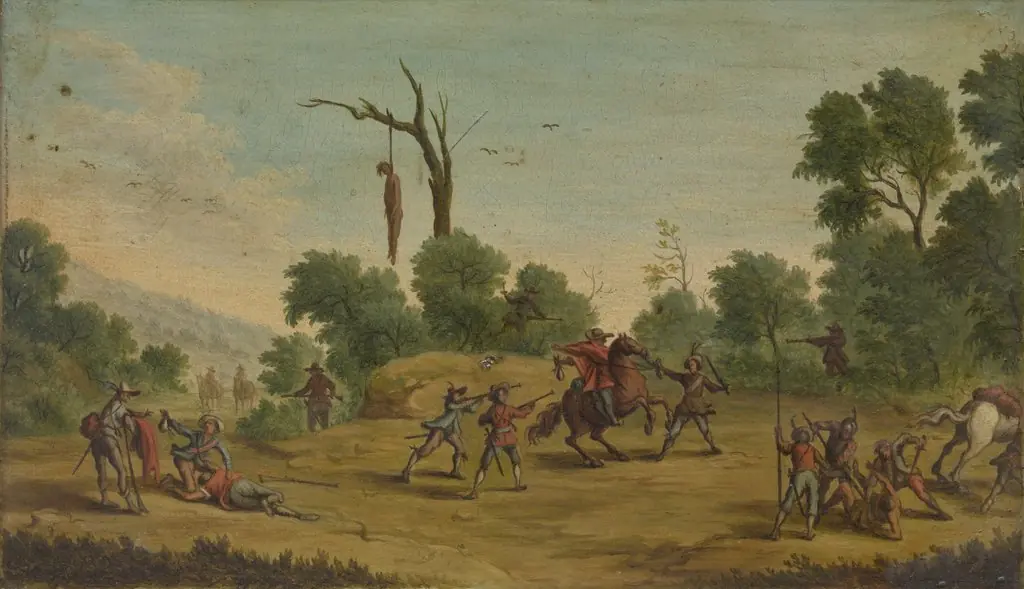 Horsemen Attacked by Robbers
 HOW WILL A COVERED PART BE CORRECTED?HOW WIKA A COVERED HEART DEED CORRECTED?
![Christ Walking on the Water [second plate], by Jacques Callot](https://artifactworldgallery.com/img/jacques-callot--christ-walking-on-the-water-second-plate--2069f3bfe4cb2126-w320.webp) Christ Walking on the Water [second plate]
Christ Walking on the Water [second plate]