Artwork
The Combat of Avigliana
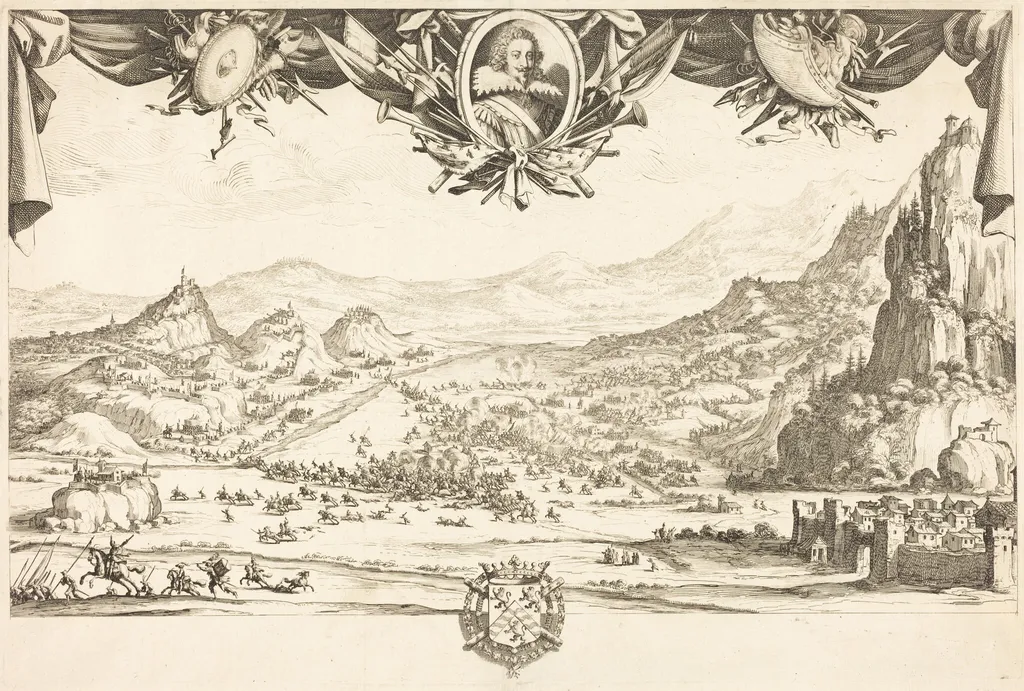
The Combat of Avigliana is an ink print by the Baroque artist Jacques Callot. It dates from 1631 and is held in the collection of the National Gallery of Art.
About this work
Overview
Executed as an etching on laid paper, the work measures a modest size yet contains an intricate depiction of a battlefield set within a hilly terrain.
Jacques Callot, a French printmaker active in the early 17th century, produced *The Combat of Avigliana* in 1631. Executed as an etching on laid paper, the work measures a modest size yet contains an intricate depiction of a battlefield set within a hilly terrain. The composition includes cavalry, infantry, a river, and a distant, smoke‑filled settlement, all rendered with Callot’s characteristic precision.
Subject & Meaning
The image records a chaotic clash near the town of Avigliana, showing mounted troops and foot soldiers engaged in close combat while a river runs through the scene. A crowned portrait positioned above the fray watches the action, suggesting a patron or allegorical overseer. The inclusion of a shipwreck on the riverbank and the surrounding smoke hints at the broader devastation of war.
Technique & Style
Callot employed the etching technique, incising fine lines into a copper plate before printing onto laid paper. His method allowed for densely packed details: tiny figures, individual weapons, and architectural fragments are all discernible. The use of jagged mountains, winding roads, and varied textures creates a sense of depth, making the imagined landscape appear convincingly three‑dimensional.
History & Provenance
Created during Callot’s prolific period in which he produced more than 1,400 prints, *The Combat of Avigliana* belongs to his series of military subjects. While the work was originally issued in the 1630s, it later entered various European collections, reflecting the broad circulation of Callot’s prints among collectors of the baroque era.
Context
The print reflects the baroque fascination with dramatic, narrative scenes and the growing interest in documenting contemporary events. Callot’s Lorraine background and his exposure to both French and Italian artistic currents informed his detailed, almost documentary approach to depicting warfare, a theme he revisited throughout his career.
Artist & collection

Artist
Jacques Callot was a baroque printmaker and draftsman from the Duchy of Lorraine.

 Holy Family at supper
 Restoration of the Aqueduct at Pisa
 Restoration of the Aqueduct at Pisa
 Square in Paris with Many Figures
 Square in Paris with Many Figures
 Horsemen Attacked by Robbers
 HOW WILL A COVERED PART BE CORRECTED?HOW WIKA A COVERED HEART DEED CORRECTED?
![Christ Walking on the Water [second plate], by Jacques Callot](https://artifactworldgallery.com/img/jacques-callot--christ-walking-on-the-water-second-plate--2069f3bfe4cb2126-w320.webp) Christ Walking on the Water [second plate]
Christ Walking on the Water [second plate]
 Houses Beside a Mountain
 The Baptism of Christ
 Mountainous Landscape with a Ruined Castle and an Arched Bridge in the Distance
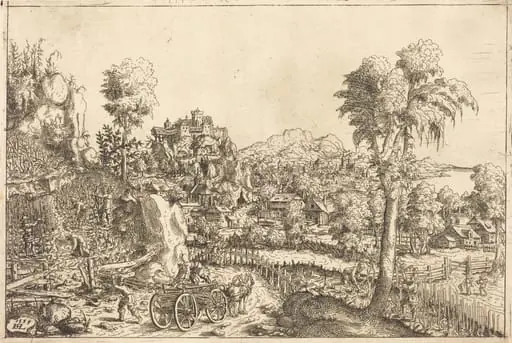 Landscape with a Vineyard
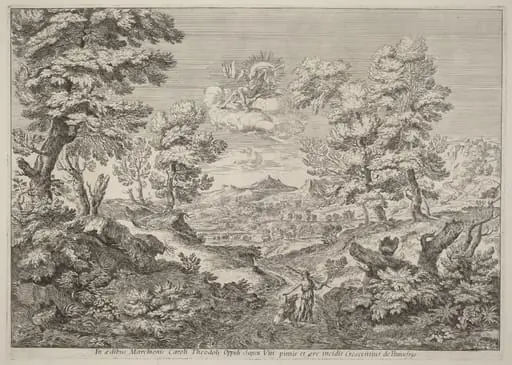 Apollo and a Nymph Leading a Lion
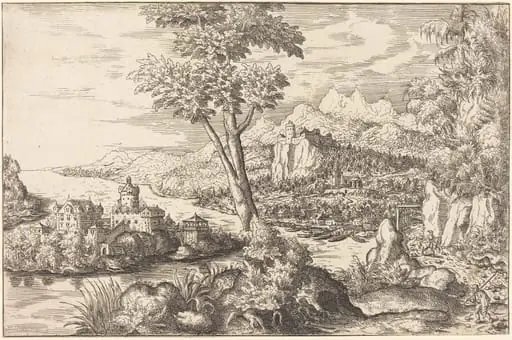 Landscape with Three Men
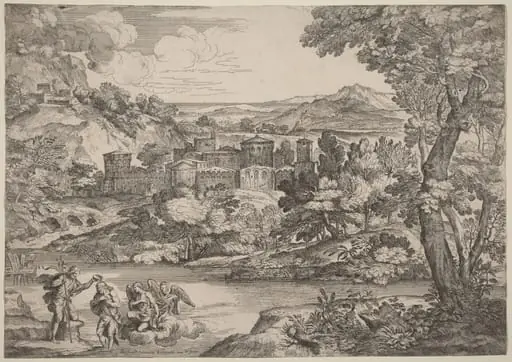 The Baptism of Christ, Set in a Mountainous Landscape
 A Waterfall
 The Stream
 Landscape with Cross and Figures